
Selecting the correct drawer sliding track is the difference between a drawer that glides effortlessly and one that sticks, sags, or fails. To find the perfect match for your furniture, you must focus on four primary specifications: load capacity, extension type, mounting style, and precise physical dimensions. In Singapore’s humid climate, where wood can expand slightly and home layouts require space-efficient designs, verifying these technical details before purchasing hardware prevents costly installation errors and ensures long-term durability.
Load Capacity: Matching Drawer Weight to Track Ratings
Every drawer sliding track is engineered to support a specific weight limit, and exceeding this threshold leads to bent rails, broken ball bearings, and misaligned drawers. When reviewing product specifications, differentiate between dynamic and static load ratings. The dynamic load rating represents the maximum weight the track supports while the drawer is actively moving, whereas the static rating refers to the weight capacity when stationary. Because drawers are meant to be opened and closed, always base your hardware selection on the dynamic load rating.
To determine the capacity you need, calculate the total expected weight of the fully loaded drawer. This calculation must include the physical weight of the empty drawer box, plus the maximum weight of its typical contents. For example, a deep kitchen drawer holding heavy cookware or a filing cabinet storing stacks of paper will require a heavy-duty track rating, whereas a shallow bedroom drawer for lightweight clothing can utilize standard-duty hardware. Always check the manufacturer’s official specification sheets and labels for exact load limits rather than assuming capacity based solely on visual bulk or metal thickness.
Products mentioned in this guide
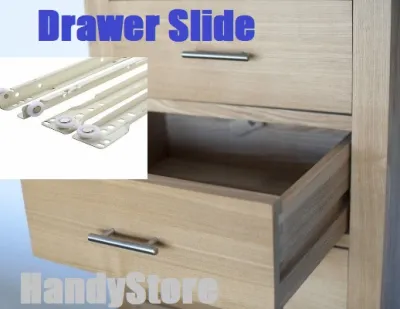
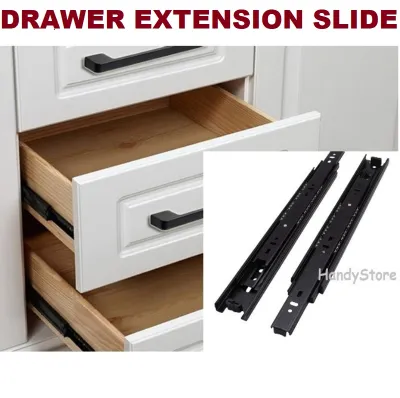
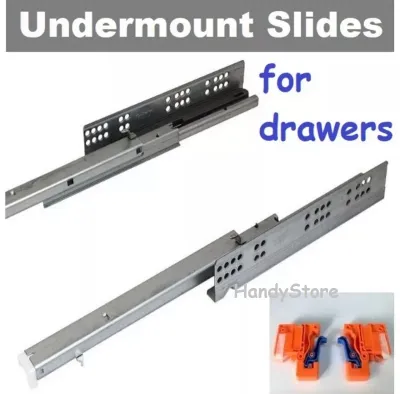
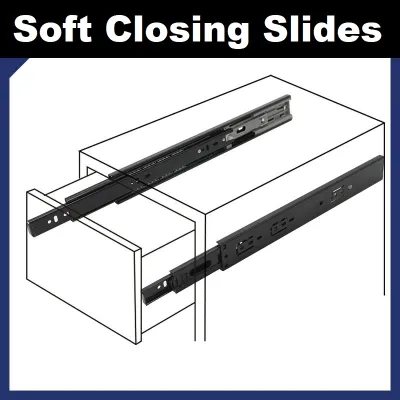
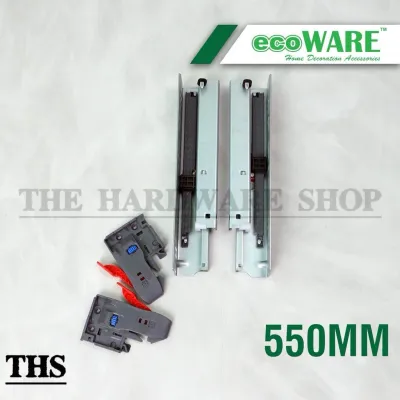
Prices are valid at publication and may change. Please refer to the product page for the latest price.
Extension Types: Choosing the Right Drawer Access
The extension type of a drawer sliding track determines how much of the drawer box pulls out from the cabinet frame, directly impacting how easily you can access the items stored inside. The three primary extension styles are partial, full, and over-travel. Partial extension tracks leave the back portion of the drawer inside the cabinet, making them suitable for shallow drawers or tight spaces. Full-extension tracks allow the drawer to open completely flush with the cabinet face, providing unobstructed access to the very back of the drawer box. Over-travel slides extend slightly beyond the cabinet face, which is highly beneficial for deep drawers or under-counter installations where an overhanging countertop might otherwise block your view.

When choosing an extension type, evaluate the surrounding environment and the physical layout of your room. In compact living spaces, such as typical Singapore apartments, fully extending a deep drawer might block a narrow hallway or collide with adjacent furniture. Balance the desire for maximum accessibility with the practical clearance available in front of the cabinet. Full-extension tracks are highly recommended for deep kitchen drawers, pantry pull-outs, and heavy file storage, where finding items at the back of the drawer would otherwise require awkward reaching.
Mounting Styles and Cabinet Clearance Requirements
The mounting style of your drawer sliding track dictates how the hardware is attached to the drawer box and the cabinet interior, which in turn determines the required clearance space. The three most common configurations are side-mount, under-mount, and center-mount. Side-mount tracks are popular due to their straightforward installation and high load capacity; they attach to both sides of the drawer box and require a precise clearance gap—typically around 12.7 mm on each side—between the drawer and the cabinet opening. Under-mount tracks are concealed beneath the drawer box, offering a clean, high-end aesthetic that showcases the drawer’s joinery, but they require specific drawer box modifications, such as precise bottom notches and specialized locking brackets. Center-mount tracks run directly underneath the center of the drawer and are often used in light-duty or antique furniture restoration.
Before purchasing any hardware, measure the existing clearance gaps inside your cabinet frame. If you are retrofitting old drawers, a side-mount track will not function if the gap between the drawer box and the cabinet wall is even slightly off, as this causes the mechanism to bind or slip. For under-mount systems, always consult the manufacturer’s detailed installation template to verify the required drawer side-wall thickness and under-drawer clearance, as these systems are highly sensitive to minor dimensional variances.
Measuring Track Length and Drawer Box Dimensions
To ensure your drawer closes completely and operates without mechanical binding, you must measure both the drawer box and the internal cabinet depth with absolute precision. The most critical rule of thumb is to measure the physical length of the drawer box itself, rather than the overall depth of the cabinet carcass, to determine your track size. The selected drawer sliding track should match the length of the drawer box; using a track that is longer than the drawer box can prevent the drawer from closing fully or cause interference with the cabinet’s back panel.
Once you have measured the drawer box, verify that the internal cabinet depth can accommodate the track. Measure from the inside front face of the cabinet to the back wall, taking care to account for any obstructions such as back panels, structural brackets, or face frame overhangs. The internal cabinet depth must always be slightly deeper than the length of the track to allow for proper installation clearance. If your cabinet has a face frame, you may also need to purchase rear mounting brackets to secure the back of the track to the rear wall of the cabinet, which can slightly alter the required depth measurements.
Secondary Features: Soft-Close and Push-to-Open
Modern drawer sliding tracks offer specialized mechanical features that enhance convenience, protect your furniture, and improve the overall user experience. Soft-close mechanisms utilize integrated hydraulic dampers to catch the drawer as it closes, gently pulling it shut to prevent slamming. This reduces ambient noise and prevents delicate items inside the drawer from shifting or breaking. Push-to-open tracks, on the other hand, eliminate the need for external handles or pulls; a simple press on the drawer front triggers a spring-loaded mechanism that pops the drawer open, which is ideal for achieving a minimalist, handleless furniture design.
While these secondary features offer clear practical benefits, they also introduce additional installation complexity and may require slightly more physical space inside the cabinet. When planning your project budget, consider prioritizing soft-close tracks for high-traffic areas, such as kitchen cutlery drawers or daily-use wardrobes, where the convenience is felt constantly. For low-traffic utility spaces, guest rooms, or storage chests, standard ball-bearing tracks can help manage overall hardware costs without sacrificing basic functionality.
Frequently Asked Questions (FAQ)
Can I use a longer track than the drawer depth?
No, you should never use a sliding track that is longer than the physical depth of the drawer box. If the track protrudes past the back of the drawer, it will strike the back panel of the cabinet, preventing the drawer from closing fully. This mismatch can cause severe mechanical binding, misalign the ball bearings, and place uneven stress on the mounting screws. Always select a track length that is equal to or slightly shorter than the drawer box depth.
Do I need soft-close tracks for all drawers?
No, you do not need soft-close tracks for every drawer. While they prevent slamming, they are more expensive than standard tracks. Prioritize soft-close mechanisms for high-use drawers in kitchens, bathrooms, and children’s bedrooms to reduce noise and protect fingers. For low-traffic storage, workshop benches, or guest room furniture, standard ball-bearing tracks are a cost-effective alternative that still provides reliable, smooth operation.
Community discussion
Share your experience or ask a question. Comments are reviewed before publication.