
Quick Guide: Which Double Sofa Bed Mechanism Suits Your Space?
Choosing a sofa bed foldable double model requires balancing daytime seating comfort, nighttime sleep quality, and the physical constraints of your room. The internal mechanism is the most critical factor, as it dictates how much effort is needed to transform the unit and how much floor space the bed occupies when fully extended.
- Pull-Out Mechanisms: Best for frequent use or dedicated guest rooms. They house a separate, dedicated mattress that offers superior support, mimicking a traditional bed, though they require substantial front clearance and physical effort to deploy.
- Click-Clack Mechanisms: Ideal for tight spaces and quick setups. They convert in seconds with a simple hinge system, requiring minimal front clearance, making them highly budget-friendly and efficient for occasional hosts.
- Futon-Style Mechanisms: Perfect for casual spaces, home offices, or study rooms. They utilize a visible wooden or metal frame with a flexible mattress, offering a lightweight, cost-effective, and minimalist solution.
- Bi-Fold Mechanisms: A balanced middle ground. They fold out smoothly without the heavy metal under-bars found in traditional pull-outs, offering a uniform sleeping surface with moderate cushioning.
Ultimately, the right choice depends on your available floor clearance, how often you expect to convert the sofa, and the level of sleep comfort your guests require.
Key Factors to Consider Before Choosing a Mechanism
Before investing in a double sofa bed, you must evaluate several practical operational factors. The way a sofa bed folds and unfolds impacts not only your daily living space but also the long-term usability of the furniture.
Products mentioned in this guide
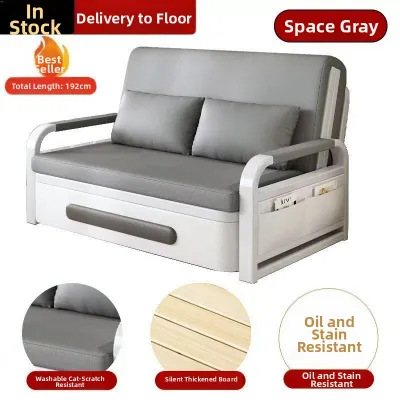
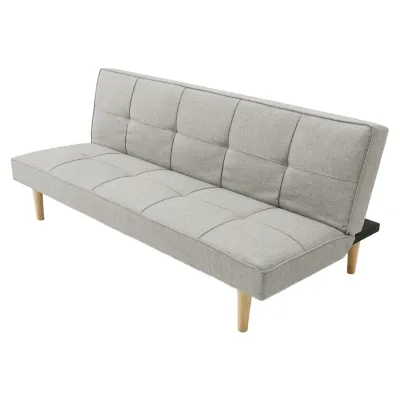
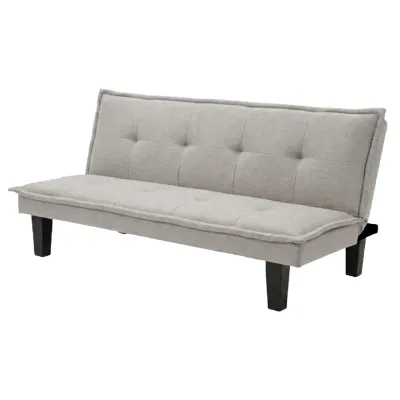
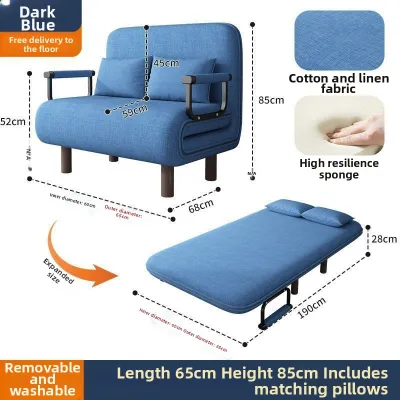
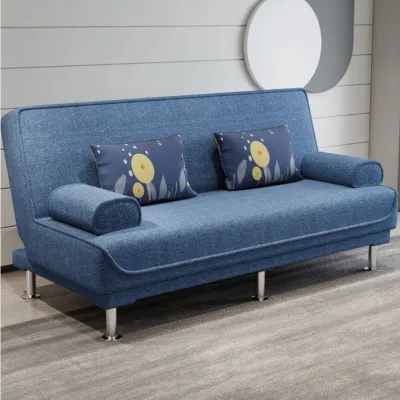
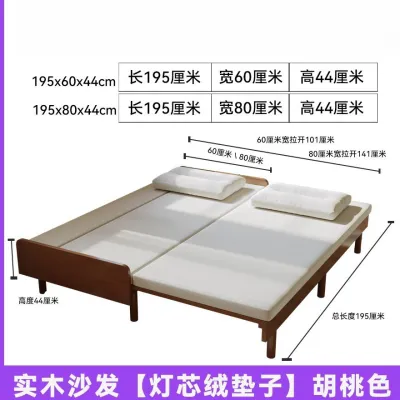
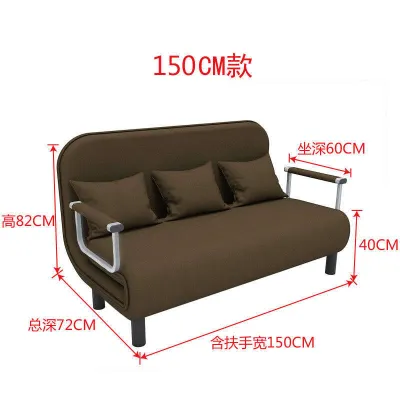
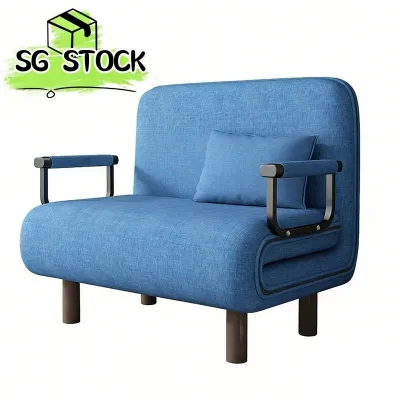
Prices are valid at publication and may change. Please refer to the product page for the latest price.

Ease of Conversion
The physical effort required to operate a sofa bed varies significantly between mechanisms. Some designs require you to remove all seat and back cushions before lifting a heavy steel frame, which can be physically demanding for a single user. Other systems utilize assisted spring hinges or smooth rolling wheels that allow for one-handed operation. If you plan to convert the bed daily, prioritizing a smooth, low-effort mechanism is essential to avoid daily frustration.
Space Clearance and Footprint
You must distinguish between the “sofa footprint” and the “bed footprint.” A sofa bed might fit perfectly against your living room wall during the day, but once extended, it can easily block walkways, doors, or built-in cabinets. Some mechanisms extend straight forward, requiring up to two meters of open floor space in front of the sofa. Others require rear clearance, meaning you must pull the sofa away from the wall before you can lower the backrest. Always measure your surrounding furniture, such as coffee tables and television consoles, to ensure you do not have to rearrange your entire room every time a guest stays over.
Mattress Support and Comfort
Sleeping comfort is directly tied to how the mechanism supports the mattress. Traditional pull-out frames use a system of metal springs, canvas webbing, or wooden slats to suspend a thin mattress. If the support system is poorly designed, sleepers may feel the structural metal bars through the mattress. Conversely, click-clack and futon models use the sofa’s seating cushions as the sleeping surface. While this eliminates the issue of metal bars, it introduces seams, creases, and varying foam densities that can affect spinal alignment during sleep.
Durability and Maintenance
A sofa bed contains moving parts, hinges, rivets, and tracks that experience mechanical stress during every conversion. Heavy-gauge steel frames and solid hardwood joints offer the best resistance to warping and bending over time. When evaluating durability, do not rely solely on the frame material; check the manufacturer’s specified weight capacity for both the seating and sleeping configurations. Moving parts may also require occasional inspection or light lubrication to prevent squeaking and stiff operation.
How the 4 Main Double Sofa Bed Mechanisms Work
The internal engineering of a double sofa bed dictates both its daytime seating profile and its nighttime comfort. Understanding the mechanics of each option allows you to match the furniture to your specific lifestyle and spatial limitations.
Pull-Out (Roll-Out) Mechanism
The traditional pull-out mechanism is engineered to conceal a complete, independent folding mattress beneath the seat cushions. To operate this system, you first remove the loose seat and back cushions. Next, you grasp a concealed handle on the metal frame, lift upward, and pull forward. The frame unfolds in a tri-fold or bi-fold motion, extending metal legs that rest on the floor to support the mattress.
This design is widely regarded as the best option for sleep comfort because it utilizes a dedicated mattress that is not compressed or sat upon during the day. The mattress is typically 10 to 12 centimeters thick and can be made of pocket springs, memory foam, or latex. Because the mattress is fully hidden when folded, the unit looks and feels exactly like a standard, premium living room sofa, complete with deep, comfortable seating cushions.
However, pull-out models are the heaviest and most structurally complex options. The steel frame adds significant weight to the furniture, making it difficult to rearrange or move. It also requires the greatest amount of front clearance to unfold fully. Over years of repeated folding, the mattress may develop permanent compression lines along the fold points, which can slightly reduce support in those specific areas.
This mechanism is best suited for primary guest rooms or main living spaces where hosting is frequent, and providing a high-quality, traditional sleeping experience is your top priority.
Click-Clack (Convertible) Mechanism
The click-clack mechanism is a highly popular, minimalist design that relies on a specialized multi-position hinge connecting the seat and the backrest. To convert the sofa into a double bed, you lift the seat section upward until you hear an audible click. This sound indicates that the locking hinge has disengaged. You then lower the seat back down, and the backrest automatically drops flat to align perfectly with the seat, creating a continuous sleeping platform.
One of the main advantages of this system is its sheer speed and ease of operation. The conversion takes less than ten seconds and requires very little physical lifting. Because the seat and backrest cushions double as the mattress, there are no heavy internal metal frames to pull out, and no loose cushions to store. This makes click-clack models exceptionally lightweight and easy to reposition within a room.
On the downside, click-clack sofa beds generally offer a firmer sleeping surface, as the foam must be dense enough to support daily sitting without bottoming out. Additionally, because the bed is formed by joining the seat and backrest, a visible seam or crease runs down the exact center of the sleeping surface. This can be uncomfortable for single sleepers who tend to lie in the middle of the bed. Furthermore, because the backrest must swing downward, many click-clack models cannot sit flush against a wall; you must leave a gap of 10 to 20 centimeters behind the sofa or slide the unit forward before converting it.
This mechanism is ideal for compact study rooms, home offices, or studio apartments where space is limited and the bed is used only occasionally for short-term guests.
Futon-Style Mechanism
The futon-style mechanism is a straightforward, functional design consisting of a simple wooden or metal frame and a single, flexible mattress. The frame typically features an A-frame or bi-fold hinge system. To convert it, you slide or pull the lower frame forward, causing the backrest portion of the frame to flatten out into a horizontal platform. The mattress, which remains exposed at all times, simply flattens out over the extended frame.
Futon-style models are highly valued for their simplicity and affordability. Because they lack complex internal springs, tracks, or heavy mechanical linkages, there are very few components that can break or wear out over time. The frames are lightweight, making them easy to assemble, disassemble, and transport. They also have a very casual, low-profile aesthetic that fits well in relaxed interiors.
However, futons lack the polished, formal appearance of a traditional upholstered sofa. They generally do not feature structured, padded armrests or deep, multi-layered seat cushioning. The flexible mattress can sometimes slide forward on the frame during daily use, requiring you to push it back into position periodically. Additionally, the slats of the frame are often visible from the sides, which may not appeal to those looking for a seamless, high-end living room centerpiece.
This mechanism is best for student accommodations, casual playrooms, or budget-conscious buyers who prioritize pure functionality and ease of transport over formal living room styling.
Bi-Fold (A-Frame / Fold-Out) Mechanism
The bi-fold or fold-out mechanism is a modern alternative that bridges the gap between click-clack simplicity and pull-out comfort. In this design, the seat cushion of the sofa is actually a thick, segmented foam mattress folded in half. To convert the unit, you pull the seat section forward. The folded mattress unfolds directly onto the floor, or onto a low-profile, integrated wooden or metal support frame, while the backrest of the sofa remains upright or folds flat to form the head of the bed.
This mechanism completely eliminates the central metal support bars that can make traditional pull-out beds uncomfortable. It provides a flat, uniform sleeping surface made of high-density foam, which offers consistent support across the entire bed. Because the mechanism does not rely on heavy steel scissor joints, it is much lighter and easier to operate than a traditional pull-out, requiring less physical strength to extend and pack away.
Nevertheless, bi-fold models can be quite deep and bulky when in sofa mode, as the folded mattress requires a deeper seat cavity to sit comfortably. Because the mattress is integrated into the seating, you have limited options for customizing the mattress thickness or material. If the foam begins to sag after years of heavy use, replacing the mattress usually requires purchasing an entirely new sofa bed or seeking professional upholstery services.
This mechanism is best for homeowners who want a comfortable, bar-free sleeping surface for overnight guests without the extreme weight and mechanical complexity of a traditional pull-out metal frame.
Double Sofa Bed Mechanisms Compared: Feature Breakdown
To help you quickly evaluate which system aligns with your specific household needs, the table below summarizes the key operational and physical characteristics of the four main mechanisms.
| Mechanism | Ease of Conversion | Front Clearance Needed | Sleep Comfort | Best Use Case |
|---|---|---|---|---|
| Pull-Out | Moderate to Heavy effort; requires lifting and unfolding. | High; extends fully forward into the room. | High; separate mattress on a supportive frame. | Living rooms or guest rooms with frequent overnight visitors. |
| Click-Clack | Very Easy; simple lift-and-release hinge action. | Minimal; extends sideways/flat, but needs rear clearance. | Medium to Firm; has a central seam. | Compact apartments, home offices, and occasional guest hosting. |
| Futon-Style | Easy; slide-forward frame with a flexible mattress. | Moderate; frame extends forward. | Medium; depends highly on mattress quality. | Casual spaces, rental properties, and budget-conscious setups. |
| Bi-Fold | Easy to Moderate; smooth roll-out or fold-out action. | High; mattress unfolds forward. | Medium-High; uniform foam surface with no metal bars. | Multi-purpose rooms where comfort and ease of use are both valued. |
Note: Always verify the exact manufacturer specifications, dimensions, and weight limits before purchasing, as individual designs and material qualities can vary significantly.
How to Choose the Right Sofa Bed Foldable Double Mechanism for Your Home
Selecting the perfect folding mechanism requires matching your physical space, budget, and usage frequency to the strengths of a specific design. Use the following guidelines to finalize your decision.
- Choose a Pull-Out if: You intend to use the bed frequently, your guests prioritize mattress comfort, you have ample open floor space in front of the sofa, and you want the furniture to look like a premium, traditional living room sofa.
- Choose a Click-Clack if: You live in a compact apartment, need a fast and effortless conversion process, have minimal clearance in front of the sofa, and are hosting short-term guests who prefer a firmer sleeping surface.
- Choose a Futon-Style if: You are furnishing a casual space on a strict budget, need lightweight furniture that is easy to move, and prioritize simple mechanical parts with high long-term reliability.
- Choose a Bi-Fold if: You want a comfortable, uniform sleeping surface without the risk of feeling metal frame bars, but you still want a simpler, lighter conversion process than a traditional pull-out offers.
Verify First
Before making your final purchase, consider these specific scenarios:
- Rental Properties: If you are furnishing a high-frequency rental, choose robust, simple mechanisms like the click-clack or futon. Complex pull-out frames are more prone to user error and mechanical damage from guests who are unfamiliar with the folding process.
- Mobility Considerations: If the primary user has back pain, joint issues, or limited physical strength, avoid heavy pull-out mechanisms. Opt for click-clack or spring-assisted bi-fold models that require minimal lifting and bending.
- Aesthetic Integration: If your room features a highly formal or minimalist design, verify that the mechanism allows the sofa bed to look like a standard sofa during the day. Pull-out and bi-fold mechanisms excel at hiding their dual purpose, whereas futons always retain a casual, informal appearance.
Measuring Your Space and Delivery Clearances
One of the most common mistakes when buying a double sofa bed is failing to account for the physical space required to deliver, install, and operate the furniture. This is particularly crucial in compact urban living environments, such as HDB flats or condominiums in Singapore, where space is optimized.
Room Footprint and Clearances
You must measure your room using two distinct layouts: “sofa mode” and “bed mode.”
- Sofa Mode: Measure the width and depth of the sofa to ensure it fits comfortably against your wall without blocking doorways, light switches, or electrical outlets.
- Bed Mode: Measure the total extended length of the bed from the back wall to the foot of the mattress. Ensure there is at least 50 to 60 centimeters of walking clearance around the sides and foot of the bed when it is fully extended. If you have a coffee table, media console, or armchair nearby, verify that you can easily move them out of the way to accommodate the extended bed.
- Side and Rear Access: Check if your chosen mechanism requires side access to release locks or pull levers. If it does, do not place the sofa tight against a side wall or next to heavy side tables that block access.
Delivery Path and Lift Access
Because double sofa beds contain internal steel frames or solid wooden structures, they are often incredibly heavy and bulky. You must plan the delivery path from the unloading bay to your living room.
- Elevator Dimensions: Measure the height, width, and diagonal depth of your building’s lift. Many heavy pull-out sofa beds are delivered as a single, fully assembled unit and may not fit into standard residential lifts if they exceed the lift's maximum height or depth.
- Stairwells and Corridors: If your delivery requires navigating stairwells or tight corridor corners, ensure the packaged dimensions of the sofa bed allow for safe turning clearance.
- Doorways and Entryways: Measure the clear opening width of your front door and internal hallways.
If your delivery path is tight, look for click-clack or futon models that are delivered flat-packed or can be easily disassembled into smaller, lighter components for assembly inside your home. Always consult the retailer regarding the delivery state of the specific model you choose.
Frequently Asked Questions (FAQ)
Can I replace the mattress on a click-clack or futon sofa bed?
Replacing the mattress on click-clack and futon sofa beds is generally difficult because the cushioning is integrated directly into the folding mechanism. On click-clack models, the mattress and upholstery are permanently fixed to the frame, meaning you cannot replace the mattress without completely reupholstering the unit. On futon models, while the mattress is separate from the frame, it must be highly flexible to bend at sharp angles when folded. If you attempt to use a standard, non-folding mattress on a futon frame, the mattress will not bend, and attempting to force it will damage the frame and hinges. Always check the manufacturer’s specifications for compatible replacement options.
Which sofa bed mechanism is the most durable for daily use?
For daily sleeping and sitting, a high-quality pull-out mechanism with a reinforced steel frame or a heavy-duty bi-fold mechanism is the most durable choice. These frames are engineered to distribute weight evenly and withstand the repetitive mechanical stress of daily conversion. However, durability depends heavily on the quality of the construction rather than the mechanism type alone. Look for frames made of tubular steel or solid hardwood rather than thin aluminum or low-grade engineered wood. To maximize longevity, always respect the manufacturer’s weight limits, avoid sitting on the very edge of the extended frame, and keep the tracks and hinges free of dust and debris.
Community discussion
Share your experience or ask a question. Comments are reviewed before publication.