
If you spend hours at a desk, you might find yourself constantly shifting in your chair, crossing your legs, or dealing with a dull ache in your lower back by the end of the day. Many people assume these discomforts are just an inevitable part of office work, but they are often direct signs of an unsupportive workspace. Specifically, when your feet cannot rest flat and stable on the floor, your entire posture suffers. An adjustable foot rest is a simple yet highly effective tool designed to bridge this gap, but before you buy one, it is important to understand if your current setup actually requires it.
Determining whether you need a footrest involves looking closely at your daily physical symptoms and evaluating how your body interacts with your office furniture. Often, we adjust our chairs upward to align our hands comfortably with the keyboard, completely forgetting about our lower body. This mismatch creates a cascade of physical strain that affects everything from your ankles to your neck. By identifying these issues early, you can make targeted adjustments to restore comfort and prevent long-term strain.
Recognizing the Physical Signs of Poor Desk Ergonomics
Lower back stiffness or aching after prolonged sitting is one of the most common indicators that your lower body lacks proper support. When your feet do not rest flat on a solid surface, your pelvis tends to tilt backward, which rounds your lower spine and strains the lumbar muscles. Over several hours, this unnatural curve fatigues the muscles supporting your back, leading to that familiar, dull ache when you finally stand up.
Products mentioned in this guide
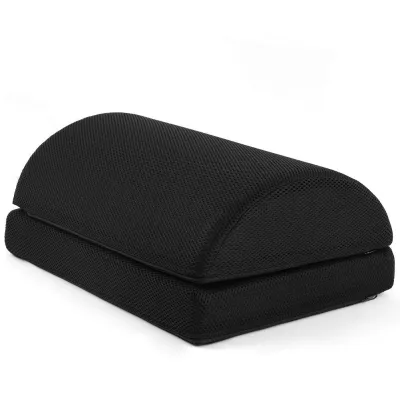
27 Lazada user ratings
No she says it was he going to show you tomorrow I hate this people the thing that you're strong but they want to bicep on me I will quit th…Read full reviewShow less
No she says it was he going to show you tomorrow I hate this people the thing that you're strong but they want to bicep on me I will quit them in my own
item received in good condition. Thanks seller for speedy action on my order as well as speedy delivery. Appreciated.
Delivery fast. Packaging looks okay. The footrest is nice and of quality. Feels comfortable when resting foot.
Item received in good condition, fast delivery, comfortable to use. Adjustable height is convenient
Perfect for office or home use, Adjustable height is convenient
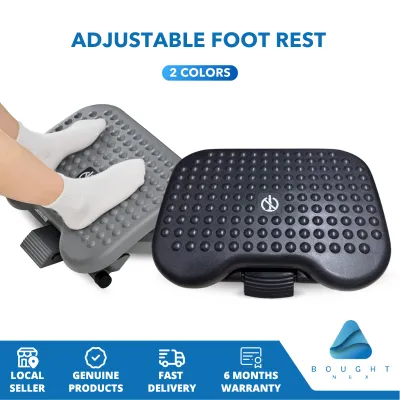
248 Lazada user ratings
Adjustability: 3 different heights adjustments available, freely rotates to different angles. Good price. The only issue is that it is a lit…Read full reviewShow less
Adjustability: 3 different heights adjustments available, freely rotates to different angles. Good price. The only issue is that it is a little wobbly when shifting from side to side as the support is in the middle.
fast delivery so far trying out. hope could reduce some stress for long hours sitting.
Quite happy with this purchase. Item came well packaged and quality!
Satisfied order delivered quickly and liked the grey color.
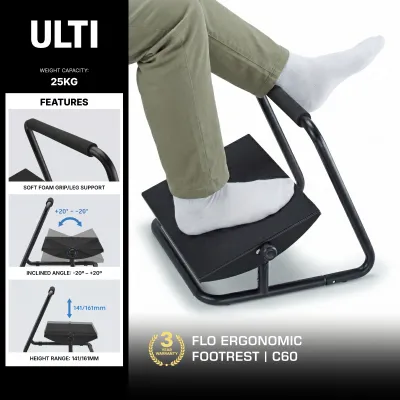
80 Lazada user ratings
Durability: sturdy and durable Comfort: like the movable paddle Anti-skid pads to protect surfaces and good weight to it on the felt of qual…Read full reviewShow less
Durability: sturdy and durable Comfort: like the movable paddle Anti-skid pads to protect surfaces and good weight to it on the felt of quality as well as practicability on not having it mobile sturdy on the floor.
Durability: excellent Comfort: excellent, just a bit warm on feet, but manageable Adjustability: excellent, can adjust height and tilt
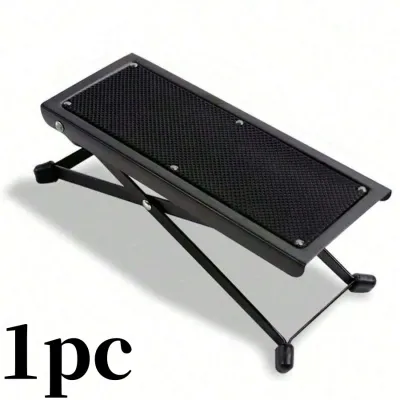
comfortable and good leg rest that is not expensive - Maximum comfort for your feet, Non-slip surface for enhanced stability
Fast delivery. Solid and durable. Love the footrest. I think the products are decent. Will return to purchase more from them
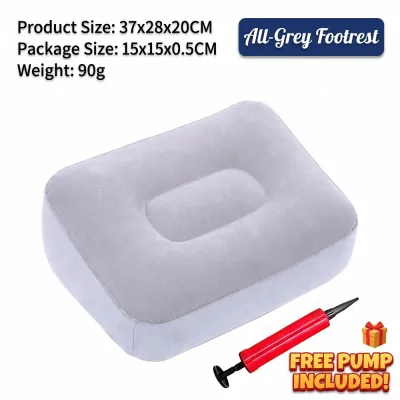
75 Lazada user ratings
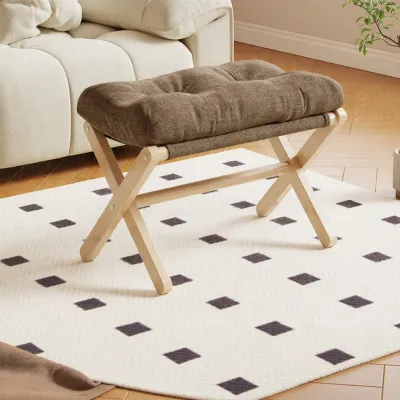
It's pretty useful, sturdier than those that hang from the bottom of tables.
Pretty good, it's comfortable even though the woodwork is a bit rough.
The workmanship is really detailed, and the soft cushion is great!
I was relieved that there was no strange smell when I got it.
It's really comfortable to sit on, and it has good support.
Prices are valid at publication and may change. Please refer to the product page for the latest price.
You might also notice leg fatigue, heaviness, or a subtle tingling sensation in your calves and feet by mid-afternoon. These symptoms often point to restricted blood circulation. When your feet dangle or press hard against the front edge of your chair cushion, the seat pan acts as a physical barrier, compressing the sensitive blood vessels and nerves behind your thighs and knees.
Pay close attention to your posture when you lose focus on how you are sitting. If you constantly find yourself slouching, sliding forward in your seat to let your feet touch the floor, or wrapping your legs around the chair’s caster wheels, your body is actively searching for stability. These awkward positions are temporary, subconscious fixes for a chair height that does not match your natural leg length.
Finally, persistent neck and shoulder tension can actually stem from unsupported feet. Without a stable lower-body foundation, your core muscles must work much harder to keep your torso upright. As your core fatigues, you are more likely to lean forward toward your screen, pulling your neck out of alignment and placing immense strain on your upper back and shoulder muscles.
Self-Assessment Checklist for Your Workspace
To pinpoint the root cause of your discomfort, sit back fully in your office chair and perform a quick self-assessment. Start by checking if your feet rest completely flat on the floor. If only your toes touch, or if you feel heavy pressure against the back of your thighs near the edge of the seat, your chair is too high, which restricts circulation and compromises your sitting posture.

Next, evaluate the angles of your knees and hips. Ideally, both your hips and knees should form angles of approximately 90 degrees, with your knees positioned at or slightly below the level of your hips. If your knees are pulled up too high, your lower back is forced to round; if they are angled downward too steeply, you will naturally slide forward in your chair.
Observe how often you shift your posture or cross your legs throughout the day. While crossing your legs might feel comfortable for a few minutes, doing it constantly is often an unconscious attempt to relieve pressure on your thighs or to stabilize an unstable pelvis. A properly supported lower body naturally reduces this constant restlessness.
Lastly, assess the relationship between your chair height and your desk surface. If you must raise your chair to align your elbows comfortably with your keyboard, check what happens to your feet. If this necessary adjustment leaves your feet dangling or barely touching the ground, your desk is too high to allow for both proper arm alignment and flat feet, making a footrest highly beneficial.
Is an Adjustable Foot Rest the Right Fix for You?
An adjustable foot rest is specifically designed to solve the “dangling feet” dilemma by raising the floor to meet your feet. This allows you to keep your chair at the ideal height for typing and viewing your monitor while maintaining a supported, neutral lower body. It is an excellent solution for shorter individuals or anyone using a fixed-height desk that is too tall for their frame.
The primary benefit of choosing an adjustable model over a static block is the ability to customize both the height and the tilt angle. Everyone’s leg length and comfort preferences differ, and an adjustable platform allows you to fine-tune the setup. Tilting the platform slightly upward supports natural ankle flexion, which can relieve tension in your calves and shins during long typing sessions.
However, a footrest is not a universal cure-all. If your desk itself is too low, adding a footrest will only cramp your legs further and force your knees into an uncomfortably high position. Similarly, if your chair lacks proper lumbar support or has an excessively deep seat pan that prevents you from sitting all the way back, a footrest alone cannot stop you from slouching.
Before purchasing, always check the physical dimensions of the footrest to ensure it fits comfortably within the available space under your desk without hitting the desk legs or your computer tower. Look for a model with a stable, non-slip base that won’t slide away on carpet or hard flooring. Additionally, verify the weight capacity and choose a surface texture, such as massaging bumps or a soft fabric cover, that matches your daily comfort preferences.
Ergonomic Adjustments to Try Before Purchasing
Before investing in new equipment, try making a few zero-cost adjustments to your current setup. If your desk is adjustable or low enough, lower your chair until your feet rest completely flat on the floor. Adjust your armrests so your shoulders remain relaxed while typing; if this resolves your leg discomfort without straining your wrists, you may not need a footrest at all.
You can also test the concept of a footrest using sturdy, fixed-height household items. Place a thick textbook, a firm yoga block, or a small, flat-bottomed plastic step stool under your desk to act as a temporary footrest. Using this makeshift setup for a day or two will help you determine if raising your feet actually relieves the pressure on your thighs and lower back.
Take a moment to reposition your monitor and keyboard to encourage a naturally upright posture. Ensure your screen is at eye level and your keyboard is close enough that you do not have to lean forward to reach it. Correcting your upper-body alignment often makes it much easier to sit back and utilize your chair’s built-in support.
Finally, remember that no ergonomic accessory can replace regular movement. Set a timer to stand, stretch, or walk around for two minutes every hour. Incorporating frequent movement breaks is one of the most effective ways to alleviate static muscle fatigue and boost circulation, regardless of the accessories you use.
Frequently Asked Questions (FAQ)
Can an adjustable foot rest help with lower back discomfort?
Yes, a footrest helps stabilize your pelvis by providing a solid foundation for your feet. When your feet are unsupported, your pelvis tends to tilt backward, which rounds your lower spine and strains the lumbar muscles. A footrest helps maintain the natural curve of your spine, though it is not a substitute for professional medical advice if you experience chronic pain.
How do I know the correct height and angle for my foot rest?
Adjust the height of the footrest until your thighs are parallel to the floor and your knees are bent at a comfortable 90-degree angle, with no pressure on the back of your thighs. A slight upward tilt of 10 to 15 degrees is generally ideal, as it supports natural ankle flexion and helps reduce tension in your calves.
Is a foot rest necessary when using a sit-stand desk?
A footrest is primarily beneficial during the seated portions of your workday to ensure proper lower-body alignment. When you transition to standing, you should move the footrest aside. For the standing phases, consider using an anti-fatigue mat or wearing supportive footwear to cushion your feet and joints.

Community discussion
Share your experience or ask a question. Comments are reviewed before publication.