
When planning a kitchen renovation in Singapore, households that cook with Liquefied Petroleum Gas (LPG) face a unique design challenge. Unlike homes connected to the municipal town gas grid, LPG users must accommodate a physical gas cylinder within their kitchen layout. Integrating this heavy, highly pressurized utility into your kitchen cabinetry requires more than just hiding it behind a standard door. A dedicated gas cabinet must balance seamless aesthetics with strict safety protocols, adequate ventilation, and robust structural support.
Finding a kitchen cabinet brand or custom carpenter in Singapore capable of executing this specialized build requires an understanding of both local safety regulations and technical cabinetry construction. While many modular kitchen brands focus on standard shelving and drawer configurations, a safe gas cylinder compartment demands bespoke engineering. This guide outlines the essential regulatory baselines, brand evaluation criteria, material specifications, and installation workflows necessary to design a functional and compliant built-in gas storage compartment for your home.
Safety and Regulatory Baselines for Gas Cylinder Storage
Storing a pressurized LPG cylinder inside an enclosed wooden or composite structure presents inherent safety risks that must dictate your kitchen’s design. The primary hazard is gas accumulation; because LPG (a mixture of propane and butane) is heavier than air, any minor leak from the regulator, valve, or hose will cause the gas to sink and pool at the bottom of the cabinet. Without proper ventilation, this pooled gas can reach flammable concentrations, where a simple electrical spark from a nearby appliance or light switch could trigger a severe incident. Additionally, proximity to high-heat appliances like built-in ovens or hobs can raise the temperature within the compartment, increasing the pressure inside the cylinder.
Products mentioned in this guide
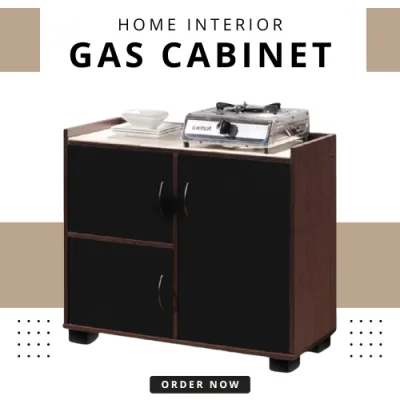
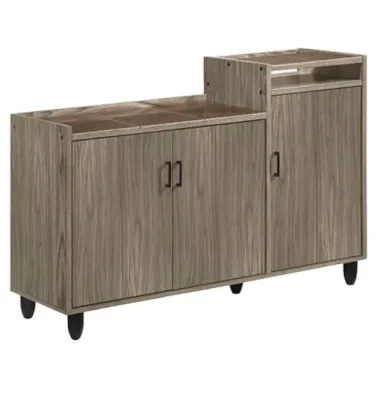
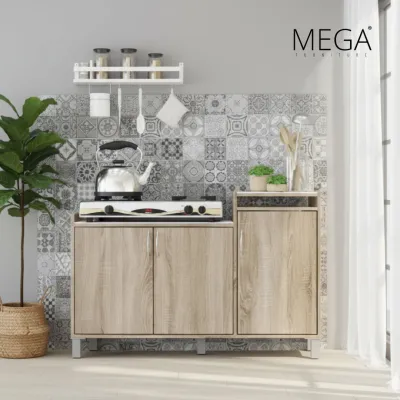
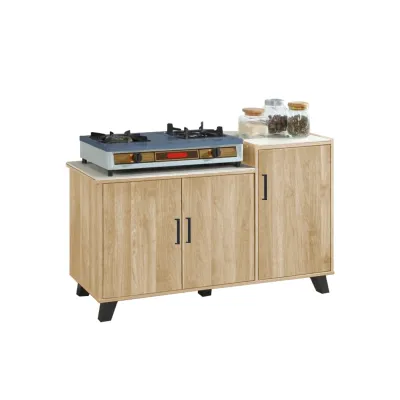
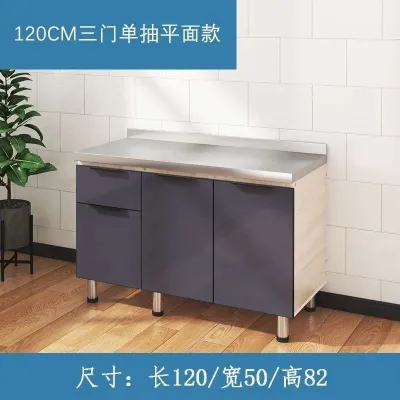
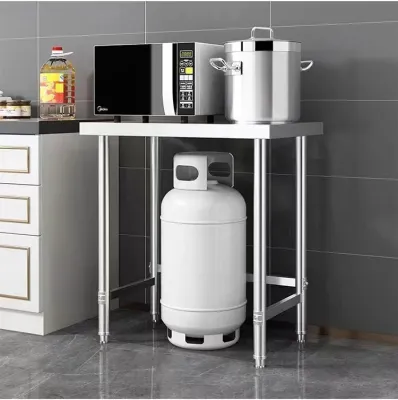
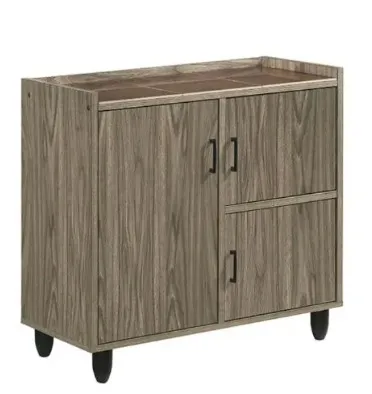
Prices are valid at publication and may change. Please refer to the product page for the latest price.
To mitigate these risks, your cabinetry design must strictly adhere to local fire safety regulations and housing authority guidelines. In Singapore, the Singapore Civil Defence Force (SCDF) and the Energy Market Authority (EMA) establish clear codes for LPG storage in residential properties. For Housing & Development Board (HDB) flats and private condominiums, there are specific limitations on the maximum allowable capacity of LPG cylinders (typically restricted to one or two cylinders of a certain size, such as 12.7kg or 9kg) and where they can be positioned. For instance, gas cylinders must not be stored in basements, near exits, or directly under sinks where water leaks could corrode the cylinder or its fittings.
Before finalizing any kitchen layout, you must verify the specific rules applicable to your property type. Condominium homeowners must also consult their respective Management Corporation Strata Title (MCST) bylaws, as some private estates have stricter rules regarding gas piping, external venting, or the use of open-flame cooking appliances. Aesthetic preferences, such as clean, handle-less cabinet lines or fully flush doors, must never compromise these safety baselines. Emergency access to the main gas valve must remain completely unobstructed at all times, allowing you to shut off the gas supply instantly without having to remove drawers or clear out stored kitchen items.
To ensure complete compliance and safety, always consult with a licensed gas service worker or an EMA-registered professional during the early planning stages of your kitchen renovation. These professionals can assess your kitchen’s natural ventilation, map out safe pipe routing, and determine the exact clearance boundaries required between your gas cabinet and adjacent electrical outlets or heat-generating appliances.
Evaluating Kitchen Cabinet Brands for Custom Gas Storage
When searching for kitchen cabinet brands or carpentry services in Singapore to build a gas cabinet, you must look beyond standard catalogs. Many mass-market modular kitchen brands offer fixed cabinet carcasses designed solely for shelving, drawers, or integrated ovens. These off-the-shelf units rarely feature the necessary ventilation cut-outs, reinforced bases, or pipe routing channels required for safe gas storage. Instead, you should focus on brands and carpentry workshops that specialize in custom kitchen solutions and demonstrate a clear understanding of utility-focused cabinetry.

Begin your evaluation by requesting past project portfolios from potential cabinet makers or interior design firms. Look specifically for completed kitchens that feature built-in gas compartments. Examine how they integrated ventilation: did they use generic plastic grilles, or did they craft seamless, custom louvered doors? Look at the positioning of the compartment relative to the hob and adjacent cabinetry. A reputable builder should be able to explain the engineering behind their designs, demonstrating that they did not simply cut a hole in a standard cabinet base but structurally reinforced the entire unit to handle the weight of the cylinder.
A critical capability of any chosen cabinet brand is their willingness and ability to collaborate with licensed gas service workers. The physical cabinet construction and the gas connection are two distinct scopes of work that must align perfectly. Your cabinet maker must design the carcass to accommodate the precise path of the copper gas pipes or flexible hoses, ensuring that no wooden panels pinch, rub, or put tension on the gas lines. They must also coordinate the installation schedule so that the gas technician can run the lines and install the regulator before the cabinet is fully sealed or anchored to the wall.
To help you vet potential carpentry vendors, use the following checklist of questions during your initial consultations:
- Regulatory Familiarity: Are your designers and carpenters familiar with SCDF fire safety guidelines regarding LPG cylinder storage in residential kitchens?
- Ventilation Strategy: What specific ventilation features do you recommend for an enclosed gas cabinet, and how do you ensure they meet minimum airflow requirements?
- Structural Reinforcement: How do you reinforce the cabinet base to support a fully loaded 12.7kg LPG cylinder (which can weigh up to 30kg in total) without sagging or warping over time?
- Material Specifications: What type of moisture-resistant and heat-resistant finishes or substrates do you use for utility cabinets, and can you provide the manufacturer's care and safety specifications?
- Accessibility and Clearance: How do you design the door hinges and opening mechanisms to ensure the cylinder can be easily removed and replaced during gas deliveries?
- Warranty Coverage: Do you offer a warranty that covers structural sagging, hinge failure, or joint separation specifically for custom utility and gas cabinets?
Essential Design and Material Specifications for Gas Cabinets
Ventilation and Airflow Management
The single most critical design feature of a gas cabinet is its ventilation system. Because LPG is heavier than air, passive ventilation must be strategically placed to allow any leaking gas to escape rather than accumulate at the base of the compartment. To achieve this, the cabinet door must incorporate open-air elements. Excellent options include louvered doors with angled slats, wire mesh panels, or decorative perforated metal inserts. If you prefer a more minimalist aesthetic, you can opt for a dedicated ventilation gap at both the top and bottom of the cabinet door, ensuring a continuous convective airflow that sweeps through the compartment.
Understanding the physics of gas dispersion is vital when organizing your kitchen storage. The airflow pathways within the gas cabinet must remain completely unobstructed. This means the compartment containing the gas cylinder must be dedicated solely to the cylinder and its immediate fittings; it should never double as a storage space for plastic bags, cleaning cloths, pots, or pantry items. Storing miscellaneous items around the cylinder base blocks the lower ventilation grilles, trapping potential gas leaks and creating a severe fire hazard.
Under no circumstances should you agree to a fully sealed, airtight cabinet design for gas storage. While solid doors with soft-close dampers look sleek, they act as a chamber that traps gas. If a leak occurs in an unventilated cabinet, opening the door can introduce a sudden rush of oxygen, which, combined with a spark from a nearby appliance or static electricity, can result in a dangerous flash fire. Ensure your cabinet drawing explicitly shows clear, unobstructed pathways for air to circulate from the room, through the cabinet, and back out.
Material Selection for Safety and Durability
The kitchen environment in Singapore is characterized by high humidity, ambient heat from cooking, and frequent cleaning. When selecting materials for your custom gas cabinet, you must look beyond generic terms like “plywood” or “laminate” and evaluate the actual performance specifications of the materials. The cabinet carcass should be constructed from high-quality, moisture-resistant substrates, such as High-Pressure Laminate (HPL) bonded to marine-grade plywood or blockboard. These materials resist warping in humid conditions and are easier to wipe clean if grease or dust accumulates.
Safety and heat resistance are paramount, especially if the gas cabinet is located near a built-in hob or oven. Check the manufacturer’s labels, safety ratings, and technical data sheets for all laminates, adhesives, and edge-banding materials used in the construction. The materials should have rated flame-retardant or heat-resistant properties, ensuring they do not degrade, peel, or release toxic fumes when exposed to elevated kitchen temperatures. Inspect the quality of the edge banding; poorly sealed edges can allow moisture to penetrate the core material, leading to swelling, joint failure, and structural compromise.
The structural integrity of the cabinet base is another critical factor. A standard 12.7kg LPG cylinder has a gross weight of approximately 26 to 30kg when full, including the steel casing. A standard 15mm or 18mm single-ply cabinet base will sag over time under this concentrated, continuous load, which can misalign the cabinet doors and compromise the stability of the entire kitchen counter. To prevent this, instruct your carpenter to use a reinforced double-ply base plate, or install heavy-duty, adjustable support legs directly beneath the cylinder’s footprint to transfer the load directly to the concrete subfloor.
Sizing, Clearance, and Accessibility
To design a functional gas cabinet, you must obtain the precise physical dimensions of the specific LPG cylinder brand you intend to use in Singapore (such as those supplied by Union Gas, SingGas, or Esso). A standard 12.7kg cylinder typically measures approximately 30cm in diameter and 60cm in height. However, you cannot design the cabinet to these exact dimensions; you must account for the height of the regulator valve, the safety cap, and the bend radius of the high-pressure gas hose connected to the top.
Always allow at least 15cm to 20cm of clear head space above the top of the cylinder valve. This clearance is essential to prevent the flexible gas hose from bending at a sharp, restrictive angle, which can cause the rubber or braided material to kink, crack, or leak over time. Additionally, there must be at least 5cm of clearance around the sides of the cylinder to allow your hands to comfortably reach in, grip the valve, and shut off the gas supply quickly in an emergency.
Accessibility is also a key factor in preventing physical strain during cylinder replacements. LPG cylinders are heavy and awkward to lift. The cabinet door mechanism and hinge placement must maximize the opening width. Standard 90-degree hinges are insufficient because the door slab remains in the way, forcing the delivery driver or homeowner to lift the heavy cylinder at an awkward angle, potentially damaging the cabinet frame or scraping the laminate. Instead, specify 155-degree or 170-degree wide-opening, zero-protrusion hinges. These hinges allow the door to swing completely out of the way, providing an unobstructed opening so the cylinder can be smoothly rolled or lifted straight out without snagging the hose or the cabinet carcass.
Step-by-Step Customization and Installation Checklist
Executing a successful gas cabinet customization requires a structured workflow that coordinates the efforts of your interior designer, cabinet maker, and licensed gas professional. Following this step-by-step checklist ensures that safety and structural integrity are maintained throughout your kitchen renovation:
1. Pre-Design and Site Survey
- Measure the available space in your kitchen layout, noting the exact positions of existing gas pipe inlets, electrical outlets, and major appliances.
- Determine the path of the gas pipe from the cabinet to the hob, ensuring it does not pass through high-heat zones or areas prone to physical damage.
- Confirm the size and weight specifications of your chosen LPG cylinder brand.
2. Cabinet Design and Material Selection
- Draft detailed cabinetry drawings showing the reinforced base, wide-opening hinges, and passive ventilation grilles (top and bottom).
- Select high-pressure laminates and moisture-resistant plywood substrates, verifying manufacturer care instructions and flame-resistance ratings.
- Designate the gas cabinet as a single-purpose compartment, ensuring no other utilities (like electrical sockets) are housed inside.
3. Carpentry Fabrication and Installation
- Fabricate the cabinet carcass with pre-drilled, smooth-edged access holes for the gas pipe, ensuring there are no sharp edges that could chafe the hose.
- Install heavy-duty support legs directly under the cylinder base to prevent structural sagging.
- Anchor the cabinet carcass securely to the wall and adjacent cabinetry to ensure absolute stability when heavy cylinders are moved in and out.
- Mount the door using wide-angle hinges and verify that the door opens smoothly without obstructing kitchen walkways.
4. Professional Gas Connection and Testing
- Engage a licensed gas service worker to run the copper piping, install the manual shut-off valve, and connect the high-pressure regulator to the cylinder.
- Ensure the gas technician conducts a professional pressure test and leak test on all joints and connections using specialized detection equipment or a soapy water solution.
- Verify that the flexible gas hose has a clear, unkinked path with a safe bend radius.
5. Post-Installation and Maintenance Checks
- Check that all passive ventilation grilles are completely clear of sawdust, plastic wrap, or construction debris.
- Create a recurring reminder to inspect the flexible gas hose every six months for signs of wear, cracking, or stiffness. Note the expiry date printed on the hose (rubber hoses typically require replacement every two years).
- Instruct all household members on how to access the compartment and shut off the main gas valve in an emergency. Never allow any household items to be stored inside the gas cabinet.
Frequently Asked Questions (FAQ)
Can I modify an existing kitchen cabinet to store a gas cylinder?
Modifying an existing kitchen cabinet to store an LPG cylinder is possible, but it presents significant structural and safety challenges. Standard kitchen base cabinets are rarely designed to support a concentrated 30kg load, meaning the base shelf will likely sag or collapse without immediate reinforcement. Furthermore, cutting ventilation holes into solid cabinet doors can compromise their structural integrity and ruin the aesthetic finish. If you decide to proceed with a retrofit, you must engage a professional carpenter to reinforce the cabinet base with heavy-duty support legs, install proper louvered vents or mesh panels, and ensure the door hinges can handle the repetitive movement. If the existing carcass is made of low-grade particleboard or shows signs of water damage, it is far safer and more durable to replace the specific cabinet unit entirely.
Do I need a special permit to install a gas cabinet in my HDB or condo?
While building a standard wooden kitchen cabinet does not require a structural renovation permit from the Housing & Development Board (HDB) or private condominium management, the installation of the gas system itself is highly regulated. Any modifications to gas piping, regulators, or the installation of new gas appliances must be carried out by a licensed gas service worker in accordance with Singapore’s gas safety regulations. For HDB flats, you must ensure that your gas cylinder storage complies with SCDF fire safety guidelines, which restrict the location and volume of LPG stored indoors. In private condominiums, you must check your MCST bylaws, as some estates prohibit individual LPG cylinders entirely, requiring residents to use electric hobs or centralized town gas systems.
What is the best door mechanism for a gas cabinet?
The best door mechanism for a gas cabinet is a standard side-hinged door equipped with 155-degree or 170-degree wide-opening, zero-protrusion hinges. This setup allows the door to swing completely clear of the cabinet opening, providing maximum clearance so you can lift or roll the heavy LPG cylinder straight out without scraping your knuckles or damaging the cabinet frame. Pull-out drawers or cargo-style pull-out systems are generally not recommended for gas cylinders; the weight of a full cylinder places immense stress on drawer runners, leading to premature failure, and the movement of the drawer can pull or tension the flexible gas hose, increasing the risk of gas leaks at the connection points. Bi-fold doors can work well in tight kitchens with limited walkway space, provided they use heavy-duty tracks and do not restrict access to the manual shut-off valve.
Community discussion
Share your experience or ask a question. Comments are reviewed before publication.