
Selecting the right brand for an aluminum kitchen cabinet system in Singapore requires looking beyond surface aesthetics. To find a provider that offers genuine customization rather than rigid, pre-fabricated modules, you must evaluate their in-house manufacturing capabilities, hardware compatibility, and structural engineering. Because Singapore’s high humidity and pest risks challenge traditional wood joinery, custom aluminum cabinets provide a durable, rust-proof, and highly tailored alternative for modern homes.
While many local contractors and boutique showrooms offer aluminum solutions, their level of customization varies significantly. The best brands do not just supply standard boxes; they design and fabricate cabinets to fit the precise contours of your kitchen layout, accommodating structural pillars, uneven walls, and integrated appliances. By focusing on material specifications, joint construction, and installation expertise, you can secure a kitchen that is both highly functional and built to last.
Why an Aluminum Kitchen Cabinet is Ideal for Singapore Homes
Singapore’s tropical climate presents unique challenges for kitchen cabinetry. High relative humidity levels throughout the year accelerate the degradation of traditional wood-based materials. Medium-density fibreboard (MDF), particleboard, and even standard plywood tend to absorb moisture from the air and from daily kitchen activities, leading to swelling, warping, and laminate peeling over time. An aluminum kitchen cabinet carcass is entirely impervious to moisture, ensuring the structure remains stable even in wet zones like the undersink area.
Products mentioned in this guide
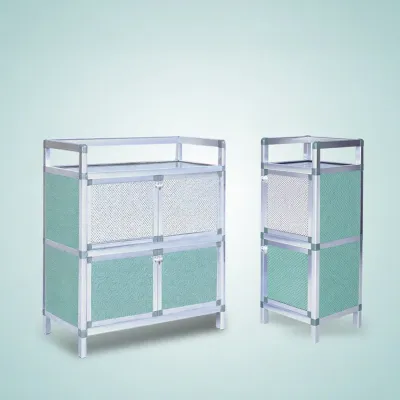
Prices are valid at publication and may change. Please refer to the product page for the latest price.
In addition to moisture resistance, aluminum provides an absolute barrier against household pests. Termites and wood-boring beetles are a persistent concern in Singapore, particularly in ground-floor units, landed properties, and older residential estates. Because aluminum offers no organic material for pests to feed on, it eliminates the risk of infestation entirely, saving homeowners from costly pest control treatments and premature kitchen replacements.
Custom fabrication is particularly valuable for maximizing space in typical Housing & Development Board (HDB) flats and condominium layouts. Off-the-shelf modular units often leave awkward, unusable gaps because they are manufactured in fixed increments. A custom aluminum system can be tailored to the exact millimeter, allowing you to optimize tight galley kitchens, utilize awkward corners, and design seamless floor-to-ceiling storage that leaves no dust-gathering gaps.
From a maintenance perspective, aluminum is exceptionally practical for heavy-cooking households. Unlike wood or laminate surfaces that can absorb grease, smoke, and odors, aluminum is non-porous and easy to sanitize. It does not support the growth of mold or bacteria, and it resists staining from common cooking ingredients. A simple wipe-down with mild soapy water is generally all that is required to keep the cabinets looking pristine for decades.
Essential Customization Features to Compare
Dimensions and Layout Configurations
True customization allows you to adapt your cabinetry to any kitchen footprint, whether you are planning an L-shape, U-shape, parallel galley, or an open-concept kitchen with a central island. In Singapore’s residential estates, kitchens often contain structural columns, exposed copper water pipes, gas meters, or refuse chutes that cannot be moved. Custom aluminum frames can be scribed and fabricated around these obstacles, hiding unsightly utilities while preserving valuable storage space.

Vertical space optimization is another critical factor. Standard HDB ceilings typically sit around 2.6 meters high, but older resale flats and high-ceiling condominiums vary widely. Custom brands can fabricate extra-tall wall cabinets or double-tier top cabinets to utilize every inch of vertical space. Furthermore, custom depth configurations ensure that built-in appliances—such as ovens, microwave drawers, and integrated refrigerators—sit perfectly flush with the cabinet carcasses for a clean, high-end look.
When planning layout dimensions, you must also consider physical access constraints. Large, continuous aluminum frames can be difficult to transport. A professional brand will assess your building’s lift dimensions and doorway clearances during the design phase, engineering the cabinets to be brought up in modular sections and assembled seamlessly on-site without damaging your property.
Surface Finishes and Aesthetics
Modern aluminum cabinets have evolved far beyond the cold, industrial metallic look of the past. Today, brands offer sophisticated surface treatments that allow aluminum to mimic other premium materials. Powder coating is a highly popular option, delivering a durable, scratch-resistant finish in matte, glossy, or textured textures. This process involves electrostatically applying dry powder paint and baking it under high heat, creating a bond that resists chipping, fading, and peeling.
For those who prefer the warmth of natural wood, high-definition wood-grain sublimation is an excellent customization choice. This technology transfers wood patterns directly into the powder-coated aluminum layer under high temperatures. The result is a realistic timber appearance—complete with grain textures—without the risk of rotting, warping, or termite damage. These finishes can be easily coordinated with popular local countertop materials, such as quartz, sintered stone, or compact laminates.
Glass-fronted aluminum doors are another customizable aesthetic feature. You can choose from clear, frosted, fluted, or tinted glass panels set within slim aluminum profiles. This allows you to create visual interest, showcase decorative dinnerware, or integrate internal cabinet lighting while maintaining the structural integrity and moisture resistance of an all-metal frame.
Internal Hardware and Storage Solutions
The functionality of a custom kitchen relies heavily on its internal organization. When comparing brands, look at the variety of pull-out larder units, corner carousels, under-sink organizers, and modular dish racks they can integrate. Custom aluminum cabinets can be designed with adjustable shelving tracks, allowing you to reconfigure your storage heights as your household needs change over time.
Because aluminum is a rigid material, securing hardware requires specialized engineering. Unlike wooden cabinets where screws bite directly into the material, high-quality aluminum cabinets utilize pre-threaded rivet nuts (rivnuts) or reinforced mounting brackets. This prevents the screws from stripping the metal or loosening over time due to the weight of heavy drawers.
Ensure that the brand you choose supports heavy-duty, corrosion-resistant hardware from reputable international manufacturers. Soft-close hinges, drawer runners, and lift-up mechanisms must be rated for high load capacities and tested for hundreds of thousands of open-close cycles. This is particularly important for heavy drawer systems holding cast-iron cookware or extensive dish collections.
How to Evaluate a Brand's Customization Capabilities
To distinguish between a brand that offers truly bespoke solutions and one that merely sells semi-custom modular boxes, you must examine their manufacturing model. Brands that operate their own local fabrication workshops—either in Singapore or in nearby Johor Bahru—typically offer much greater design flexibility. They can accommodate non-standard requests, make rapid adjustments during the manufacturing process, and provide faster turnaround times for any necessary on-site rectifications.
In contrast, brands that outsource their production to overseas factories often work within rigid, pre-determined sizing templates. If your kitchen layout requires a non-standard cabinet width or a highly specific angle to fit a sloped ceiling, an outsourced brand may struggle to accommodate the request, or charge exorbitant custom-handling fees. Furthermore, communication delays between the local sales office and an overseas factory can increase the risk of manufacturing errors.
During the design phase, evaluate the brand’s technical deliverables. A professional custom fabricator should provide detailed 3D renderings and precise technical drawings showing exact dimensions, clearance margins, and hardware placements. They must also perform a meticulous on-site measurement using professional laser levels. This step is crucial because concrete walls and floors in Singaporean homes are rarely perfectly straight; the fabricator must account for these minor deviations to ensure a flawless installation.
When visiting showrooms, perform a physical inspection of their cabinet samples. Check the thickness of the aluminum profiles used for the structural frames; high-quality systems generally use architectural-grade aluminum alloys with a frame thickness of 1.2mm to 1.5mm. Examine the joint construction closely. Look for clean, precision-engineered mechanical joints or seamless welds. Avoid systems that rely on visible, basic self-tapping screws at the corners, as these can loosen over time and compromise structural stability.
Finally, scrutinize the brand’s warranty terms. A confident, high-quality fabricator will offer a comprehensive warranty that clearly distinguishes between different components. Look for a long-term warranty (typically 10 years or more) covering the structural integrity of the aluminum frame and carcasses. The warranty should also cover surface finishes against peeling or bubbling, and moving hardware against mechanical failure for a reasonable period.
Steps to Find and Verify Reliable Local Makers
Begin your search by shortlisting local aluminum cabinet specialists and planning visits to their physical showrooms. Showrooms are often located in industrial hubs such as Ubi, Defu Industrial Estate, Toh Guan, or Sungei Kadut. Visiting in person allows you to physically test the quality of the products. Open and close the drawers to assess the smoothness of the runners, check the alignment of the door panels, and feel the weight and sturdiness of the cabinet doors.
While at the showroom, request to see a portfolio of their past completed projects. Look specifically for installations in housing types similar to yours, whether it is a brand-new HDB BTO flat, an older resale unit, or a compact condominium. Pay close attention to how they executed tricky design details in these projects, such as scribing cabinets around exposed ceiling beams, integrating heavy stone countertops, or concealing utility pipes.
If your kitchen renovation involves structural hacking, wall demolition, or major plumbing and electrical relocation, you must verify that the contractor is registered. In Singapore, any renovation work in HDB flats must be carried out by an HDB Registered Renovation Contractor (RRC). Working with a registered contractor ensures that the works comply with safety guidelines and structural regulations, protecting you from potential fines or structural damage to the building.
Before making a final decision, consult independent review platforms, local home renovation forums, and social media groups to gauge customer satisfaction. Look for consistent feedback regarding the brand’s punctuality, installation cleanliness, and responsiveness to post-installation issues. A brand that provides excellent after-sales service and honors their warranty commitments is far more valuable than one that simply offers the lowest initial price.
Understanding Costs and Getting Accurate Quotes
In the Singapore renovation market, aluminum kitchen cabinets are typically priced using a “per foot run” (pfr) model. This rate is usually split into base (bottom) cabinets and wall (top) cabinets. While this pricing structure makes it easy to estimate baseline costs, you must understand exactly what is included in the base rate. Some brands include basic internal shelving and standard doors in their per-foot-run price, while others charge separately for doors, backing panels, and internal carcasses.
Several key design choices will drive up the overall cost of your custom kitchen. Opting for premium surface finishes, such as high-definition wood-grain sublimation or specialized textured powder coatings, will carry a surcharge compared to standard solid colors. Complex custom cuts to fit around structural columns, integrated LED lighting channels, and heavy-duty pull-out storage hardware will also add to the final invoice.
When reviewing written quotations, watch out for hidden fees that can quickly inflate your budget. A professional, transparent quote should be fully itemized and include charges for:
- Delivery and transportation to your site
- Professional installation labor
- Dismantling and safe disposal of your existing kitchen cabinetry
- Plumbing reconnection for the sink and tap
- Scribing and sealing gaps against uneven walls
To compare quotes fairly across different brands, ensure you are comparing identical specifications. Request that each company quote for the exact same layout dimensions, cabinet heights, material grades, and hardware configurations. Ensure all prices are quoted in Singapore Dollars (SGD) and clearly state whether they are inclusive of prevailing local taxes (GST). Comparing itemized, apples-to-apples quotes is the only way to determine which brand offers the best value for your customization requirements.
Frequently Asked Questions (FAQ)
Are aluminum cabinets completely waterproof?
High-quality architectural-grade aluminum profiles and panels are entirely waterproof. They will not rot, warp, rust, or degrade when exposed to water, making them highly resilient in wet kitchen environments. However, the overall water resistance of your kitchen installation also depends on the quality of the installation and the materials used for sealing. The joints where the cabinets meet the walls and countertops must be sealed with high-grade, mold-resistant silicone to prevent water from seeping behind the carcasses. Additionally, you should verify that the brand uses 100% aluminum for all internal shelving and backing panels, rather than substituting cheaper wood-composite materials in hidden areas.
How long does the custom fabrication and installation process take?
The typical timeline for custom aluminum kitchen cabinets ranges from 4 to 8 weeks from the initial consultation to final installation. Once you finalize the kitchen layout and select your finishes, the design team will produce technical drawings for your approval. After you sign off on these drawings, the detailed on-site measurement is conducted, and the fabrication process begins in the factory, which usually takes 3 to 6 weeks. The actual on-site installation of the cabinets is relatively fast, typically taking between 2 to 4 days. However, you must allow additional time if your project involves complex countertop installation (such as custom-cut quartz or sintered stone), plumbing hookups, or integrated appliance testing.
Community discussion
Share your experience or ask a question. Comments are reviewed before publication.