
Finding the ideal wardrobe brand for an HDB bedroom in Singapore depends on matching a brand’s sizing systems and door mechanisms to your specific floor plan. Because HDB layouts vary significantly—from compact common rooms in newer Build-To-Order (BTO) flats to older, more spacious master bedrooms with structural beams—there is no single universal brand that fits every home. The right choice comes down to how well a brand’s modular increments or custom capabilities align with your room’s physical dimensions, allowing you to maximize storage without blocking walkways or natural light.
To make an informed decision, you must evaluate brands based on their structural adaptability, material quality for Singapore’s humid climate, and the hidden costs of delivery and installation. This guide breaks down the essential spatial calculations, product features, and brand evaluation criteria to help you select the perfect wardrobe for your HDB layout.
Understanding HDB Bedroom Space Constraints
Before browsing brand catalogs or visiting showrooms, you must understand the physical limits of your HDB bedroom. Newer BTO common rooms typically measure around 9 to 11 square meters, while master bedrooms generally offer 12 to 14 square meters. These compact footprints mean that every centimeter of floor space occupied by furniture directly impacts your daily comfort and movement.
Products mentioned in this guide
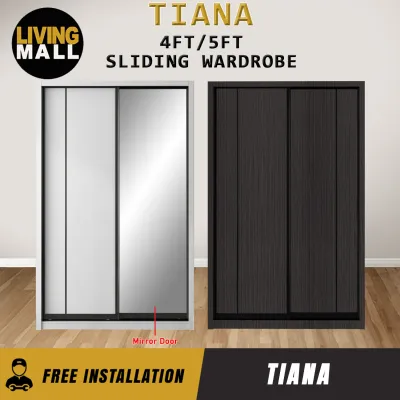
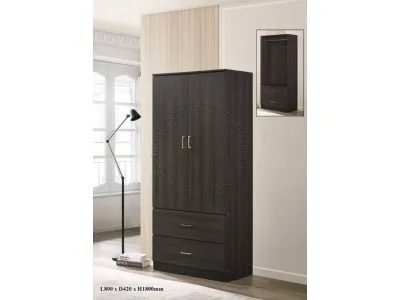
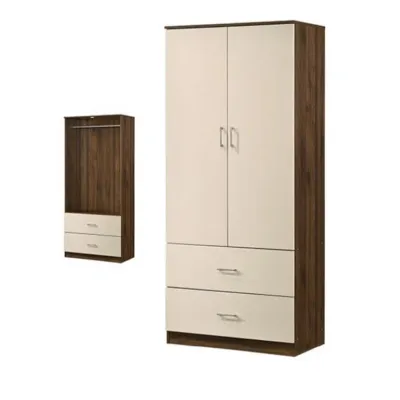
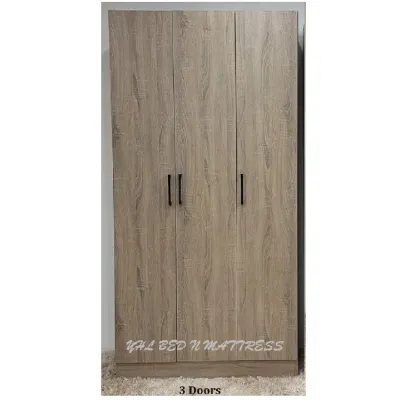
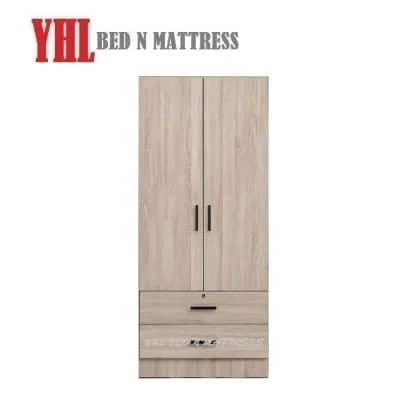
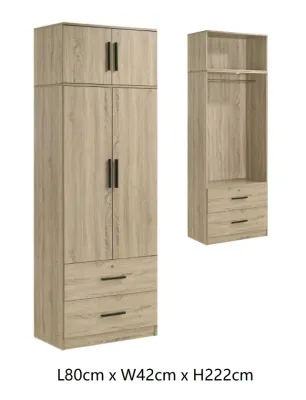
![[FREE INSTALLATION] KENZZO : Multifunctional 2 Door 5 tier small corner wardrobe with Hanging rod & adjustable shelves](https://img.lazcdn.com/g/p/00504151b6d2b7b2ec28060ed4a5b106.jpg_400x400q80.jpg_.webp)
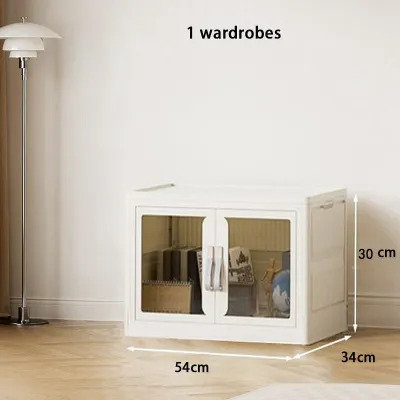
Prices are valid at publication and may change. Please refer to the product page for the latest price.
Clearance is the most critical measurement to calculate before purchasing a wardrobe. To maintain a comfortable walkway, you need a minimum of 50cm to 60cm of open space between the edge of your bed and the wardrobe doors. If you choose a wardrobe with hinged doors, you must add the door’s swing radius—typically 40cm to 60cm—to this clearance calculation. Failing to account for this can leave you with doors that strike the bedside table or prevent you from opening drawers fully when the bed is occupied.
Sliding doors offer a practical alternative for tight spaces because they do not require a front swing radius. However, they come with a different spatial trade-off: sliding door tracks require a deeper wardrobe frame, usually adding 5cm to 10cm to the overall depth of the unit compared to hinged alternatives. You must measure your room’s width carefully to ensure this extra depth does not narrow your primary walkway too much.
Finally, look out for structural obstacles that are common in HDB flats. Ceiling beams, structural columns, electrical trunking, and air-conditioner ledges can prevent standard, flat-pack wardrobes from sitting flush against the wall. If a ready-made wardrobe cannot accommodate these obstacles, you will be left with awkward, dust-gathering gaps that waste valuable storage space.
Key Wardrobe Features for Compact HDB Layouts
When comparing wardrobe brands, look for specific design features engineered to optimize small spaces. The right combination of door mechanisms, vertical extensions, and interior modularity can make a compact HDB bedroom feel significantly more organized and spacious.

For tight layouts where the bed sits close to the wardrobe, prioritize brands that offer high-quality sliding door systems. Ensure the sliding tracks operate smoothly and feature soft-close mechanisms to prevent slamming. If you have a bit more clearance and prefer full visibility of your clothes at a single glance, look for brands that offer slim-profile hinged doors with 110-degree or 185-degree wide-opening hinges, which allow easier access to corner compartments.
Maximize your room’s vertical space by choosing brands that offer tall units or stackable top-box extensions. Standard HDB ceiling heights are typically around 2.6 meters. Many standard off-the-shelf wardrobes stop at 2.0 or 2.2 meters, leaving a large gap at the top that collects dust. Selecting a brand with 2.36-meter or 2.4-meter height options, or one that offers modular add-on cabinets, allows you to store seasonal bedding, luggage, and less frequently used items high up, keeping your main hanging areas organized.
Interior modularity is another crucial feature to look for in a brand’s product line. A good wardrobe system should allow you to customize the interior layout with adjustable shelving pegs, pull-out trouser racks, shallow jewelry drawers, and double hanging rods. This flexibility ensures you can adapt the wardrobe’s interior as your lifestyle changes, rather than being stuck with a fixed, inefficient layout.
To enhance the visual feel of a small bedroom, look for brands that offer mirrored door panels or light-colored finishes. Full-length mirrored doors reflect light from the windows, making a small common room feel twice its actual size. Light wood laminates, matte white finishes, and soft grey tones prevent the wardrobe from looking like a massive, heavy block that dominates the room visually.
Evaluating Brand Offerings: Ready-Made vs. Custom Built
As you research wardrobe brands in Singapore, you will generally choose between two main paths: ready-made modular brands and custom carpentry services. Each approach has distinct advantages and limitations regarding timeline, budget, and spatial fit.
Ready-made modular wardrobes are highly popular due to their immediate availability and transparent, upfront pricing. Brands specializing in modular systems allow you to mix and match pre-fabricated frames of various widths (such as 50cm, 75cm, or 100cm) to fit your wall. The primary drawback is that these fixed dimensions rarely align perfectly with your wall length, often leaving a 10cm to 20cm gap at the end that cannot be utilized. Additionally, they cannot be modified to fit around ceiling beams or wall columns.
Custom carpentry brands, on the other hand, build your wardrobe from scratch to fit the exact millimeter of your bedroom. This approach allows for seamless integration, wrapping the wardrobe around structural columns, fitting it perfectly under low ceiling beams, and running it completely flush from wall to wall and floor to ceiling. While this maximizes every cubic centimeter of storage, it comes with longer lead times—often three to six weeks for fabrication—and a higher, more variable pricing structure. Furthermore, custom wardrobes are permanent fixtures that cannot be easily moved if you relocate.
Whichever path you choose, verify the essential services the brand provides before making a deposit. A reliable brand should offer professional on-site measurement services, as HDB walls and floors are rarely perfectly straight or level. For custom or semi-custom options, ensure the brand provides detailed 3D layout renderings so you can verify the scale, door clearances, and interior configurations before production begins.
How to Compare and Shortlist Wardrobe Brands
To find the best wardrobe brand for your needs, you must look beyond the initial price tag and aesthetic appeal. Use this practical checklist to evaluate and compare brands operating in Singapore:
- Examine Real-World Portfolios: Look for documented HDB bedroom installations in the brand's portfolio or customer reviews. Showroom displays are often set up in massive, high-ceiling spaces that do not reflect the reality of a standard BTO flat. Real-world photos show how the brand's products handle actual HDB features like skirting boards, electrical sockets, and trunking.
- Check Warranty Coverage on Moving Parts: The longevity of a wardrobe depends heavily on its hardware. Ask about the specific warranty terms for sliding door tracks, hinges, drawer runners, and soft-close mechanisms. Brands that offer multi-year warranties on these moving parts generally use higher-grade hardware that resists sagging and misalignment over time.
- Clarify Hidden Fees: The advertised price of a wardrobe often excludes essential services. Always ask for a full breakdown of delivery fees, assembly charges, and dismantling fees for your old furniture. Additionally, check if there are "walk-up" surcharges if your HDB block's lift does not stop on your floor, or if the wardrobe panels are too large to fit into the standard passenger lift.
- Verify Material Specifications: Singapore's high humidity can cause low-grade engineered wood to swell, warp, or develop mold. When comparing brands, check the density and core material of their boards. Look for high-density fiberboard (HDF), moisture-resistant medium-density fiberboard (MDF), or solid plywood cores. Pay close attention to the edge banding quality; tightly sealed edges prevent moisture from penetrating the board, ensuring the wardrobe remains structurally sound for years.
Decision Framework: Matching Brands to Your Room Profile
To narrow down your shortlist, match your specific bedroom layout, living situation, and timeline to the most suitable wardrobe category:
- The Standard Rectangular Room: If your bedroom has straight walls, no awkward columns, and you are working within a strict budget or tight move-in timeline, choose modular ready-made brands. Measure your doorways and lift clearance first to ensure the pre-fabricated frames can be safely delivered to your unit.
- The Irregular or Beam-Heavy Room: If your bedroom features low-hanging ceiling beams, structural columns, or you want a seamless, built-in look that leaves zero gaps, prioritize custom carpentry brands or highly customizable semi-custom modular systems. This ensures you do not lose valuable storage space to awkward architectural features.
- The Rental or Temporary Home: If you are currently renting your HDB flat or plan to relocate within a few years, choose freestanding independent wardrobe units. These freestanding models can be easily dismantled, transported, and reassembled in a new home, offering excellent flexibility even if they do not maximize every inch of your current wall space.
Before finalizing your purchase, confirm the brand’s policy on post-installation support. Over time, sliding doors may require minor track realignments and hinges may need adjusting as the wardrobe settles under the weight of your clothes. Choosing a brand known for reliable customer service ensures your wardrobe remains functional and smooth-operating for its entire lifespan.
Frequently Asked Questions (FAQ)
Do I need a custom wardrobe for a standard HDB common room?
You do not strictly need a custom wardrobe if your common room has a straightforward rectangular layout. If your available wall length matches standard modular widths (such as 1.2 meters, 1.8 meters, or 2.4 meters), a ready-made modular wardrobe will fit well and save you money. However, if your room has a structural column in the corner, a low ceiling beam, or if you want to maximize a tight space next to the bedroom door, a custom build is highly recommended to prevent wasted space and awkward gaps.
How do I prevent wardrobe doors from derailing in sliding systems?
To prevent sliding doors from derailing, start by choosing a brand that uses high-quality bottom-running tracks with built-in anti-jump clips, or robust top-hung roller systems. During installation, ensure the wardrobe frame is perfectly level, as any tilt puts uneven pressure on the rollers. For daily maintenance, vacuum the bottom tracks regularly to remove dust, hair, and fabric fibers. Debris accumulation in the tracks is the primary cause of wheel misalignment, friction, and eventual door derailment.
Community discussion
Share your experience or ask a question. Comments are reviewed before publication.