
Selecting the ideal bed headboard for a Housing & Development Board (HDB) bedroom in Singapore is less about finding a single “best” brand and more about solving a spatial puzzle. Because HDB bedrooms—especially in modern Build-To-Order (BTO) flats—are highly standardized and compact, your choice of headboard will directly impact your room’s traffic flow, accessibility to electrical outlets, and overall comfort. The right brand for your home depends entirely on your room’s physical layout, the placement of wall fixtures, and whether you are willing to drill into your walls.
For homeowners dealing with awkward room layouts, such as exposed air-conditioner trunking, low window sills, or poorly positioned light switches, custom carpentry or modular headboard systems provide the most practical fit. If you have a standard layout where saving every square centimeter of floor space is your primary goal, ready-made retail brands that specialize in slim, frame-attached profiles are highly efficient and budget-friendly. Meanwhile, premium freestanding designer brands are excellent for spacious master bedrooms where you want to make a stylistic statement without drilling, provided you have enough clearance to accommodate their deeper profiles.
Critical HDB Bedroom Constraints That Dictate Your Choice
Before browsing any local furniture showroom or online catalog, you must measure and map out the physical realities of your HDB bedroom. Unlike larger private properties, HDB bedrooms require precise spatial planning to remain functional.
Products mentioned in this guide
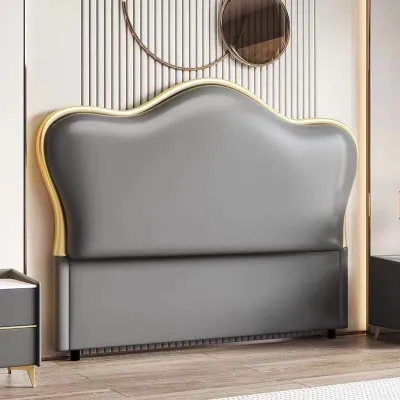
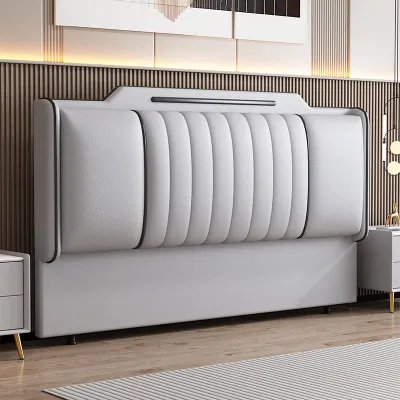
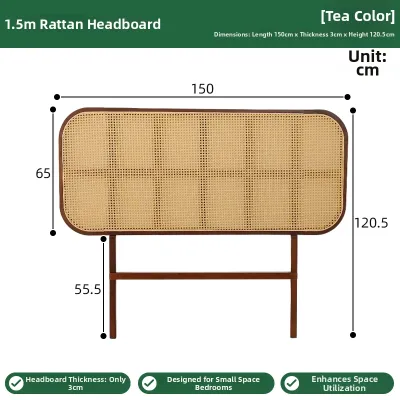
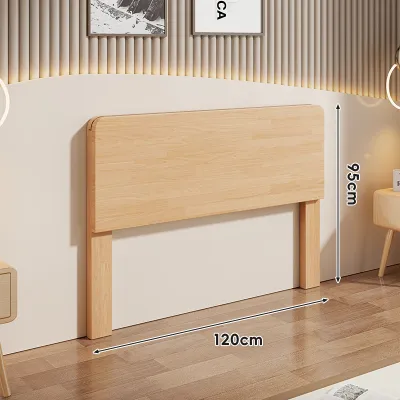
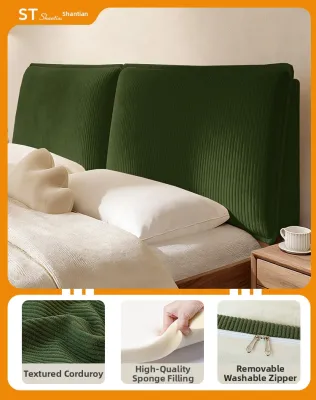
Prices are valid at publication and may change. Please refer to the product page for the latest price.
Walkway Clearance and Wardrobe Access The most common mistake when purchasing a bed headboard is overlooking how much it extends the overall length of your bed assembly. A standard Singapore Queen-size mattress is 190 cm long, and a typical bed frame adds a few centimeters to that length. In a standard BTO common bedroom, which often measures around 9 to 11 square meters, the space between the foot of the bed and the opposite wall or wardrobe is incredibly tight. If you select a thick, heavily padded headboard that is 20 cm deep, you reduce your remaining walkway space significantly. To ensure you can walk comfortably, open swing-out wardrobe doors, and pull out under-bed drawers, you should maintain a minimum walkway clearance of 60 to 70 cm. Always check the manufacturer’s specification sheet for the exact finished depth of the headboard and add this to your mattress length before finalizing your purchase.
Wall Obstructions and Electrical Outlets HDB bedrooms are rarely blank canvases. They are filled with essential utility fixtures that dictate where your bed can realistically sit. Air-conditioner trunking often runs horizontally or vertically along bedroom walls, which can prevent a tall headboard from resting flush against the wall. Furthermore, light switches, power sockets, and fiber-optic data points are usually installed at a standard height of 45 cm to 100 cm from the floor. If a ready-made headboard covers these sockets, you lose access to your charging ports, or you are forced to pull the entire bed forward, creating an unsightly and unstable gap behind the headboard. Window sills also present a height barrier; a headboard that is too tall may block natural light or prevent you from opening your windows fully.
Wall Structural Integrity and Drilling Restrictions How your headboard is supported is a major safety and practical consideration. HDB flats consist of two main wall types: structural concrete walls (including shear walls and household shelter walls) and non-structural partition walls (such as drywall or lightweight concrete blocks). Structural walls are incredibly dense and require a rotary hammer drill, masonry drill bits, and heavy-duty expansion anchors to mount a headboard securely. Non-structural partition walls, on the other hand, have much lower load-bearing capacities. Mounting a heavy, solid wood or thickly upholstered headboard to a drywall partition without locating the internal metal studs or using specialized hollow-wall anchors can lead to structural failure and wall damage. If you are renting your flat or want to avoid the hassle of drilling, you should focus on brands that offer bed-frame-attached or completely freestanding headboards.
Delivery Access and Lift Dimensions Another critical logistical constraint is getting the headboard into your flat. HDB passenger lifts have strict height, width, and weight capacities. While a standard Queen or King mattress can often be bent slightly or fits easily, a massive, single-panel wooden or upholstered headboard cannot. Before ordering a large, wide, or non-demountable headboard, you must measure your HDB lift door opening and interior cab depth. If the item cannot fit into the lift, furniture delivery teams may have to carry it up the stairwell, which often incurs manual handling fees per flight of stairs, or they may refuse delivery altogether if the stairwell turnings are too narrow.
Comparing Headboard Brands and Retail Options in Singapore
The Singapore furniture market offers a diverse range of headboard solutions categorized into three primary types: custom/modular, ready-made retail, and premium freestanding. Understanding the strengths, limitations, and specific HDB suitability of each category will help you narrow down your options.

Custom and Modular Solutions for Tricky Layouts
For bedrooms with non-standard dimensions or awkward wall obstructions, custom carpentry and modular headboards are the most versatile option. Local carpentry workshops, interior design firms, and specialized modular upholstery brands allow you to design a headboard from scratch, tailored to your exact room measurements.
The primary benefit of a custom solution is its ability to integrate seamlessly with your room’s existing infrastructure. Carpenters can build custom cutouts directly into a wooden or fabric-wrapped panel, allowing your light switches and power sockets to remain fully accessible and flush with the headboard surface. If you have air-con trunking running down the corner of your wall, a custom headboard can be notched out to fit perfectly around the pipes. Additionally, you can choose a wall-to-wall headboard panel that is ultra-thin (often less than 5 cm deep), which creates a luxurious hotel-like aesthetic without sacrificing valuable floor space.
However, custom solutions come with clear trade-offs that you must consider:
- Longer Lead Times: Unlike off-the-shelf options, custom headboards typically require three to six weeks for fabrication and installation.
- Higher Financial Investment: Custom work involves personalized labor, detailed site measurements, and bespoke materials, making it significantly more expensive than ready-made alternatives.
- Permanence: Once a custom headboard is anchored to your wall or integrated with built-in carpentry, it cannot be easily moved or reconfigured if you decide to change your room layout in the future.
- Material Durability Checks: When opting for custom fabric or leather upholstery, check the manufacturer's care instructions and ensure the material is suited for Singapore's humid climate. Fabrics should ideally be treated with anti-stain and anti-mould coatings, while synthetic leathers must be verified for hydrolysis resistance to prevent premature peeling in non-air-conditioned rooms.
Ready-Made and Space-Saving Retail Brands
If you have a standard HDB bedroom layout and want a straightforward, cost-effective solution, ready-made retail brands are highly practical. Brands like IKEA, FortyTwo, and various local online furniture retailers offer a wide selection of mass-produced headboards designed to fit standard Singapore bed sizes (Single, Super Single, Queen, and King).
These brands specialize in space-saving designs that are ideal for compact BTO common rooms. Many of their headboards feature ultra-slim profiles—often measuring between 3 cm and 8 cm in depth—which minimizes the impact on your walkway clearance. To avoid the need for wall drilling, many ready-made headboards are engineered to bolt directly onto compatible bed frames using pre-drilled brackets. This makes them incredibly stable and easy to assemble or disassemble, which is a major advantage for tenants or those who like to rearrange their furniture. Some models even feature built-in storage, such as narrow side bookshelves or slide-out compartments, which can eliminate the need for bedside tables entirely in narrow rooms.
Before purchasing a ready-made option, keep these key verification points in mind:
- Fixed Dimensions: Ready-made headboards cannot be modified. You must carefully measure the height of your wall sockets to ensure the headboard will not block them.
- Frame Compatibility: Not all headboards are universally compatible with every bed frame. If you are buying a headboard from one brand and a bed frame from another, you must verify that the mounting bracket heights and bolt patterns align, or be prepared to purchase separate adapter brackets.
- Material and Joint Stability: Lower-priced ready-made headboards often utilize particleboard or medium-density fibreboard (MDF) wrapped in paper foil or thin veneer. Check that the joints are reinforced with sturdy metal brackets and that the edges are well-sealed against moisture, as high humidity can cause unsealed MDF to swell and warp over time.
- Assembly Conditions: Many ready-made headboards require self-assembly. If you are assembling it yourself, ensure you have the proper tools and a flat surface to work on. Check the manufacturer's instructions to see if two people are required for safe assembly. If the instructions conflict with your existing bed frame's setup, do not force the connection; consult a professional installer or the manufacturer to avoid voiding your warranty.
Premium and Freestanding Designer Brands
For homeowners looking to create a luxurious, design-forward master bedroom, premium local and international showrooms—such as Castlery, Scanteak, or high-end mattress boutiques like King Koil and Tempur—offer exceptional freestanding and floor-standing headboards.
The standout feature of freestanding headboards from premium brands is their ease of installation. These headboards are designed to stand firmly on the floor on their own legs or base. They do not require mounting brackets, wall drilling, or complex attachment kits; instead, they are held securely in place simply by the weight of your bed frame and mattress pushing them against the wall. This makes them an excellent, damage-free choice for high-end BTO renovations or premium rental properties. Furthermore, these brands typically use superior materials, such as solid teak, oak, or high-density resilient foam upholstered in premium linen or top-grain leather, resulting in excellent structural stability and a refined finish.
However, premium freestanding headboards present specific challenges in an HDB context:
- Significant Depth Profile: Designer headboards, especially those with deep button tufting, wingback sides, or thick wooden frames, are often quite deep—ranging from 15 cm to over 30 cm in thickness. In a compact HDB master bedroom, this extra depth can severely restrict the walkway at the foot of the bed or block sliding wardrobe doors.
- Weight and Stability: Because these headboards are heavy and rely on gravity and compression, they must be placed on a completely flat, level floor. If your HDB floor tiles have slight unevenness or if your skirting boards push the bottom of the headboard away from the wall, the headboard may wobble or lean forward.
- Access and Assembly: Always confirm that the delivery team can maneuver the heavy, solid-frame headboard through your flat's front door, narrow corridors, and bedroom entryway. Check the assembly conditions and ensure the brand's delivery service includes professional on-site setup and leveling.
- Solid Wood and Leather Care: Solid wood headboards from premium brands like Scanteak require periodic maintenance, such as applying wood oil or wax, to maintain their finish and prevent the wood from drying out or cracking in air-conditioned rooms. For premium leather headboards from brands like Castlery, check the care label carefully. Avoid placing the bed in direct sunlight from HDB windows, as UV rays can fade and dry out the leather, causing it to crack over time. Use a specialized leather conditioner every six months to preserve its suppleness.
Specification and Installation Comparison Matrix
To help you quickly compare the practical implications of these headboard types for your HDB flat, refer to the comparison matrix below.
| Solution Type | Typical Depth Profile | Installation Method | Best HDB Scenario | Key Verification Points |
|---|---|---|---|---|
| Custom / Modular | Ultra-Slim to Custom (3 cm – 12 cm) | Wall-mounted or integrated into built-in carpentry | Irregular walls with air-con trunking, window sills, or active power sockets | Scribe lines around trunking, socket cutout positions, wall drilling safety |
| Ready-Made Retail | Slim to Standard (3 cm – 10 cm) | Frame-attached or simple wall-mount brackets | Standard common bedrooms, budget-conscious setups, rental flats | Bolt hole compatibility with bed frame, socket height clearance |
| Premium Freestanding | Thick / Deep (15 cm – 30 cm) | Freestanding (compressed between bed frame and wall) | Spacious master bedrooms, premium renovations, damage-free setups | Total bed length vs. walkway clearance, floor leveling, lift access dimensions |
Decision Framework: Finalizing Your Headboard Purchase
To make your final decision, follow this structured framework based on your specific HDB bedroom reality.
Choose Custom / Modular if:
- Your bed must be positioned against a wall that has active power sockets, light switches, or air-conditioning trunking that you cannot block.
- You want a seamless, wall-to-wall upholstered or wooden panel look that maximizes vertical space while remaining ultra-thin.
- You are undergoing a complete home renovation and have the budget and time (3 to 6 weeks) to accommodate custom fabrication.
Choose Ready-Made Retail if:
- Your bedroom wall is completely clear of obstructions where the headboard will sit.
- Every centimeter of floor space counts, and you require a slim, frame-attached profile (under 10 cm deep) to preserve walkway clearance.
- You need a cost-effective, quick-delivery solution that can be easily assembled, disassembled, or replaced if you move.
Choose Freestanding Premium if:
- You are furnishing a spacious HDB master bedroom where a deep headboard (15 cm to 30 cm) will not obstruct walkways or wardrobe doors.
- You are renting or want to avoid drilling into structural concrete walls entirely.
- You prioritize high-quality solid woods or luxurious upholstered finishes and want a statement furniture piece that can move with you to your next home.
Verify First if You Plan to Wall-Mount: Before purchasing any wall-mounted headboard, you must verify your wall type. If the wall is a structural concrete shear wall, ensure your installer uses a rotary hammer drill and appropriate concrete expansion anchors. If the wall is a non-structural drywall partition, do not hang a heavy headboard directly on the plasterboard; instead, verify that the installer can locate the internal metal studs or use heavy-duty hollow-wall toggle bolts. If you are unsure of your wall’s load capacity, consult a qualified professional handyman or opt for a frame-attached or freestanding model.
The Final Measurement Check Before clicking “buy” or signing a carpentry contract, perform this final calculation:
- Measure the total length of your bedroom wall (from the head of the bed to the opposite wall or wardrobe face).
- Subtract the depth of your wardrobe (standard wardrobes are 60 cm deep).
- Subtract your mattress length (standard Singapore Queen/King is 190 cm).
- Subtract a mandatory 60 cm for a comfortable walking clearance.
- The remaining figure is the maximum allowable depth for your headboard and bed frame assembly. If the remaining space is less than 10 cm, prioritize an ultra-slim, frame-attached, or custom-built headboard.
Frequently Asked Questions (FAQ)
Can I mount a heavy headboard on HDB non-structural partition walls?
Yes, but you must take specific structural precautions. Non-structural partition walls in HDB flats, such as drywall or lightweight concrete blocks, have significantly lower load-bearing capacities than solid concrete walls. You should never hang a heavy solid wood or thickly padded headboard directly onto plasterboard using standard plastic wall plugs. Instead, check the headboard’s exact weight and ensure your installer uses heavy-duty hollow-wall anchors, toggle bolts, or mounts the brackets directly into the internal metal wall studs. If the headboard is exceptionally heavy, it is highly recommended to choose a bed-frame-attached or freestanding design to avoid the risk of wall damage or structural failure.
How do I account for skirting boards when measuring for a headboard?
HDB floor skirting boards typically protrude 1 to 2 cm from the wall. If you choose a freestanding or wall-mounted headboard that does not have a skirting cutout at the bottom, the skirting board will prevent the headboard from sitting flush against the wall. This creates a gap at the top, which can cause the headboard to wobble when you lean against it, and it will push your entire bed frame 2 cm further into the room, reducing your walkway clearance. When measuring, check if the headboard design features a recessed base or skirting cutout. If it does not, you must factor this extra 2 cm gap into your overall bed length and walkway calculations.
Community discussion
Share your experience or ask a question. Comments are reviewed before publication.