
Finding the right single foldable mattress in Singapore requires balancing space-saving convenience with proper physical support. Whether you are accommodating overnight guests in a compact HDB spare room, setting up a temporary bed in a study, or looking for a highly portable sleeping solution, firmness is the most critical factor for sleep quality. Because foldable mattresses are thinner than standard mattresses, choosing the wrong firmness can lead to bottoming out against the hard floor. Understanding how different brands structure their firmness levels and materials allows you to make an informed decision that protects your spine and ensures long-term comfort.
Decoding Firmness Labels and Mattress Materials
When browsing local bedding shops or online marketplaces in Singapore, you will encounter various firmness ratings, typically presented on a scale from 1 to 10. On this scale, a rating of 1 represents an incredibly soft, cloud-like surface, while a 10 indicates a surface as rigid as a wooden floor. However, these scales are highly subjective and vary significantly between manufacturers. A “medium-firm” label from one brand might feel like a “firm” from another, making it essential to look past marketing buzzwords and examine the underlying material specifications.
The core material of a single foldable mattress determines both its baseline support and its resistance to sagging over time. Most budget-friendly options utilize standard polyurethane (PU) foam, which is lightweight but tends to soften rapidly under regular use. For daily use or heavier sleepers, high-density foam or memory foam comfort layers are far more reliable. High-density foam provides a resilient structure that distributes body weight evenly, preventing the mattress from flattening completely under pressure.
Products mentioned in this guide
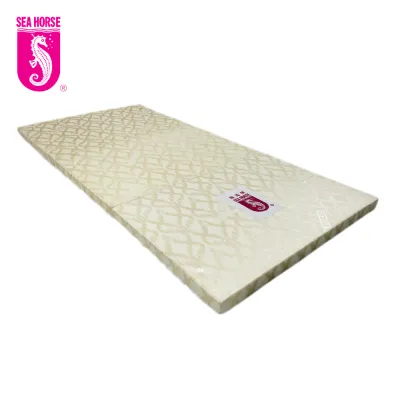
![[1-2 day delivery] Foldable Foam Mattress 3-Fold Mattress](https://img.lazcdn.com/g/ff/kf/Se38f308a460b4ba3aef73a3da6703c621.jpg_400x400q80.jpg_.webp)
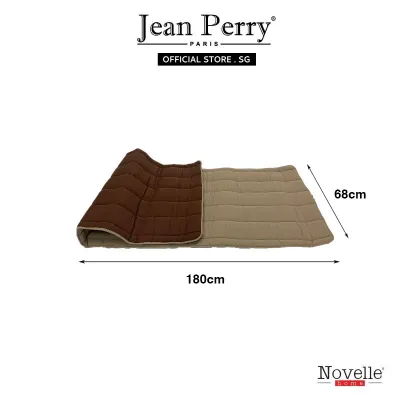
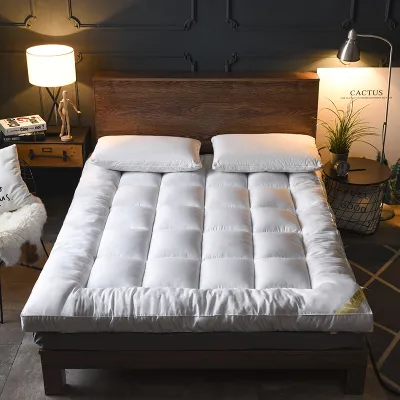
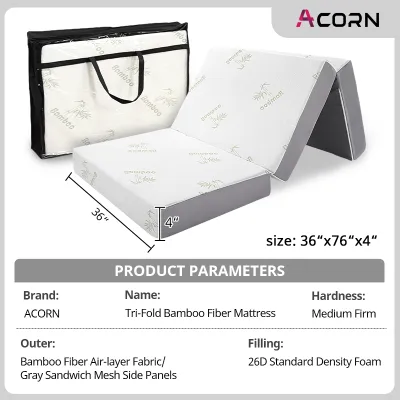
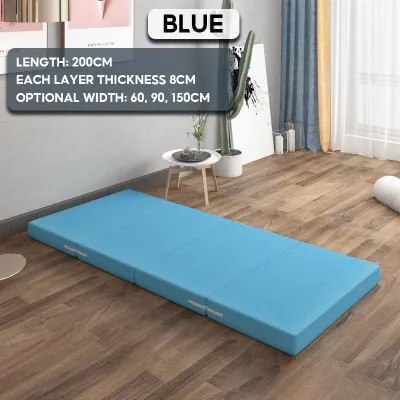
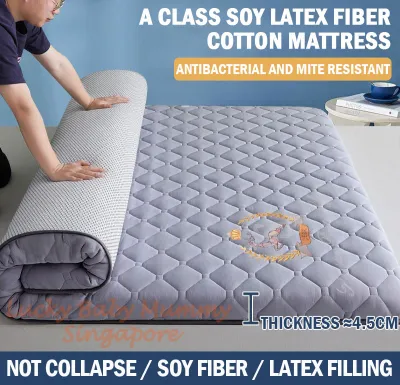
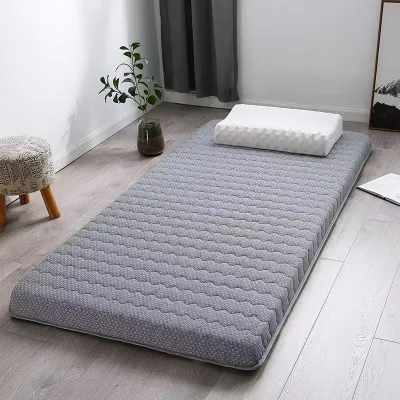
Prices are valid at publication and may change. Please refer to the product page for the latest price.
To make an accurate comparison, always check the product tags, technical specification sheets, or manufacturer websites for density ratings, often measured in kilograms per cubic meter (kg/m³). A higher density rating generally correlates with better durability and consistent firmness retention. If a brand does not disclose its foam density or construction layers, treat its firmness claims with caution and prioritize brands that offer transparent material breakdowns.
Matching Firmness Levels to Your Sleeping Position
Your primary sleeping posture dictates how your body weight is distributed across the mattress surface, which in turn determines the level of firmness you need. Proper spinal alignment is only achieved when the mattress supports the natural curves of your body without forcing your joints into awkward angles.

Side sleepers require a mattress that offers excellent contouring and pressure relief, particularly around the shoulders and hips. On a surface that is too firm, these protruding areas bear the brunt of the body’s weight, leading to restricted blood circulation, numbness, and morning aches. A medium-soft to medium mattress allows the shoulders and hips to sink just enough to keep the spine straight.
Back sleepers need a balanced surface that supports the lower back while allowing the hips to settle slightly. If the mattress is too soft, the pelvis sinks too deeply, arching the spine unnaturally. Conversely, an overly firm mattress leaves a gap under the lumbar spine, forcing the lower back muscles to remain tense throughout the night. A medium-firm mattress typically provides the ideal compromise for back sleepers.
Stomach sleepers require the firmest support of all. Sleeping on the stomach naturally coaxes the lower back into an exaggerated arch. If the mattress is soft, the midsection sinks deeply into the foam, exacerbating this arch and causing severe lower back strain. A firm to extra-firm single foldable mattress keeps the hips level with the shoulders, maintaining a neutral spinal alignment.
| Sleep Position | Recommended Firmness Range | Key Support Needs |
|---|---|---|
| Side Sleeper | Medium-Soft to Medium (4 to 6 out of 10) | Deep contouring for shoulders and hips to relieve pressure points. |
| Back Sleeper | Medium-Firm (6 to 7 out of 10) | Balanced support to maintain natural lumbar curvature and prevent pelvic sinkage. |
| Stomach Sleeper | Firm to Extra-Firm (7 to 9 out of 10) | High surface resistance to keep the midsection level and prevent lower back arching. |
Adjusting Firmness Choices for Body Weight
The way a mattress feels is directly influenced by the amount of force applied to its surface. Consequently, your body weight plays a massive role in how you perceive a foldable mattress’s firmness. A mattress rated as “medium-firm” by a manufacturer may feel incredibly rigid to a lighter individual, while a heavier sleeper might find it far too soft.
Lighter individuals, typically weighing under 60 kg, do not exert enough downward force to compress high-density foam layers. For these sleepers, a mattress can feel significantly firmer than advertised. If you fall into this category, opting for a slightly softer model or one with a thicker, plush comfort layer ensures you still receive adequate pressure relief and contouring.
Heavier individuals, particularly those weighing over 80 kg, require substantial structural support to prevent bottoming out. On a thin foldable mattress, excessive sinkage means your body will quickly press through the foam layers and make contact with the hard floor beneath. To avoid this, heavier sleepers should look for mattresses with a minimum thickness of 10 to 15 centimeters, utilizing high-density base foams.
Additionally, it is crucial to check the manufacturer’s specified weight capacity labels before purchasing. Pay close attention to how the folding hinges are constructed; under heavier loads, the joints of a tri-fold or bi-fold mattress can spread apart, creating uncomfortable gaps. Ensuring the mattress is rated for your weight category protects both your sleep quality and the lifespan of the product.
Comparing Brand Specifications and Purchase Terms
When comparing different single foldable mattress brands in Singapore, look closely at the internal layer construction. A high-quality foldable mattress is rarely made of a single block of uniform foam. Instead, it should feature a dual-layer or multi-layer design, combining a soft comfort layer on top with a dense, supportive base layer underneath. This configuration provides the immediate pressure relief of a softer bed while maintaining the structural integrity needed to keep you off the floor.
Because you cannot fully test a mattress in a few minutes at a showroom, purchase terms are just as important as physical specifications. Look for brands that offer risk-free sleep trials, allowing you to test the mattress in your own home for a set number of nights. Be sure to read the fine print: some brands charge return shipping or restocking fees, while others only offer store credit instead of a full refund.
Warranty terms also require careful scrutiny, especially regarding foldable designs. Standard mattress warranties often exclude damage to folding hinges, fabric covers, or zippers. Ensure the warranty explicitly covers foam sagging (usually defined as a visible indentation of 2 to 3 centimeters or more) and joint degradation under normal use.
Finally, spend time reading customer reviews, filtering specifically for long-term feedback. Look for mentions of premature sagging, tearing along the hinge seams, or persistent chemical odors (off-gassing) after unboxing. A mattress that feels great during the first week but loses its firmness within six months is a poor investment.
Checking Dimensions, Storage, and Folding Design
A single foldable mattress must fit seamlessly into your living space, both when in use and when stored away. Standard single mattress dimensions in Singapore typically measure 91 centimeters wide by 190 centimeters long, but foldable models can vary slightly. Always measure your available floor space, bed frame, or daybed before purchasing to ensure a proper fit.
Storage is another critical consideration, particularly in compact Singaporean apartments where closet space is at a premium. Check the folded dimensions of the mattress to confirm it can fit inside your wardrobe, under your existing bed frame, or in the trunk of your car if you plan to transport it. A mattress that is too bulky to store easily defeats the primary purpose of a foldable design.
The folding mechanism itself—usually a bi-fold (two panels) or tri-fold (three panels) design—impacts both portability and comfort. Tri-fold mattresses are generally easier to store because they fold into a more compact, square shape, but they feature two crease lines. Bi-fold models have only one crease but remain longer when folded. Evaluate whether you can feel these crease lines when lying down; high-quality brands design their covers and foam joints to minimize the gap, ensuring a smooth, uninterrupted sleeping surface.
Decision Framework: Which Firmness Should You Choose?
To finalize your decision, synthesize your sleeping position, body weight, and space constraints into a clear set of actionable rules.
First, choose a softer or medium-firm option if you are primarily a side sleeper or a lighter individual. This ensures your shoulders and hips are cushioned, preventing morning stiffness and joint pain. Look for models with a dedicated memory foam or latex comfort layer on top of the support foam.
Second, opt for a firm or extra-firm model if you are a stomach sleeper, a back sleeper who prefers robust support, or a heavier individual. This prevents your midsection from sinking, keeping your spine aligned and ensuring you do not bottom out against the floor.
Third, be prepared to look elsewhere if the folding hinges of a particular model create an uncomfortable gap or ridge. If you can feel the floor or the hinge joints through the mattress during a trial, the design is unsuitable for your body type, regardless of how high the foam quality is.
Lastly, always prioritize brands that offer a clear, risk-free sleep trial. Testing the mattress in your own home, under your actual sleeping conditions, is the only foolproof way to verify if the firmness level and folding design truly support a restful night’s sleep.

Community discussion
Share your experience or ask a question. Comments are reviewed before publication.