
Finding the right shoes cabinet with seat for a Singapore home requires balancing structural durability, actual shoe volume, and seating ergonomics rather than relying on a single brand claim. Because entryway layouts in local apartments—such as HDB flats and condominiums—vary significantly, selecting the ideal unit depends on matching the cabinet’s physical specifications to your household’s daily routines and spatial constraints. A well-chosen cabinet not only keeps your entryway organized but also provides a safe, comfortable spot to put on footwear before heading out. This guide outlines the core dimensions, material differences, and verification steps you need to make an informed comparison.
Evaluating Build Quality and Structural Stability
The structural integrity of a shoes cabinet with seat is paramount because the unit must safely support the weight of an adult while maintaining its storage function. When comparing different models, start by examining the frame materials specified by the manufacturer. Solid wood frames offer excellent natural strength and joint stability, but they require careful inspection of the finish to ensure resistance to moisture. Engineered wood, such as Medium-Density Fibreboard (MDF) or particleboard, is highly common and budget-friendly, but its durability depends heavily on the thickness of the panels and the quality of the protective laminate or veneer. Metal frames, often combined with wooden shelving, provide high weight capacities and a modern industrial look, provided the metal is powder-coated to prevent rust in Singapore’s humid climate.
Beyond the primary materials, the quality of the joinery and hardware determines how well the cabinet withstands daily use. Look for reinforced corners, heavy-duty metal hinges, and smooth drawer slides. Soft-close hinges are particularly beneficial for preventing doors from slamming, which can loosen joints over time. If the cabinet features pull-out drawers or flip-down compartments, check if the tracks and pivots are made of durable metal rather than thin plastic, as plastic components tend to degrade and crack under the weight of heavy footwear.
Products mentioned in this guide
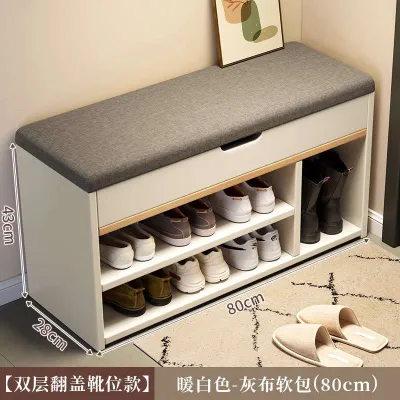
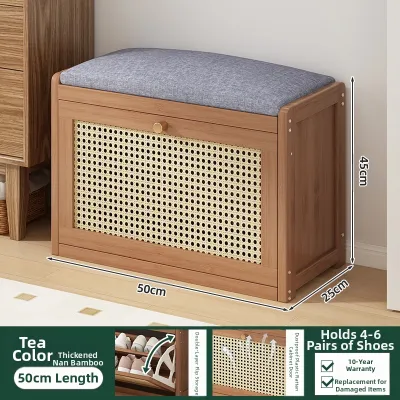
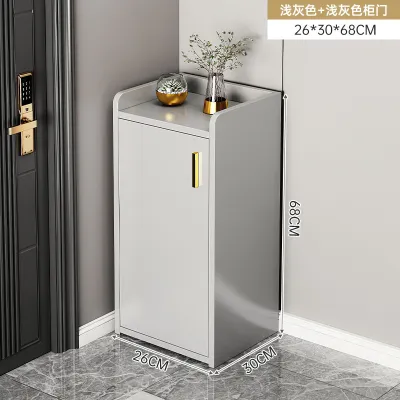
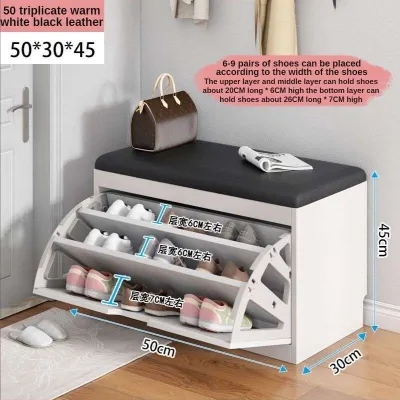
Prices are valid at publication and may change. Please refer to the product page for the latest price.
Safety is another critical factor, especially for households with children, pets, or older adults. Always verify the manufacturer’s stated maximum load capacity for the seating surface. A reliable bench should comfortably support at least 100 kg to 150 kg, but you must confirm this specification on the product label rather than assuming capacity based on appearance. Additionally, check whether the cabinet includes an anti-tip kit. Tall or narrow cabinets with built-in seats can become front-heavy when doors are opened or when someone sits down, making wall anchoring an essential safety measure to prevent accidental tipping.
Assessing Storage Capacity and Shoe Organization
A common frustration with entryway furniture is purchasing a unit only to find that your footwear does not fit properly. To avoid this, you must evaluate the internal shelf dimensions rather than relying solely on the manufacturer’s advertised pair capacity. Measure the depth of the shelves and compare it to your longest pair of shoes. Standard men’s shoes often require an internal depth of at least 33 to 35 cm to sit flat without bending the heels. If you wear larger sizes, look for cabinets specifically designed with deeper compartments or adjustable shelves that can be tilted or removed to accommodate boots, high heels, and bulky sneakers.

Calculating your actual storage needs involves counting the shoes you intend to keep at the entryway and comparing that number against the cabinet’s layout. Keep in mind that manufacturers often calculate shoe capacity based on standard flat shoes or children’s sizes. Bulky running shoes, high-top sneakers, and platform heels take up significantly more physical space, which can reduce the real-world capacity of the cabinet by up to 30 percent. If you have a large household, a multi-tier cabinet with adjustable shelving offers the flexibility needed to maximize every centimetre of vertical space.
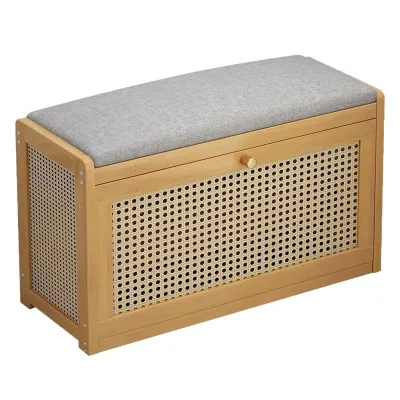
In Singapore’s tropical climate, ventilation is crucial for maintaining both your footwear and the cabinet itself. Enclosed cabinets without proper airflow can trap moisture and sweat, leading to mould growth, unpleasant odours, and the deterioration of shoe materials like leather and synthetic fabrics. When comparing cabinets, look for designs that incorporate louvered doors, open-back panels, or ventilation holes. If you prefer a fully closed aesthetic, ensure you are prepared to use moisture-absorbing sachets or charcoal bags inside the compartments to manage humidity levels.
Seating Comfort and Entryway Ergonomics
The seating component of a shoes cabinet with seat should offer genuine comfort and support during your daily transitions. When evaluating the cushion, check the manufacturer’s specifications for the type of padding used. High-density foam is highly recommended because it retains its shape and support over years of use, whereas low-density standard padding can flatten quickly, leaving you sitting directly on the hard wooden or metal frame. The thickness of the cushion also matters; a thickness of at least 3 to 5 cm is generally ideal for providing adequate cushioning without making the seat excessively high.
Upholstery materials play a major role in both comfort and maintenance. Fabric covers offer a soft, cozy feel but can be difficult to clean if stained by wet umbrellas or dirty shoes. If you choose fabric, look for removable, machine-washable covers or treat them with a fabric protector. Faux leather (such as PU or PVC) is highly popular for entryways because it can be easily wiped clean with a damp cloth, making it highly practical for busy households. However, ensure the faux leather is of high quality to prevent peeling in humid conditions. Velvet covers add a touch of luxury but require regular vacuuming to prevent dust buildup.
Ergonomic seating height is another essential consideration. The standard height for comfortable seating ranges between 40 and 48 cm from the floor to the top of the cushion. A seat that is too low can be difficult to stand up from, especially for older adults or individuals with knee joint issues, while a seat that is too high makes it awkward to bend down and tie shoelaces. Measure the total height of the cabinet, including the cushion, to ensure it aligns with your household’s physical needs.
Space Planning and Installation Checks
Before finalizing your purchase, you must carefully plan the placement of the cabinet to ensure it fits your entryway without creating an obstruction. Measure the available floor space, taking into account the footprint of the cabinet when the doors or drawers are fully opened. In narrow HDB corridors or compact condo foyers, a cabinet door that swings outward can block the walkway entirely. For tight spaces, consider sliding doors or flip-drawer designs that open vertically, but always verify that you have enough clearance to sit down comfortably and move your feet without bumping into opposite walls or furniture.
Delivery access is an easily overlooked detail that can cause significant logistical issues. Verify the packaged dimensions of the cabinet before ordering, especially if you live in a high-rise building. Ensure the box can fit through your building’s elevator doors, up the stairwells if necessary, and through your main entryway door. If the cabinet arrives fully assembled, these measurements are even more critical.
Finally, assess the installation requirements and the condition of your entryway floor. Many shoe cabinets require assembly, so check if the retailer offers professional installation or if you will need to assemble it yourself using basic tools. Ensure your floor is level; an uneven floor can cause the cabinet to wobble, putting extra stress on the joints and making the seating surface unstable. If your floor is slightly uneven, look for cabinets with adjustable leveling feet. If the cabinet is tall or top-heavy, plan to anchor it securely to the wall, verifying first what type of wall plugs are suitable for your specific wall material (such as concrete or drywall).
Decision Framework: Which Type Fits Your Entryway?
To choose the right shoes cabinet with seat, match your household’s specific spatial constraints and storage habits to the following structural types:
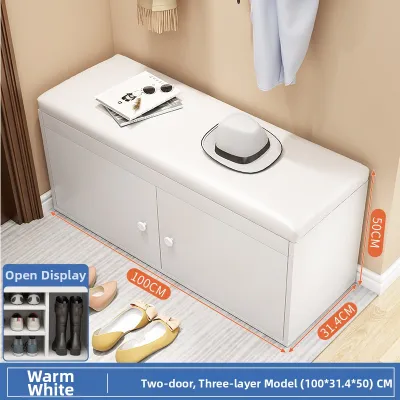
If you have a large family and a relatively wide entryway, choose a tall, multi-tier engineered wood cabinet with an integrated side bench. This configuration maximizes shoe capacity by utilizing vertical space while still providing a dedicated, comfortable seating area on one side. Ensure the engineered wood has a high-quality, moisture-resistant laminate finish to withstand daily wear.
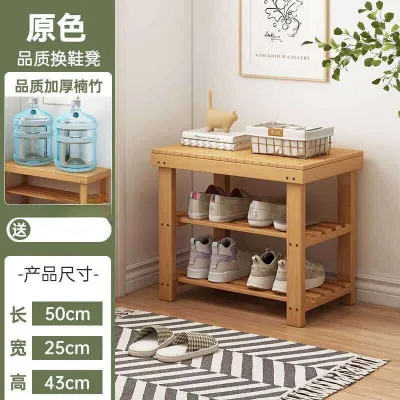
If you have limited floor space and prioritize quick, convenient access to your daily footwear, choose a compact, solid wood or metal-frame bench with open shelving underneath. The open design allows for excellent ventilation, prevents odour buildup, and makes it easy to slide shoes in and out without opening doors. This style is ideal for keeping active footwear organized while maintaining a light, airy look in a small foyer.
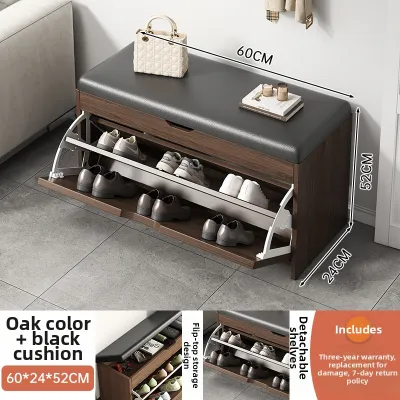
If your entryway is exceptionally narrow, choose a slim-profile, flip-drawer cabinet with a padded top. The flip-down compartments store shoes vertically, significantly reducing the cabinet’s depth. However, before purchasing, verify the internal depth of the flip drawers to ensure they can accommodate larger shoe sizes without crushing the tops of the shoes.
Regardless of the style you select, always verify whether the cabinet requires wall anchoring or specific floor leveling before finalizing your purchase. Taking these precautions ensures your new furniture remains safe, stable, and functional for years to come.
Frequently Asked Questions (FAQ)
How many pairs of shoes can a standard shoe cabinet with a seat actually hold? (H3)
The actual capacity of a shoe cabinet with a seat depends heavily on the style of the cabinet and the types of shoes you own. A standard compact bench with two shelves typically holds between 6 to 10 pairs of flat shoes or low-profile sneakers. Tall units with integrated seating can hold 15 to 24 pairs. However, bulky footwear like high-top sneakers, boots, or wide running shoes will take up more space, reducing the overall capacity. To ensure a proper fit, measure the width and height of your largest shoes and compare them to the internal shelf dimensions provided by the manufacturer.
Is it safe for an adult to sit on any shoe cabinet? (H3)
No, it is not safe to sit on any shoe cabinet unless the manufacturer explicitly states that the unit is designed and tested for seating. Standard shoe cabinets without integrated seats often use thinner top panels and lightweight joinery that cannot support the concentrated weight of an adult, leading to structural failure or tipping. Always check the manufacturer’s product specifications for the maximum weight limit of the seating surface. Look for cabinets constructed with reinforced support beams, sturdy metal or solid wood frames, and secure joinery to ensure safe daily use.

Community discussion
Share your experience or ask a question. Comments are reviewed before publication.