
Quick Answer: How to Choose the Right Seahorse Single Sofa Bed
Selecting the right Seahorse single sofa bed requires balancing how often you plan to sleep on it against the physical limits of your living space. If you need an everyday bed, your priority should be mattress density and support. For occasional guest use, a swift conversion mechanism and a compact footprint take precedence.
Fabric selection must also match your household’s humidity levels and maintenance habits to ensure long-term durability. By evaluating these three core dimensions—comfort, mechanism, and fabric quality—you can identify the model that best fits your home without relying on guesswork.
Evaluating Sleeping and Seating Comfort
Mattress and Foam Type
Seahorse is widely recognized for its firm foam products. When evaluating a single sofa bed, inspect the product specifications or law labels for foam density. High-density polyurethane foam offers firm, resilient support that resists sagging, making it highly suitable for daily sleeping. Pocket spring inserts, if available, provide localized contouring but add weight to the frame. Standard low-density foam may feel soft initially but can compress permanently under daily use, leading to discomfort over time.
Products mentioned in this guide
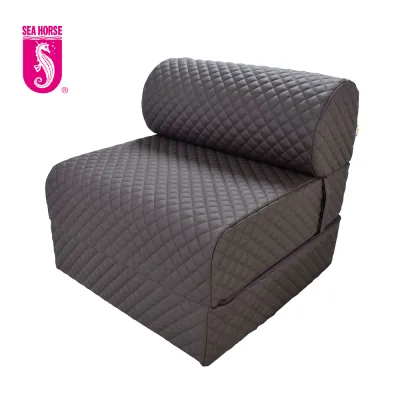
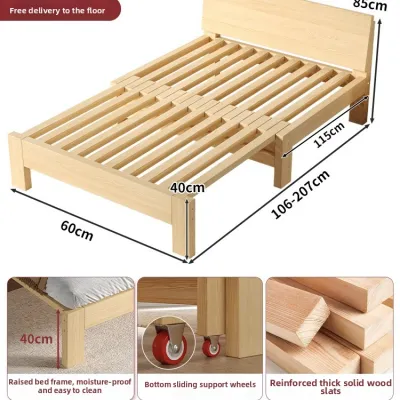
Prices are valid at publication and may change. Please refer to the product page for the latest price.

Support and Sagging
Look beneath the cushions to assess the structural foundation. A robust support system is vital for preventing premature wear. Wooden slats offer a traditional, slightly flexible base that enhances mattress breathability in warm climates. Metal mesh or solid platform bases provide rigid support but require a sufficiently thick foam layer to prevent you from feeling the frame. Check the joints and frame connections for any play or wobbling when pressure is applied to ensure long-term seating and sleeping stability.
Seating Depth and Height
A sofa bed must function comfortably as a chair during the day. Measure the seating height from the floor to the top of the cushion; a standard height of 40 cm to 45 cm allows your feet to rest flat on the floor. The seating depth should support your thighs without forcing you to slouch. If the depth is too deep for a single sofa, you may need to add lumbar cushions to maintain proper ergonomic posture.
Comparing Conversion Mechanisms for Daily Use
Mechanism Types
Single sofa beds typically employ three main mechanisms, each requiring a different level of user effort. Pull-out designs slide forward from the base, often revealing a multi-fold mattress; they offer a traditional bed height but require more physical effort to deploy. Click-clack mechanisms operate by folding the backrest forward until it clicks, then laying it flat; this is highly reliable and quick but often leaves a split down the center of the sleeping surface. Futon-style fold-down models simply unfold directly onto the floor, which is incredibly simple but places the sleeping surface at floor level.
Smoothness and Hardware
Test the mechanism in person if possible, or check user manuals for hardware specifications. Look for heavy-duty steel frames with smooth powder coating. Hinges should operate quietly without grinding or catching. Inspect the locking pins and spring-loaded joints; any resistance or uneven alignment during conversion suggests potential wear points that could fail under daily use.
Floor Clearance and Footprint
A single sofa bed is highly favored for tight spaces, but it still requires a clear path to extend. Measure the exact depth of the sofa when fully converted into a bed. Ensure there is at least 50 cm of clearance around the extended bed to allow for comfortable movement. Also, check if the mechanism requires you to pull the sofa away from the wall before converting it, as this wall clearance can become tedious if done daily.
Assessing Fabric Quality and Durability
Material Composition
Fabric covers dictate both comfort and longevity, especially in warm, humid environments. Examine the material composition tag. Polyester and synthetic blends are highly durable, resistant to stretching, and easy to spot-clean, making them practical for high-traffic living rooms. Cotton and linen blends offer superior breathability and a soft texture, but they wrinkle easily and can absorb moisture, which may lead to musty odors if the room lacks proper ventilation.
Weave and Texture
The tightness of the weave determines how well the fabric resists wear and tear. Run your hand over the surface; a tight, flat weave (such as canvas or heavy twill) is less likely to snag on zippers, buttons, or pet claws. Loose, textured weaves like chenille or bouclé feel cozy but can trap dust, pet hair, and lint, requiring more frequent vacuuming.
Cleaning and Care
Always verify the cleaning code on the care label. Look for models featuring removable, zippered covers that can be machine-washed or dry-cleaned. If the upholstery is fixed, check if the fabric has been treated with a water-resistant coating. For fixed covers, you will need to rely on specialized fabric cleaners or professional upholstery steam cleaning to manage spills and stains.
Space Planning and HDB Compatibility Checks
Dimensional Verification
In typical Singapore HDB flats, space is at a premium. Before purchasing, tape out the footprint of both the sofa mode and the fully extended bed mode on your floor. This visual check ensures the bed will not block access to wardrobes, power outlets, or bedroom doors when deployed.
Access and Delivery
Do not overlook the journey from the delivery truck to your living room. Measure your HDB lift door width, lift cabin depth, and ceiling height. If your block requires stair access, measure the width of the stairwells and the clearance at tight turns. Compare these dimensions with the packaged product dimensions provided by the manufacturer to avoid costly delivery failures.
Weight and Floor Protection
Sofa beds are significantly heavier than standard single chairs due to their internal metal or solid wood frames. Dragging or shifting a heavy unit can easily scratch vinyl, laminate, or parquet flooring. Check the weight specifications and plan to install heavy-duty felt pads or rubber cups under the legs or wheels to distribute the weight and protect your floors.
Decision Framework: Matching the Model to Your Needs
To streamline your decision, use this conditional framework to match a Seahorse single sofa bed to your specific living situation:
- Daily Sleeping Priority: Choose a pull-out mechanism model if you intend to use the unit as your primary bed. These models typically accommodate thicker, high-density foam mattresses that provide the necessary spinal support for nightly rest.
- Space-Saving & Occasional Use: Opt for a click-clack or fold-down model if the unit will primarily serve as a living room chair and only occasionally host overnight guests. These mechanisms convert in seconds and have a smaller overall footprint.
- Environmental & Household Factors: Prioritize synthetic polyester blends with tight weaves if you live in a high-humidity area, have pets, or plan to place the sofa bed in a high-use zone. This ensures easier stain removal and prevents moisture retention.
- Space Constraints: If your measured room layout does not allow for at least 50 cm of walking clearance around the fully extended bed, a single sofa bed may not be a viable option. In such cases, consider alternative space-saving furniture like a folding mattress or a daybed that fits your specific room dimensions.
Frequently Asked Questions (FAQ)
How often should I rotate or flip the sofa bed mattress to prevent sagging?
To maintain even wear and prolong the life of the foam, it is recommended to rotate the mattress end-to-end every three to six months. If the mattress is double-sided (upholstered on both sides), you should also flip it over during these intervals. Always consult the manufacturer’s care manual, as some modern multi-layered foam mattresses are designed with a specific top and bottom layer and must never be flipped.
Can I replace the fabric cover on my Seahorse single sofa bed if it gets damaged?
Whether you can replace the cover depends entirely on the model’s design. Models designed with removable, zippered slipcovers allow for easy replacement or washing. If your sofa bed features fixed upholstery, the fabric cannot be easily removed; in this case, you will need to contact a professional upholsterer to re-cover the unit or use a third-party stretch slipcover to protect or conceal the damaged area.
Community discussion
Share your experience or ask a question. Comments are reviewed before publication.