
Finding the right recliner sofa in Singapore requires looking beyond brand names and aesthetic appeal to focus on the physical components that dictate long-term comfort and structural integrity. Because individual model specifications vary widely and brand catalogs update frequently, a successful comparison relies on evaluating tangible factors: cushioning materials, mechanism design, frame construction, and spatial compatibility with local housing layouts. By understanding how these elements interact, you can objectively assess any showroom model or online listing to find a recliner that suits your body and your home.
To make an informed investment, buyers must look past marketing claims and learn how to inspect the internal and external components of a sofa. This guide provides a practical framework for evaluating comfort, assessing build quality, measuring for local space constraints, and navigating the final purchasing decision.
Key Dimensions for Evaluating Recliner Comfort
Evaluating the comfort of a recliner sofa goes far beyond the initial “sink-in” feeling when you first sit down. Long-term comfort depends on how well the cushioning supports your body over several hours and how smoothly the reclining mechanism transitions between positions.
Products mentioned in this guide
![[SG Seller] TAYLOR COWHIDE RECLINER LEATHER SOFA 3 SEETER (MANUAL/POWER RECLINER AVAILABLE)](https://img.lazcdn.com/g/p/c11663e79909996131fe58434a265c61.jpg_400x400q80.jpg_.webp)
![[SG Seller] TAYLOR COWHIDE LEATHER RECLINER SOFA 2 SEETER (MANUAL/POWER RECLINER AVAILABLE)](https://img.lazcdn.com/g/p/4f15c39aafcc546e68472b3f14e7f49e.jpg_400x400q80.jpg_.webp)
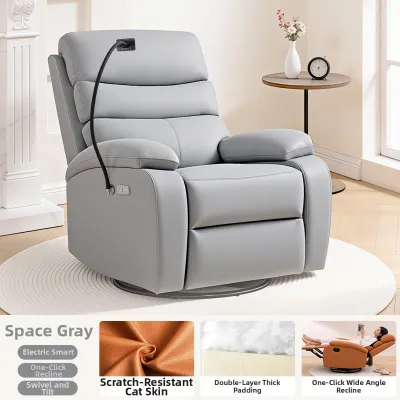
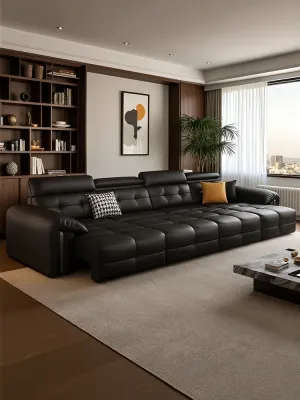
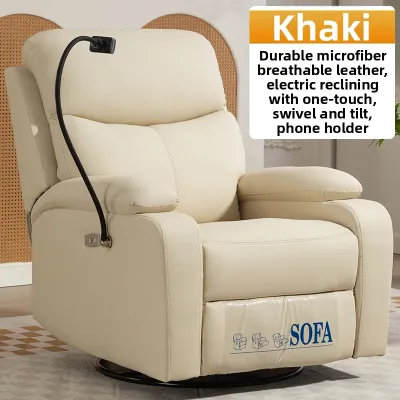
Prices are valid at publication and may change. Please refer to the product page for the latest price.
Cushioning density is the primary indicator of whether a sofa will maintain its shape or sag within a few years. High-density polyurethane foam (typically rated at 30 kg/m³ or higher) offers the best balance of support and longevity. When reviewing manufacturer specifications, look for high-density foam cores wrapped in polyester fiberfill or down feathers, which provide a soft initial feel without sacrificing structural support underneath. Some premium models incorporate pocket springs within the seat cushions, offering localized support similar to a high-quality mattress.
The recline mechanism dictates how easily you can adjust your seating position. Manual mechanisms rely on a physical lever, pull tab, or body tension to release the footrest and push the backrest down. While manual options are mechanically simple, they offer limited positioning angles—usually only upright, semi-reclined, and fully reclined. Motorized recliners use electric motors to allow infinite adjustment angles, letting you stop the recline at the exact degree of comfort you prefer. When testing motorized models, pay attention to the motor’s noise level and the smoothness of the motion; a high-quality motor should glide quietly without jerking.
Ergonomic support zones are critical for preventing back and neck strain. A well-designed recliner should provide continuous support across three key areas: the lumbar spine, the neck, and the lower legs. When fully reclined, there should be no empty gaps between your lower back and the backrest. The headrest should cradle your neck comfortably, keeping your head slightly elevated if you plan to watch television. Additionally, the footrest should support your legs without putting pressure on the back of your knees or leaving your ankles hanging unsupported.
Assessing Build Quality and Structural Durability
A recliner sofa is a complex piece of furniture with moving parts, making structural durability just as important as comfort. Assessing build quality requires inspecting the frame, the weight capacity, and the upholstery materials to ensure the sofa can withstand daily use.

The frame serves as the foundation of the entire sofa. High-quality recliners feature frames made from kiln-dried hardwood, such as birch or oak, or heavy-duty reinforced steel. Kiln-drying removes moisture from the wood, preventing it from warping, cracking, or bowing in Singapore’s humid climate. Avoid frames constructed primarily of low-grade particleboard or thin plywood, as these materials can split under the stress of reclining mechanisms. Inspect the joint construction where possible; quality frames are joined with double dowels, corner blocks, and heavy-duty screws rather than simple staples and glue.
Weight capacity limits and base stability are direct indicators of a recliner’s structural strength. Always check the manufacturer’s documentation for the maximum load capacity, which typically ranges from 110 kg to over 150 kg per seat. A sturdy recliner should have a wide, heavy metal base footprint that remains firmly planted on the floor. When you recline fully, the chair should not tip backward or wobble side-to-side. If the sofa has a swivel or rocking feature, the transition between motions should feel stable and secure.
Upholstery durability determines how well the sofa’s exterior resists wear, tear, and environmental factors. In Singapore’s tropical climate, material selection significantly impacts daily comfort. Genuine top-grain leather is highly durable and naturally breathable, but it requires regular conditioning to prevent drying and cracking. Synthetic leathers, such as polyurethane (PU) or polyvinyl chloride (PVC), are easy to wipe clean but tend to trap heat and may peel over time in high humidity. Performance fabrics, which are treated to resist stains and moisture, offer excellent breathability and durability, making them a practical choice for households with pets or young children. Always check the care labels to understand the specific maintenance and cleaning protocols required for each material.
Space and Clearance Requirements for Local Homes
Before finalizing any recliner purchase, you must ensure the sofa physically fits your living space, both when static and when fully extended. This is particularly crucial for Singapore’s residential layouts, such as HDB flats and condominiums, where floor space is often limited.
First, measure the overall footprint of the sofa in both its upright and fully reclined positions. A standard recliner requires significant depth when extended, as the backrest tilts backward and the footrest extends forward. Mark these dimensions on your living room floor using masking tape to visualize how much walkway space remains. Ensure that when the recliner is fully extended, it does not block main pathways, doorways, or access to other furniture.
Wall clearance is another critical spatial factor. Traditional recliners require 30 to 50 cm of clearance between the back of the sofa and the wall to recline fully. If your sofa must sit directly against a wall, look for “wall-hugger” or “zero-wall” designs. These specialized models utilize a forward-sliding mechanism that moves the seat cushion forward as the backrest reclines, requiring as little as 5 to 10 cm of rear wall clearance. This design is highly efficient for maximizing floor space in compact living rooms.
Finally, plan the delivery logistics carefully. A recliner sofa is often heavier and bulkier than a standard stationary sofa due to its internal metal mechanisms. Measure the width and height of your front door, hallway turns, and any narrow corridors. Most importantly, check the dimensions of your building’s passenger lift and lift entrance. If the sofa cannot fit into the lift, it may need to be carried up the stairs, which can incur additional delivery fees or, in some cases, make delivery impossible. Check if the recliner’s backrest can be detached for easier transport through tight spaces.
Decision Framework: Matching Features to User Needs
Choosing the right recliner involves matching specific product features to your household’s physical needs, space constraints, and lifestyle habits. Use this conditional framework to narrow down your options:
- Choose motorized models if: You require precise control over your seating angle, have limited physical strength to operate a manual lever, or want integrated features like USB charging ports. Motorized models are also highly suitable for elderly family members who need a gentle, controlled transition from reclining to standing.
- Choose manual models if: You prefer a budget-friendly option, want a lighter piece of furniture that is easier to rearrange, or do not have a power outlet located near your desired sofa placement. Manual recliners also eliminate the risk of electronic component failures over time.
- Choose wall-hugger designs if: Your living room is compact, or you prefer to place your sofa directly against a wall to maximize open floor space.
- Verify material suitability based on room usage: If the recliner will be placed in a non-air-conditioned room, prioritize breathable performance fabrics or genuine leather over synthetic PU leather to avoid heat retention. If you have pets, opt for scratch-resistant performance fabrics with tight weaves.
Before making a final decision, always cross-reference the manufacturer’s specified weight capacity, frame dimensions, and warranty terms against your household’s actual usage patterns to ensure long-term satisfaction.
Frequently Asked Questions (FAQ)
How do I test a recliner sofa for long-term comfort in a showroom?
To properly evaluate a recliner, spend at least 10 to 15 minutes sitting in it in various positions rather than just sitting down briefly. Test the transition from upright to fully reclined multiple times to check for smooth, quiet operation. Pay close attention to the support under your lower back and neck; there should be no noticeable gaps or pressure points. Finally, ensure your feet rest comfortably on the floor when upright, and that your legs are fully supported by the footrest when reclined.
What should I check regarding warranty and after-sales service?
When comparing warranties, look at the specific coverage breakdown, as different components often have different warranty periods. A reliable warranty should cover the internal metal reclining mechanism and the structural frame for a longer period (such as 5 to 10 years), while the motorized electronics, foam cushioning, and upholstery fabric typically carry shorter coverage (usually 1 to 2 years). Confirm whether the brand provides local repair services in Singapore, if they stock replacement parts locally, and what fees apply for transport and labor during a repair claim.
Community discussion
Share your experience or ask a question. Comments are reviewed before publication.