
Comparing leather sofa bed brands in Singapore requires looking past aesthetic appeal to evaluate the structural integrity, leather grade, and mechanical engineering of each piece. While entry-level options offer space-saving convenience at lower price points, premium models provide the structural support and material durability necessary for daily use. The true value of a leather sofa bed is determined by how well its materials and mechanism match your specific frequency of use, your home’s physical layout, and your long-term comfort requirements. By understanding the technical specifications of leather types, frame construction, and folding mechanisms, you can make an informed investment that withstands Singapore’s tropical climate and the demands of modern urban living.
Defining Your Leather Sofa Bed Requirements
Before comparing specific brands in Singapore showrooms or online marketplaces, you must establish how the sofa bed will function within your household. If the piece is intended as a primary daily sleeping surface, your priorities must lean heavily toward mattress support, high-density foam, and a heavy-duty mechanism that can withstand daily folding and unfolding. Conversely, if the sofa bed is primarily for occasional overnight guests, you might prioritize a sleeker sofa profile, a simpler click-clack mechanism, and a more compact footprint that does not overwhelm your living area when closed.
Physical constraints are particularly critical in Singapore’s residential landscape, where apartments often feature tight entryways, narrow corridors, and specific lift dimensions. You must measure the designated floor space not only when the sofa is closed but also when it is fully extended into a bed, ensuring there is sufficient clearance to walk around the perimeter. Additionally, verify the dimensions of your building’s service lift, main door frame, and any hallway turns to prevent delivery day complications. Some brands deliver sofa beds fully assembled, while others provide flat-packed options that are assembled on-site; knowing these delivery conditions beforehand helps you avoid unexpected handling fees or delivery failures. Finally, identify whether your layout requires integrated features like under-seat storage compartments to maximize utility in smaller rooms.
Products mentioned in this guide
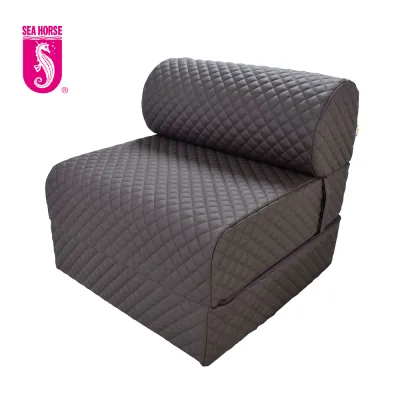
![[SG Seller] Fabric Sofa Bed 3 Seater Sofabed Fast Delivery From Singapore. Free Assembly. High Quality Sofas and Sofabeds. 1 Year Warranty. Fast Delivery from Singapore.](https://img.lazcdn.com/g/p/348901f321b96fa2ba1866c7a1619f40.jpg_400x400q80.jpg_.webp)
![[SG] High Quality Fabric Sofabed | High Quality | Bedroom | Compact | Living Room | Fabric Sofa Bed | High-End | Comfortable | 3 Seater [SG OPEN BOX SALE]](https://img.lazcdn.com/g/p/5486a3bc39ec2ea9f6d992dfb470c94a.jpg_400x400q80.jpg_.webp)
Prices are valid at publication and may change. Please refer to the product page for the latest price.
Key Quality Indicators to Compare Across Brands
To objectively compare different brands, you must look beyond brand names and focus on the technical specifications of the materials used. The first major differentiator is the leather grading. Genuine leather is categorized into full-grain and top-grain options, which retain the natural hide structure, offering superior breathability and wear resistance over time. Many mid-range brands use split leather or corrected-grain leather on non-contact areas while keeping top-grain leather on the seats and armrests to balance cost and quality. Be cautious of bonded leather, which consists of shredded leather scraps glued to a backing; this material is highly prone to peeling and cracking, especially in warm environments. Always check the product label or ask the retailer for a precise breakdown of the leather composition and the recommended care routine.

The frame and support system form the backbone of any durable sofa bed. High-quality brands construct their frames from kiln-dried hardwood, such as birch or oak, or reinforced steel tubing. Kiln-drying removes moisture from the wood, preventing it from warping, cracking, or bowing under load. When evaluating a brand, verify the maximum weight capacity limits explicitly stated by the manufacturer for both the sofa and bed configurations. A sturdy frame should feel heavy and remain completely stable without wobbling, creaking, or flexing when you sit on the edge or apply pressure to the armrests.
The folding mechanism and mattress quality directly dictate the comfort and longevity of the piece. Pull-out mechanisms should operate smoothly with minimal physical effort, utilizing counterbalanced springs or smooth-gliding rollers. Examine the joints of the mechanism; they should be securely bolted rather than riveted, allowing for tighter tolerances and easier maintenance. For the mattress, check the thickness and foam density. A high-density polyurethane foam or pocket-spring mattress with a density of at least 30 kg/m³ is recommended to prevent sagging and provide adequate spinal alignment. If the manufacturer does not disclose the foam density or mattress support core specifications, treat this as a sign to proceed with caution.
Evaluating Price and Value in the Singapore Market
Navigating the pricing landscape in Singapore requires a clear understanding of what each budget bracket typically delivers. Entry-level leather sofa beds, often priced under S$800, generally feature synthetic polyurethane (PU) leather or bonded leather paired with basic click-clack mechanisms and lightweight metal or engineered wood frames. While budget-friendly, these models are best reserved for occasional guest use due to their limited wear resistance. The mid-range bracket, spanning from S$1,000 to S$2,500, is where you will find the most balanced value. Brands in this tier typically offer top-grain leather on contact surfaces, sturdy kiln-dried hardwood frames, and reliable pull-out mechanisms with high-density foam mattresses suitable for regular use. Premium options, priced from S$3,000 and above, feature full-grain leather upholstery, custom-engineered Italian or German mechanisms, and high-resilience pocket-spring mattresses designed for daily sleeping comfort.
When calculating your total investment, you must factor in ancillary costs that are not always included in the retail price. In Singapore, delivery fees can vary based on your location, building accessibility, and whether the delivery team must carry the heavy furniture up stairs if it does not fit into the lift. Assembly charges are another common add-on, as complex pull-out mechanisms require professional installation to ensure safe operation. Additionally, if you are replacing an existing sofa, inquire about the retailer’s old furniture disposal services, which typically incur a separate fee but save you the hassle of coordinating with town councils or private waste contractors.
Finally, scrutinize the warranty terms offered by each brand. A comprehensive warranty is a strong indicator of manufacturer confidence. Ensure you understand what is covered and for how long; ideally, the warranty should cover the structural frame and the mechanical moving parts for at least three to five years, while the leather upholstery may carry a separate, shorter warranty against manufacturing defects. Be aware that warranties rarely cover natural wear and tear, accidental punctures, or damage caused by improper cleaning agents.
Decision Framework: Matching Brands to Your Priorities
To narrow down your choices, match your specific household priorities to the strengths of different product designs. If your primary goal is to find a daily sleeping solution that offers long-term durability and comfort, prioritize brands that offer thick top-grain leather upholstery and high-density foam or pocket-spring mattresses. These materials resist stretching and sagging under continuous use, ensuring the bed remains supportive over several years.
If your living space is highly constrained and the bed will only be used occasionally by guests, focus on brands that offer compact click-clack mechanisms and easy-clean treated leather or high-quality synthetic alternatives. These designs minimize the overall footprint of the sofa, making them ideal for study rooms or small living areas, while the treated surfaces require minimal maintenance between guest visits.
Before making a final purchase, always verify if the brand provides robust local after-sales support in Singapore. This includes clear maintenance guidelines tailored to the local climate, as well as accessible replacement parts for the folding mechanism. A high-quality sofa bed is a long-term investment, and the ability to source a replacement spring, hinge, or roller locally can extend the lifespan of your furniture by years.
Conversely, you should reconsider your purchase if the retailer cannot provide a clear breakdown of the materials used, or if the folding mechanism feels stiff, misaligned, or unstable during an in-store demonstration. A mechanism that requires excessive force to operate or exhibits significant lateral wobble in the showroom is highly likely to fail prematurely under regular household use.
Frequently Asked Questions (FAQ)
Is genuine leather suitable for Singapore's humid climate?
Yes, genuine leather is highly suitable for Singapore’s humid climate, provided it is properly maintained. Unlike synthetic alternatives like polyurethane (PU) or PVC, which tend to trap heat and moisture against the skin, genuine leather possesses natural pores that allow it to breathe. This breathability makes genuine leather sofas feel cooler and more comfortable to sit or sleep on in tropical environments. However, high humidity can encourage mold growth if the leather is left in damp, unventilated spaces. To prevent this, check the manufacturer’s specific care label. You should position the sofa bed in a well-ventilated area away from direct sunlight, wipe it down regularly with a dry microfiber cloth, and apply a specialized leather conditioner every six to twelve months to keep the fibers supple and prevent cracking.
How can I test the durability of a sofa bed mechanism before buying?
Testing the durability of a sofa bed mechanism requires a hands-on evaluation in the showroom. You should personally operate the folding mechanism at least three to five times consecutively. Pay close attention to the transition: it should feel smooth, balanced, and require minimal physical strain. Listen for any grinding, squeaking, or clicking sounds that might indicate poor alignment or friction between metal parts. Once the bed is fully extended, apply firm downward pressure to the head, middle, and foot sections to check for stability and ensure the locking joints remain securely engaged without flexing. Additionally, ask the sales representative about the mechanism’s tested lifecycle—reputable manufacturers often test their hardware for thousands of cycles—and confirm whether the retailer stocks local replacement parts and offers repair services in Singapore.
Community discussion
Share your experience or ask a question. Comments are reviewed before publication.