
Quick Answer: The Core Framework for Evaluating Recliner Comfort
Evaluating the comfort of a leather recliner requires looking beyond the initial showroom “sink-in” feeling. Comfort is highly personal, but its longevity depends on measurable engineering specifications. When comparing brands, prioritize high-resilience foam or pocket-spring cushions over standard polyfoam, and look for steel recline mechanisms with smooth, quiet transitions.
Tactile comfort relies on high-grade, breathable top-grain or full-grain leather that adapts to body temperature, while physical support requires a chair proportioned precisely to your body’s height and weight. Whether browsing specifications online or testing models in a physical showroom, using a structured evaluation checklist ensures you invest in a chair that maintains its supportive shape and smooth operation for years.
Seat Construction and Cushioning: What Dictates Long-Term Support
The internal build of a leather recliner determines whether it will remain supportive over years of daily use or sag within months. Cushioning is the most immediate factor in how a chair feels, but the underlying suspension system is what keeps your spine properly aligned.
Products mentioned in this guide
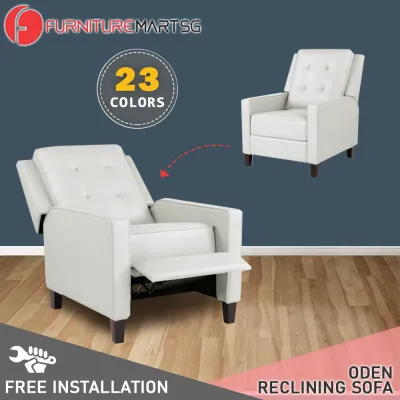
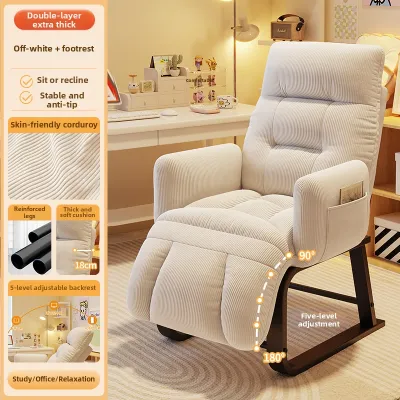
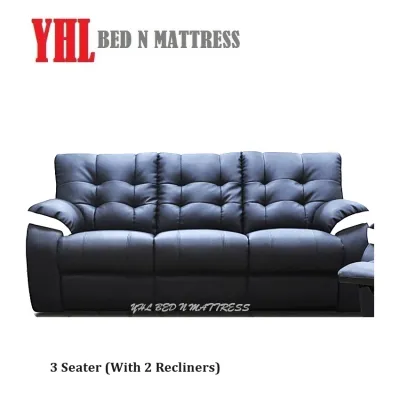
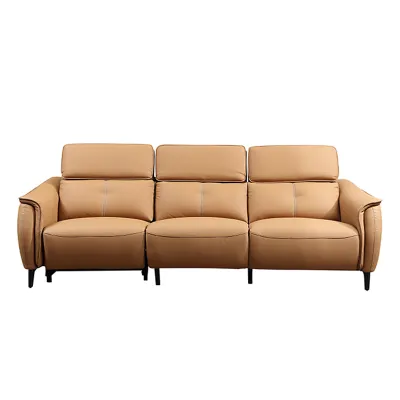
![[Sg Sales]Electric Power Lift Recliner Sofa Chair Space Sofa Cabin Faux Leather Sofa Multi-Functional Electric Reclining Lazy Sofa Full Reliance Massage Chair Massage Sofa](https://img.lazcdn.com/g/p/28a8fabc74691aa4cf00bc6dd9e8ffaa.jpg_400x400q80.jpg_.webp)
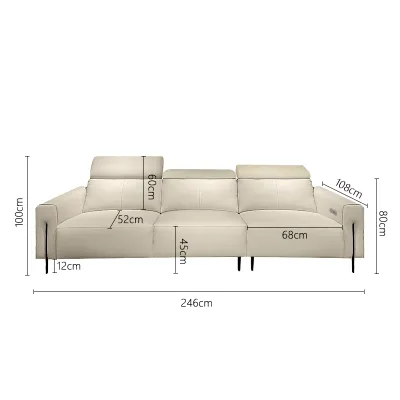
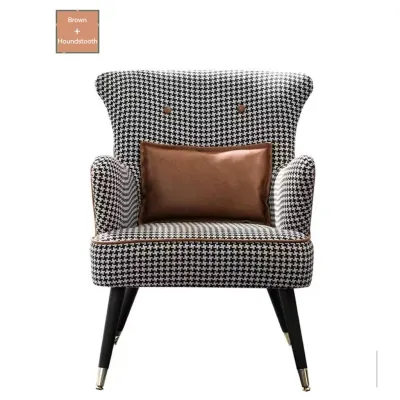
Prices are valid at publication and may change. Please refer to the product page for the latest price.

When comparing brands, look closely at the foam specifications. High-resilience (HR) polyurethane foam is the industry standard for premium seating. It features an irregular cell structure that provides a supportive bounce-back sensation, preventing the “bottoming out” feeling common in cheaper alternatives. For optimal durability, verify that the foam density is rated between 1.8 and 2.5 pounds per cubic foot. Some brands offer down-wrapped or fiber-filled cushions, which provide an incredibly soft, enveloping initial feel. However, these materials require regular manual fluffing and lack the structural resilience needed for long-term ergonomic support. An excellent middle ground is a pocket-coil cushion, where individual steel springs are wrapped in fabric and encased in high-density foam, mimicking the supportive feel of a high-end mattress.
The suspension system beneath the cushion distributes your body weight and prevents sagging. Sinuous springs—S-shaped steel wires stretched across the frame—are highly common and offer excellent, resilient support when constructed from heavy-gauge steel. The traditional gold standard is the eight-way hand-tied spring system, where coil springs are manually secured to the frame and each other in eight directions. While this craftsmanship provides unmatched weight distribution and durability, it also increases the chair’s overall height, weight, and cost.
Lumbar support is another critical point of comparison. When a recliner transitions from an upright to a reclined position, a gap often opens between the lower back and the seat. Premium brands combat this by engineering active lumbar support systems that shift forward as the backrest reclines, keeping the spine in a neutral position. When evaluating different models, check the manufacturer’s spec sheets for reinforced wood or steel frames, corner-block joints, and robust cushion sagging warranties, which are strong indicators of structural integrity.
Recline Mechanisms and Ergonomic Adjustability
The mechanism of a leather recliner dictates how easily you can adjust your position and how well the chair supports your body across different angles. Reclining systems generally fall into two categories: manual and power.
Manual recliners operate via a pull-lever, a release button, or a simple push-back motion. While manual models are typically lighter, less expensive, and do not require proximity to an electrical outlet, they offer limited adjustability. Most manual systems only lock into two or three preset angles, which may not align perfectly with your body’s comfort sweet spot. Closing a manual footrest also requires physical leg and core strength, which can be tiring or difficult for some users.
Power recliners utilize electric motors to offer infinite position locking. This means you can stop the recline at any precise millimetre to find the exact angle that relieves pressure on your lower back. Advanced power models feature multiple motors, allowing you to control the footrest, backrest, headrest, and lumbar support independently. This independent adjustability is highly beneficial for ergonomic alignment; for example, you can fully recline the body while keeping your head tilted forward to read or watch television without straining your neck.
When comparing power mechanisms across different brands, pay close attention to the transition smoothness and motor noise. High-quality electric motors operate nearly silently and glide smoothly without jerky movements that can startle or cause physical discomfort. Additionally, consider the power source: while most power recliners must be plugged into a wall outlet, some brands offer optional rechargeable lithium-ion battery packs. This is a crucial consideration for open-concept living rooms where trailing cables pose a safety hazard.
Leather Recliner Grade and Tactile Comfort: Reading the Labels
The quality of the upholstery directly impacts how a leather recliner feels against your skin and how well it regulates temperature. Because “leather” is a broad commercial term, you must look past general marketing descriptions and verify the exact grade on the official specification sheet.
Full-grain leather is the highest grade available, featuring the natural, unbuffed hide. It retains the tightest fiber structure, making it exceptionally durable. Because its natural pores remain open, full-grain leather is highly breathable, adapting quickly to your body temperature and preventing the sticky, hot sensation often associated with synthetic materials. Top-grain leather is the next tier; the outer layer is lightly sanded to remove imperfections, resulting in a more uniform appearance while retaining excellent softness and breathability. Both full-grain and top-grain leathers are typically treated with aniline or semi-aniline dyes, which preserve the natural texture and feel of the hide.
Corrected-grain leather has been heavily sanded, buffed, and embossed with a synthetic grain pattern. To protect the altered surface, manufacturers apply a thick polyurethane or pigmented coating. While this makes the leather highly resistant to spills and easy to clean, it also creates a stiffer texture and blocks the natural pores. In warm, humid environments, corrected-grain leather can trap body heat and feel uncomfortably warm during long sitting sessions. Bonded leather, which consists of shredded leather scraps glued together with polyurethane, should be avoided entirely; it lacks breathability, feels synthetic, and is highly prone to peeling and cracking within a few years.
To ensure your long-term comfort, check the manufacturer’s care instructions and finish descriptions. If you live in a warm climate, prioritizing highly breathable aniline or semi-aniline top-grain leather will significantly enhance your daily comfort.
Sizing and Proportions: Matching the Recliner to Your Body
A leather recliner cannot be truly comfortable if its physical dimensions do not match your body’s proportions. An ill-fitting chair can cause muscle strain, joint pressure, and poor circulation over time.
To evaluate a recliner’s fit, compare four critical measurements against your own body dimensions:
- Seat Depth: The distance from the front of the seat cushion to the backrest. When sitting fully upright, there should be a gap of about 5 to 8 centimetres between the edge of the seat and the back of your knees. If the seat is too deep, you will be forced to slouch to reach the backrest, straining your lower spine.
- Seat Height: The distance from the floor to the top of the seat cushion. Your feet should rest flat on the floor with your knees bent at a comfortable 90-degree angle. A seat that is too high cuts off circulation to the back of the thighs, while a seat that is too low places excess pressure on the sit bones.
- Backrest Height: The backrest must be tall enough to support your head and neck comfortably. If the backrest is too short, your head will hang backward without support, leading to neck fatigue.
- Footrest Length: When fully reclined, the footrest should support your calves and heels. If your feet hang off the edge significantly, it can cause ankle strain and muscle tension in the legs.
Beyond personal ergonomics, you must evaluate how the recliner fits your physical space. Measure the “wall clearance” required for the recline mechanism to operate. Traditional recliners need 30 to 50 centimetres of space behind the backrest to fully recline, whereas “wall-hugger” or “zero-wall” models slide forward on their tracks, requiring as little as 10 to 15 centimetres. Finally, verify the delivery access. Recliners are often bulky, heavy pieces of furniture; check the boxed dimensions against your doorway widths, hallway turns, and passenger lift dimensions to ensure the delivery team can safely transport the chair into your home.
Decision Framework: Matching Comfort Features to Your Needs
To finalize your choice among different leather recliner brands, align their specific engineering features with your physical requirements, space constraints, and lifestyle preferences. Use the following guidelines to guide your decision:
- Choose a high-resilience foam cushion with a multi-motor power recline mechanism if you require precise, effortless positioning, suffer from lower back pain, and prefer firm, long-lasting spinal support that does not sag over time.
- Choose a down-wrapped or fiber-filled cushion with a manual push-back mechanism if you prefer a plush, enveloping, cloud-like seating experience, do not mind manually fluffing the cushions, and want a streamlined look without power cords.
- Choose a model with an independent power headrest, extended footrest, and wall-hugger clearance if you are taller, have limited space in your living room, and require dedicated neck and full calf support while watching television or reading.
- Verify the return policy, home trial period, and structural warranty if you are purchasing your leather recliner online without the opportunity to physically test its comfort, proportions, and mechanical operation first.
Frequently Asked Questions (FAQ)
How long should I sit in a leather recliner in the showroom to test its comfort?
You should sit in the recliner for at least 10 to 15 minutes in both the upright and fully reclined positions. A quick, two-minute sit only reveals the initial softness of the top cushioning layers. A longer test allows the foam to compress under your full body weight, showing whether the underlying spring system and lumbar support remain comfortable and pressure-free over an extended period.
Does the type of leather affect how hot the recliner feels?
Yes, the leather grade and finish significantly impact heat retention. Natural, minimally processed leathers like full-grain or top-grain aniline breathe exceptionally well because their pores remain open, allowing them to adapt to room temperature and dissipate body heat. Heavily pigmented or corrected-grain leathers with thick protective polyurethane coatings block these pores, trapping heat and moisture, which can make the seat feel warm and sticky.
Community discussion
Share your experience or ask a question. Comments are reviewed before publication.