
When searching for a lazy chair in Singapore, the ideal balance of comfort and lumbar support depends heavily on your unique body shape, physical mobility, and preferred resting posture. There is no single brand or design that suits everyone. Instead, the market is divided into three distinct design categories: legless floor chairs, low-profile lounge recliners, and structured foam loungers or bean bags. Each category addresses spinal alignment and muscle relaxation in fundamentally different ways.
Lounge recliners typically offer the most structured and robust lumbar support, utilizing contoured frames to maintain the natural S-curve of your spine. Legless floor chairs provide firm, highly adjustable backing directly at floor level, making them excellent for compact living but demanding on your joints during entry and exit. Meanwhile, structured foam loungers and bean bags prioritize enveloping softness, conforming to your body shape rather than forcing you into a strict, ergonomically aligned posture.
Core Dimensions for Evaluating Comfort and Back Support
Cushioning and Fill Materials
The internal composition of a lazy chair directly dictates how well it distributes your body weight and how long it retains its supportive shape. High-resilience (HR) foam is widely considered the standard for long-term support. It features an open-cell structure that quickly rebounds when you stand up, providing a consistent, firm base that prevents your pelvis from sinking too deep. This pelvic stability is crucial for keeping your lower back in a neutral position.
Products mentioned in this guide
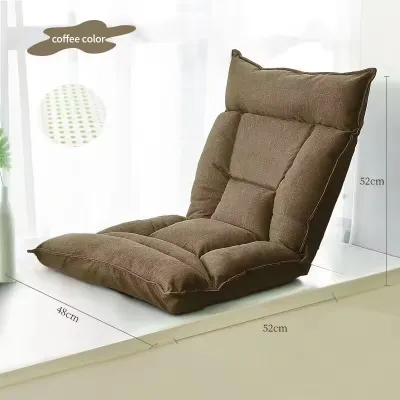
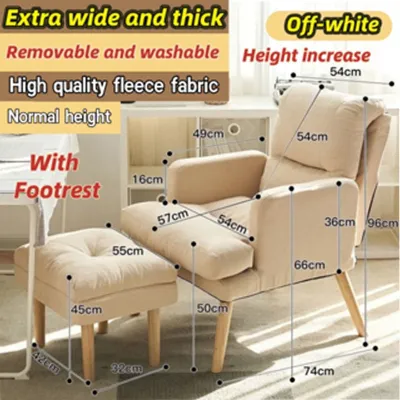
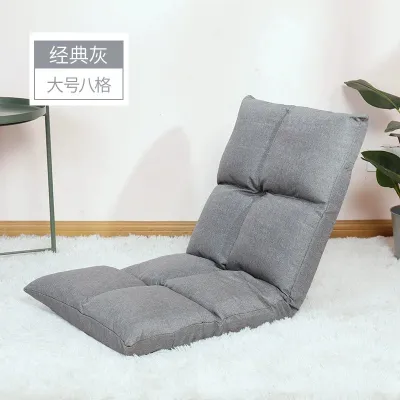
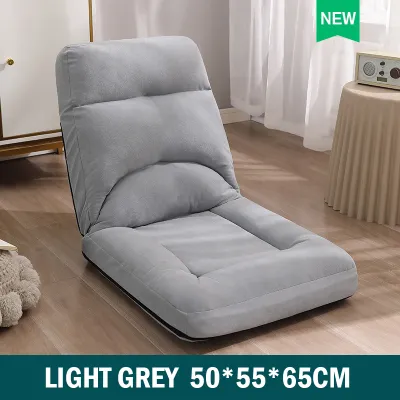
Prices are valid at publication and may change. Please refer to the product page for the latest price.
Memory foam offers excellent pressure relief by contouring precisely to the shape of your body, distributing weight evenly across the seat. However, memory foam tends to retain body heat. In Singapore’s warm and humid climate, a pure memory foam chair can quickly become uncomfortably hot unless used in a consistently air-conditioned room.
Microbeads, commonly found in traditional bean bags, offer maximum adaptability because they shift dynamically as you move. The major drawback is their tendency to flatten over time as the polystyrene beads compress under constant weight. When evaluating different brands, look for multi-layer cushion constructions. The most supportive designs feature a high-density, high-resilience foam core for structural integrity, topped with a softer layer of memory foam or fiberfill for immediate surface comfort.
Backrest Structure and Lumbar Alignment
The human spine naturally curves inward at the lower back, a shape known as the lumbar lordosis. When you sit in a deeply cushioned lazy chair, your pelvis tends to tilt backward, flattening this natural curve and placing immense pressure on your spinal discs. To counteract this, a high-quality lazy chair must provide active resistance against your lower back.
Adjustable recline mechanisms, such as the multi-stage “click-clack” gear systems found in many Japanese-style floor chairs, allow you to fine-tune the angle of support. Being able to adjust the backrest through various angles helps you find the precise point where your torso and thighs form an angle of roughly 100 to 110 degrees, which minimizes spinal pressure.
Built-in lumbar curves or adjustable support pillows are essential features for any chair intended for sessions longer than thirty minutes. These features physically fill the gap between the chair back and your lower spine, preventing slouching. You should be cautious of completely flat, unstructured backrests. While they may feel soft and inviting initially, they offer no resistance to gravity, forcing your back muscles to remain tense to keep you upright, which eventually leads to muscle fatigue and stiffness.
Upholstery and Breathability
The material that wraps your lazy chair plays a significant role in your overall comfort, particularly regarding thermal regulation. Natural fibers such as cotton and linen are highly breathable. They allow air to circulate freely, helping to dissipate body heat and moisture, which is incredibly beneficial in Singapore’s tropical climate. However, these fabrics are highly absorbent, meaning they can stain easily from sweat, spilled drinks, or humidity-induced mildew if not treated with protective coatings.
Synthetic upholstery options, including polyester blends and polyurethane (PU) faux leather, offer superior durability and are much easier to wipe clean. The trade-off is breathability. In non-air-conditioned spaces, synthetic fabrics can trap heat and perspiration, causing your skin to feel sticky against the chair.
If you plan to place your lazy chair in a naturally ventilated living room or study, prioritize breathable woven fabrics or mesh inserts. If the chair is destined for a dedicated air-conditioned living room or entertainment space, synthetic leather or plush velvet can provide a luxurious, cozy feel without the risk of overheating. Always check the manufacturer’s care instructions to ensure the fabric can withstand regular cleaning.
How Popular Lazy Chair Styles Handle Lumbar Support
Legless Floor Chairs with Reclining Gears
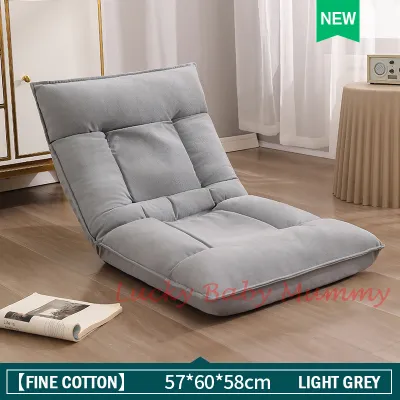
Legless floor chairs, often inspired by traditional Japanese tatami seating, have become popular in Singapore’s compact apartments due to their space-saving designs. These chairs feature an internal metal frame equipped with multi-angle gear joints. This mechanical core allows you to adjust the backrest from a fully flat position to a completely upright 90-degree angle, providing highly customizable support.

Because the base of these chairs sits directly on the floor, they offer a very stable, firm foundation. This firmness prevents your hips from sinking too low, which helps maintain a relatively neutral pelvic tilt. They are excellent for low-table activities, console gaming, or reading, providing a dedicated space for relaxation.
The primary drawback of legless chairs is the physical demand they place on your lower extremities. Sitting at floor level forces your knees and hips into sharp angles, which can restrict blood circulation and lead to leg numbness over extended periods. Additionally, getting up from the floor requires significant core and leg strength, making these chairs less suitable for individuals with joint stiffness or mobility challenges.
Low-Profile Lounge Recliners with Ottomans
Low-profile lounge recliners elevated on wooden or metal frames represent the pinnacle of structured relaxation. Many of these designs feature bentwood frames that possess a natural springiness, absorbing your micro-movements and reducing the impact on your spine. The backrests are ergonomically contoured to match the natural S-curve of the human spine, providing continuous contact and support from your pelvis up to your neck.
When paired with a matching ottoman, these recliners allow you to elevate your legs. Elevating your knees slightly above or level with your hips immediately takes the tension off your hip flexors and lower back, opening up the spinal joints and promoting deep muscular relaxation.
While these chairs offer superior ergonomic benefits, they require a substantial amount of dedicated floor space. Unlike foldable floor chairs, structured recliners cannot be easily tucked away under a bed or in a wardrobe. They are permanent furniture pieces that require careful spatial planning, especially in smaller HDB flats or studio apartments where floor space is at a premium.
Bean Bags and Structured Foam Loungers
Traditional bean bags filled with expanded polystyrene (EPS) microbeads are the definition of casual seating, but they are notoriously poor at providing lumbar support. When you sit in a standard bean bag, the beads displace to the sides, leaving very little material directly under your lower back. Your pelvis sinks deep into the bag, forcing your spine into a pronounced “C” shape that strains the posterior spinal ligaments.
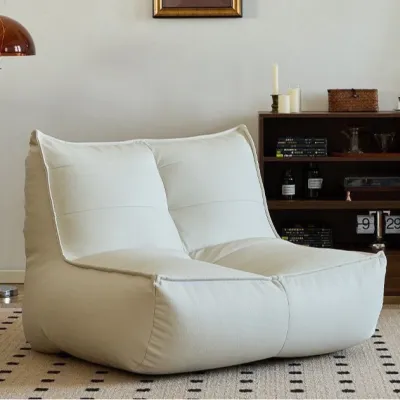
To address this issue, modern furniture brands have developed structured foam loungers. These chairs replace loose beads with shredded polyurethane foam or shaped solid foam cores encased in segmented inner liners. The segmented design prevents the filling from shifting away from high-pressure areas, allowing the chair to maintain a semi-rigid backrest and a defined seat. This design offers a compromise between the casual aesthetic of a bean bag and the support of a traditional chair.
While structured foam loungers are a massive improvement over traditional bean bags, they still lack the precise, rigid support of mechanical recliners. They are ideal for short-term lounging, casual movie nights, or quick naps, but they should not be relied upon as primary seating for hours of continuous reading or working.
Comparison Table: Lazy Chair Design Types vs. Comfort Profiles
| Design Type | Lumbar Support Level | Best Posture/Use Case | Potential Drawbacks |
|---|---|---|---|
| Legless Floor Chair | Moderate to Firm (Adjustable) | Upright sitting, console gaming, low-table work | Requires floor-level entry/exit, can cause leg numbness |
| Lounge Recliner with Ottoman | High (Contoured & Ergonomic) | Deep relaxation, reading, leg elevation | Large footprint, high spatial requirement, difficult to move |
| Structured Foam Lounger | Low to Moderate (Conforming) | Casual lounging, short naps, watching television | Lacks rigid support, prone to flattening over time |
Decision Framework: Matching Chair Styles to Your Relaxation Needs
Selecting the right lazy chair style requires balancing your personal comfort preferences with your home’s physical layout and your body’s physical capabilities. Use the following framework to guide your decision.
- Choose a legless floor chair if… you prefer sitting close to the ground, need a highly portable seating option that can be folded flat and stored under a bed, and require firm, adjustable back support for activities like console gaming or low-table study. This style is ideal for multi-purpose rooms where space must be reclaimed quickly.
- Choose a low-profile lounge recliner if… you prioritize long-term spinal health, want to elevate your legs to relieve lower back tension, and have a dedicated, permanent corner in your living room or bedroom. This option is best for those who want a structured, ergonomic resting posture that supports the body for hours.
- Choose a structured foam lounger if… you want a soft, enveloping seating experience that molds to your body for casual lounging, watching television, or napping. This style suits relaxed, informal spaces where strict postural alignment is less critical than immediate, cozy comfort.
- Verify first if… you experience chronic lower back pain, sciatica, or joint stiffness in your knees and hips. Floor-level seating requires significant flexibility and muscle strength to enter and exit safely. If you have mobility limitations, sitting on the floor can exacerbate joint strain and increase the risk of injury. In such cases, consult a healthcare professional before purchasing, or prioritize elevated lounge recliners equipped with sturdy, solid armrests that provide mechanical leverage to help you stand up safely.
Practical Verification Steps Before Buying in Singapore
Space and Clearance
Before purchasing, you must verify that the lazy chair will physically fit into your home without obstructing foot traffic. Measure the chair’s maximum dimensions when fully reclined, including any footrests or matching ottomans. Ensure you maintain a clearance walkway of at least 60 to 70 centimeters around the chair.
Additionally, measure your home’s entry points. Verify the height and width of your main door frame, hallway corners, and your building’s passenger lift. Many delivery issues in Singapore arise because a fully assembled lounge recliner cannot fit inside a standard apartment lift or navigate tight corridor turns. If the chair does not come flat-packed, confirm the delivery dimensions with the retailer.
In-Store Testing Protocol
To evaluate comfort, never rely solely on online photos or brief sits. Visit the showroom and spend at least 10 to 15 minutes testing the chair in your typical resting positions.
During your test, pay attention to key pressure points. Ensure your lower back feels firmly supported without a large empty gap between your spine and the backrest. Check the depth of the seat: the back of your knees should not press tightly against the edge of the seat cushion, as this can restrict blood flow. Finally, test the adjustment mechanisms to ensure they operate smoothly while seated.
Return Policies and Trial Periods
Because comfort is highly subjective, a chair that feels supportive in a showroom might feel different after a few hours of use at home. In Singapore, many furniture stores do not accept returns or refunds based on “comfort dissatisfaction” once the item has been unboxed or assembled; warranties typically only cover structural manufacturing defects.
Ask the retailer if they offer a home trial period, which is occasionally available for premium brands. If a trial period is offered, clarify the terms: check if there are restocking fees, whether you must retain the original packaging, and who covers the cost of return transport.
Frequently Asked Questions (FAQ)
Can a lazy chair replace a standard ergonomic office chair?
A lazy chair should not replace a standard ergonomic office chair. Lazy chairs are designed for relaxation, featuring reclined angles and soft cushioning that encourage a relaxed posture. They lack the upright vertical support, adjustable seat height, and dynamic armrest positioning required to maintain a healthy alignment while typing or working at a desk. Using a lazy chair for prolonged computer work can force your neck and shoulders forward, leading to strain.
How do I maintain the cushioning to prevent it from flattening?
To maintain your lazy chair’s shape and prevent the cushioning from flattening, regularly fluff and rotate the cushions if they are removable. For chairs filled with high-resilience or memory foam, avoid sitting in the exact same spot and position every day to distribute wear evenly. If you own a bean bag or a structured lounger filled with microbeads, check the manufacturer’s care instructions for topping up the filling. Most brands sell separate bags of replacement beads to restore firmness.
Are floor-level lazy chairs safe for elderly users?
Floor-level lazy chairs are generally not recommended for elderly users or individuals with limited mobility. Getting into and out of a chair that sits directly on the floor requires significant knee flexibility, hip mobility, and core strength. This movement can place excessive strain on aging joints and increases the risk of slipping or falling. For older adults, elevated lounge recliners with firm, supportive seat cushions and solid, sturdy armrests are much safer, as they provide the necessary physical leverage to stand up easily.
Community discussion
Share your experience or ask a question. Comments are reviewed before publication.