
Selecting the ideal kitchen cabinet setup to house your storage racks requires balancing spatial constraints, hardware compatibility, and your renovation budget. In Singapore, where kitchen layouts in HDB flats, executive condominiums, and private apartments often feature tight corners or structural columns, finding the right cabinet provider is key to maximizing every square centimeter. There is no single “best” brand for everyone; instead, the right choice depends on whether you prioritize bespoke dimensional precision, standardized modular ecosystems, or budget-friendly DIY flexibility.
To integrate a kitchen storage rack cabinet successfully, you must navigate three primary categories of kitchen cabinet providers available in the local market: custom carpentry firms, established modular kitchen brands, and semi-custom or hack-friendly flat-pack brands. True customization for internal storage racks involves matching internal cabinet clearances, load-bearing capacities, and hinge clearances. Each provider type handles these technical specifications differently, affecting how smoothly your pull-out baskets, corner carousels, or tall pantry larders will operate over years of daily use.
How to Evaluate Storage Rack Customization in Kitchen Cabinets
Before choosing a cabinet provider, you must understand the technical criteria that dictate how well a cabinet carcass can accommodate internal storage racks. Many homeowners purchase high-end stainless steel pull-out baskets only to find they cannot be installed due to minor measurement discrepancies or structural limitations. Evaluating these key metrics beforehand prevents costly retrofitting mistakes during your kitchen renovation.
Products mentioned in this guide
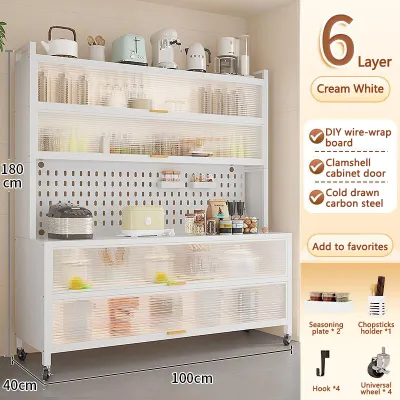
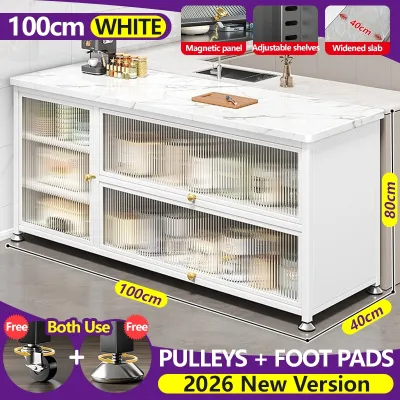
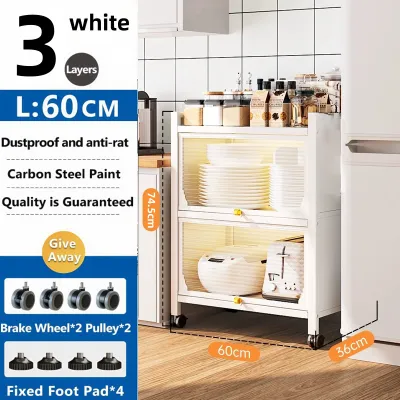
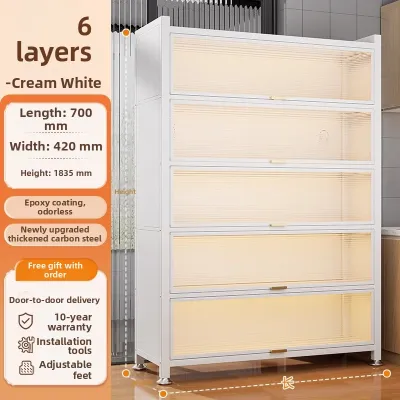
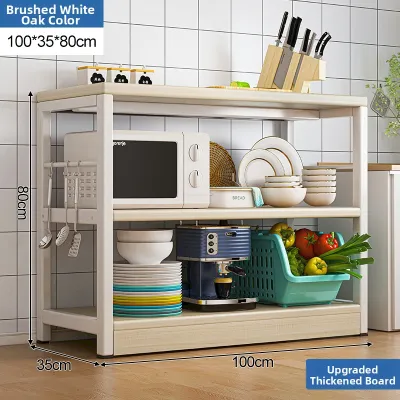
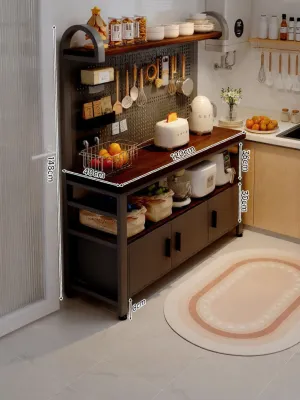
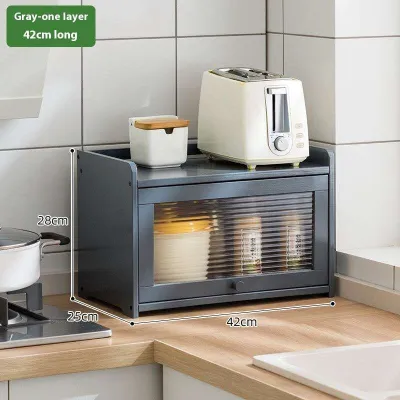
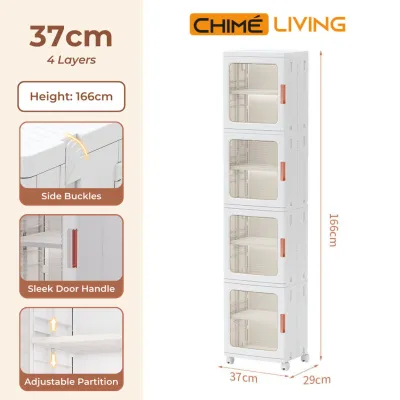
Prices are valid at publication and may change. Please refer to the product page for the latest price.
Internal Dimension Compatibility
Most aftermarket storage racks, such as pull-out spice drawers, dish racks, and corner units, are manufactured to fit standardized metric cabinet widths. These standard external widths typically measure 300mm, 400mm, 450mm, 500mm, 600mm, 800mm, or 900mm. However, the critical measurement for installation is the internal clear width, which depends on the thickness of the cabinet side panels.
Cabinet side panels in Singapore are commonly fabricated from 15mm, 16mm, or 18mm thick boards. For example, a standard 600mm external cabinet built with 18mm side panels yields an internal clear width of 564mm. If you opt for custom carpentry, the carpenter can build a cabinet to any bespoke dimension, such as 535mm. While this maximizes your physical wall space, it makes installing standard off-the-shelf pull-out racks highly difficult, as you will need to source custom spacers or commission bespoke metalwork.
Load-Bearing Capacity and Material Integrity
Heavy-duty storage systems, such as multi-tiered pull-out pantry towers or blind corner optimizers, carry substantial weight when fully loaded with canned goods, glass jars, and small kitchen appliances. The cabinet’s baseboard and side panels must support both the weight of the hardware and its contents without sagging, warping, or stripping the mounting screws.
While local carpentry workshops often recommend solid plywood for its moisture resistance in Singapore’s humid climate, the material name alone does not guarantee long-term durability. Homeowners must verify the quality of the laminate finish, the sealing of the edge bands, and the strength of the joints. In high-humidity zones, such as under the kitchen sink or near the cooking hob, unsealed edge bands can allow moisture ingress from steam or spills. This leads to swelling and structural degradation around the mounting screws of your runner slides, regardless of the core material. For heavy-duty racks, prioritize cabinet carcasses built with thick, high-density panels (at least 18mm) and reinforced joints.
Proprietary versus Aftermarket Hardware Ecosystems
Some modular kitchen brands operate within closed proprietary ecosystems. These brands design their cabinet carcasses to work exclusively with their own branded pull-out racks, drawer runners, and soft-close hinges. While this guarantees a seamless fit and flawless mechanical operation, it restricts your ability to upgrade or replace components independently.
Conversely, open-system cabinets allow you to install third-party aftermarket hardware from specialized brands like Blum, Excel, Song-Cho, or Häfele. This open compatibility gives you the freedom to shop around for the best deals on wire baskets, pull-out larders, and magic corners, and allows for straightforward replacements if your storage needs change in the future.
Vertical and Horizontal Adjustability
Your storage requirements will inevitably evolve over time. A cabinet system that offers pre-drilled system holes (commonly spaced 32mm apart vertically) allows you to adjust the height of your pull-out racks and shelves as needed. Custom carpentry cabinets often feature fixed shelving or custom-drilled holes that cannot be easily adjusted later without drilling new holes manually, which risks splintering the laminate finish.
Comparing Singapore Kitchen Cabinet Providers for Storage Rack Integration
To help you visualize how different provider types compare, the following table summarizes the key practical dimensions of integrating storage racks across the three main cabinet categories in Singapore.

| Provider Category | Customization Flexibility | Estimated Cost Tier | Typical Lead Time | Aftermarket Rack Compatibility |
|---|---|---|---|---|
| Custom Carpentry | High (Bespoke dimensions) | Medium to High | 4 to 8 Weeks | Moderate (Requires precise coordination) |
| Modular Kitchen Brands | Low to Medium (Fixed sizes) | High to Very High | 6 to 12 Weeks | Low (Optimized for proprietary systems) |
| Semi-Custom / Flat-Pack | Medium (Standard metric sizes) | Low to Medium | 1 to 3 Weeks | High (Highly compatible with standard racks) |
Custom Carpentry Firms (Bespoke Fit)
Local carpentry remains a highly popular choice for Singapore homeowners due to its unmatched ability to maximize space in challenging layouts. If your kitchen features awkward structural pillars, non-standard wall angles, or a bomb shelter door recess, a custom carpenter can design cabinet carcasses that fit these anomalies perfectly. This bespoke approach allows you to utilize every odd corner for custom pull-out spice racks or narrow bottle organizers.
However, integrating aftermarket pull-out hardware into custom carpentry requires meticulous planning and clear communication. You must purchase your desired storage racks and provide the exact technical data sheets, including minimum internal depth, width, and hinge clearance requirements, to your carpenter before fabrication begins. If the carpenter makes a minor calculation error or fails to account for the protrusion of the cabinet door hinge, the pull-out rack may hit the door or fail to slide out entirely. Additionally, the smooth operation of the slide mechanisms relies heavily on the individual carpenter’s installation skill on-site.
Modular Kitchen Brands (Standardized Ecosystems)
Modular kitchen brands, ranging from premium European imports to established local modular specialists, offer highly engineered, factory-finished cabinetry. These systems are characterized by exceptional precision, as the carcasses are cut and edge-banded using industrial machinery in controlled factory environments. This ensures that every cabinet box is perfectly square, which is critical for the smooth gliding of heavy pull-out pantry systems.
When you purchase a modular kitchen, you typically choose from a catalog of integrated storage racks designed specifically for those cabinet dimensions. The soft-close mechanisms, load-bearing capacities, and wire basket configurations are pre-tested and guaranteed to work together flawlessly. The primary drawback is the premium cost and the lack of dimensional flexibility. If a modular cabinet run leaves a 15cm gap at the end of your kitchen wall, the brand cannot easily fabricate a custom 15cm carcass to fill it, often requiring filler panels that result in wasted space.
Semi-Custom and Hack-Friendly Brands (Flexible & Budget)
Semi-custom and flat-pack modular brands offer a compelling middle ground for budget-conscious homeowners who want high compatibility with aftermarket storage racks. These brands utilize standardized metric dimensions for their cabinet boxes, making them highly compatible with a wide array of third-party pull-out organizers, wire baskets, and lazy Susans sold in local hardware stores and online marketplaces.
Because these cabinet systems use standardized pre-drilled side panels, installing aftermarket racks is often a straightforward DIY task or a simple job for a local handyman. You can easily swap out basic wire baskets for premium soft-close pull-out drawers as your budget allows. The trade-off lies in the planning effort required. You must take on the responsibility of measuring, sourcing, and verifying the compatibility of the third-party hardware yourself, and ensure that the cabinet carcasses are assembled and leveled perfectly to prevent the sliding racks from drifting open or binding.
Decision Framework: Choosing the Right Kitchen Cabinet Provider
To make an actionable decision for your kitchen renovation, evaluate your specific layout, budget, and storage priorities against the following framework.
- Choose Custom Carpentry if you have an irregular kitchen layout with structural columns, non-standard niches, or plumbing pipes that must be boxed up. This route is ideal if you want a seamless, wall-to-wall fit and are willing to coordinate closely with your designer or carpenter to integrate specific aftermarket storage hardware.
- Choose Modular Brands if you have a generous budget, a standard rectangular kitchen layout, and prioritize premium, factory-tested hardware. This option is best if you want a hassle-free process where the brand handles all compatibility checks, installation, and long-term warranties for both the cabinetry and the integrated storage racks.
- Choose Semi-Custom/Hack-Friendly Brands if you want to minimize upfront costs while retaining the flexibility to upgrade, customize, or replace your kitchen storage racks over time. This path is perfect if your kitchen layout accommodates standard metric cabinet sizes and you are comfortable managing the hardware sourcing and installation details.
- Verify first if your kitchen has structural limitations, such as floor traps, gas pipes, or shallow wall depths, that could interfere with standard rack installations. For example, most heavy-duty pull-out pantry towers require a minimum internal cabinet depth of 550mm. If your kitchen layout only allows for a shallow 450mm countertop run along one wall, standard pull-out larders will not fit, forcing you to seek custom shallow-depth drawers or bespoke carpentry solutions.
Practical Checks Before Installing Kitchen Storage Rack Cabinets
Before finalizing your cabinet order or purchasing any internal storage racks, perform these essential technical and safety checks to ensure a successful installation.
- Measure the True Internal Clear Width: Do not rely on the external cabinet dimensions. Measure the internal width of the cabinet box after assembly. Crucially, subtract the protrusion of the cabinet door hinges when the door is fully open. Standard hinges can protrude 20mm to 40mm into the cabinet opening, which will block pull-out racks unless you use zero-protrusion hinges or install spacer blocks behind the runner tracks.
- Verify Load-Bearing Limits and Wall Anchoring: A fully loaded pull-out pantry or corner carousel can put immense leverage on the cabinet carcass. Ensure that the cabinet side panels are thick enough (minimum 16mm, ideally 18mm) to hold the mounting screws securely. For heavy pantry towers, ensure the cabinet carcass is securely anchored to the concrete wall of your home using high-quality masonry wall plugs to prevent any risk of the cabinet tipping forward when the racks are fully extended.
- Check for Obstruction and Deployment Clearance: Walk through the physical path of the pull-out racks. Ensure that when a rack is fully extended, it does not strike adjacent drawer handles, dishwashers, oven doors, or wall protrusions. Pay close attention to L-shaped kitchen corners; the handle of a drawer on one side of the corner can easily block a pull-out rack on the adjacent side if not planned with sufficient corner filler clearance.
- Review Manufacturer Warranties and Instructions: Before drilling new mounting holes into a modular or semi-custom cabinet carcass, check the manufacturer's warranty guidelines. Drilling aftermarket hardware tracks into proprietary side panels may void the warranty on the entire cabinet carcass. Always read both the cabinet manufacturer's instructions and the storage rack's installation manual. If the instructions conflict, or if you are unsure about the structural integrity of your panels, stop and consult a qualified professional kitchen installer.
Frequently Asked Questions (FAQ)
Can I install aftermarket pull-out storage racks in any kitchen cabinet?
No, you cannot install aftermarket pull-out racks in every cabinet without verifying compatibility. Installation depends on having sufficient internal clear width, depth, and height, as well as adequate clearance to bypass the cabinet door hinges. Framed cabinets (common in traditional designs) have narrower openings than frameless cabinets (common in modern Singapore kitchens), which can restrict rack deployment. Always measure your cabinet’s internal clear dimensions and compare them to the minimum installation requirements specified in the storage rack’s manual before purchasing.
What is the standard internal width needed for a pull-out kitchen storage rack cabinet?
There is no single standard internal width, as pull-out storage racks are manufactured to match various standard external cabinet widths, such as 300mm, 400mm, 500mm, and 600mm. For a standard cabinet with 18mm thick side panels, a 400mm external width cabinet typically provides an internal clear width of 364mm, while a 600mm cabinet provides 564mm. Always refer to the specific storage rack manufacturer’s installation manual to determine the exact minimum and maximum internal clearance dimensions required for that specific hardware model.
Community discussion
Share your experience or ask a question. Comments are reviewed before publication.