
When comparing popular home office chair brands, no single brand holds an exclusive monopoly on the highest-quality hydraulic cylinder. This is because the vast majority of office chair brands do not manufacture their own gas lifts. Instead, they source these critical components from specialized third-party manufacturers. Consequently, evaluating the durability and lift quality of a hydraulic cylinder chair requires looking beyond the brand logo on the backrest. A reliable hydraulic cylinder is identified by its certified gas lift class (specifically Class 3 or Class 4), verifiable safety certifications from independent testing bodies like TÜV Rheinland, SGS, or BIFMA, and the specific terms of the manufacturer’s warranty covering the lift mechanism. By focusing on these objective technical specifications rather than brand marketing, you can ensure your home office chair remains stable, safe, and fully adjustable for years to come.
Decoding Gas Lift Classes and Safety Certifications
To understand the differences in hydraulic cylinder quality across various chair brands, you must first understand the standardized rating systems used by the furniture industry. These mechanisms, technically known as gas springs or gas lifts, rely on highly pressurized nitrogen gas sealed within a steel chamber to support and adjust the seat height. The performance, safety, and longevity of this system are governed by international standards that classify cylinders into distinct tiers based on their construction quality.
Gas Lift Classes (Class 1 to Class 4)
The classification of a hydraulic cylinder chair lift is determined primarily by the thickness of the steel walls used in its construction and its structural load capacity. Manufacturers classify these cylinders from Class 1 through Class 4, with higher numbers indicating thicker steel and greater durability.
Products mentioned in this guide
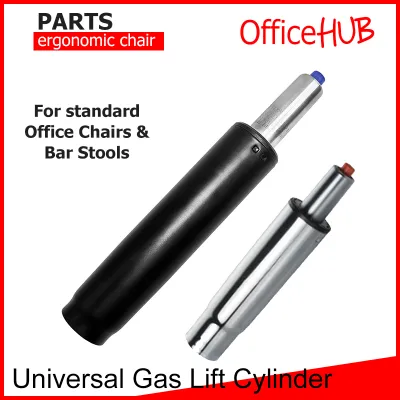
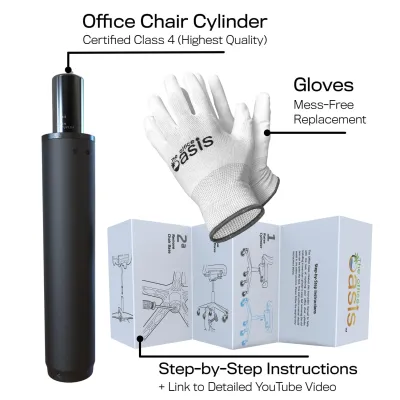
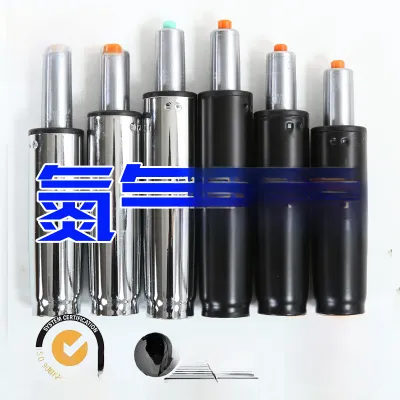
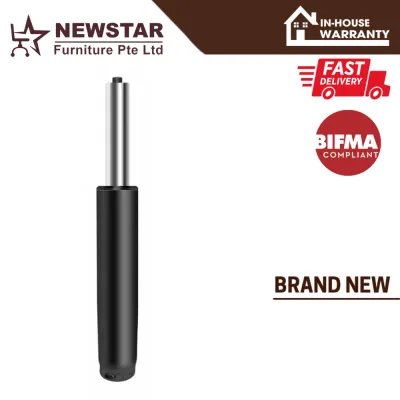
Prices are valid at publication and may change. Please refer to the product page for the latest price.
- Class 1 and Class 2: These cylinders feature thin steel walls, typically under 1.0 mm, and are designed for light-duty or occasional use. They are commonly found in budget-friendly, entry-level chairs. For daily adult office work, these classes should generally be avoided, as their seals and thin walls are more susceptible to premature wear, wobbling, and pressure loss under consistent daily loads.
- Class 3: This class is the standard benchmark for reputable ergonomic office chairs. Under standard manufacturing specifications, Class 3 cylinders typically feature an outer steel wall thickness of approximately 1.5 mm. They are generally rated to support weight capacities up to 150 kg. This provides a reliable balance of durability and cost-effectiveness for standard home office environments.
- Class 4: Representing the heavy-duty standard for premium office seating, Class 4 cylinders are constructed with thicker steel walls, typically measuring around 2.0 mm. They are frequently rated to support loads up to 200 kg or more, depending on the overall chair base and frame limits. The thicker steel wall provides superior resistance to lateral forces, reducing the likelihood of the chair developing a wobble over time and ensuring a higher safety margin.
Recognizing Valid Certification Marks
Because any brand can claim their chair features a “high-quality” or “heavy-duty” lift, verifying these claims through independent, third-party testing certifications is essential. Legitimate manufacturers subject their hydraulic cylinders to rigorous safety and durability testing to obtain certifications from recognized international bodies.
- SGS and TÜV Rheinland: These are leading global testing, inspection, and certification organizations. A cylinder certified by SGS or TÜV Rheinland has undergone extreme pressure, cycle, and load tests to ensure it complies with safety standards such as DIN 4550.
- BIFMA (Business and Institutional Furniture Manufacturers Association): The ANSI/BIFMA X5.1 standard defines specific safety and performance requirements for office chairs, including vertical load and cycle tests for the adjustment mechanism.
- Locating the Steel Stamp: To verify these certifications, look closely at the physical cylinder itself. Legitimate, certified cylinders feature the certification marks, the manufacturer's name, and the class rating permanently stamped directly into the steel casing of either the inner or outer column. If a brand advertises a "certified" lift but the physical cylinder lacks these engraved markings, or if the marketing materials use vague phrases like "tested to industry standards" without naming the specific certifying body, exercise caution.
Key Dimensions for Comparing Brand Durability
When comparing different home office chair brands in Singapore, evaluating the hydraulic cylinder’s long-term durability requires analyzing several key engineering and environmental factors. Because Singapore’s tropical climate features consistently high relative humidity—frequently exceeding 80% year-round—local environmental conditions place unique demands on the materials and finishes of office furniture.

- Warranty Terms for the Mechanism: One of the most reliable indicators of a brand's confidence in its hydraulic cylinder is the specific warranty period allocated to the lift mechanism. While a brand might offer a general 3-year or 5-year warranty on the chair frame, the moving parts—especially the gas lift—are often subject to shorter coverage periods or excluded entirely under "wear and tear" clauses. Prioritize brands that explicitly include the hydraulic cylinder in their comprehensive warranty for a period of 5 to 12 years. A long, explicit warranty ensures that if the internal seals fail prematurely, the brand will provide a replacement cylinder without additional cost.
- Surface Treatment and Corrosion Resistance: In highly humid environments like Singapore, rust is a primary enemy of hydraulic cylinders. If the outer steel tube of the cylinder begins to corrode, the rough rust particles can damage the internal rubber seals as the cylinder moves up and down, leading to rapid gas leakage. When comparing chairs, check the surface treatment of the cylinder. High-quality cylinders feature advanced protective finishes such as electrophoretic coating, black oxide treatment, or heavy chrome plating. These finishes provide a robust barrier against moisture and oxidation, preventing rust formation and preserving the smooth operation of the lift.
- Seal Quality and Internal Lubrication: The longevity of a hydraulic cylinder depends entirely on its ability to maintain pressurized nitrogen gas within its chamber. This containment relies on high-quality internal rubber O-rings and specialized synthetic lubricants. While you cannot inspect these internal components before purchasing, you can verify their quality indirectly. Look for brands that are transparent about their component sourcing, often partnering with established global cylinder manufacturers. Additionally, check user feedback specifically concerning the chair's performance after two or three years of continuous use; frequent reports of minor height adjustments or a spongy feel under weight often point to inferior seal materials or inadequate factory lubrication.
Warning Signs of Hydraulic Cylinder Failure
Over years of daily use, even high-quality hydraulic cylinders will eventually experience wear. Recognizing the early signs of degradation is crucial for maintaining a safe and ergonomic workspace, as a failing cylinder can compromise your posture or lead to sudden physical instability.
- Gradual Sinking: The most common symptom of a failing hydraulic cylinder is a chair that slowly and silently drops in height while you are sitting on it. This gradual sinking occurs when the internal rubber seals degrade or crack, allowing the pressurized nitrogen gas to slowly bypass the seals and escape from the high-pressure chamber. If you find yourself repeatedly adjusting your chair height throughout the day, the cylinder's sealing mechanism has failed and requires replacement.
- Oil Leaks and Residue: High-quality gas lifts contain a specific amount of synthetic oil to lubricate the seals and internal piston rod. If you notice a dark, greasy residue or liquid oil accumulating around the base of the cylinder, on the top of the five-star wheel base, or on the floor beneath the chair, it indicates that the primary seal has ruptured. Once the lubricant escapes, the internal metal components will experience rapid wear, leading to imminent mechanism failure.
- Jerky or Noisy Adjustments: When you operate the height adjustment lever, the movement should be smooth and silent. If the chair stutters, moves in a jerky, ratcheting motion, or produces grinding, squeaking, or clicking noises, the internal lubrication has dried out, or the inner cylinder wall has suffered physical scoring. This mechanical friction accelerates wear and can eventually lock the cylinder in place.
- Safety Boundary: If your hydraulic cylinder exhibits any of these failure signs, do not attempt to bypass or lock the mechanism using makeshift solutions such as metal hose clamps, PVC pipe shims, or mechanical split collars clamped around the inner column. While these DIY methods can temporarily hold the chair at a fixed height, they do not resolve the underlying structural failure of a pressurized vessel. A compromised gas cylinder is a physical hazard; sudden pressure loss or structural failure under load can lead to unexpected collapse, potentially causing fall injuries or damaging the chair's tilt mechanism. The only safe and correct course of action is to replace the failing cylinder.
Decision Framework: Choosing the Most Reliable Option
To make an informed purchasing decision that aligns with your specific needs, budget, and long-term durability expectations, use the following structured framework to evaluate your options.
- Choose a brand with a long, comprehensive mechanism warranty if:
- You plan to use the chair for intensive daily work (8 or more hours per day).
- You prioritize long-term peace of mind and want to avoid the hassle of sourcing aftermarket parts.
- You want guaranteed access to official replacement components and customer support in Singapore.
- Choose a chair with verified Class 4 and TÜV/SGS stamps if:
- The user's weight is close to or exceeds 100 kg, requiring a higher structural safety margin.
- You want the maximum resistance against lateral forces to prevent the chair from developing a wobble over years of use.
- You prefer components that have undergone rigorous, independent laboratory testing to guarantee structural integrity.
- Verify first if:
- The brand explicitly states the gas lift class (Class 3 or Class 4) in their product specifications rather than using generic marketing terms.
- The chair utilizes a standard 50 mm tapered cylinder design. This standard size is highly compatible with a wide range of third-party replacement cylinders, ensuring you can easily repair the chair in the future even if the original brand is no longer operating.
- The delivery and assembly conditions are clearly outlined. For heavy chairs with robust Class 4 cylinders and solid steel bases, ensure your building's lift access and doorways can accommodate the packaged dimensions, or opt for professional assembly services if you lack the specialized tools to seat the tapered cylinder securely.
- Neither option may fit if:
- The manufacturer hides or refuses to disclose the gas lift class and certification details.
- The chair uses a proprietary, non-standard cylinder design that prevents the use of standard aftermarket replacements.
- The brand offers a warranty of less than 2 years on the hydraulic lift mechanism, indicating a higher risk of premature failure and subsequent out-of-pocket replacement costs.
Frequently Asked Questions (FAQ)
Can I replace a sinking hydraulic cylinder myself?
Yes, replacing a sinking cylinder is a manageable DIY task for most users, provided the chair uses a standard tapered design. To perform the replacement, you will need a rubber mallet, a pipe wrench (to grip and twist the old cylinder), and penetrating oil if the components have become tightly wedged together over time. Start by applying penetrating oil to the joints where the cylinder meets the seat mechanism and the wheel base, allowing it to sit for a few minutes. Carefully tap the base with the mallet while holding the cylinder, and use the pipe wrench to twist the cylinder out of the seat plate. However, if the cylinder is severely stuck, requires proprietary tools, or if you feel unsure about handling the pressurized mechanism, stop immediately. Consult a professional technician or the chair’s manufacturer to prevent damage to the chair frame or personal injury.
Is a Class 4 gas lift always better than a Class 3 for home use?
Not necessarily. While a Class 4 gas lift features thicker steel walls (typically 2.0 mm compared to 1.5 mm for Class 3) and supports higher maximum weight capacities, it does not automatically guarantee smoother daily operation or better internal seal longevity. The overall durability of a hydraulic cylinder is heavily influenced by the quality of its internal rubber seals, the precision of its internal valves, and the grade of synthetic lubrication used during manufacturing. A high-quality, certified Class 3 cylinder sourced from a reputable, specialized manufacturer will consistently outperform and outlast a poorly manufactured Class 4 cylinder that uses low-grade seals or inadequate internal lubrication. For the vast majority of home office users under 120 kg, a certified Class 3 cylinder from a transparent brand offers exceptional durability and performance.
Community discussion
Share your experience or ask a question. Comments are reviewed before publication.