
Quick Answer: Matching Pillow Designs to Your Travel Needs
Finding the ideal foldable travel pillow is not about searching for a single, universally perfect brand. Instead, the right choice depends entirely on how you balance the trade-off between rigid, 360-degree neck support and ultra-compact packability. Every traveler has unique physical needs and luggage constraints, meaning a design that works for a long-haul flight might be too bulky for a weekend backpacking trip.
To make an informed decision, you can use a conditional framework based on your primary travel style. If your main priority is saving space in a small carry-on bag, wrap-style designs with internal support structures offer the most compact footprint. For those who require firm, traditional cushioning to prevent neck strain, contoured memory foam models provide excellent lateral stability despite their larger packed size. If you want a middle ground with adjustable firmness and minimal weight, hybrid inflatable designs allow you to customize the support level while deflating to a fraction of their fully expanded size.
Evaluating Neck Support: What to Check in Brand Specifications
When comparing travel pillow brands, marketing terms like “orthopedic” or “ergonomic” offer little practical guidance. To evaluate how well a pillow will support your head and neck during transit, you must look closely at the physical specifications and structural features. A supportive pillow must prevent your head from tilting sideways or falling forward, which are the primary causes of post-travel neck stiffness.
Products mentioned in this guide

![[SG FREE 🚚] Portable Inflatable Flocking PVC Pillow Camping Sleeping Air Pillow For Travel Outdoor Hiking Flight Foldable Head Rest Pillow](https://img.lazcdn.com/g/p/7c7e8dccc27170ad66771c8abe66593c.jpg_400x400q80.jpg_.webp)

Prices are valid at publication and may change. Please refer to the product page for the latest price.

First, examine the contours of the pillow. High-quality designs often feature raised side lobes that cradle the jawline and a tapered back section that sits flat against the seat headrest. This flat back is crucial because a thick, rounded pillow will push your head forward, straining your neck muscles. Additionally, look for built-in chin support mechanisms, such as overlapping front ends or adjustable toggles, which keep your head upright when you nod off.
Next, check the product labels for the specific materials used inside the pillow. High-density polyurethane memory foam offers consistent, contouring support but reacts to ambient temperature, becoming firmer in cold airplane cabins. Alternatively, some brands use internal plastic or composite frames wrapped in fleece to create a rigid shelf for your neck. When reviewing these specifications, verify if the support structures are adjustable or if they come in different sizes to match your neck length.
Finally, pay attention to the fastening systems. Adjustable straps, magnetic buckles, or interlocking hook-and-loop bands allow you to customize the tension and fit. A secure fastening system ensures the pillow remains snug against your neck throughout the journey, preventing it from shifting as you move. During your initial fitting at home, observe whether the pillow distributes weight evenly across your collarbones and shoulders without creating uncomfortable pressure points.
Assessing Compactness and Packability for Travel
Packability is just as important as support when you are navigating crowded airport terminals or packing a compact carry-on bag. To assess the true footprint of a travel pillow, you should look past the fully inflated or expanded dimensions and focus on the compressed, packed measurements. Many brands advertise a plush, oversized pillow but fail to mention how much space it occupies in your luggage.
Start by comparing the expanded dimensions with the folded, rolled, or deflated dimensions provided in the manufacturer’s specifications. A reliable travel pillow should compress to at least half its original size. Check if the product includes a dedicated compression sack, a travel pouch, or integrated straps that keep the pillow tightly rolled. Some premium models utilize vacuum-style valves or heavy-duty compression straps to squeeze out excess air and foam volume, allowing them to fit into tight corners of your backpack.
The total weight of the pillow is another critical factor, especially if you are trying to stay within strict airline carry-on limits. While memory foam pillows offer excellent comfort, they are generally heavier than inflatable or wrap-style alternatives. Look for the exact weight in grams or ounces on the product specification sheet, keeping in mind that any rigid hardware, heavy buckles, or thick carrying cases will add to the total weight you have to carry.
Lastly, evaluate the external attachment options. If your cabin bag is already full, you will need a convenient way to transport the pillow outside your luggage. Look for carrying cases equipped with sturdy carabiners, snap loops, or adjustable straps that allow you to secure the pillow to your backpack handle or suitcase trolley sleeve. This keeps the pillow easily accessible during transit while saving valuable internal storage space.
Comparing Common Foldable Pillow Structural Designs
Modern foldable travel pillows generally fall into three distinct structural categories, each offering a different balance of support, weight, and packed volume. Understanding these design philosophies will help you narrow down your choices and select a brand that aligns with your specific comfort preferences and packing habits.
Wrap and Scarf-Style Supports
Wrap and scarf-style supports represent a significant departure from traditional travel pillows. Instead of relying on foam or air, these designs utilize a hidden, flexible internal support structure—often made of lightweight plastic—that is held against the side of your neck by a soft fabric wrap. This creates a stable lateral shelf that prevents your head from bending at an uncomfortable angle.
The primary advantage of this design is its exceptional packability. Because there is no bulky foam or air chamber, the entire wrap can be rolled up or folded flat, easily fitting into small outer pockets of your luggage or even a jacket pocket. However, the effectiveness of a wrap-style support depends heavily on your wrapping technique. You must adjust the tension correctly to ensure the internal frame sits snugly against your jaw and shoulder, which may require some trial and error during your first few trips.
Contoured Memory Foam with Compression Straps
Contoured memory foam pillows are the closest relatives to traditional household pillows, offering a familiar, cushioned feel. These designs typically feature a U-shape or J-shape with raised side panels to support the head from multiple angles. The high-density foam conforms to the unique shape of your neck and shoulders, absorbing movement and providing excellent vibration dampening on bumpy flights.
While memory foam offers superb comfort, its packed size is naturally larger than other designs. To address this, manufacturers often include compression straps or toggle closures that allow you to roll the pillow tightly into a compact cylinder. When evaluating these models, pay close attention to the durability of the compression hardware, such as plastic buckles and drawstring toggles, as these components are under constant tension when the pillow is packed away.
Hybrid and Inflatable-Core Designs
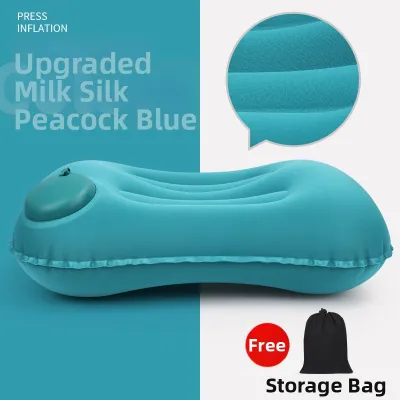
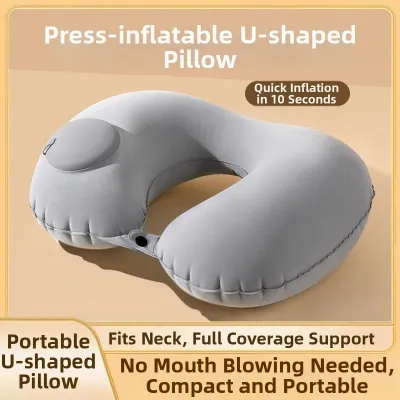
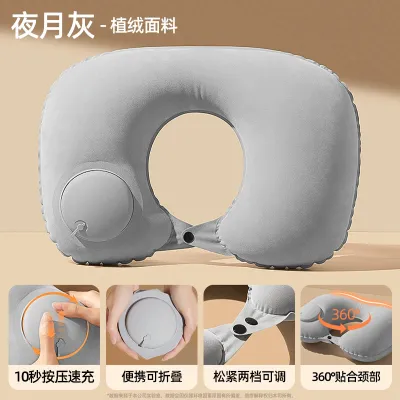
Hybrid and inflatable-core designs aim to combine the space-saving benefits of air pillows with the plush comfort of foam. These pillows feature an inflatable inner bladder surrounded by a thin layer of memory foam, microfiber padding, or soft quilted fabric. This construction allows you to deflate the pillow completely for storage while still enjoying a soft, non-plastic surface against your skin.
The deflated footprint of a hybrid pillow is incredibly small, often matching the size of a soda can. Additionally, the air valve allows you to adjust the firmness of the pillow on the fly; you can release a small amount of air to make the support softer or inflate it fully for maximum rigidity. Before purchasing, it is essential to check the durability of the seams and the valve mechanism, as well as the puncture resistance of the outer fabric, to ensure the pillow does not lose air during a long flight.
Finalizing Your Purchase: A Practical Selection Checklist
Before you make a final decision and purchase a foldable travel pillow, it is helpful to run through a practical checklist to ensure the model you choose fits your travel habits and physical requirements. Taking a few minutes to verify these details can prevent the hassle of returning an unsuitable product.
- Measure Your Luggage Space: Compare the packed dimensions of the pillow directly against the available space in your favorite travel bag. If you usually travel with a small personal item, a bulky memory foam pillow may not fit, making a wrap-style or inflatable design a more practical choice.
- Verify the Return Policy: Comfort is highly subjective, and a pillow that works for one person might feel uncomfortable for another. Ensure the retailer or brand offers a flexible return or exchange policy so you can test the pillow's fit and support at home before committing to keeping it.
- Check the Care Labels: Travel pillows are exposed to sweat, oils, and dirty airplane surfaces. Verify that the outer cover is fully removable and machine washable, and check if the inner support structure requires special spot-cleaning.
- Read Seating-Specific Feedback: Look for user reviews that mention your typical travel conditions, such as window versus middle seats, or long-haul flights. This feedback can reveal whether a pillow remains comfortable when pressed against a cabin wall or if it slips out of place on leather seats.
Frequently Asked Questions (FAQ)
Can I wash the inner support structure of a foldable travel pillow?
No, you should generally avoid washing the inner support structure of a travel pillow unless the manufacturer’s care label explicitly states it is safe to do so. Internal components like high-density memory foam, plastic structural frames, and inflatable air bladders can be easily damaged by water, heat, and laundry detergents. Washing memory foam in a machine can cause it to tear or lose its supportive properties, while hot water can degrade the seams of inflatable bladders. Instead, always remove the outer fabric cover for machine washing, and use a damp cloth to gently spot-clean the inner core if it becomes soiled.
Are foldable travel pillows allowed in carry-on luggage?
Yes, foldable travel pillows are widely permitted in carry-on luggage and are generally treated as personal comfort items rather than standard pieces of baggage. Most airlines do not count a travel pillow worn around your neck or attached to the outside of your bag toward your strict carry-on allowance. However, rules can vary, especially on budget carriers with highly restrictive personal item dimensions. To avoid any issues at the boarding gate, it is always wise to verify your specific airline’s baggage policy and ensure your pillow can be easily compressed and packed inside your main bag if required.
Community discussion
Share your experience or ask a question. Comments are reviewed before publication.