
Quick Answer: Navigating Foldable Single Mattress Brands by Firmness
Finding the best single mattress foldable option in Singapore depends on matching a brand’s firmness levels and material density to your sleep profile, budget, and space constraints, rather than crowning a single brand as a universal winner. Because foldable mattresses have thinner profiles than traditional beds, minor variations in material quality and construction drastically affect sleep support.
In Singapore, where space optimization is critical in typical HDB flats and condominiums, single-size foldable mattresses are highly popular. However, the market is filled with options that vary widely in quality and support. To compare brands effectively, look past subjective marketing terms and evaluate four core pillars: firmness consistency across joints, fold design (tri-fold versus bi-fold), foam or latex density, and cover hygiene. This guide will help you decode technical specifications to find the right fit for daily use or guest hosting, ensuring you invest in a mattress that supports your spinal alignment without bottoming out.
Understanding Firmness Levels in Foldable Single Mattresses
Foldable single mattresses must achieve proper support within a shallow profile, usually ranging from 2 to 6 inches (approximately 5 to 15 centimeters). Because there is less material depth to absorb body weight, foldable mattresses typically feel firmer than traditional beds of the exact same rated firmness. On a standard 1-10 firmness scale (where 1 is extremely soft and 10 is rigid), a foldable mattress rated as a “medium” (5) often feels like a “medium-firm” (7). If the mattress is too soft, heavy pressure points like your hips will compress the thin foam completely, causing you to bottom out against the hard floor.
Products mentioned in this guide
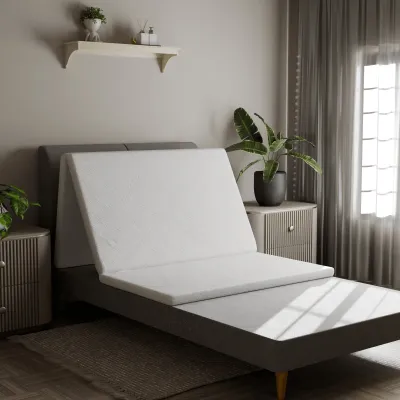
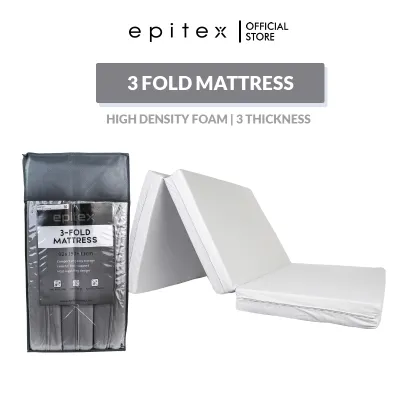
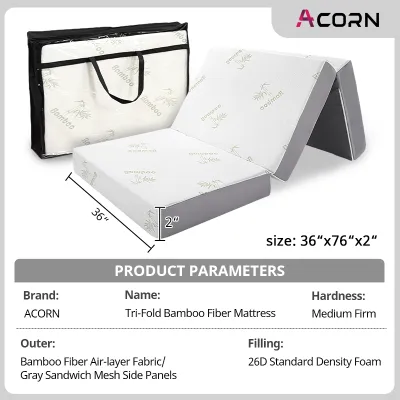
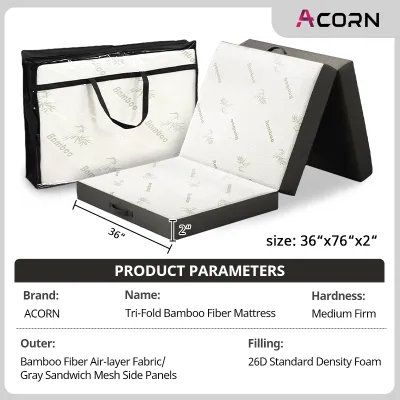
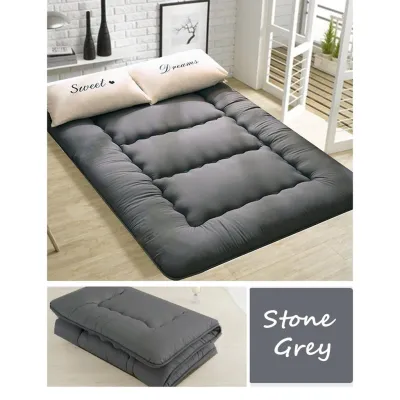
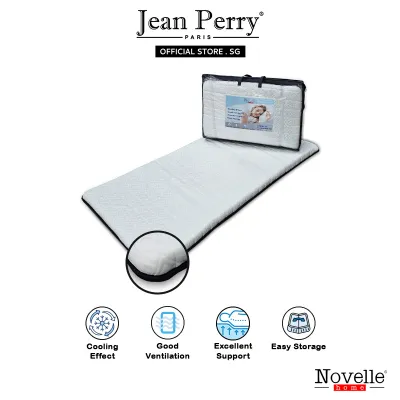
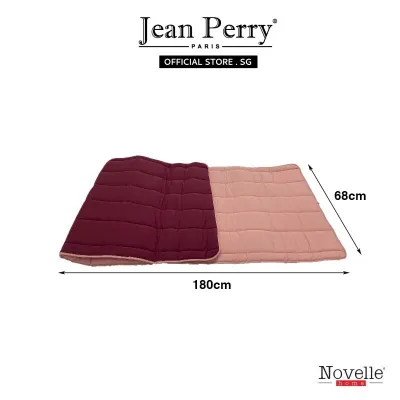
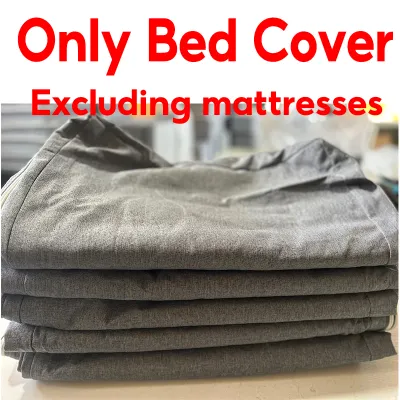
Prices are valid at publication and may change. Please refer to the product page for the latest price.

The materials used inside the mattress dictate how it responds to your weight:
- High-Density Polyurethane (PU) Foam: This is the most common support material, offering highly responsive "push-back" support to keep your body aligned. It serves as the durable base for most foldable designs, ensuring that the mattress maintains its shape and support over years of repeated folding.
- Memory Foam: Often used as a top comfort layer to contour to your body and relieve pressure. However, a pure memory foam foldable mattress without a dense PU foam base will cause excessive sinkage, making it highly uncomfortable for daily use.
- Natural Latex: A premium option that offers a springy, highly responsive feel. It distributes weight evenly, sleeps cooler, and retains its shape well over years of repeated folding, making it an excellent investment for those seeking durability.
To verify firmness and durability, look past subjective marketing terms like “orthopedic support” or “cloud-like comfort.” Instead, check for objective specifications such as foam density (measured in kg/m³) or Indentation Load Deflection (ILD) ratings. High-quality PU support foam should have a density of 30 kg/m³ or higher. Brands that do not disclose density often use low-grade foam that softens and sags within months, leading to back discomfort.
Key Comparison Dimensions Beyond Firmness
While selecting the correct firmness level is vital for spinal alignment, several other physical and structural dimensions determine how well a foldable mattress performs in a Singapore home.
- Fold Design and Hinge Durability: Tri-fold designs divide the single mattress into three equal segments connected by fabric hinges. They are highly compact and fit easily into closets, wardrobe tops, or household shelters, making them ideal for space-constrained homes. However, the fabric hinges experience high wear and can tear if the stitching is poor. Bi-fold designs fold in half, offering a more continuous sleeping surface with fewer seams and less joint wear, but they remain bulky when folded and require larger storage spaces.
- Cover Materials and Climate Suitability: Singapore's year-round high humidity requires breathable, moisture-wicking covers. Look for removable, washable covers made of natural bamboo fibers, Tencel, or high-performance breathable mesh to dissipate body heat and prevent mold, mildew, and dust mites. Avoid cheap, non-breathable synthetic polyester covers that trap heat and cause uncomfortable, sweaty sleep. A removable cover is essential for maintaining hygiene, especially if the mattress is placed directly on the floor where dust accumulates.
- Thickness and Support Base: A foldable single mattress should be at least 4 inches (10 centimeters) thick to prevent an average adult from bottoming out. While 5-inch or 6-inch models provide superior support and comfort, they are heavier and bulkier, making them harder to fold, lift, and transport. If the mattress is for daily use, prioritize thickness; if it is for occasional guest use, a lighter 3-inch model may suffice, provided the foam density is exceptionally high.
- Storage and Portability: Look for practical features like reinforced carry handles and included breathable storage bags. Always measure your storage space and compare it against the brand's folded dimensions before purchasing. Storing a foldable mattress in a non-breathable plastic cover can trap moisture and ruin the foam, so a breathable fabric bag is highly recommended for long-term storage.
Matching Firmness to Your Sleep Profile and Use Case
To select the right model, you must align the mattress’s firmness with your sleeping posture, body weight, and intended use. Because foldable single mattresses lack the complex spring systems of traditional beds, matching the foam’s physical properties to your sleep profile is critical.
A mattress that is too soft will cause your heaviest pressure points—specifically your hips and shoulders—to sink completely through the material, causing you to “bottom out” against the hard floor. Consequently, most reputable manufacturers design foldable mattresses with a baseline firmness rating of 6 to 8 to ensure adequate support.
- Sleep Position Requirements:
- Side Sleepers: Need a medium to medium-soft profile (4 to 6 on the scale) to allow shoulders and hips to sink, maintaining spinal alignment.
- Back Sleepers: Require a medium-firm profile (6 to 7) to support the lower back curve.
- Stomach Sleepers: Need a firm to extra-firm profile (7 to 9) to prevent the pelvis from sagging, which arches the spine uncomfortably.
- User Weight Dynamics: Lighter individuals (<60 kg) exert less force and may find medium-firm mattresses uncomfortably hard. Heavier individuals (>80 kg) compress thin foam easily and require a very firm, high-density mattress (8 out of 10) to prevent bottoming out.
- Primary Use Case: Daily use in small apartments demands a premium 5-to-6-inch mattress with high-density foam and excellent edge support. For occasional guests, a universal medium-firm feel (6 to 7) is the safest choice to accommodate various sleeping styles, prioritizing lightweight portability and storage bags.
| Sleep Position | User Weight Profile | Recommended Firmness (Scale 1-10) | Ideal Material Characteristic |
|---|---|---|---|
| Side Sleeper | Light to Moderate (<75 kg) | 4 to 6 (Medium-Soft to Medium) | Contouring memory foam or soft latex top over a high-density base |
| Side Sleeper | Heavy (>75 kg) | 6 to 7 (Medium-Firm) | High-density resilient foam with a thick comfort layer |
| Back Sleeper | Light (<60 kg) | 5 to 6 (Medium) | Responsive latex or medium-density PU foam for gentle contouring |
| Back Sleeper | Moderate to Heavy (>60 kg) | 6.5 to 8 (Medium-Firm to Firm) | Thick, high-density PU foam base with minimal sinkage |
| Stomach Sleeper | All Weight Profiles | 7 to 9 (Firm to Extra-Firm) | Ultra-dense, rigid PU foam base to prevent hip sinkage |
| Multi-position / Guest | Variable | 6 to 7 (Universal Medium-Firm) | Balanced, resilient PU foam with a breathable, washable cover |
How to Evaluate Brands and Verify Claims
When shopping on online marketplaces or in local showrooms, look for verifiable evidence to back up brand claims. Since physical testing is not always possible before buying online, understanding how to read product specifications and analyze user feedback is crucial.
To avoid buying a mattress that quickly loses its shape, prioritize brands that are transparent about their materials and manufacturing processes.
- Checking Product Labels: Verify that the unfolded single size matches standard Singapore dimensions (typically 91 cm x 190 cm) so fitted sheets fit properly. Check the folded dimensions, foam density, and cover material composition. If a brand only lists "high-density foam" without a numerical value (such as 30 kg/m³ or higher), proceed with caution as the foam may degrade rapidly under regular use.
- Analyzing User Reviews: Filter reviews for keywords like "too soft," "sank," "bottomed out," or "back pain" to assess true firmness. Reviews written after six months of use offer the most accurate picture of durability and resistance to sagging. User feedback often reveals the true firmness and durability better than the brand's own marketing, helping you avoid low-grade products.
- Trial Periods and Return Policies: Some premium brands offer 30-to-100-night sleep trials. Read the fine print to check for return shipping or restocking fees in Singapore, and verify if you must repackage the mattress in its original box. Ensure the warranty covers foam sagging or indentation of more than 1 inch over a period of 3 to 10 years.
- Verifiable Certifications: Look for internationally recognized standards on product pages. CertiPUR-US ensures the foam is free from harmful chemicals (like formaldehyde and heavy metals) and has low VOC emissions. OEKO-TEX Standard 100 certifies that the cover fabrics are safe and free from harmful substances. Reputable brands will proudly display these badges on their official product pages.
Decision Framework: Which Brand Type Fits You?
Use this conditional framework to finalize your choice based on your priorities and budget:
- Choose a Premium Specialty Brand if: You need a foldable single mattress for daily use, require a highly specific firmness level for spinal support, want high-density foam that resists sagging, and have a budget of S$150 to S$400+ to invest in long-term sleep health. These brands typically offer sleep trials and multi-year warranties.
- Choose a Budget-Friendly Generalist Brand if: The mattress is primarily for occasional guests or children's sleepovers, you want a safe, universal medium-firm feel, and your main priorities are low cost (typically under S$100) and compact storage. These models are lightweight but may require replacement sooner under frequent use.
- Choose an Eco-Friendly / Natural Material Brand if: You prefer natural latex over synthetic foams, want a naturally cooling and responsive sleep surface, and accept a heavier weight and a higher price point. This is an excellent choice for those prioritizing sustainable manufacturing and chemical-free materials.
- Verify First if: You have chronic back pain, joint issues, or specific orthopedic needs. Before relying on a foldable mattress for primary, long-term sleep, check the applied product's label and the treated item's manufacturer instructions. If you have pre-existing medical conditions, consult a healthcare professional or physiotherapist first.
By identifying which of these categories aligns with your household’s requirements, you can narrow down your search and make a confident purchase that balances cost, comfort, and durability.
Frequently Asked Questions (FAQ)
Can a foldable single mattress replace a traditional bed for daily use?
While possible, a foldable single mattress has distinct limitations for daily use. They generally lack robust edge support, making the sides compress deeply when you sit near the edge. Placing them directly on the floor also restricts airflow, which can trap heat and moisture. For long-term daily use, choose a premium model at least 5 to 6 inches thick with high-density foam, and ideally place it on a slatted bed base to promote ventilation. This helps prevent back discomfort and extends the lifespan of the mattress.
How do I clean and maintain a foldable mattress in a humid climate?
Proper maintenance is crucial in Singapore’s humid climate to prevent mold and mildew. Always check the applied product’s label and the manufacturer’s specific care instructions first. If the cover is removable, machine wash it according to the care label’s temperature settings. Never saturate the internal foam with water or liquid cleaners, as trapped moisture causes mold and foam degradation. For spills, blot immediately with a dry cloth. To eliminate odors, sprinkle baking soda on the dry foam, let it sit, and vacuum it off. Air the mattress regularly in a well-ventilated room, keeping it out of direct, intense sunlight which degrades polyurethane foam. If instructions conflict or the use is not covered, consult the manufacturer or a professional mattress cleaner.
Community discussion
Share your experience or ask a question. Comments are reviewed before publication.