
Selecting the ideal firmness for a queen-size bed is not about finding a single, universally perfect number on a scale. Instead, the correct firmness level is a highly individual decision driven by your primary sleeping position, body weight, and whether you share the bed with a partner. When searching for the perfect mattress queen size in Singapore, you must balance personal comfort with the physical realities of your bedroom space, local climate, and the structural integrity of the bed itself.
In Singapore’s mattress market, consumers generally encounter two distinct manufacturing philosophies. Traditional heritage brands usually offer structured, multi-tiered firmness options (such as Plush, Medium, and Firm) within their classic collections, relying on physical showroom testing. Direct-to-consumer “bed-in-a-box” brands, on the other hand, typically engineer a single “universal” medium-firm profile designed to satisfy the vast majority of sleepers, backed by risk-free home sleep trials.
When shopping for a queen-size bed, focusing solely on surface firmness is a common pitfall. For a bed of this size, which is highly popular in local HDB flats and condominiums due to its space-saving footprint, you must also evaluate how the mattress handles motion transfer and edge support. These secondary factors directly determine whether two sleepers can rest comfortably without disrupting each other’s sleep throughout the night.
Products mentioned in this guide
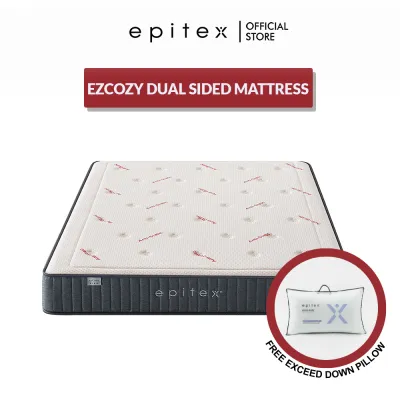
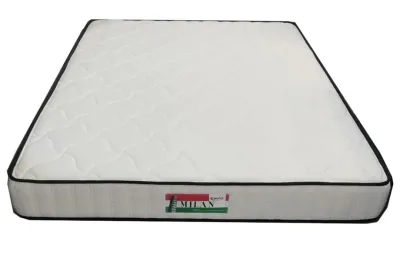
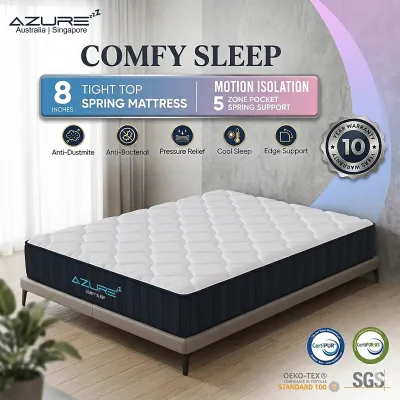
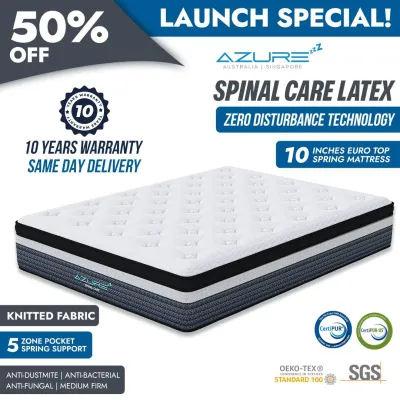
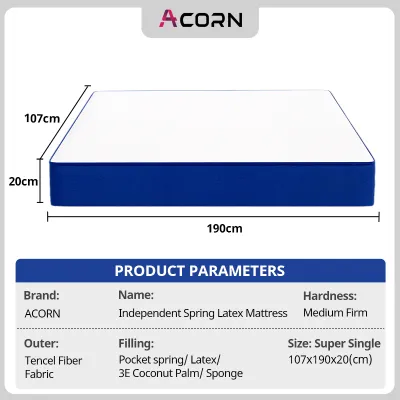
![[Bulky] DREAMAX Equinox Rest 8 Inch Comfort Pocket Spring Mattress / 20cm / Bed (SG) / sd](https://img.lazcdn.com/g/p/c25e074503162de8fade85f5c4b33c8d.jpg_400x400q80.jpg_.webp)
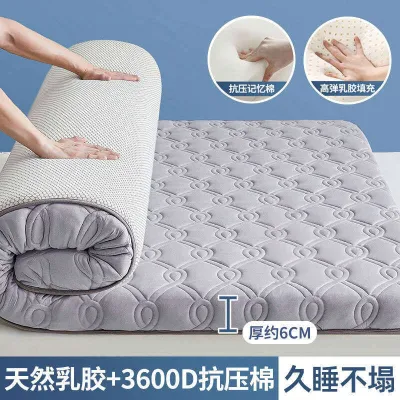
![[SG] NEXT DAY DELIVERY + FREE PILLOWS. Pocket Spring FIRM Mattress Luxury Memory Foam Single Super Single Queen King High Quality. Euro Design and High Quality. Comes in King Size Queen Super Single and Single Size Mattress. Free & Fast Delivery](https://img.lazcdn.com/g/p/f3daa9a9becc0782f477139f4696cded.jpg_400x400q80.jpg_.webp)
Prices are valid at publication and may change. Please refer to the product page for the latest price.
Firmness vs. Support: What Queen Size Sleepers Need to Know
Many shoppers conflate firmness with support, yet they serve entirely different functions in mattress design. Firmness refers to the immediate feel of the mattress surface when you first lie down—how soft or hard it feels against your skin and muscles. Support, conversely, refers to the underlying structural integrity of the mattress core, which is responsible for keeping your spine in a neutral, healthy alignment regardless of your sleep position.
To help consumers navigate these differences, the bedding industry uses a standard 1-to-10 firmness scale. On this spectrum, a rating of 1 represents an extremely soft surface with almost no resistance, while a 10 represents an incredibly rigid, board-like feel. The vast majority of mattresses sold in Singapore fall within the 5-to-7 range, which is widely classified as “medium-firm” and offers a balanced compromise between initial pressure relief and deep structural support.
The physical dimensions of a standard Singapore queen mattress (typically measuring 152 cm by 190 cm) introduce unique structural demands. Because a queen bed is the most common choice for couples, the mattress core must support two distinct body weights and sleeping postures simultaneously. Without a robust support core, a mattress can develop a “hammocking” effect over time, causing both sleepers to roll involuntarily toward the center of the bed.
Furthermore, the usable surface area of a queen-size bed is highly dependent on the quality of its edge support. If a mattress has weak, sagging edges, you will naturally feel as though you are about to roll off the bed when sleeping near the perimeter. This effectively reduces your usable sleeping space, forcing both partners to crowd into the center and making a standard queen bed feel significantly smaller than its actual dimensions.
How Popular Brands in Singapore Design Their Firmness Levels
As you compare options in the Singapore market, you will find that brands approach firmness through different design philosophies and material compositions. Because manufacturers frequently update their product lines, seasonal collections, and material specifications, it is always wise to verify current model details on official brand websites or via authorized local retail showrooms before making a purchase.

Traditional Innerspring and Hybrid Brands
Established showroom brands in Singapore—including household names like Sealy, Simmons, King Koil, and Tempur—typically utilize a traditional product tier system. Within a single model line, they often manufacture multiple variations, allowing you to choose between Plush, Medium, and Firm iterations of the same basic mattress design. This approach relies heavily on the physical showroom experience, where buyers can lie on different models to compare the exact tension of pocketed coils and the thickness of integrated pillow tops.
These traditional hybrid and innerspring models are highly valued for their precise, engineered support systems. By varying the gauge (thickness) of the steel wire used in the coil units or altering the density of the comfort foams, these brands can cater to highly specific comfort preferences. However, because these mattresses feature heavy steel coil units and thick comfort layers, they are exceptionally heavy and rigid, making it essential to measure your lift cabins, doorway clearances, and corridor turns before arranging delivery to high-rise Singapore apartments.
Bed-in-a-Box and Foam Brands
In contrast, direct-to-consumer bed-in-a-box brands—such as Origin, Woosa, and Emma—have streamlined the buying process by offering a limited selection, often centering on a single “universal” medium-firm model. This design philosophy aims to hit the comfort “sweet spot” (typically a 6 or 6.5 out of 10 on the firmness scale) that comfortably supports approximately 80% of sleepers. By minimizing options, these brands reduce decision fatigue and simplify the online purchasing journey.
Because these mattresses are compressed, rolled, and shipped in compact cardboard boxes, they cannot be easily tested in a traditional showroom setting before purchase. To offset this limitation, online-first brands rely on extended, risk-free home sleep trials, often spanning 100 nights or more. This allows you to evaluate the mattress’s true firmness and support in your own home environment, under actual sleeping conditions, which is generally far more revealing than a brief five-minute trial in a brightly lit retail store.
Natural Latex Specialists
For sleepers seeking an eco-friendly or highly breathable option, natural latex specialists like Heveya or European Bedding offer a distinctly different tactile experience. Unlike memory foam, which contours slowly to the body and can create a “sinking” sensation, natural latex is highly resilient and buoyant. It provides an immediate “push-back” support that keeps you resting on top of the mattress surface rather than sinking deep into it, making it exceptionally easy to turn over during the night.
Latex brands frequently address firmness customization through modular designs. Instead of gluing the internal layers together, they often house independent latex layers of varying densities (such as soft, medium, and firm) within a zippered mattress cover. This clever design allows you to unzip the cover and physically rearrange the internal layers at home to customize the overall firmness, providing a highly adaptable sleeping surface that can be adjusted as your physical needs change over time.
Beyond the Label: 4 Key Dimensions to Compare for a Mattress Queen Size
To make an informed decision, you must look beyond the simple numerical firmness rating printed on a spec sheet. Evaluating how different materials and construction methods interact will give you a much clearer picture of how a mattress queen size will actually perform in your daily life.
- Comfort Layer Material: The materials used in the top comfort layers dictate the initial feel and pressure-relieving characteristics of the bed. High-density memory foam excels at deep pressure relief by contouring precisely to your body's curves, which makes the mattress feel slightly softer and more cradling. On the other hand, natural latex and micro-coils react instantly to your movements, providing a springy, active bounce that makes the mattress feel firmer, more responsive, and easier to move around on.
- Support Core Construction: The foundation of the mattress determines its long-term durability and structural alignment capabilities. Pocketed coil support cores consist of hundreds of individually wrapped steel springs that compress independently, offering targeted support to different zones of the body while preventing motion from transferring across the bed. High-density polyfoam support cores provide a solid, uniform foundation but may lack the localized contouring and dynamic responsiveness of a high-quality pocketed spring system.
- Edge Support Systems: A robust edge support system is critical for maximizing the usable surface area of a queen-size bed, especially when shared by two people. High-quality mattresses often feature a reinforced perimeter, either through a thick border of high-density foam encasement or by utilizing heavier-gauge steel coils along the outer edges. This structural reinforcement prevents the common "roll-off" sensation when sleeping near the edge and provides a stable, supportive surface when sitting on the side of the bed to put on your shoes.
- Temperature Regulation: In Singapore's hot and humid tropical climate, heat retention is a major comfort consideration that is directly influenced by mattress firmness. Firmer mattresses generally sleep cooler because your body remains positioned on top of the sleeping surface, allowing air to circulate freely around you. Softer mattresses, which allow you to sink deeper into the comfort layers, tend to trap body heat against your skin, particularly if the comfort layers are made of traditional, non-gel-infused memory foams that lack open-cell breathability.
Decision Framework: Which Firmness Should You Choose?
Selecting the right firmness level requires a careful analysis of your personal sleep habits, body type, and bedroom environment. By applying conditional logic to your specific circumstances, you can narrow down the vast array of choices to the option most likely to provide a restful night’s sleep.
Choose a Plush/Soft feel (3 to 4 out of 10) if:
- You are a strict side sleeper who requires deep cushioning to prevent painful pressure points from developing on your shoulders and hips.
- You have a lighter body weight (typically under 60 kg) and do not exert enough physical force to compress firmer comfort layers, which can make a medium mattress feel excessively hard.
- You sleep alone or with a partner of a similar light build, and you prefer a "cloud-like," cradled sensation over a buoyant, active bounce.
Choose a Medium/Medium-Firm feel (5 to 7 out of 10) if:
- You are a combination sleeper who frequently shifts between your back, side, and stomach throughout the night, requiring a versatile surface that adapts to multiple positions.
- You share the queen bed with a partner of a different weight or sleeping style, as this range offers the most balanced compromise that satisfies both sleepers.
- You are furnishing a guest room or purchasing a mattress online without prior testing, making this the safest, most universally comfortable choice.
Choose a Firm feel (8 to 9 out of 10) if:
- You sleep predominantly on your back or stomach, positions that require a highly stable, non-yielding surface to prevent your hips from sinking too deep and arching your lower back out of alignment.
- You have a heavier body weight (typically over 90 kg) and require a firmer mattress to ensure you do not bottom out through the comfort layers and rest directly on the rigid support core.
- You require strict spinal alignment to prevent chronic lower back pain, or you simply prefer the sensation of sleeping "on top" of the bed rather than "in" it.
Verify first if:
- You and your partner have drastically different firmness needs. Before compromising your sleep quality, look into specialized dual-firmness queen mattresses, which feature a split internal construction with a soft feel on one side and a firm feel on the other.
- You want to customize your setup over time. Customizable split-layer latex beds allow you to adjust individual sides independently.
- You are using an adjustable bed base. Ensure the mattress model you select is explicitly certified by the manufacturer as compatible with adjustable frames, as some highly rigid innerspring models cannot bend safely without damaging the internal coil structure.
Frequently Asked Questions (FAQ)
Can a mattress topper change the firmness of my queen bed?
A high-quality mattress topper can effectively alter the surface feel of your bed, making a mattress that is slightly too firm feel noticeably softer and more cushioned. However, a topper is only a surface-level modification; it cannot fix a mattress that is sagging, dipping, or structurally compromised at its core. If your underlying queen mattress has lost its structural support, adding a topper will simply follow the existing contour of the sag, failing to resolve spinal alignment issues.
Will a new mattress feel softer after a break-in period?
Yes, it is entirely normal for a brand-new mattress to feel significantly firmer during your first few nights of sleep than it did in a well-worn retail showroom. Both the high-density comfort foams and the steel coil units require a physical break-in period, typically taking between 30 to 60 days of continuous use to fully soften and conform to your body shape. It is highly recommended to sleep on a new mattress for at least a month before deciding whether the firmness level is truly suitable for you.
How do I test firmness when buying online in Singapore?
When purchasing a mattress online without the benefit of a physical showroom visit, your primary safety net is a comprehensive, risk-free sleep trial. Prioritize reputable online brands in Singapore that offer a trial period of at least 100 nights, coupled with a transparent, hassle-free return and refund policy. This allows you to thoroughly test how the mattress’s firmness and support interact with your body over several weeks of actual sleep, which is far more reliable than a brief showroom test.
Community discussion
Share your experience or ask a question. Comments are reviewed before publication.