
Finding the right electric recliner chair in Singapore requires looking beyond brand names to evaluate specific material standards and mechanical warranties. Because manufacturing supply chains and brand specifications frequently shift, no single brand holds a permanent monopoly on quality. Instead, the most reliable purchase is one where you can verify the exact leather grade, inspect the motor’s origin and warranty terms, and confirm that the materials are treated to withstand Singapore’s high relative humidity.
By focusing on verifiable specifications rather than marketing labels, you can identify a chair that offers lasting comfort and structural integrity. This guide establishes a practical framework for evaluating leather authenticity, motor durability, and spatial compatibility, ensuring your investment remains functional and comfortable for years to come.
How to Verify Leather Quality and Climate Suitability
To ensure your electric recliner survives the tropical climate of Singapore, understanding leather grades is essential. Full-grain leather represents the highest tier, retaining the natural outer layer of the hide. This structure offers maximum breathability, allowing heat to dissipate when sitting for extended periods without air conditioning. However, it is also the most sensitive to moisture and requires consistent maintenance.
Products mentioned in this guide
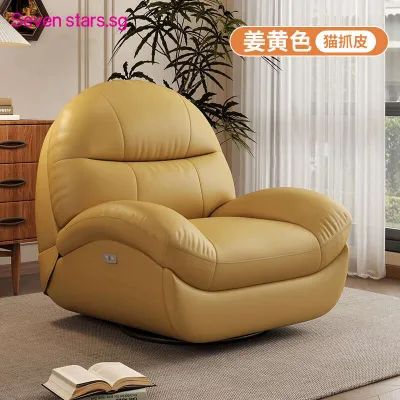
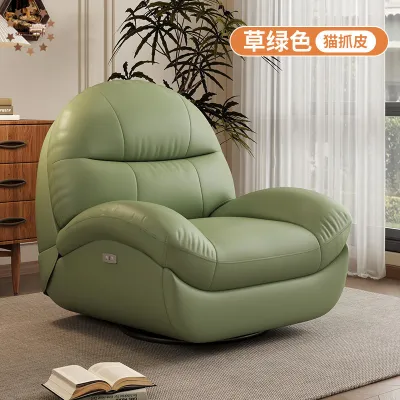
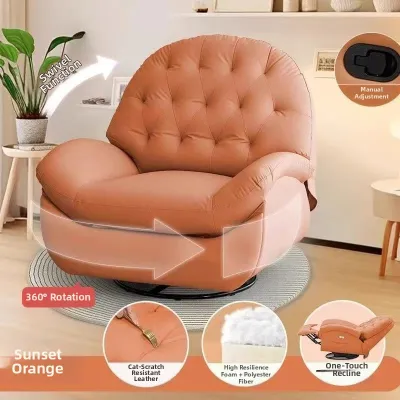
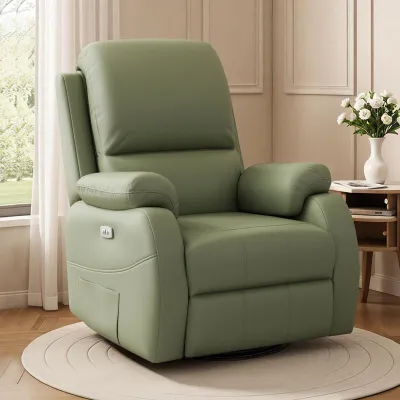
![[Sg Sales]Electric Power Lift Recliner Sofa Chair Space Sofa Cabin Faux Leather Sofa Multi-Functional Electric Reclining Lazy Sofa Full Reliance Massage Chair Massage Sofa](https://img.lazcdn.com/g/p/0250080ef5e27f0802593fb50c27b00a.jpg_400x400q80.jpg_.webp)
![[Free installation] Electric Recliner Sofa Chair | Single Zero Gravity Motorized Lounge Chair | Rotating Lazy Sofa Bed with Warranty](https://img.lazcdn.com/g/p/76a9b5a7220bfea1b826a65095b7fbbc.jpg_400x400q80.jpg_.webp)
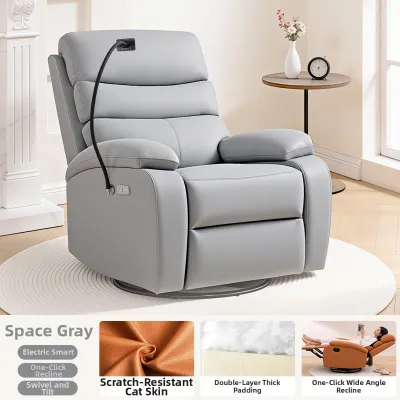
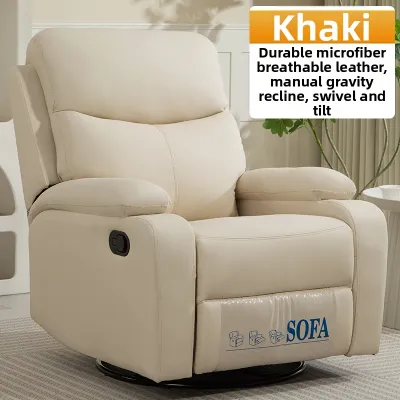
Prices are valid at publication and may change. Please refer to the product page for the latest price.
Top-grain leather is slightly more processed, with the outermost surface sanded to remove imperfections. It remains highly durable and breathable while offering a more uniform appearance. Corrected-grain leather, on the other hand, undergoes extensive buffing and receives a synthetic topcoat to mimic natural grain. While highly resistant to initial staining, it lacks the breathability of higher grades and can feel uncomfortably warm in humid weather.
When shopping, look closely at manufacturer labels and perform tactile checks. Genuine leather should feel warm and adapt to your body temperature quickly, whereas synthetic alternatives often feel plasticky or cold. Pressing your finger into genuine leather creates fine, radiating wrinkles that disappear when you release the pressure; synthetic materials tend to depress rigidly without natural wrinkling.
Singapore’s high humidity makes mold resistance a critical factor. Unprotected genuine leather can absorb ambient moisture, leading to mold growth if kept in poorly ventilated rooms. Ask retailers if the leather has undergone anti-fungal or moisture-resistant treatments during the tanning process. Regular conditioning with specialized leather creams is also necessary to maintain the material’s natural oils and prevent moisture from warping the fibers.
Be highly cautious of misleading marketing terminology. Terms like “PU leather,” “vegan leather,” and “synthetic leather” do not contain animal hide; they are polyurethane or polyvinyl chloride plastics that degrade and peel rapidly under local humidity. Similarly, “leather match” configurations use genuine leather on contact areas (like the seat and backrest) and matching vinyl on the sides and back. While cost-effective, the synthetic portions will age differently, potentially peeling or cracking long before the genuine leather sections show wear. Always ask the retailer for a written breakdown of the exact percentage and location of genuine leather used on the chair.
Evaluating Motor Reliability and Structural Build
The motor and mechanical frame are the heart of any electric recliner, and their durability determines the lifespan of your furniture. When evaluating different brands, always request a detailed breakdown of the warranty terms. Retailers often advertise a single, long-term warranty period that only applies to the wooden frame, while the electric motor, control box, and leather upholstery carry much shorter coverage periods. A robust warranty should ideally cover the motor and electrical components for several years, providing on-site repair or replacement services.

In-store testing is crucial for assessing the mechanical refinement of the recliner. When operating the chair, listen closely to the motor’s sound. A high-quality motor operates with a quiet, consistent hum; any grinding, clicking, or straining noises suggest poor alignment or inadequate power. The movement should be smooth and continuous, without sudden jerks or pauses as the footrest and backrest transition through their ranges of motion.
Pay attention to the response time when pressing the control buttons. There should be a minimal delay between pressing the button and the physical movement of the chair. If the mechanism hesitates or requires multiple presses to respond, the control box or wiring may be prone to early failure. Additionally, test the manual override or safety stop features if the model includes them, ensuring the chair stops instantly if an obstruction is detected.
The internal frame provides the structural foundation necessary to support both the motor’s torque and the user’s weight. Verify the frame materials through the manufacturer’s official specifications. High-quality recliners utilize kiln-dried hardwood or reinforced metal alloys for the load-bearing chassis. Kiln-drying removes moisture from the wood, preventing it from warping or splitting in Singapore’s humid climate. Avoid frames constructed primarily of cheap particleboard or thin plywood, as they can warp under the mechanical stress of the reclining action.
Always check the certified weight capacity of the recliner. A higher weight rating typically indicates a more robust motor and a sturdier metal linkage system. Even if you do not require the maximum weight capacity, choosing a chair rated for higher loads ensures the motor operates well within its limits, reducing wear and tear over years of daily use.
Decision Framework: Choosing the Right Brand Profile
Selecting the right electric recliner requires balancing your personal comfort preferences against practical technical specifications. To simplify this process, you can use a structured decision framework based on your primary household needs.
If your primary priority is luxurious comfort, natural texture, and a piece of furniture that develops a beautiful patina over time, focus on brands that offer transparent sourcing for full-grain or semi-aniline leather. These materials provide the highest breathability, making them ideal for living rooms that rely on natural ventilation or ceiling fans rather than continuous air conditioning. Ensure the brand provides clear care instructions and recommends specific conditioning products compatible with their leather finishes.
If the recliner is intended for high-frequency daily use, or if it needs to support heavier weight loads, prioritize brands that emphasize mechanical engineering and offer extended motor warranties. Look for models featuring dual motors, which allow independent control of the headrest and footrest, distributing the mechanical workload and reducing strain on individual components. In this scenario, a robust, steel-reinforced frame and a warranty of at least three to five years on electrical parts should take precedence over premium leather grades.
For households operating on a tighter budget, you may find that available electric recliners within your price range only offer bonded leather or low-grade synthetic coverings paired with vague, short-term motor warranties. In such cases, it is often wiser to pivot away from leather entirely. A high-quality fabric electric recliner, or even a manual recliner made with premium materials, will generally offer far greater durability and comfort than a cheap leather-look alternative that peels within a year.
Before finalizing any premium purchase, always verify the brand’s local after-sales support network. An electric recliner is a complex appliance; if a motor fails or a control wire snags, you will need a technician who can service the chair in your home. Confirm whether the retailer employs in-house technicians in Singapore or relies on third-party contractors, and ask about the typical turnaround time for replacement parts. Choosing a brand with an established local presence ensures that minor electrical issues do not render your expensive chair permanently unusable.
Pre-Purchase Verification for Singapore Homes
Before committing to a purchase, you must perform several practical checks to ensure the electric recliner can be safely delivered and operated within your home. Singapore’s residential layouts, particularly in HDB flats and condominiums, often feature tight corridors, narrow doorways, and compact passenger lifts. Measure the exact dimensions of your entryways, elevator doors, and any tight corners along the delivery path. Compare these measurements against the chair’s boxed dimensions, which you can request from the retailer, to avoid delivery day complications.
Spatial planning within the living room is equally critical. Unlike traditional armchairs, an electric recliner requires significant clearance both in front and behind the unit to operate safely. “Wall-hugger” designs are highly beneficial for smaller Singaporean living spaces, as they slide forward as they recline, requiring only a few centimeters of clearance from the wall. Ensure you measure the full reclining footprint of the chair to prevent it from blocking walkways or colliding with other furniture.
Power management is another essential consideration for motorized furniture. The chair must be positioned near an electrical outlet to avoid stretching cables across high-traffic areas, which creates a tripping hazard and risks damaging the power cord. If a direct wall connection is not feasible, plan a safe cable routing strategy using low-profile floor cord protectors. Some premium models offer optional rechargeable lithium-ion battery packs, allowing you to operate the chair wirelessly for several weeks between charges, completely eliminating floor clutter.
Finally, clarify the retailer’s delivery and return policies in writing. Ask whether the delivery fee includes assembly, positioning, and the disposal of packaging materials. Understand the exact terms of their return policy, including any restocking fees or transport charges you might incur if the chair does not fit your space. Confirming these logistical details beforehand protects your investment and ensures a smooth transition from the showroom to your living room.
Frequently Asked Questions (FAQ)
Does genuine leather peel in Singapore's humid climate?
Genuine top-grain or full-grain leather does not peel. Peeling is a characteristic failure of synthetic materials like polyurethane (PU) or bonded leather, where the plastic coating separates from its fabric backing due to moisture and friction. However, while genuine leather will not peel, Singapore’s high humidity can cause other issues if the material is neglected. Without proper ventilation and occasional conditioning, genuine leather can absorb excess moisture, making it susceptible to mold growth, or it can dry out and crack if exposed to direct sunlight from large windows. Keeping the room well-ventilated and applying a leather conditioner once or twice a year will keep the fibers supple and prevent degradation.
Are replacement parts for recliner motors easily available locally?
The availability of replacement parts depends heavily on the brand’s local distribution network. Established retailers in Singapore typically maintain a local inventory of common replacement components, such as motors, transformers, and control switches, allowing them to resolve issues quickly. Conversely, if you purchase an unbranded or direct-import electric recliner from an online marketplace, finding replacement parts can be exceptionally difficult. These models often use proprietary or obscure electrical systems, meaning a simple motor failure could require shipping parts internationally, resulting in weeks of downtime. Always ask the retailer if they stock replacement parts locally before making your purchase.

Community discussion
Share your experience or ask a question. Comments are reviewed before publication.