
Quick Answer: What Defines Massage Variety and Customization?
When comparing chair massager brands, the sheer volume of proprietary marketing terms can make finding the right model feel overwhelming. However, the true variety of massage techniques and the depth of customization are determined by three core mechanical elements: the roller mechanism (2D, 3D, or 4D), the track system (S-track or L-track), and the granularity of the manual control interface. While brands frequently update their model names and aesthetic designs, these underlying mechanical specifications dictate exactly how a chair moves, where it can reach, and how precisely you can tailor the pressure.
Rather than relying on brand-specific buzzwords that promise unique, patented techniques, you should focus on evaluating the physical capabilities of the roller engines and the flexibility of the software controls. A chair with limited mechanical adjustments will always produce a repetitive, standardized experience, regardless of how many preset programs the manufacturer advertises. By understanding these technical specifications, you can look past the promotional literature and identify a chair massager that aligns with your specific physical requirements and comfort preferences.
Core Mechanical Differences That Define Massage Variety
Roller Mechanisms and Track Systems
The primary engine of any chair massager is its roller mechanism, which physically mimics the hands of a massage therapist. In entry-level models, you will typically find 2D roller systems. These rollers operate on a two-dimensional plane, moving vertically up and down your back and horizontally left and right. While effective for basic surface muscle relaxation, 2D rollers cannot adjust their depth, meaning they apply uniform pressure regardless of the natural contours of your spine.
Products mentioned in this guide
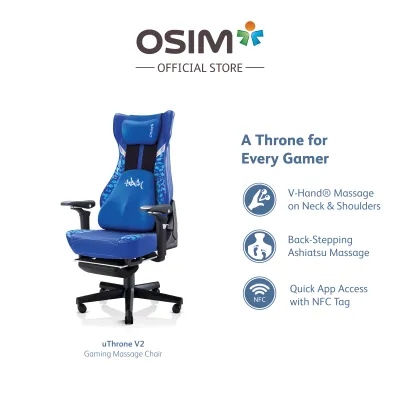

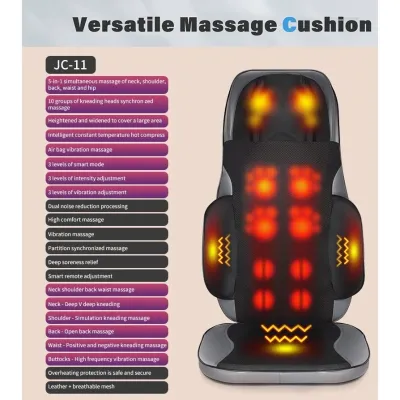
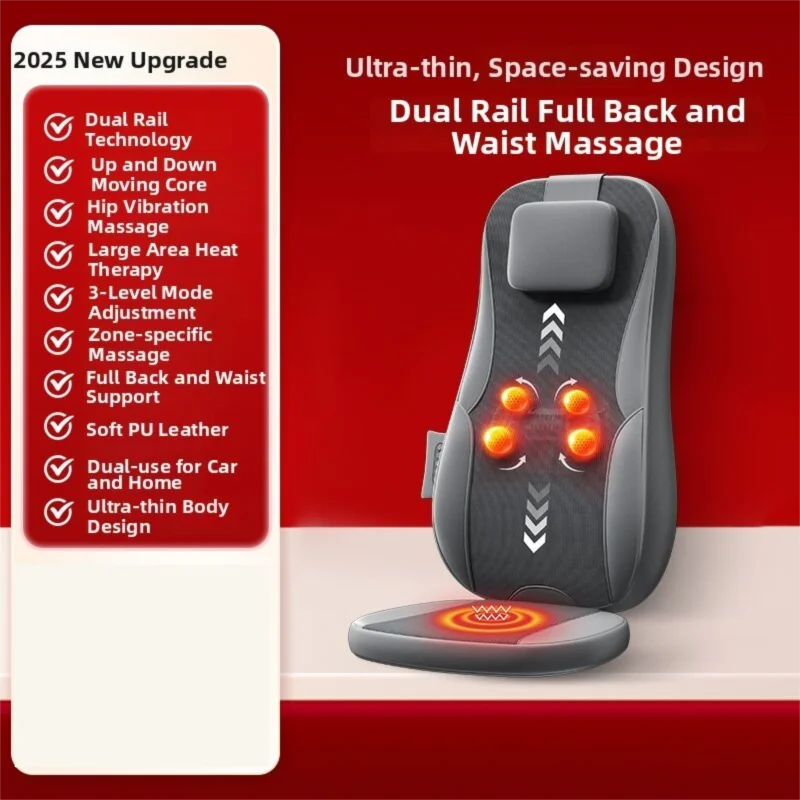
Prices are valid at publication and may change. Please refer to the product page for the latest price.

To achieve a more realistic and therapeutic massage, higher-tier models utilize 3D roller systems. These mechanisms add an in-and-out depth dimension, allowing the rollers to protrude forward into your muscles or retract away from them. This depth adjustment is crucial for targeting deeper muscle layers in high-tension areas like the neck and lumbar region. Moving up to 4D systems introduces real-time speed modulation to the 3D movement. Instead of moving at a constant pace, 4D rollers speed up or slow down rhythmically during a single stroke, simulating the natural cadence of a professional massage therapist who pauses to apply deeper pressure to tight knots.
Equally important is the track system that guides these rollers along your body. An S-track (Sinusoidal track) is designed to follow the natural, S-shaped curve of the human spine, focusing intensely on the neck, shoulders, and lower back. However, the S-track stops at the lower lumbar region. An L-track extends this coverage significantly, wrapping around the glutes and reaching down to the upper hamstrings. Many modern premium models feature an SL-track, which combines the spinal contouring of an S-track with the extended reach of an L-track. When shopping, always verify the exact track type and length on the product specification sheet rather than relying on vague brand descriptions of “full-body” coverage.
Airbag Compression and Secondary Techniques
While rollers address the spinal column and glutes, airbag compression systems handle the extremities and outer muscle groups. Airbags are strategically placed in zones covering the shoulders, arms, hands, hips, calves, and feet. By inflating and deflating in pre-programmed sequences, these airbags provide a compression massage that promotes circulation and helps flush metabolic waste from tired muscles. The variety of this experience depends on the number of independent air valves and the zoning of the system rather than the sheer quantity of airbags. A chair with fewer, well-zoned airbags controlled by multi-channel valves often provides a more precise and comfortable compression sequence than a chair with dozens of airbags tied to a single, basic pump.
Secondary massage techniques further expand the variety of therapy a chair can deliver. Many mid-range and premium models incorporate dedicated foot rollers and reflexology nodes built into the sole of the footrest, which spin or oscillate to target pressure points on the bottom of the feet. This is often paired with calf rollers or mechanical kneading modules that target the back of the lower legs.
Thermal therapy is another critical secondary feature that enhances muscle relaxation. You should carefully check the distribution of the heating elements. While basic models restrict heat to a small zone in the lumbar region, advanced chair massagers offer carbon fiber heating elements that extend to the calves, feet, and even the chest via heated blankets or wraps. This widespread warmth helps dilate blood vessels, making the mechanical roller and airbag actions more effective and significantly increasing the overall comfort of the massage.
How to Evaluate Customization and Adjustability Features
Intensity, Speed, and Width Controls
A wide variety of massage techniques is of little use if the pressure is too painful or too weak for your personal tolerance. This is why granular adjustability is the cornerstone of a high-quality massage chair experience. The most fundamental adjustments are roller speed, roller width, and airbag compression intensity. Roller width adjustment is particularly critical; it allows you to change the horizontal distance between the two main rollers. If the rollers are set too wide, they can press painfully against your shoulder blades or ribs; if they are too narrow, they will miss the paraspinal muscles entirely.
When evaluating different models, look closely at how these adjustments are structured. Entry-level models often limit customization to global intensity settings, meaning you can only choose between low, medium, or high presets that adjust the entire chair simultaneously. This can be frustrating if you prefer deep, firm pressure on your lower back but gentle, light compression on your arms. Higher-tier models provide independent, step-by-step adjustments for each function. You can set the rollers to maximum depth and speed while keeping the airbag compression on the lowest setting. Ensure that these adjustments are easily accessible via the physical remote control, built-in armrest quick dials, or a dedicated smartphone app so you do not have to navigate complex menus mid-massage.
Targeted, Manual, and Memory Modes
The sophistication of a chair’s software determines how effectively it can tailor a massage session to your body and daily needs. Before a massage begins, most modern chairs run an automatic body-scanning sequence. This system typically uses optical sensors or roller resistance detection to map your spine, locate your shoulders, and measure your height. An accurate scan ensures that the rollers target the correct anatomical points rather than pressing against the back of your skull or stopping short of your lower neck.
Beyond automatic programs, a highly customizable chair must offer robust manual controls. Look for models that include “spot” and “partial” massage modes. A spot massage locks the rollers in a single, precise location, allowing you to focus the mechanical action directly on a stubborn knot in your shoulder or lower back. A partial mode allows the rollers to traverse a short, localized zone (usually around 10 to 15 centimeters) to work on a specific muscle group.
Furthermore, verify if the chair allows you to save these manual configurations into user memory profiles. If multiple family members share the chair, having dedicated memory slots prevents you from having to manually adjust the speed, width, and airbag intensity every time you sit down. Finally, ensure the control system allows you to make real-time adjustments to these settings without interrupting or completely resetting the active program cycle, which can disrupt the relaxation process.
Matching Technical Specifications to Your Comfort Preferences
Choosing the right chair massager requires translating technical specifications into a configuration that aligns with your physical needs and comfort goals.
- For Deep Tissue Relief: If your primary goal is to alleviate chronic muscle knots, stubborn tension, or lower body tightness, prioritize a chair equipped with a 3D or 4D roller engine on an SL-track. Look for models that offer high-intensity manual controls and a "zero-gravity" recline feature, which tilts the chair back to distribute your body weight evenly across the rollers, naturally deepening the massage pressure.
- For Gentle Relaxation and Pain Sensitivity: If you have a low pain tolerance, are sensitive to firm pressure, or simply want a soothing way to unwind, focus on chairs that emphasize advanced airbag compression and comprehensive heat therapy. Look for models that offer low-speed, low-intensity roller settings, or those that allow you to completely turn off the back rollers while keeping the heated airbag compression active.
- For Diverse Body Types: If the chair will be used by individuals of varying heights, prioritize models with precise optical body scanning, a long SL-track, and an electronically extendable footrest. An adjustable footrest ensures that taller users can stretch out comfortably without their knees being pushed too high, while shorter users can still reach the foot rollers and calf airbags effectively.
Safety Warning: While chair massagers are excellent tools for daily relaxation, they are high-powered mechanical devices. You must consult a healthcare professional before using deep-tissue, high-compression, or heated massage features if you have specific medical conditions, including but not limited to neuropathy, spinal issues, severe osteoporosis, cardiovascular conditions, active blood clots, or if you are pregnant. Always review the manufacturer’s safety guidelines and contraindications prior to your first session.
Decision Framework: Which Massage Setup Fits Your Needs?
To finalize your decision, use this structured framework to match your physical space, lifestyle, and therapeutic needs to the correct chair massager configuration.
- Choose a 3D/4D SL-track model if: You require comprehensive, full-body coverage from your neck down to your glutes, prefer deep-tissue massage that can be adjusted in real-time, and want a highly therapeutic experience that mimics professional manual therapy.
- Choose an S-track model with advanced airbag systems if: Your tension is concentrated almost entirely in your neck, shoulders, and lower back, you prefer gentle compression over intense mechanical roller pressure, and you need a more compact footprint that conserves floor space.
- Verify physical compatibility first: Before committing to any purchase, you must verify the finished dimensions of the chair in both its upright and fully reclined positions. In Singapore's residential context, measure your doorway widths, lift entry clearances, and HDB corridor turning radiuses to ensure the delivery team can safely navigate the chair into your home. Additionally, check the manufacturer's specifications for the chair's total weight and its recommended flooring protection. Ensure your flooring can safely support the concentrated weight of the chair and the occupant, particularly during the dynamic movements of zero-gravity recline modes.
Frequently Asked Questions (FAQ)
Do 4D massage rollers actually provide a better experience than 3D?
Whether 4D rollers are superior to 3D rollers is highly subjective and depends entirely on your personal comfort preferences. While 4D rollers offer greater technique variety by adding rhythmic speed variations to the in-and-out depth movements of 3D rollers, they are not inherently more therapeutic. A well-calibrated 3D system that offers precise manual depth and speed controls can provide an exceptionally satisfying massage. Some users actually find the sudden speed changes of 4D programs to be jarring or unpredictably aggressive, preferring the consistent, steady pace of a high-quality 3D system.
Can I adjust the massage intensity while a preset program is running?
The ability to adjust intensity on the fly depends heavily on the chair’s control system and model tier. Premium and mid-range chair massagers typically allow you to make real-time adjustments to roller speed, depth, and airbag pressure via the remote or smartphone app without interrupting the active preset cycle. Conversely, entry-level or basic models often lock these settings once an automatic program begins. On these simpler models, if a preset program feels too intense, you must stop the cycle entirely, navigate back to the main menu, and select a different program or manually configure a milder session.
Community discussion
Share your experience or ask a question. Comments are reviewed before publication.