
Quick Answer: Matching Headboard Types to Your HDB Bedroom Needs
Selecting the right bed headboard in Singapore depends directly on your HDB flat’s layout, room dimensions, and structural constraints rather than a single brand. Because HDB bedrooms feature highly optimized floor plans, your choice must balance spatial efficiency with structural safety.
- For Tight Layouts and Built-In Wardrobes: If your bedroom has built-in wardrobes flanking the bed or a narrow walkway, choose brands that offer custom-width carpentry, modular wall panels, or ultra-slim profiles (under 5cm in depth) to preserve floor space.
- For Acoustic Comfort and Luxury Aesthetics: If you prioritize sound dampening and a plush, hotel-like feel, choose established upholstery brands. Ensure you select moisture-resistant, easy-clean performance fabrics that can withstand Singapore's humid climate.
- For Drywall Partitions: If you are mounting against a non-load-bearing drywall partition (common in newer BTO flats), avoid heavy wall-mounted designs. Instead, opt for freestanding, floor-standing, or frame-anchored headboards that do not place structural stress on the wall.
Critical Dimensions: Sizing a Bed Headboard for HDB Floor Plans
HDB bedrooms require meticulous spatial planning. A standard master bedroom in a modern BTO flat typically measures between 10 to 12 square meters, while common bedrooms are often smaller, around 8 to 9 square meters. Introducing a bed headboard without verifying your room’s physical limits can quickly make the space feel cramped and non-functional.

Walkway clearance is the most critical dimension to calculate before purchasing. Interior design standards recommend maintaining a clear walkway of at least 60cm around the sides and foot of the bed to allow comfortable movement. Standard Queen or King-sized mattresses already take up 190cm of length. If you add a thick, heavily tufted headboard that measures 15cm to 25cm in depth, you risk reducing your walkway to an uncomfortable squeeze, potentially blocking wardrobe doors or dresser drawers from opening fully.
Products mentioned in this guide
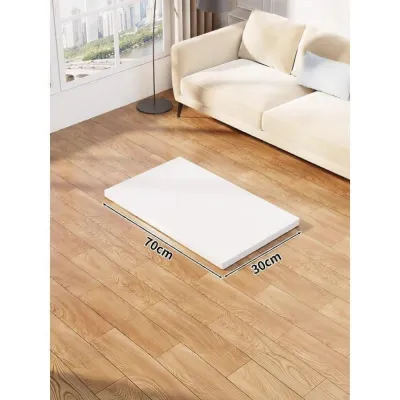
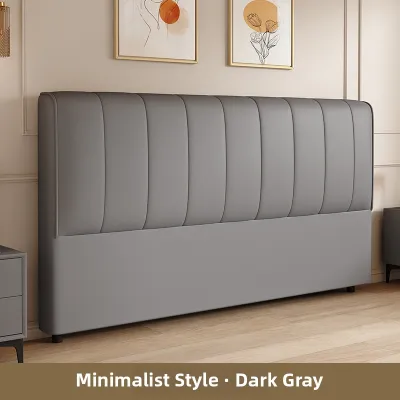
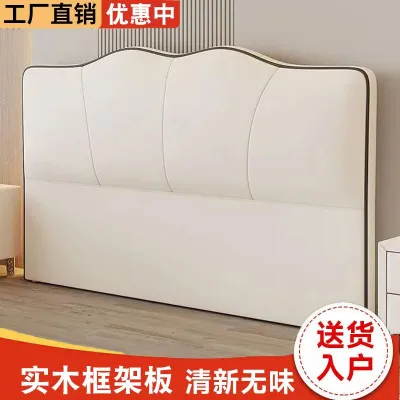
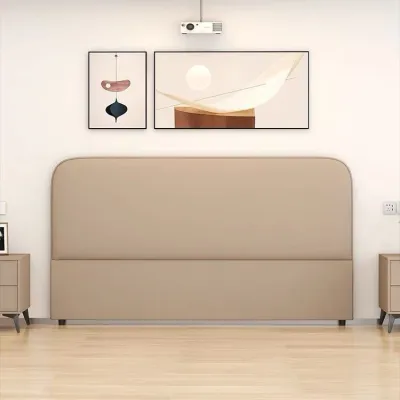
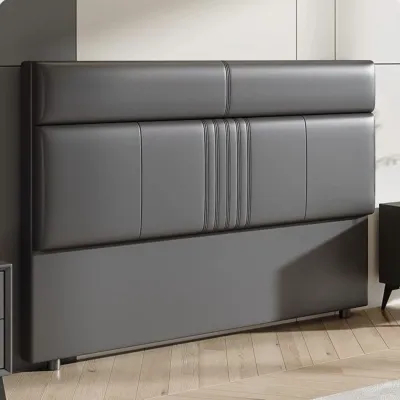
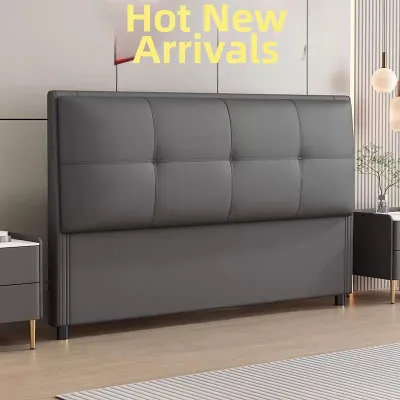
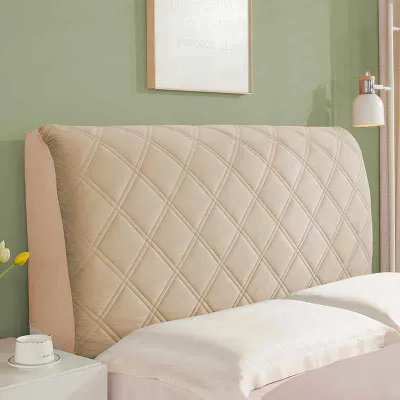
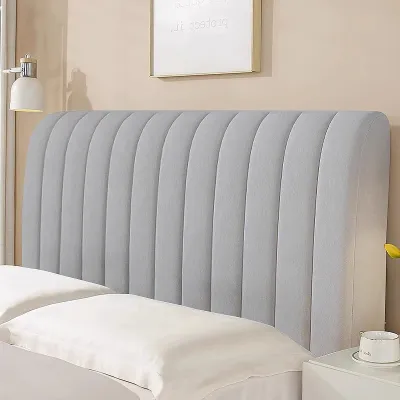
Prices are valid at publication and may change. Please refer to the product page for the latest price.
When evaluating headboard styles, you must choose between wall-mounted (floating) and bed-frame-attached designs:
- Wall-Mounted Headboards: These designs sit flush against the wall, saving valuable floor space. They create a clean, modern aesthetic and minimize visual clutter. However, they require permanent drilling and concrete anchoring, making them less suitable for rental units or homeowners who like to rearrange their layout.
- Frame-Attached Headboards: These models bolt directly to the bed frame, moving as a single unit. They offer excellent flexibility and do not damage your walls. The trade-off is that they often require a 2cm to 5cm gap behind them to prevent the headboard from knocking against the wall when you lean back, which slightly increases the bed's overall footprint.
Height restrictions also play a significant role in visual balance. Standard HDB ceilings are typically 2.6 meters high. An excessively tall headboard (over 1.3 meters) can visually cut the room in half, making the ceiling feel lower and the room more confined. Opting for low-profile or slim-depth designs (typically 90cm to 110cm in height) preserves the vertical visual flow, helping a compact bedroom feel more open and airy.
Comparing Headboard Design Styles for Compact Spaces
Different design styles and materials perform differently under the spatial and environmental conditions of a Singapore home. Understanding these characteristics will help you narrow down your brand search.
Minimalist and Low-Profile Designs
Slim wooden, metal, or rattan headboards are highly effective for smaller HDB bedrooms because of their minimal visual weight. These designs typically feature a depth of just 2cm to 5cm, preserving precious centimeters of walkway space at the foot of the bed. Rattan and open-spindle wooden designs allow light and air to pass through, preventing a small room from feeling visually crowded.
However, natural materials require specific care in Singapore’s high-humidity tropical climate. When purchasing a wooden or rattan headboard, verify that the manufacturer has applied a protective polyurethane or lacquer finish. Unsealed wood can absorb moisture from the air, leading to warping, joint separation, or mold growth. Avoid placing unfinished natural materials directly against external-facing walls, which tend to retain more moisture during the monsoon seasons.
Built-In Storage and Multifunctional Headboards
Headboards featuring integrated shelving, top ledges, or hidden side compartments serve as excellent double-duty furniture. By utilizing the vertical space directly behind your pillows, you can eliminate the need for bulky bedside tables. This is a highly efficient solution for narrow HDB common rooms or children’s rooms where floor space is at a premium.
Despite their utility, storage headboards present a clear spatial trade-off. These units are significantly thicker than standard designs, often measuring between 20cm and 35cm in depth. This extra thickness pushes your entire bed further into the room, directly reducing the walkway space at the foot of the bed. Use this style only if your bedroom’s length can easily accommodate the added depth without restricting access to wardrobes or doorways.
Upholstered and Statement Pieces
Upholstered headboards, wrapped in fabric, velvet, or leatherette, bring acoustic dampening and visual warmth to HDB master bedrooms. In high-density housing estates, padded headboards help absorb ambient sound, contributing to a quieter sleeping environment.
When selecting an upholstered headboard, material durability is paramount due to Singapore’s humidity. High moisture levels can lead to dust mite accumulation, mold, and the premature peeling of low-grade synthetic leathers (PU). Look for brands that utilize performance fabrics treated with water-resistant, stain-resistant, and anti-microbial coatings. Removable, dry-cleanable fabric covers or high-quality commercial-grade leatherette are much easier to maintain over time than delicate, non-removable natural linens.
Evaluating Furniture Brands for HDB Suitability and Customization
To find a brand that fits your specific HDB bedroom layout, evaluate potential options across four essential dimensions:
- Customization Capabilities: Many mass-market international furniture brands supply headboards in fixed European or American sizes, which may not align perfectly with standard Singapore mattress dimensions (Single, Super Single, Queen, King). Look for local or regional brands that offer customizable widths and heights. This customization is crucial if you need to fit a headboard precisely between built-in wardrobe panels, avoid covering electrical sockets, or align with a specific wall niche.
- Material Transparency and Durability: High-quality brands clearly disclose their material origins and construction methods. For wooden components, look for solid hardwoods (such as teak, oak, or walnut) or high-density, moisture-resistant engineered wood (like MDF with a sealed veneer). Avoid unsealed particle board, which swells and warps rapidly in humid conditions. For upholstered options, verify that the brand uses high-density foam (at least 30 kg/m³) to ensure the headboard maintains its shape and structural support over years of daily use.
- Delivery and Installation Logistics: HDB estates present specific logistical challenges. Ensure your chosen brand has experience navigating HDB delivery routes. The packaged headboard must fit within standard HDB passenger or service lift dimensions (typically 2.1 meters in height and 1.2 meters in width) and clear tight corridor turning radiuses. Furthermore, verify if the brand provides professional installation, especially for wall-mounted models that require precise drilling into concrete walls or careful alignment with wall studs.
- After-Sales and Warranty: A reliable brand should offer a clear warranty covering structural frame warping, joint failures, and mounting hardware for at least 1 to 3 years. Note that standard warranties rarely cover normal fabric wear, pilling, or the peeling of synthetic leather due to humidity. Prioritize brands that offer clear care instructions and supply replacement covers or hardware parts if needed.
Decision Framework: Space-Saving vs. Aesthetic Focus
To simplify your buying decision, use this structured framework to match your spatial constraints and design priorities with the right category of headboard brand.
Choose Custom Carpentry or Local Modular Brands If:
- Your bed must fit into a precise alcove, a tight corner, or directly between two built-in wardrobes.
- You want to integrate power sockets, light switches, or LED reading lights directly into the headboard panel.
- Your bedroom layout is highly compact, requiring an ultra-slim design (under 3cm depth) to maximize walkway space.
Choose Online or Regional Modular Brands If:
- Your bedroom has standard dimensions, and you are using a standard Queen or King bed frame.
- You are working within a specific budget and prefer a cost-effective, ready-to-assemble option with straightforward shipping.
- You want a freestanding or frame-attached design that can be easily disassembled and moved to a new home in the future.
Choose Premium Upholstery or Boutique Design Brands If:
- You are styling a spacious HDB master bedroom where visual impact, comfort, and premium finishes are your main priorities.
- You require specialized, high-durability fabrics (such as pet-friendly or stain-resistant performance weaves) to withstand daily wear.
- You want a comprehensive white-glove delivery and wall-mounting service included in your purchase.
Avoid Standard Wall-Mounted Designs If:
- Your bedroom wall has severe surface unevenness, exposed conduit trunking, or concealed electrical wiring that prevents a flush mount. Always inspect the wall surface before purchasing.
- You are currently renting your HDB flat or plan to relocate within a few years. Wall-mounted headboards require heavy-duty anchors that leave permanent holes in the plaster. Removing them can cause significant surface damage, leading to potential repair costs during tenancy handovers. For temporary living arrangements, stick to frame-attached or freestanding floor models.
Pre-Purchase Measurement and Installation Checklist
Before finalizing your headboard purchase, complete this step-by-step checklist to ensure a seamless delivery and installation process.
- Measure Wall and Clearance: Measure the exact width of the wall where your bed will sit. Do not just measure at eye level; measure along the floor as well. Take note of skirting boards, which typically project 1cm to 2cm from the wall. If you want a flush wall-mounted headboard, ensure the design features a recessed bottom cutout to clear the skirting, or prepare to mount it slightly forward.
- Identify Electrical Outlets and Fixtures: Locate all power sockets, light switches, and air-conditioning conduit trunking. A headboard that blocks a socket can render your bedside chargers useless or force you to pull the entire bed frame forward, wasting valuable floor space. Ensure the headboard height does not interfere with low-hanging wall sconces or air-conditioning units.
- Verify the Delivery Path: Measure the entry points of your building and home. Check the height, width, and diagonal clearance of your HDB service lift, the lift lobby doors, your front door frame, and the bedroom doorway. Large, non-demountable headboards (especially solid wood or fully upholstered King-sized models) can easily get stuck in tight corridor turns.
- Identify Your Wall Type: Determine what material your bedroom wall is made of. Tap the wall firmly: a solid, dull thud indicates a concrete or structural wall, which can easily support heavy, wall-mounted headboards using standard masonry plugs. A hollow, echoing sound indicates a drywall partition or gypsum board (common in newer BTO layouts separating bedrooms). Drywalls require specialized hollow-wall toggle bolts and have strict weight limits; heavy upholstered headboards should instead be anchored to the bed frame or sit directly on the floor to prevent structural failure.
Frequently Asked Questions (FAQ)
Can I mount a heavy upholstered headboard on an HDB drywall partition?
Yes, but you must use extreme caution and the correct hardware. Newer HDB BTO flats often use non-load-bearing drywall partitions to separate bedrooms. These walls cannot support heavy, cantilevered loads using standard plastic wall plugs. If you must mount a heavy headboard on drywall, you must locate the internal metal studs and secure the mounting brackets directly to them, or use heavy-duty hollow-wall toggle bolts. For maximum safety and to prevent wall cracking, it is highly recommended to choose a floor-standing headboard or one that bolts directly to your bed frame, eliminating the load on the drywall partition entirely.
Do I need to remove my existing HDB built-in wardrobe to install a headboard?
In most cases, you do not need to remove your built-in wardrobe. If your bed sits between wardrobe units, measure the exact clearance width between them. Many local brands offer custom-width headboards that can be manufactured to fit precisely within this gap. Alternatively, you can select an ultra-slim, low-profile bed headboard that slides in front of the wardrobe’s side panel, provided it does not block the opening of swing doors or sliding tracks. If space is incredibly tight, modular adhesive wall panels can be applied directly to the wall between the wardrobes, creating a plush headboard effect without taking up any floor space or requiring wardrobe modifications.
Community discussion
Share your experience or ask a question. Comments are reviewed before publication.