
Finding the right mattress in Singapore often involves navigating standard sizing conventions, but searching for a niche size like an 80x180cm mattress introduces a unique set of challenges. In the local market, standard mattress sizes are built around British and Singaporean dimensions, where a standard Single measures 91x190cm. Because an 80x180cm footprint is significantly narrower and shorter, finding off-the-shelf options from mainstream brands is rare.
Direct brand-to-brand comparisons for this specific size are generally limited to specialized European imports, custom local mattress manufacturers, or compact children’s furniture lines. To make a successful purchase, you must prioritize exact bed frame measurements, evaluate material breathability for Singapore’s humid climate, and carefully review the return policies. Since custom-cut sizes are rarely eligible for standard sleep trials, understanding your options beforehand is essential to securing a comfortable, high-quality sleep surface.
Understanding the 80x180cm Size: Non-Standard Dimensions
To understand how an 80x180cm mattress fits into your home, you must first compare it to standard Singaporean bedding dimensions. A standard local Single mattress measures 91cm wide by 190cm long, while a Super Single measures 107cm wide by 190cm long. This means an 80x180cm mattress is 11cm narrower and 10cm shorter than a standard Single. It represents a highly compact footprint designed to maximize floor space in tight quarters, making it a popular choice for custom loft beds, built-in HDB bedroom cabinetry, or compact guest rooms.
Products mentioned in this guide
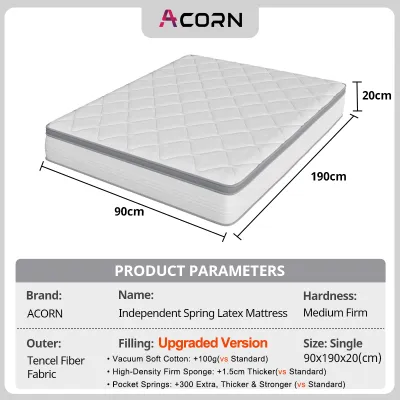
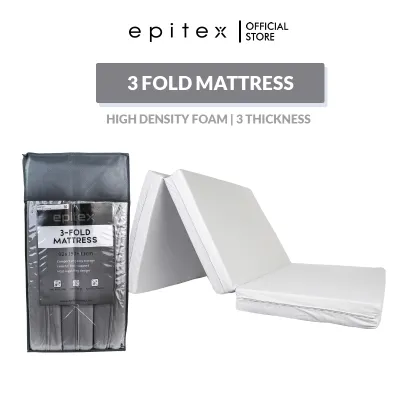
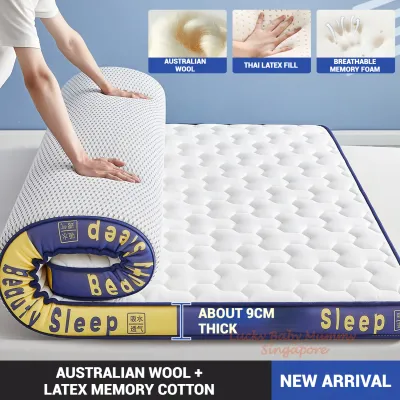
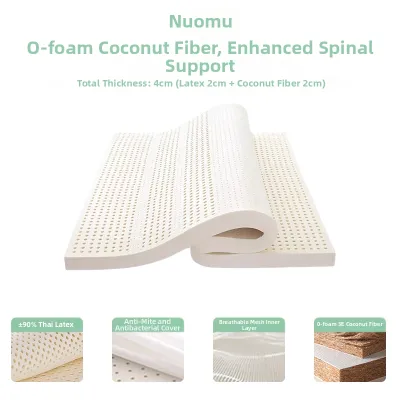
Prices are valid at publication and may change. Please refer to the product page for the latest price.
Because this size is non-standard locally, you will rarely find it stocked in typical retail showrooms. Instead, these dimensions usually originate from European sizing systems—where 80cm widths are common for dual-adjustable beds—or from specialized manufacturers targeting space-saving furniture. If you have purchased an imported European bed frame or a compact modular bunk bed, it may require these exact dimensions to fit safely within the frame’s perimeter.
Before placing an order, you must perform a rigorous spatial check. Measure the internal length and width of your bed frame rather than relying on the manufacturer’s external dimensions. Pay close attention to the lip depth of the frame; a mattress that is too thick may obscure the headboard, while one that is too thin might leave a dangerous gap. Additionally, measure your room’s clearance, ensuring that wardrobe doors, entrance doors, and dresser drawers can open fully without hitting the bed.
Another critical consideration is bedding compatibility. Standard Single fitted sheets bought in Singapore will not fit an 80x180cm mattress properly. Because local sheets are designed for a 190cm length and 91cm width, the excess fabric will bunch up, creating uncomfortable ridges under your body. To resolve this, you will need to source specialized European-sized linens, order custom-made sheets from local tailors, or use heavy-duty sheet straps underneath the mattress to pull standard sheets taut.
Evaluating Firmness Options for Your Sleep Profile
When buying a niche size like an 80x180cm mattress, you cannot always test every firmness level in a showroom. Most manufacturers use a standard 1-to-10 firmness scale, where 1 is cloud-soft and 10 is extra-firm. However, these ratings are highly subjective. A “medium-firm” mattress (typically a 6 or 7) from a custom local workshop may feel significantly firmer than a “medium-firm” imported European latex mattress due to differences in layering and structural design.

Your ideal firmness level depends heavily on your body weight and primary sleeping position. Side sleepers generally require a medium to medium-soft surface (4 to 6) that contours to the shoulders and hips, keeping the spine aligned. Back and stomach sleepers require a firmer surface (7 to 8) to prevent the pelvis from sinking too deeply, which can lead to lower back strain. If you are purchasing this mattress for a rapidly growing child or teenager, a medium-firm profile is usually recommended to support developing bone structures.
Because an 80cm width is exceptionally narrow, you will naturally sleep closer to the edge of the mattress than you would on a standard double bed. This proximity makes edge support a critical quality metric. If a mattress lacks reinforced edges, you may experience a “roll-off” sensation when sleeping near the sides. Look for pocketed spring options with thicker gauge perimeter coils, or foam mattresses designed with high-density foam encasements around the outer border to maintain structural integrity.
Under normal circumstances, mattress brands offer 30- to 100-night sleep trials to let you test the firmness in your own home. However, you must verify the fine print for non-standard sizes. Most brands explicitly exclude custom-cut or imported 80x180cm mattresses from their trial and return policies. If the firmness is not right, you may be stuck with the purchase. To mitigate this risk, visit a physical showroom to test a standard-sized model of the exact same material composition before ordering the custom-sized version.
Assessing Build Quality and Climate Suitability
Singapore’s tropical climate, characterized by high temperatures and relative humidity levels that frequently exceed 80 percent, demands careful material selection. A mattress that traps heat and moisture will quickly become a breeding ground for mold, mildew, and dust mites. When comparing 80x180cm options, you must evaluate how the core support systems and comfort layers behave under these environmental conditions.
- Pocketed Springs: This support system consists of individual fabric-encased coils. It offers excellent airflow because the open spaces between the springs allow heat to dissipate. Pocketed springs also provide superior motion isolation, which is beneficial if the mattress is placed on a shared bunk bed.
- Natural Latex: Derived from rubber tree sap, natural latex is highly breathable due to its open-cell structure and pincore ventilation holes. It is inherently resistant to dust mites and mold, making it highly suitable for Singapore's climate. It offers a responsive, buoyant feel rather than a sinking sensation.
- High-Density Polyurethane Foam: While highly customizable and easy for manufacturers to cut to custom dimensions, standard polyurethane foam can trap body heat. If you choose a foam mattress, ensure it features open-cell technology, gel infusions, or convoluted air channels to assist with temperature regulation.
Beyond the core materials, pay close attention to the mattress cover fabric. Look for breathable, moisture-wicking textiles such as Tencel, bamboo-derived rayon, or organic cotton blends. These materials help pull sweat away from the body, keeping the sleeping surface cool. Avoid synthetic polyester covers, which trap heat and can cause night sweats in unconditioned rooms.
To ensure the materials used are safe and free from harmful chemicals, check for recognized international certifications. Do not rely on generic marketing terms like “eco-friendly” or “organic.” Instead, look for the CertiPUR-US certification for polyurethane foams, which guarantees low volatile organic compound (VOC) emissions, and the Oeko-Tex Standard 100 certification for textiles, ensuring they are free from harmful levels of toxic substances.
Finally, assess the overall structural durability of the mattress. For foam models, inquire about the foam density rating; high-quality, durable foam typically has a density of 30 kg/m³ or higher. For spring mattresses, ask about the coil count and coil gauge. A lower gauge number indicates thicker, more durable wire. A well-constructed mattress should maintain its shape and support without sagging, even when placed in a high-humidity environment.
Comparing Value, Warranties, and Delivery Constraints
When shopping for an 80x180cm mattress in Singapore, the pricing structure differs from standard retail models. Because these dimensions require custom manufacturing runs or specialized import logistics, you will often pay a premium. A custom-cut mattress may cost the same as, or more than, a standard local Single mattress of the same material quality. When evaluating value, compare the retail price directly against the material specifications, such as latex purity, foam density, and coil construction.
Warranty terms require close scrutiny, especially for non-standard sizes. While many brands advertise a “10-year warranty,” the actual coverage details can vary significantly. You must check the specific sagging depth threshold required to trigger a warranty claim. Some manufacturers require a visible indentation of 2.5cm or more before they will repair or replace the mattress, while premium brands may cover sagging starting at 1.5cm. Ensure the warranty explicitly covers custom-sized products and does not contain clauses that void coverage for non-standard dimensions.
Logistics and delivery present additional practical hurdles in Singapore’s high-rise residential landscape. If you live in an HDB flat or a condominium, verify how the mattress will be delivered.
- Bed-in-a-Box: Many modern foam and hybrid mattresses are compressed, rolled, and vacuum-sealed in a compact box. This format is exceptionally easy to transport through narrow HDB corridors, tight stairwells, and small passenger lifts.
- Flat Delivery: Traditional spring mattresses cannot be folded or compressed. You must measure your doorway, lift cabin dimensions, and stairwell clearances to ensure the delivery team can physically bring the flat mattress into your home.
- Additional Fees: Always check for hidden charges. Some retailers charge extra for delivering to walk-up apartments without lift access, weekend deliveries, or disposing of your old mattress. Disposal fees in Singapore typically range from S$30 to S$100 depending on the retailer.
Because custom-sized mattresses are almost always classified as “final sale,” you must confirm all specifications in writing before completing your purchase. Double-check the exact dimensions on your invoice. Once the manufacturer cuts the materials to 80x180cm, you will not be able to cancel the order or request a refund if you discover that your bed frame actually required a different size.
Decision Framework: Which 80x180cm Mattress Route to Take
Navigating the purchase of a non-standard mattress requires a structured approach to avoid costly mistakes. Depending on your budget, timeline, and frame requirements, you can choose between three primary pathways to find the ideal sleep system.
Choose a custom local mattress maker if:
- You have a high-end, antique, or custom built-in bed frame that strictly demands 80x180cm dimensions with zero tolerance for variance.
- You want complete control over the internal materials, such as selecting a specific ratio of natural latex to pocketed springs.
- You are comfortable paying a custom manufacturing premium and accept that the purchase is a final sale with no option for a sleep trial.
Choose a specialized European or compact furniture brand if:
- You want verified material safety certifications like Oeko-Tex Standard 100 or CertiPUR-US without paying custom fabrication prices.
- You prefer the convenience of a compressed bed-in-a-box delivery format to navigate tight HDB corridors and lifts easily.
- Your bed frame can accommodate slight dimensional variations, allowing you to use standard European narrow sizes (such as 80x190cm or 80x200cm) if they are readily available.
Verify first if you can use a standard local size:
- Before committing to a niche 80x180cm size, measure your bedroom layout to see if you can accommodate a standard Singapore Single (91x190cm).
- If you are willing to replace your existing bed frame, switching to a standard Single size opens up hundreds of mainstream brand choices.
- Choosing a standard size provides access to highly competitive pricing, immediate delivery, and flexible 100-night sleep trials that eliminate the financial risk of choosing the wrong firmness.
Frequently Asked Questions (FAQ)
Can I use standard Single bedsheets on an 80x180cm mattress?
Standard Singapore Single sheets are designed for mattresses measuring 91x190cm, meaning they will be 11cm too wide and 10cm too long for an 80x180cm mattress. If you attempt to use them, the excess fabric will bunch up and slide around, disrupting your sleep. To achieve a snug fit, look for European single sheets, order custom-tailored linens, or use adjustable sheet straps underneath the mattress to secure and pull the excess fabric taut.
Do custom mattress makers in Singapore offer sleep trials?
No, custom mattress makers in Singapore rarely offer sleep trials for non-standard sizes like 80x180cm. Standard brands can easily refurbish, donate, or resell returned standard-sized mattresses, but custom-cut dimensions cannot be easily resold. Consequently, these purchases are almost always classified as final sale. To ensure you choose the correct firmness, visit the manufacturer’s showroom to test a standard-sized mattress with the exact same material layering before placing your custom order.
Is an 80x180cm mattress suitable for a single adult?
An 80x180cm mattress can accommodate a single adult, but it has distinct ergonomic limitations. While the 80cm width is sufficient for individuals who sleep quietly without tossing and turning, the 180cm length is restrictive. If you are taller than 170cm, you may find your head or feet pressing against the edges, which can disrupt natural spinal alignment. If space permits, taller adults should consider a longer variant, such as an 80x190cm or 80x200cm mattress, to ensure adequate head-to-toe support.
Community discussion
Share your experience or ask a question. Comments are reviewed before publication.