
Finding the right wall key holder for a compact Singapore apartment is a balancing act between spatial efficiency and daily utility. In high-density housing like Housing & Development Board (HDB) flats and modern condominiums, entryways are often narrow corridors or direct transitions into living areas without a formal foyer. A poorly chosen keychain holder wall mount can easily obstruct walkways, catch on clothing, or interfere with the swing of your front door. To optimize this small but critical zone, you must evaluate your physical space, understand your wall composition, and select a design that keeps your daily essentials organized without adding visual clutter.
Choosing the ideal organizer requires looking beyond aesthetics to focus on depth, mounting security, and functional integration. By taking precise measurements and matching the holder to your household’s specific routine, you can turn a easily overlooked wall space into a highly efficient transition point.
Assessing Your Entryway Space and Clearance
Before purchasing any wall-mounted organizer, you must measure the physical limits of your entryway. Start by measuring the usable wall width and depth. In many local apartments, the space next to the main door is highly constrained, sometimes offering only a few centimeters of clearance before meeting a shoe cabinet, a mirror, or a structural household shelter wall. Use a metal measuring tape to map out the exact footprint of the wall area you plan to use, keeping in mind that the key holder should not protrude past adjacent furniture.
Products mentioned in this guide
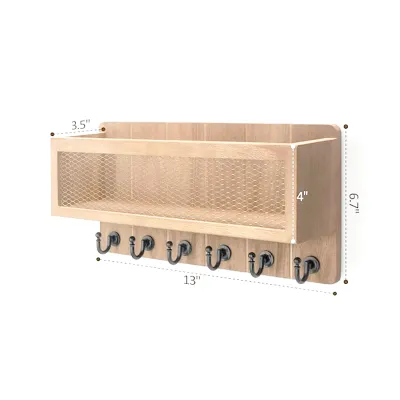
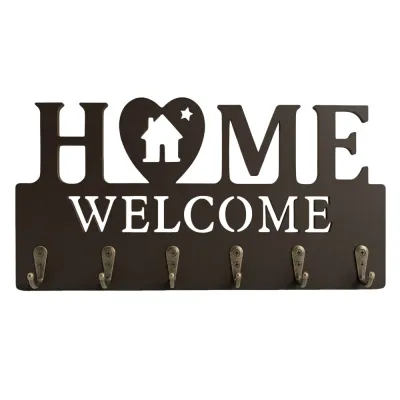
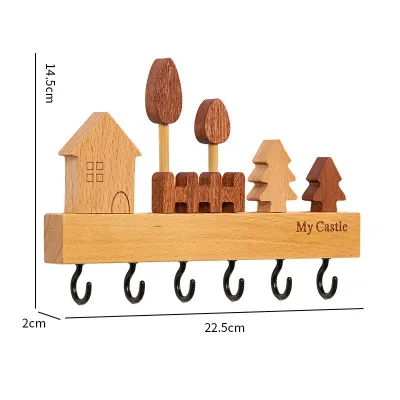
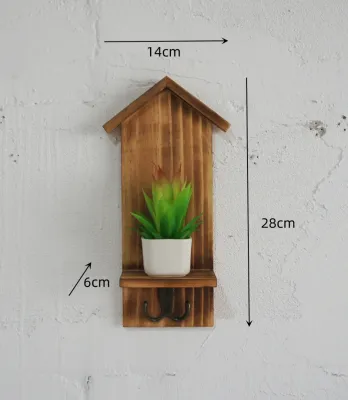
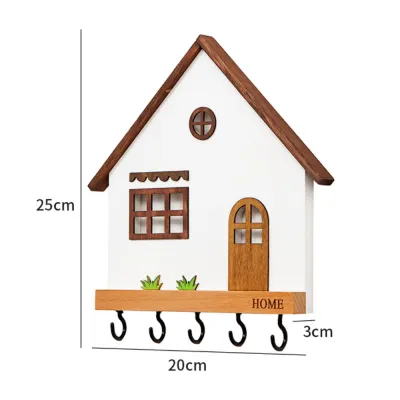
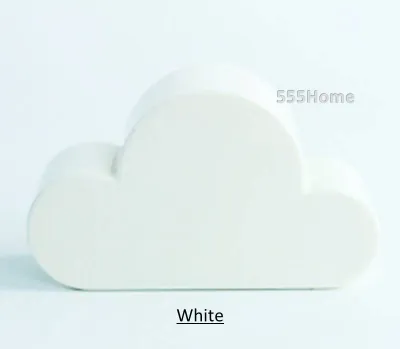
Prices are valid at publication and may change. Please refer to the product page for the latest price.
Door swing clearance is another critical factor that is frequently overlooked. Open your main door and safety gate fully to identify the exact path they travel. Any key holder mounted within this zone must have an ultra-shallow profile to prevent the door or its handle from slamming into it. A collision can damage both your door finish and the key holder itself, potentially pulling the mount out of the wall over time.
High-traffic bottlenecks are common in compact entryways, especially during morning rushes when multiple household members are leaving at the same time. If your entryway doubles as a narrow hallway, a bulky organizer will restrict movement. To maintain a comfortable flow, aim for a key holder with a depth of less than five centimeters. This ensures that even when keys are hanging, they remain close to the wall and out of the path of passing shoulders and bags.
Types of Space-Efficient Wall Keychain Holders
For ultra-shallow spaces, minimalist hook rails and magnetic mounts offer the most streamlined profile. Magnetic key holders use strong internal magnets to hold keyrings directly against a flat panel, eliminating protruding hooks entirely. This design is exceptionally low-profile, making it virtually impossible to snag on clothing. Hook rails with slim, upward-curving pegs also work well, provided the pegs do not extend too far outward.

If you prefer to keep your entryway looking pristine and free of visual clutter, hidden key boxes or small wall cabinets are an excellent alternative. These units feature a shallow door that conceals the hooks inside, keeping keychains out of sight. However, when selecting a cabinet style, you must account for the clearance needed to swing the cabinet door open. Ensure the door opens in a direction that does not block your path or conflict with the main entrance door.
For exceptionally narrow corridors, fold-down or recessed options provide maximum flexibility. Some modern designs feature spring-loaded or manual hooks that fold completely flat into the frame when not in use. This allows you to tuck the hooks away when you go on holiday or when the entryway needs to be completely clear for moving furniture. Recessed options, which sit inside a wall cavity, are highly space-efficient but are generally only feasible if you are undertaking a major renovation with custom carpentry or partition walls.
Multi-Functional Coat Racks with Integrated Key Storage
In small apartments, furniture and organizers often need to perform double duty to save space. Entryway organizers that combine key hooks with a small coat rack, mail slot, or display shelf can maximize your vertical wall utility. Instead of mounting separate units for keys, umbrellas, and daily mail, a single multi-functional piece consolidates these needs into one compact footprint.
When evaluating these combined units, you must assess the total depth of the rack when it is fully loaded. While the wooden frame itself might only be three centimeters deep, hanging a thick jacket, a reusable shopping bag, or a large umbrella can easily triple that depth. Ensure that this accumulated bulk will not spill over into your main walking path or block access to light switches and intercom panels.
Weight distribution and panel stability are crucial when hanging heavier outerwear alongside lightweight keys. A multi-functional rack must be anchored securely to prevent it from tilting or pulling away from the wall under uneven loads. If you plan to hang heavy work bags or wet umbrellas, look for organizers with robust, wide-set mounting points rather than a single central hook, which can cause the unit to wobble and scratch your wall paint.
Accessibility is the final check for multi-functional units. Ensure that the key hooks remain easy to reach even when the rack is fully loaded with coats or bags. If the key hooks are positioned directly beneath the coat pegs, hanging a long jacket will drape over the keys, forcing you to rummage through fabric every time you enter or leave. Look for designs where key storage is offset to the side or positioned on a dedicated lower tier.
Installation Requirements and Weight Capacity Checks
Selecting the right mounting method depends entirely on your apartment’s wall construction. In Singapore, HDB flats typically feature internal walls made of solid concrete or precast concrete panels, while some condominiums use drywall partitions to divide rooms. Concrete walls require a masonry drill bit, plastic wall plugs, and screws to achieve a secure hold. Drywall, on the other hand, requires specialized hollow-wall anchors or toggle bolts to prevent the screws from tearing through the plasterboard.
Always check the manufacturer’s weight rating before installation. A basic keychain holder wall mount designed for three or four standard keyrings has a relatively low weight threshold. However, if your household keychains include heavy car fobs, multi-tools, or decorative ornaments, the cumulative weight can quickly exceed the limits of lightweight adhesive mounts. Overloading an adhesive hook can cause it to fail unexpectedly, potentially damaging your keys or flooring.
If you are renting or prefer not to drill, high-quality adhesive strips are a popular alternative, but they must be applied correctly. Clean the wall surface thoroughly with rubbing alcohol to remove dust and oils, and allow it to dry completely before applying the adhesive. Be aware that the high humidity levels typical of Singapore’s tropical climate can degrade some adhesives over time, so regular checks on the mount’s stability are highly recommended.
For complex installations, such as drilling into tiled walls near an entryway bathroom or mounting heavy, solid-wood organizers, it is wise to stop and consult a professional handyman. Drilling into ceramic or homogenous tiles without the proper diamond-tipped drill bits can easily crack the tile, leading to costly repairs. A professional can also help identify hidden utility pipes or electrical conduits running behind the wall.
Common Space-Matching Mistakes to Avoid
One of the most common mistakes is overestimating your wall’s practical depth and ignoring the physical sweep of nearby doors. A key holder might look perfectly compact in a spacious showroom, but once installed behind a door that opens to ninety degrees, it can prevent the door from opening fully. Always measure with the door open and account for the extra space your hands need to grab the keys comfortably.
Mounting height is another frequent error. Placing the holder too high makes it difficult for younger family members or shorter guests to reach, while mounting it too low increases the risk of bags or groceries knocking the keys off their hooks. A standard guideline is to mount the holder at comfortable eye level, roughly 140 to 150 centimeters from the floor, ensuring it remains accessible to everyone in the household.
Finally, avoid ignoring the visual weight of bulky organizers in small, enclosed foyers. A heavy, dark timber key cabinet can make a narrow entryway feel cramped and visually cluttered. For small spaces, opt for light-colored woods, matte metals, or transparent acrylics that blend seamlessly into your wall paint. Keeping the design visually light helps maintain an open, airy feel in your home’s primary transition zone.
Frequently Asked Questions (FAQ)
Can I use adhesive key holders on rented apartment walls?
Yes, you can use adhesive key holders in a rental property, but you must take specific precautions to protect the landlord’s property. First, review your tenancy agreement to ensure there are no strict clauses against wall adhesives, as some landlords prohibit them due to the risk of paint damage.
Before application, evaluate the condition of the wall paint. If the paint is old, chalky, or already peeling, the adhesive will bond to the loose paint layer rather than the wall, leading to a quick failure and unsightly peeling. When it is time to move out, do not rip the adhesive off directly. Use a hairdryer on a warm setting to gently heat and soften the adhesive backing, then pull the tab slowly parallel to the wall to release it without tearing the drywall or paint.
How many keys should a small entryway holder realistically support?
A small entryway key holder should ideally support only your daily-use keys, typically averaging two to four keyrings per household. Prioritize the keys you need every single day, such as your main door key, security gate key, and letterbox key.
Overcrowding a small holder makes it difficult to grab a single set of keys quickly, often causing other keychains to fall off in the process. Bulky car fobs, loyalty cards, and decorative keychains add unnecessary weight and volume. Store occasional-use keys, such as spare room keys or padlock keys, in a secondary storage box inside a drawer or cabinet rather than cluttering your primary entryway mount.
Community discussion
Share your experience or ask a question. Comments are reviewed before publication.