
Integrating a coffee table fish tank into your living room requires balancing the visual aesthetics of your interior design with the structural and biological demands of a functioning aquatic habitat. The ideal style is one that harmonizes with your room’s existing furniture materials, color palette, and spatial flow while ensuring the physical safety of your home and the livestock inside.
In Singapore, where urban apartments often feature open-plan living areas, a coffee table fish tank serves as a striking room anchor. However, because it sits low to the ground and is subject to foot traffic, vibrations, and top-down viewing, selecting the right material and structural frame is critical. By understanding how different tank styles interact with your decor, you can create a safe, stunning centerpiece that elevates your entire living space.
Quick Guide: Matching Aquarium Styles to Your Living Room Theme
Selecting the right coffee table fish tank involves matching the tank’s physical structure to the design elements already present in your home. Different living room aesthetics dictate specific materials, shapes, and base finishes to ensure the tank looks like an intentional piece of furniture rather than an afterthought.
Products mentioned in this guide
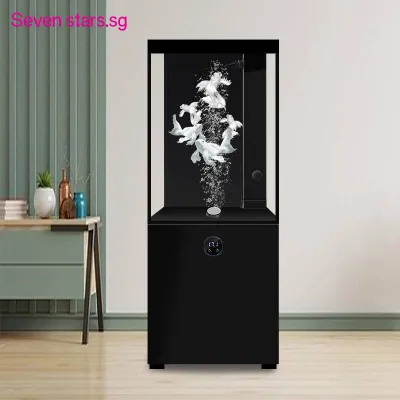
Prices are valid at publication and may change. Please refer to the product page for the latest price.
- Minimalist & Scandinavian: Best paired with frameless, high-clarity glass or seamless acrylic tanks featuring hidden filtration. These designs maintain visual lightness and unobstructed sightlines.
- Industrial & Urban Loft: Best paired with matte black steel, wrought iron, or concrete-accented frames. These provide a heavy-duty, structured visual anchor that complements exposed brick or raw finishes.
- Rustic, Mid-Century Modern & Japandi: Best paired with natural wood cabinetry bases, such as teak, oak, or walnut. These add organic warmth and biophilic texture, though they require meticulous moisture management.
An aquarium coffee table is a functional tabletop that must withstand daily use—holding cups, books, and resisting accidental bumps—while also acting as a stable, biologically active aquarium. This duality means you cannot simply convert a standard coffee table into a tank without addressing filtration, lighting, gas exchange, and structural load.
Before purchasing, evaluate your room’s dominant colors, textures, and spatial flow. A heavy industrial metal tank may feel jarring in a soft, pastel-toned Scandinavian room, while a delicate frameless glass tank might get lost in a spacious, rustic living area filled with chunky wooden furniture.
Sleek Glass and Acrylic: Best for Modern and Minimalist Spaces
Modern and minimalist living rooms prioritize clean lines, uncluttered surfaces, and an open, airy feel. For these spaces, a coffee table fish tank constructed primarily from glass or acrylic is the ideal choice. These designs often feature frameless construction, high-clarity low-iron glass, or thick acrylic panels with polished, seamless joints that offer an unobstructed view of the aquatic environment from every angle.

To maintain a clean aesthetic, these contemporary tanks utilize concealed filtration systems. Power cords, filter tubes, and air lines are routed through the bottom of the tank or hidden within a central column, preventing unsightly equipment from disrupting the visual flow of the room. This visual lightness is particularly beneficial in smaller living rooms, as the transparent surfaces allow light to pass through, making the space feel larger.
However, these sleek designs come with practical limits and maintenance challenges. Water lines, dust, fingerprints, and smudges are highly visible on glass and acrylic surfaces. Because the top of the tank serves as a table, any condensation, water spots, or scratches on the glass lid will be directly under the gaze of anyone sitting on the sofa. Acrylic scratches much more easily than glass, requiring specialized cleaning cloths and careful handling. Additionally, hiding equipment like heaters and filter intakes is a significant challenge; any exposed wires or tubes instantly break the clean, frameless look.
Safety is another critical consideration for frameless designs. These tanks rely entirely on high-strength silicone joints (for glass) or chemical bonding (for acrylic). You must verify the manufacturer’s structural load ratings and glass thickness specifications rather than assuming any glass-topped table can support heavy objects. Never exceed the recommended top-load capacity, and ensure the glass is tempered or laminated to prevent catastrophic shattering if an object is dropped on the surface.
Metal Frames and Industrial Designs: Ideal for Urban Lofts
Industrial and urban loft aesthetics embrace raw, structural elements, making metal-framed coffee table fish tanks an excellent match. These designs typically feature black steel, iron frames, matte powder-coated finishes, exposed rivets or hardware, and mixed-material bases that combine metal with concrete or dark wood. A metal-framed tank acts as a bold, heavy-duty anchor that grounds the seating area and complements industrial textures like exposed brick, concrete floors, and metal light fixtures.
In addition to their aesthetic appeal, metal frames provide exceptional structural support. The rigid metal skeleton easily bears the weight of the water and glass, offering peace of mind regarding the tank’s stability. The structured frame also helps protect the corners of the glass tank from accidental impacts from vacuum cleaners, toys, or feet.
Despite their durability, metal-framed aquariums face specific environmental risks, primarily rust and corrosion. In high-humidity tropical climates, or due to salt creep in marine setups and accidental freshwater spills during maintenance, metal parts are highly vulnerable to oxidation. Rust not only degrades the structural integrity of the frame over time but can also leach toxic metal oxides into the aquarium water if it drips back into the tank.
Before purchasing, check that all metal components have been treated with a high-quality powder coating, galvanization, or marine-grade anti-corrosion finish. Inspect the welds and joints for any signs of exposed raw metal. It is also wise to wipe down any metal surfaces immediately after water changes to prevent moisture from pooling in crevices.
Natural Wood Bases: Perfect for Warm, Rustic, and Japandi Interiors
For living rooms designed with warmth, comfort, and natural materials in mind—such as rustic, mid-century modern, Japandi, or biophilic themes—a coffee table fish tank with a natural wood base is the perfect fit. These designs feature cabinetry bases made from rich hardwoods like teak, oak, or walnut, which seamlessly blend the aquarium into your existing furniture collection. The wood grain adds organic texture and warmth, softening the technical look of the aquarium equipment.
Wooden bases excel at hiding the necessary life-support systems of the aquarium. Integrated sumps, canister filters, air pumps, and electrical multi-plugs can be completely hidden behind wooden cabinet doors, keeping the focus entirely on the aquascape. This makes wood bases highly practical for larger setups that require more robust filtration systems.
However, wood is highly sensitive to moisture. In an aquarium setup, condensation constantly forms under the lid, and water spills are inevitable during maintenance. High ambient humidity accelerates these issues. Unprotected wood will warp, swell, split, or rot, and can quickly become a breeding ground for mold and mildew. This not only ruins the appearance of the table but can also compromise its structural strength, risking a catastrophic collapse of the heavy tank.
To prevent water damage, ensure the wooden base is treated with marine-grade sealants or polyurethane finishes that form an impermeable moisture barrier. There should be a physical barrier, such as a plastic liner or glass pane, separating the water-containing areas from the direct wood surfaces. Regularly inspect the joints, doors, and interior cabinet walls for signs of water intrusion, dampness, or discoloration. Follow the manufacturer’s care instructions for reapplying protective oils or sealants.
Essential Structural and Practical Checks Before You Buy
Moving beyond aesthetics, owning a coffee table fish tank requires a clear understanding of the structural, spatial, and biological realities involved. Failing to plan for these factors can lead to costly damage to your home or a stressful environment for your aquatic life.
- Structural Load & Floor Capacity: Water is incredibly heavy, weighing approximately 1 kg per liter. When you add the weight of the glass tank itself, the substrate (sand, gravel, or soil), rocks, driftwood, and the heavy base, a modest 120-liter coffee table tank can easily exceed 180 to 200 kg. You must verify both the furniture's rated load capacity and your floor's structural limits. In Singapore, modern HDB flats and private apartments are engineered to handle standard residential loads, but placing a highly concentrated, heavy static load in the center of a room requires caution. Ensure the table rests on a level surface; an uneven floor can place uneven stress on the glass panels, leading to a sudden, catastrophic structural failure.
- Dimensions and Spatial Flow: A coffee table must function comfortably within your living room layout. Measure the clearance around your seating. There should be at least 45 to 60 cm of walking space between the edge of the tank and your sofa or TV console to ensure safe passage and prevent accidental kicks or bumps. Consider the height of the table as well; a tank that is too high will block the view of the TV, while one that is too low makes viewing the fish uncomfortable. Additionally, verify that the fully assembled unit can fit through your home's doorways, hallways, and lift access—many pre-assembled aquarium cabinets are bulky and cannot be easily disassembled.
- Utility and Cable Management: An aquarium requires electricity to run filters, lights, heaters, and air pumps. Running power cords across the living room floor creates a major tripping hazard and ruins the clean aesthetic of the room. Plan your cable routing carefully. You can use low-profile, heavy-duty floor cord covers that match your flooring, run cables under a secure rug, or install a dedicated floor outlet directly beneath where the table will sit. Always implement "drip loops" on all electrical cords—this is a simple loop in the cord below the level of the outlet that prevents water from running straight down the wire into the electrical socket.
- Maintenance Access: A coffee table tank is significantly harder to maintain than a standard eye-level aquarium. Because it is low to the ground, you cannot rely on a simple gravity-fed siphon to drain water during water changes, as the bucket must be lower than the tank's water level. You will likely need a small submersible utility pump to pump water out into a bucket or directly to a drain. Ensure the top glass or acrylic cover is easy to remove or slide open, allowing you to clean the glass, trim plants, and feed the fish without having to dismantle the entire table. Check how easy it is to access the filtration media; if you have to crawl on the floor or lift a heavy glass top every time you need to clean the filter, maintenance will quickly become a chore you neglect, leading to poor water quality and fish health.
Frequently Asked Questions (FAQ)
Do I need a special stand for a coffee table fish tank?
Yes, you absolutely need a specialized stand or base. Standard living room coffee tables are designed to support light items like books, cups, and laptops, typically rated for loads under 30 to 50 kg. They lack the internal bracing, reinforced joinery, and water-resistant materials required to support the massive, continuous weight of a filled aquarium. An aquarium coffee table base must be engineered to distribute weight evenly across its footprint and must include level-adjusting feet. Even a minor tilt or unevenness in the floor can cause the glass panels of the tank to experience torsional stress, which can lead to sudden, catastrophic glass fractures.
How do I manage condensation on a wooden aquarium coffee table?
Managing condensation requires a multi-layered approach. First, use a tight-fitting glass or acrylic lid directly over the water surface to contain moisture and minimize evaporation. Ensure there are splash guards around filter outlets to prevent water droplets from spraying onto the wooden frame. In high-humidity climates, using a room dehumidifier or maintaining good air circulation with ceiling fans can help reduce ambient moisture. Regularly inspect the waterproof sealant or polyurethane coating on the wooden base, and immediately wipe down any spills or condensation that escapes during feeding or maintenance.
What fish are suitable for a low-profile coffee table tank?
Selecting fish for a coffee table tank requires balancing aesthetics with animal welfare. These tanks typically have a wide, shallow footprint, which provides a large surface area for oxygen exchange but limits vertical swimming depth. You must avoid large, active swimmers or deep-bodied fish (like angelfish or discus) that require vertical space. Instead, choose small, peaceful species that thrive in shallow water columns, such as neon tetras, rasboras, guppies, or dwarf shrimp. Ensure the species you select are not prone to jumping, as the gap between the water surface and the table lid is often small. Always let the biological capacity and spatial dimensions of the tank dictate your stocking choices, rather than forcing fish into an unsuitable environment for the sake of decor.
Community discussion
Share your experience or ask a question. Comments are reviewed before publication.