
Selecting the right wood for a wardrobe in Singapore’s tropical climate requires balancing moisture resistance, structural stability, and protective finishes rather than relying solely on a wood species name. While solid hardwoods like teak or engineered options like high-density fiberboard (HDF) with proper sealing are common choices, their long-term durability depends heavily on edge-banding quality, surface treatments, and room ventilation.
In a region characterized by high relative humidity and warm temperatures year-round, furniture materials are constantly subjected to environmental stress. Wood is naturally hygroscopic, meaning it absorbs and releases moisture from the surrounding air. Without the correct material selection and protective measures, a wardrobe can quickly become prone to warping, sagging, mould growth, and pest infestations.
To make an informed decision, homeowners must look beyond aesthetic appeal and evaluate the technical specifications of the wood, the quality of the manufacturing process, and the specific conditions of the installation space. This guide provides a comprehensive framework for assessing different wood types, verifying manufacturer claims, and implementing proper installation and maintenance practices to ensure your wardrobe remains durable and functional for years to come.
Products mentioned in this guide
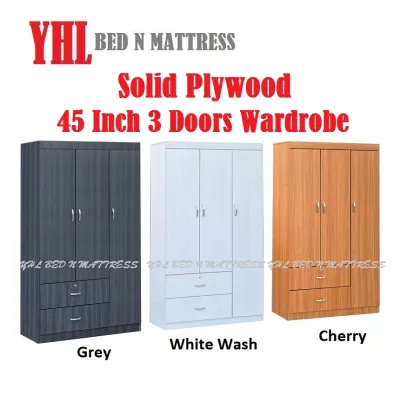
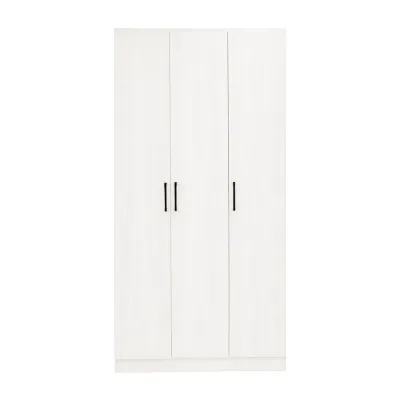
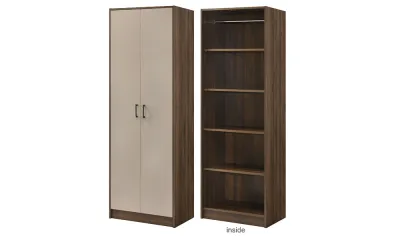
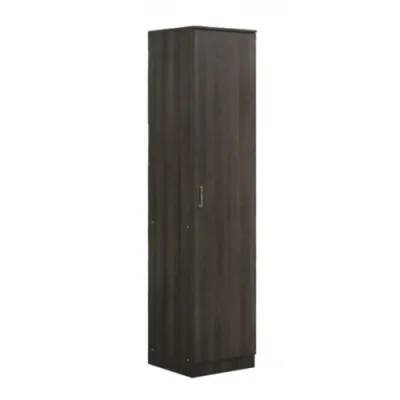
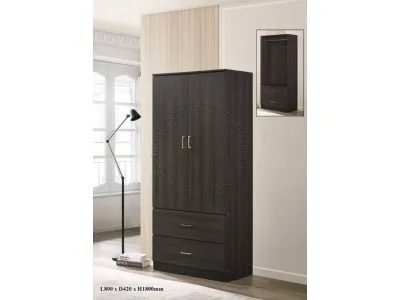

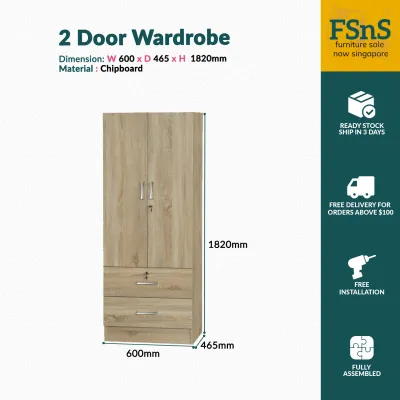
![[FREE INSTALLATION] KENZZO : Multifunctional 2 Door 5 tier small corner wardrobe with Hanging rod & adjustable shelves](https://img.lazcdn.com/g/p/00504151b6d2b7b2ec28060ed4a5b106.jpg_400x400q80.jpg_.webp)
Prices are valid at publication and may change. Please refer to the product page for the latest price.
How Singapore's Tropical Humidity Affects Wardrobe Wood
Singapore’s tropical climate presents unique challenges for wooden furniture, primarily due to consistently high humidity levels that often exceed 80 percent. When wood is exposed to such high levels of atmospheric moisture, its fibers absorb water vapor, causing the material to expand. Conversely, when air-conditioning is turned on, the humidity drops rapidly, causing the wood to release moisture and contract. This continuous cycle of expansion and contraction puts immense structural stress on the wardrobe.
Over time, this dimensional instability manifests as warping, bowing, and swelling. Wardrobe doors may become misaligned and fail to close properly, while drawer runners can stick as the surrounding wood expands. In severe cases, the joints connecting the wardrobe panels can loosen, compromising the overall structural integrity of the unit. This movement is particularly pronounced in solid woods with wild, open grains that have not been thoroughly seasoned or sealed.
Stagnant, humid air in enclosed spaces also creates the ideal breeding ground for mould and mildew. Wardrobes are typically kept closed, trapping pockets of still air inside. If the wardrobe is constructed from untreated or poorly finished wood, fungal spores can easily settle on the porous surfaces. Mould not only damages the wood finish and leaves persistent, musty odors but can also ruin clothing, linens, and other stored items.
Furthermore, damp environments and hidden moisture pockets significantly increase the risk of termite infestations. Subterranean termites require moisture to survive and are highly attracted to damp wood and cellulose-based materials. Wardrobes placed against damp walls or near bathrooms can trap moisture behind them, creating an undetected pathway for termites to enter and hollow out the wooden structure from the inside out.
Solid Wood vs. Engineered Boards: Evaluating Moisture Resistance
When choosing a wardrobe, the debate often centers on solid wood versus engineered boards. Solid wood, derived directly from timber, is highly valued for its natural grain patterns, strength, and longevity. However, because it is a natural, organic material, its grain structure remains highly reactive to environmental changes. Hardwoods like teak and mahogany possess natural oils that offer some resistance to moisture and pests, but they are still subject to natural movement if the wood is not thoroughly kiln-dried and sealed on all sides.

Engineered boards, such as plywood, medium-density fiberboard (MDF), and high-density fiberboard (HDF), are manufactured by bonding wood fibers, particles, or veneers together with adhesives under high pressure. This layered or composite structure distributes internal stresses in multiple directions, making engineered boards significantly more dimensionally stable than solid wood. They are far less likely to warp, bow, or split when exposed to fluctuating humidity levels.
Despite their stability, the vulnerability of engineered boards lies in their core materials. If moisture penetrates the protective surface layer, the internal wood fibers can swell, leading to irreversible delamination and structural weakening. This makes the quality of the edge banding and surface sealing absolutely critical. High-pressure laminates (HPL), melamine foils, or wood veneers must be seamlessly bonded to every exposed edge using high-quality, moisture-resistant adhesives like polyurethane (PUR) to create an airtight barrier.
To evaluate the structural stability and moisture resistance of a wardrobe before purchasing, use the following checklist based on manufacturer specifications rather than marketing claims:
- Core Material Composition: Verify if the engineered board is specifically rated as moisture-resistant (often designated as MR or green-core boards) or marine-grade.
- Edge Banding Quality: Inspect the edges of doors and panels closely. Ensure there are no visible gaps, glue lines, or lifting corners where moisture could seep into the core.
- Surface Sealant Coverage: Confirm that all surfaces, including the back panel, interior shelving, and underside of the unit, are fully sealed with a protective laminate, lacquer, or veneer.
- Joint Construction and Hardware: Check that the joints are reinforced with robust hardware, such as dowels or cam locks, that do not compromise the protective surface coating during assembly.
Key Specifications and Labels to Verify Before Buying
To ensure your wardrobe can withstand local climate conditions, it is essential to verify the technical specifications and certifications of the materials used. Avoid relying on vague retail descriptions like “humidity-proof” or “weather-resistant.” Instead, ask the retailer or manufacturer for documented proof of moisture resistance and structural standards.
For engineered wood panels, look for recognized moisture-resistance grades. For example, boards that comply with European standards such as EN 312 (for particleboards) or EN 622 (for fiberboards) often carry specific ratings indicating their suitability for humid conditions (such as P3 or Option 1 MR ratings). These standards require the boards to undergo rigorous testing, including water immersion and cyclic humidity exposure, to measure thickness swelling and internal bond strength.
Examine the specifications of the surface treatments and finishes. High-quality polyurethane (PU) lacquers, UV-cured acrylic coatings, and high-pressure laminates (HPL) serve as highly effective physical barriers against moisture ingress. Ensure the manufacturer specifies that these protective coatings are applied to all six sides of each panel. It is common for budget wardrobes to leave the top, bottom, or back edges of panels raw and exposed, which allows moisture to enter the core easily.
Additionally, inquire about documented anti-termite treatments and structural warranties. Some manufacturers treat their wood cores with safe, low-toxicity preservatives during production to deter wood-boring insects. Always request a copy of the manufacturer’s structural warranty to understand what is covered, such as delamination or warping under normal indoor conditions, and carefully review the provided care instructions to ensure they align with your household’s maintenance routine.
Installation Checks and Space Planning for Local Homes
The longevity of your wardrobe depends not only on the material quality but also on the physical installation environment and spatial planning. Before the wardrobe is delivered and assembled, conduct a thorough inspection of the designated installation area. Check the walls for any signs of dampness, peeling paint, or powdery residue, which could indicate internal plumbing leaks or condensation from adjacent bathrooms.
Pay close attention to the placement of air-conditioning units and windows. Avoid installing the wardrobe directly beneath an air conditioner blower, as cold air blowing onto the wardrobe can cause localized temperature drops, leading to condensation on the wood surfaces. Similarly, keep the wardrobe away from direct sunlight and open windows where rainwater could splash onto the unit during sudden tropical downpours.
Accurate physical measurements are critical to a successful installation. Verify the finished dimensions of the wardrobe against the available room space, taking into account ceiling height, baseboard thickness, and the swing clearance of wardrobe doors. Additionally, measure all access routes, including doorway widths, hallway turns, and lift cabin dimensions, to ensure the delivery team can safely transport the large panels without scratching the surfaces or damaging the edges.
During assembly, ensure the wardrobe is not pushed completely flush against the wall. Leaving an expansion and ventilation gap of at least two to three centimeters between the back of the wardrobe and the wall allows air to circulate, preventing moisture from becoming trapped in the dark space behind the unit. Finally, verify that the wardrobe is anchored securely to the wall using appropriate brackets and wall plugs, as recommended by the manufacturer, to ensure structural stability and prevent tip-over hazards.
Routine Maintenance to Prevent Mould, Warping, and Termites
Even the most moisture-resistant wardrobe requires regular, proactive maintenance to preserve its structural integrity and appearance in a humid climate. Managing indoor humidity is the most effective way to protect your furniture. On dry, sunny days, open windows to promote cross-ventilation and reduce indoor moisture levels. Alternatively, running a dehumidifier or air conditioner in the bedroom can help maintain a stable, dry environment.
Inside the wardrobe, place disposable moisture absorbers, silica gel packs, or hanging dehumidifying bags on shelves and in hanging sections. Monitor these absorbers regularly and replace them promptly once they become saturated with water, as full containers can accidentally spill or release moisture back into the enclosed space. Avoid packing clothes too tightly on hangers or shelves, as restricted airflow inside the cabinet encourages the growth of mould and mildew.
Establish a monthly visual inspection routine to catch potential issues early. Inspect the back panels, bottom corners, drawer interiors, and metal hinges for any signs of swelling, discolored mould spots, or structural sagging. Pay close attention to the joints and edges where moisture is most likely to penetrate. Early detection of minor swelling or mould allows you to take corrective action before the damage becomes irreversible.
When cleaning the wardrobe, use a soft, dry, or slightly damp microfiber cloth to wipe down the surfaces. Avoid using wet mops, dripping cloths, or excessive water, as liquid can easily seep into joints and cause the wood fibers to swell. Refrain from using harsh chemical cleaners, abrasive scouring pads, or heavy wax-based polishes unless specifically recommended by the manufacturer, as these substances can degrade the protective surface sealant and leave a sticky residue that attracts dust and moisture.
Frequently Asked Questions (FAQ)
Is solid wood always more durable than engineered wood in humid climates?
No, solid wood is not inherently more durable than engineered wood in high-humidity environments. While solid timber offers high structural strength, its natural grain remains highly reactive to moisture, making it prone to warping, bowing, and cracking if not thoroughly seasoned and sealed. High-quality engineered wood, such as moisture-resistant HDF or plywood with seamless edge banding and a robust laminate finish, often provides greater dimensional stability because its layered construction resists natural movement. The long-term durability of either material depends heavily on the quality of its protective coatings, edge sealing, and joint construction.
What are the early visual signs of termite damage in a wardrobe?
Early indicators of termite activity include thin, earthy mud tubes running along the back panels, baseboards, or joints of the wardrobe. You may also notice fine, wood-colored powder or tiny, pellet-like droppings (frass) accumulating near the base of the unit or inside drawers. If you tap the wood and it produces a hollow sound, or if the surface laminate feels soft, papery, or easily punctures under light pressure, the internal core may be severely compromised. If you observe any of these signs, immediately stop using the wardrobe, avoid disturbing the affected areas, and consult a licensed professional pest control service.
Community discussion
Share your experience or ask a question. Comments are reviewed before publication.