
Finding the right thin storage cabinet for under-bed use in Singapore requires balancing tight vertical clearance with easy physical access. In compact apartments, maximizing the unused space beneath a bed frame is one of the most effective ways to declutter a bedroom. However, success depends on precise measurements, selecting materials that withstand local humidity, and choosing a cabinet style that matches your specific storage needs. By focusing on physical dimensions, structural integrity, and ease of movement, you can transform this often-overlooked area into a highly functional storage zone.
To make this space work, you must look beyond simple plastic tubs and consider low-profile, structured cabinets. These units offer better organization, smoother access, and a more polished appearance than basic storage bags. However, because under-bed clearance is typically very limited, selecting a cabinet requires careful planning. You must ensure the unit fits comfortably beneath the frame, clears any support legs, and can be easily pulled out without damaging your flooring.
This guide provides a practical framework for evaluating thin storage cabinets, measuring your space accurately, and choosing the right materials for your home. Whether you are storing seasonal bedding, extra clothing, or daily accessories, understanding these key factors will help you make an informed decision.
Products mentioned in this guide
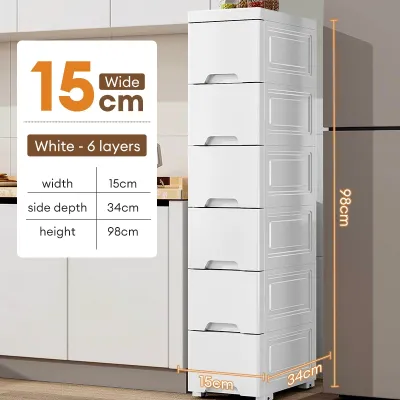

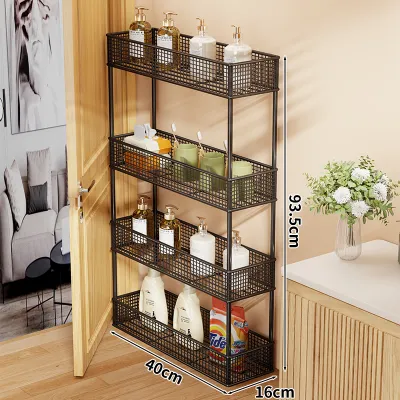
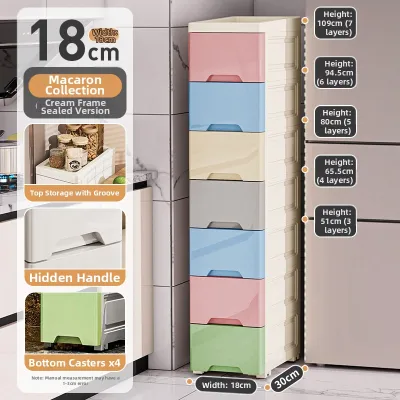

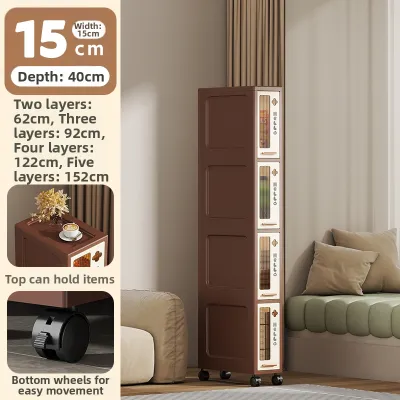
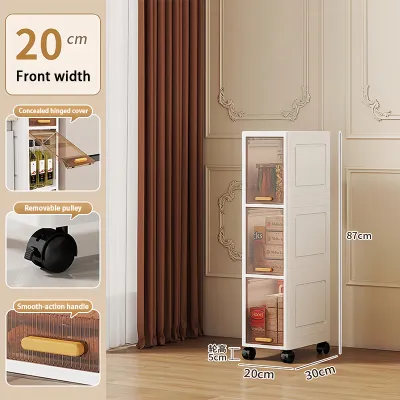
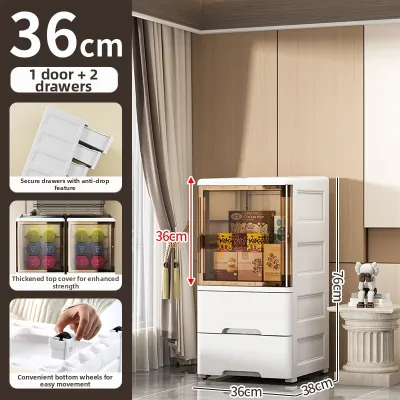
Prices are valid at publication and may change. Please refer to the product page for the latest price.
Measuring Under-Bed Clearance and Room Access
Measuring the space under your bed is the most critical step in choosing a thin storage cabinet. Even a discrepancy of a few millimeters can prevent a cabinet from sliding smoothly under the frame. To avoid this, you must measure the vertical clearance at multiple points along the bed frame. Do not rely solely on the manufacturer’s listed bed height, as mattress weight, bedding overhang, and center support beams can significantly reduce the actual clearance.
Start by measuring the distance from the floor to the lowest edge of the bed frame side rails. Next, measure the clearance near the center of the bed, as some frames sag slightly under the weight of the mattress and occupants. If your bed frame uses a flexible slat system, measure the clearance while the mattress is fully loaded to ensure the cabinet will not scrape against the underside of the slats. If your bed frame has a central support leg or crossbeams, measure the distance between these supports and the side rails. This will determine the maximum width and depth of the cabinets you can place side-by-side.
You must also account for the “clearance envelope” required to pull the cabinet out. In compact Singapore bedrooms, space around the bed is often limited by bedside tables, wardrobes, or walls. Measure the open floor space adjacent to the bed to ensure there is enough room to fully extend or roll out the cabinet. If the clearance path is tight, you may need to choose multiple shorter cabinets rather than one long unit, allowing you to pivot them out at an angle.
Beyond the frame itself, consider the physical features of the storage cabinet. Many thin cabinets feature wheels, casters, handles, or latches that protrude from the main body. Ensure your vertical clearance measurements account for these components. For example, a cabinet body might measure 15 centimeters in height, but the addition of casters and a top handle could bring the total height to 18 centimeters. Always allow a safety margin of at least 1 to 2 centimeters of clearance above the tallest point of the cabinet.
Finally, verify the delivery and assembly path within your home. While thin cabinets are designed to fit under beds, some models are delivered fully assembled or in large, flat-packed boxes. Measure your doorways, narrow hallways, and elevator doors to ensure the packaging can be easily transported to your bedroom. If you live in a high-rise apartment, checking elevator dimensions is particularly important to avoid delivery complications.
Evaluating Materials and Build Quality for Bedroom Environments
The choice of material for your under-bed cabinet directly impacts its durability, ease of use, and suitability for your bedroom’s microclimate. Because these cabinets sit close to the floor, they are highly susceptible to dust, moisture, and physical wear. Rather than assuming a material’s performance based on its name, you should carefully review the manufacturer’s specifications for finishes, joint construction, and care guidelines.

Engineered wood, such as medium-density fibreboard (MDF) or particleboard, is a common choice for structured under-bed furniture. If you select engineered wood, check for high-quality protective laminates or veneer finishes. These surfaces help protect the underlying material from minor moisture exposure during floor mopping. Ensure all edges are fully banded, as exposed engineered wood can absorb ambient moisture, leading to swelling or warping over time. Look for sturdy joint construction, such as cam-lock systems or reinforced dowels, which provide better stability when the cabinet is frequently moved.
Plastic cabinets, typically made from polypropylene, offer excellent moisture resistance and are lightweight. This makes them highly practical for humid environments or for storing items that must be kept completely dry. When evaluating plastic options, look for reinforced bases and thick walls. Thin plastic can bow under heavy loads, causing the cabinet to drag on the floor or preventing the drawers from sliding smoothly. Check if the plastic is UV-stabilized or treated to resist yellowing over time, especially if your bedroom receives direct sunlight.
Metal cabinets, such as those made from powder-coated steel, provide exceptional strength and a modern aesthetic. If you choose metal, verify that the powder coating is uniform and free of chips or scratches. A high-quality powder-coated finish acts as a barrier against rust, which is essential in humid climates. Metal units are highly durable and can support heavier items without bending, but they can be heavier to maneuver. Ensure the corners are rounded or protected to prevent accidental scratches to your ankles or bedding.
Weight capacity and load distribution are critical factors, especially if you plan to store heavy items like books, shoes, or winter coats. Check the manufacturer’s rated load capacity for both the individual drawers and the overall cabinet frame. Overloading a thin cabinet can cause the frame to sag, which may misalign the drawers or put excessive pressure on the wheels, potentially scratching your bedroom flooring.
Mobility features are equally important for under-bed storage. Look for cabinets equipped with multi-directional casters or smooth-gliding wheels. If your bedroom has hardwood, parquet, or vinyl flooring, choose wheels made from soft materials like polyurethane or rubber to prevent scratching. For carpeted floors, larger, hard plastic wheels are generally more effective. If the cabinet will be accessed frequently, consider models with locking casters to keep the unit securely in place when closed.
Building Your Shortlist Based on Storage Needs
To select the right thin storage cabinet, you must match the cabinet’s internal configuration with the specific items you plan to store. Under-bed cabinets generally fall into three design categories: shallow multi-drawer units, deep single-drawer or open-bin designs, and modular or divided units. Understanding the strengths of each style will help you build a practical shortlist.
Shallow, multi-drawer units are ideal for organizing smaller, daily-use items. If you plan to store folded clothing, activewear, socks, or accessories, a multi-drawer configuration allows you to categorize items clearly. Because these drawers are shallow, you can easily see all contents at a glance without having to dig through layers of fabric. Look for drawers with smooth sliding tracks or roller glides to ensure effortless operation. This style is particularly useful if you want to supplement your main wardrobe without taking up additional floor space in the room.
Deep, single-drawer or open-bin designs are better suited for bulky, seasonal items. If your primary goal is to store extra bedding, winter blankets, bulky comforters, or large footwear, a single spacious compartment is highly efficient. These designs maximize the available volume by eliminating internal dividers and drawer tracks. When choosing an open-bin design, look for models with secure, tight-fitting lids to protect the contents from dust and pests. This is especially useful for storing winter wear used for overseas travel, keeping it compressed and protected until your next trip.
Divided or modular inserts offer the greatest flexibility for mixed storage. Some thin cabinets come with adjustable dividers or removable fabric bins that fit precisely inside the main frame. This setup is excellent for organizing a variety of items, such as a mix of shoes, travel accessories, and documents. The dividers prevent items from shifting or sliding around when you pull the cabinet out from under the bed. If your storage needs change over time, modular units allow you to reconfigure the interior layout without buying a new cabinet.
When comparing these styles, consider how often you will need to access the cabinet. Daily-use items are best kept in smooth-sliding drawers that can be pulled out partially. Seasonal items, which are accessed only a few times a year, can be stored in simpler, roll-out bins with removable lids. Balancing accessibility with storage volume will ensure your chosen cabinet fits seamlessly into your daily routine and bedroom layout.
Safety, Assembly, and Maintenance Checks
Proper assembly and regular maintenance are essential to ensure your under-bed storage cabinet remains safe, functional, and durable over time. Because these units are frequently rolled back and forth, they experience continuous physical vibration and stress, which can loosen joints and misalign moving parts.
During assembly, carefully follow the manufacturer’s instructions and ensure all structural joints, screws, and dowels are securely fastened. If the cabinet features drawer slides or wheel tracks, verify that they are perfectly aligned and level. Misaligned tracks can cause drawers to stick, increase wear on the sliding mechanisms, and put uneven stress on the cabinet frame. Avoid over-tightening screws in engineered wood, as this can strip the material and weaken the joint. If the cabinet includes safety brackets or anti-tip hardware, review the instructions to determine if they are required for your specific low-profile setup.
Regular maintenance is key to preserving the smooth operation of your cabinet. Periodically inspect the wheels or casters for dust, hair, or fiber buildup, which can clog the axles and cause the wheels to drag rather than roll. Wipe the wheels clean with a damp cloth and check that they spin freely. If your cabinet slides on tracks, vacuum the tracks regularly to remove dust and debris that can obstruct movement. Applying a small amount of silicone-based lubricant to the drawer glides can also help maintain smooth operation.
When cleaning the cabinet surfaces, always refer to the product label and manufacturer guidelines. For engineered wood and metal cabinets, avoid using harsh chemical cleaners, abrasive pads, or excessive water, which can damage the protective finish or cause rust and swelling. A soft, slightly damp microfiber cloth is usually sufficient for routine dusting. For plastic cabinets, mild soapy water can be used, but ensure the unit is completely dry before sliding it back under the bed to prevent trapping moisture.
Finally, perform periodic structural checks. Gently shake the cabinet to ensure the frame remains rigid and stable. If you notice any wobbling or loose joints, tighten the hardware immediately. If the cabinet is placed on a delicate flooring surface, check the floor periodically for any signs of wear or scratching, and consider adding protective felt pads or upgrading to softer wheels if necessary.
Frequently Asked Questions (FAQ)
Can I use a standard thin storage cabinet under a platform bed?
Most standard platform or divan beds sit very low to the ground or have solid bases that rest directly on the floor, leaving no under-bed clearance. If your platform bed has short legs, you must measure the exact clearance to see if an ultra-thin cabinet can fit. Do not attempt to modify the bed legs or add risers unless the bed manufacturer explicitly states it is safe to do so, as altering the legs can compromise the structural integrity and safety of the bed frame. If the clearance is insufficient, consider alternative low-profile storage solutions, such as slim fabric storage bags or side-access drawers designed specifically for platform frames.
How do I prevent dust from accumulating inside under-bed cabinets?
The area beneath a bed is highly prone to dust accumulation. To protect your stored items, choose cabinets that feature tight-fitting lids, secure latches, or integrated dust seals along the drawer edges. For maximum protection, especially when storing seasonal clothing or bedding, place your items inside vacuum storage bags before placing them in the cabinet. Additionally, establish a regular cleaning routine where you roll out the cabinets and vacuum the floor beneath the bed to minimize the overall dust load in the area.
Are plastic or engineered wood cabinets better for humid climates?
In humid climates, plastic cabinets are generally more resilient as they are completely impervious to moisture and will not warp, swell, or support mold growth. However, high-quality engineered wood cabinets can perform well if they feature complete edge-banding and a high-grade laminate finish that seals the wood from ambient humidity. When using engineered wood in humid environments, ensure your bedroom is well-ventilated, avoid placing the cabinet against damp walls, and check the manufacturer’s care instructions to ensure the finish is rated for humid conditions.
Community discussion
Share your experience or ask a question. Comments are reviewed before publication.