
Selecting the perfect mattress for a compact Singapore Built-To-Order (BTO) master bedroom requires a careful balance of physical dimensions and visual proportions. While a larger bed offers more sleeping surface, it can easily overwhelm a limited floor plan, leaving little room for wardrobes, vanity tables, or comfortable walking paths. For most standard BTO master bedrooms, a Queen-size mattress paired with a moderate thickness profile of 8 to 10 inches strikes the ideal balance between comfort and spatial harmony. This combination preserves essential clearance while ensuring the bed does not dominate the room visually.
Measuring Your BTO Master Bedroom for a New Mattress
Before browsing online catalogs or visiting showrooms, you must establish the exact physical boundaries of your master bedroom. BTO flats are known for their efficient layouts, which means every centimeter counts. Start by measuring the total length and width of the room using a reliable measuring tape. Do not rely solely on the developer’s floor plan, as actual on-site dimensions can vary slightly after plastering and painting.
When calculating the available floor area, you must account for fixed architectural features and built-in furniture. If you plan to install a built-in wardrobe, subtract its depth—typically 60 centimeters—from the room’s total width. Factor in the swing clearance of wardrobe doors and the bedroom entry door. A door that cannot open fully because it strikes the corner of the mattress frame is a common and frustrating layout mistake.
Products mentioned in this guide
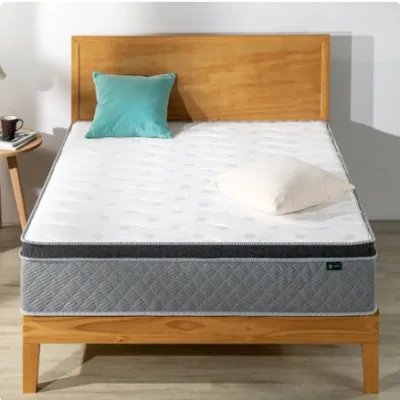

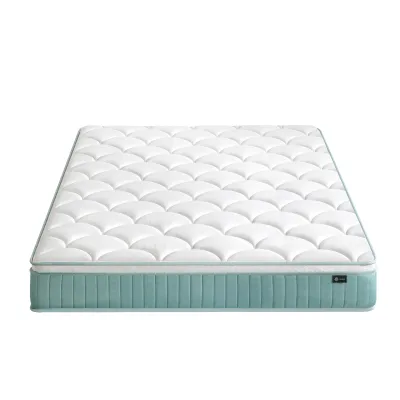
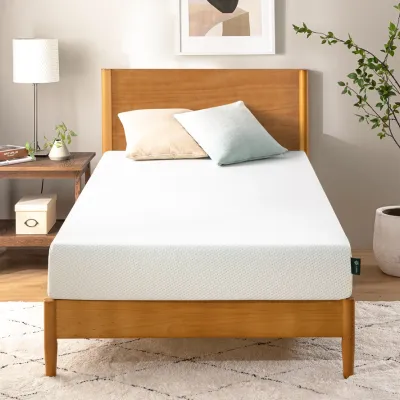
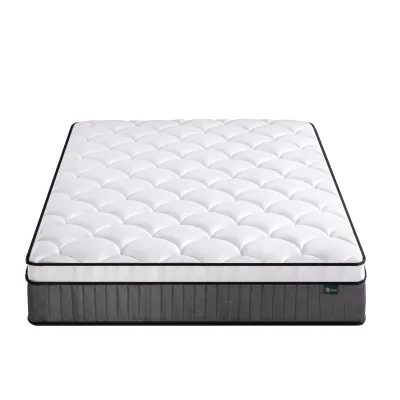
Prices are valid at publication and may change. Please refer to the product page for the latest price.
Additionally, take note of low-hanging window ledges, bay windows, and the placement of wall-mounted air-conditioning units. Air-con trunking often runs along the top of walls or down corners, which can restrict where a tall headboard or bed frame can sit.
Equally important is mapping out the path from the building’s drop-off point to your bedroom door. Measure the height and width of your HDB lift door, the interior lift cabin, and any tight corridor turns. While many modern mattresses are shipped compressed in a box, making them easier to maneuver through tight spaces, you must still verify that the packaged box dimensions can clear your doorway and any sharp angles in your entryway.
Finally, locate all electrical wall sockets and light switches. Placing a bed directly in front of a socket can block access to chargers and bedside lamps, or force you to pull the bed frame away from the wall, wasting precious floor space.
Comparing Zinus Mattress Sizes for Compact Layouts
When choosing between mattress sizes, the decision usually comes down to a Queen-size or a King-size model. In a standard BTO master bedroom, a Queen-size mattress (measuring 152 cm by 190 cm) is generally the most practical choice. This size comfortably accommodates two adults while leaving sufficient clearance on three sides of the bed. Ideally, you should aim for at least 50 to 60 centimeters of walking space around the foot and sides of the bed to allow for comfortable movement and easy bed-making.

A King-size mattress (measuring 183 cm by 190 cm) offers an extra 31 centimeters of width, which is highly desirable for couples who prefer more personal space or share the bed with children. However, this extra width comes at a direct cost to your room’s traffic flow. In a compact BTO room, a King-size bed often leaves very narrow side walkways, sometimes reducing clearance to less than 30 centimeters. This can make accessing built-in wardrobes difficult and may force you to opt for sliding wardrobe doors rather than traditional hinged doors.
To visualize how these sizes will function in your actual space, use a floor plan layout approach. Clear the room and use masking tape on the floor to outline the exact dimensions of both the mattress and the bed frame. Walk around the taped outline to test the flow of the room. Open and close your wardrobe doors and bedroom door to ensure they do not collide with the taped boundary. This simple physical test can prevent costly return fees and layout headaches.
If you find that a Queen-size bed still feels too tight, consider how your choice of bed frame impacts the overall footprint. A minimalist platform bed or a divan base will keep the total footprint close to the actual mattress dimensions, whereas an oversized upholstered frame can add 10 to 20 centimeters to both the length and width, quickly crowding a small room.
Choosing the Right Mattress Thickness for Small Spaces
The thickness, or profile, of your mattress plays a significant role in both your sleep quality and the visual volume of your bedroom. Mattresses generally range from low-profile options (6 to 8 inches) to high-profile models (10 to 12 inches or thicker). In a compact BTO bedroom, a lower-profile mattress can create an illusion of higher ceilings, making the entire room feel more open and less visually cluttered.
However, you should not sacrifice physical comfort and support solely for aesthetics. Thicker mattresses often feature multiple layers of memory foam, pocket springs, or latex, which provide superior pressure relief and motion isolation. If you prefer a thicker mattress, such as a 10-inch or 12-inch model, you can offset its visual weight by pairing it with a low-profile bed frame. A low platform or a recessed bed base keeps the overall sleeping surface at a comfortable height while preventing the bed from dominating the vertical space.
When evaluating thickness, check the total height of the bed from the floor to the top of the mattress. The ideal height for easy entry and exit is generally around 45 to 60 centimeters, allowing your feet to touch the floor comfortably when sitting on the edge of the bed. A bed that is too high can feel imposing in a small room and may be difficult to climb into, while a bed that is too low can put extra strain on your knees when standing up.
Additionally, verify how the mattress thickness interacts with your bed frame’s headboard and support system. A very thick mattress can obscure a beautiful headboard design or sit too high against window sills. Ensure your bed frame’s slats or solid platform are rated to support both the weight of a thicker mattress and the sleepers, as denser, multi-layer mattresses can be significantly heavier than basic models.
Finalizing Your Mattress Choice and Delivery Logistics
Once you have determined the ideal size and thickness, you can finalize your purchase by cross-referencing your choice with a few practical logistics. Start by checking the exact packaged dimensions of the mattress model you select. Even though compressed mattresses are highly portable, knowing the box dimensions helps you plan the delivery day and ensure a clear path through your home’s entryway.
Next, inspect your bed frame to confirm its structural compatibility. If you are using an existing frame, check the manufacturer’s guidelines regarding weight limits and slat spacing. Memory foam and hybrid mattresses require sturdy, closely spaced slats—typically no more than 7.5 centimeters apart—to prevent sagging and maintain the mattress’s structural integrity over time.
Finally, review the retailer’s customer service policies before placing your order. Look for clear information regarding trial periods, return shipping fees, and warranty terms. Because comfort is highly subjective, a trial period allows you to test the mattress in your own home to ensure it provides the right level of support. Additionally, check if the delivery service offers old mattress disposal, which can save you the hassle of arranging bulky waste removal with your local town council.
Frequently Asked Questions (FAQ)
Can a King-size mattress fit in a standard 4-room BTO master bedroom?
Yes, a King-size mattress can fit in a standard 4-room BTO master bedroom, but it requires careful layout planning and compromises on other furniture. To accommodate a King-size bed (183 cm by 190 cm) while maintaining a functional room, you will likely need to position the bed against the main wall and opt for sliding wardrobe doors to avoid clearance issues. You may also need to minimize bedside tables or choose wall-mounted shelves to keep the walkways clear. Measure your specific room dimensions to ensure you have at least 50 centimeters of clearance on the sides of the bed for movement.
Does a thicker mattress make a small room look more cramped?
A thicker mattress can make a small room look more cramped if it is paired with a tall, bulky bed frame, as it raises the visual horizon of the room and makes the ceiling appear lower. To prevent this, you can balance a thicker mattress (10 to 12 inches) by using a low-profile platform bed frame or a floor-level divan. Keeping your bedding simple, using light colors, and avoiding oversized headboards will also help maintain a sense of openness and proportion in a compact space.

Community discussion
Share your experience or ask a question. Comments are reviewed before publication.