
In a compact Singapore HDB flat, the best sweeping robot shelf is an open-bottom, multi-functional unit—such as an open-base console table or a low-profile TV cabinet—that integrates the docking station into existing furniture. This setup maximizes vertical storage while keeping the floor clear for the robot’s automated cleaning cycles. To make this work, you must carefully evaluate your flat’s layout, choose a design that accommodates your specific robot’s clearance needs, and verify structural safety before buying.
Assessing Your Space and Docking Requirements
HDB flats require smart spatial planning because every square meter counts. Before purchasing any furniture, you must measure the exact physical footprint of your robot vacuum and its docking station.
Start by measuring the height, width, and depth of the dock when the robot is fully parked inside it. Many modern docking stations feature auto-empty bins or water-refilling tanks that extend significantly upward, requiring ample vertical clearance.
Products mentioned in this guide
![[CozyNest ] Wood Sweeping Robot Storage Cabinet Companion Organizer Cabinet Housekeeping Cabinet Storage Organizer Bookshelf Cabinet Movable](https://img.lazcdn.com/g/p/3e0c1a05e97f2d69766834a18fc145c6.jpg_400x400q80.jpg_.webp)
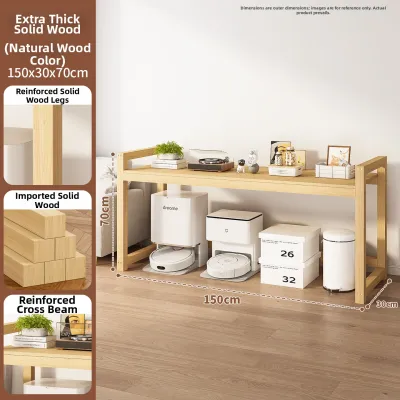
Prices are valid at publication and may change. Please refer to the product page for the latest price.
Consult your robot’s manual for the manufacturer’s recommended buffer zones. Typically, docks require a clear zone on both the left and right sides, as well as a straight path of clear space directly in front, to allow the infrared or LiDAR sensors to align properly during docking.
Power access is another critical factor. Identify a docking spot with a nearby wall outlet so you do not have to run long, unsightly extension cords across your living room or hallway.
Check the Wi-Fi signal strength at the exact spot where you plan to place the shelf. A weak connection can prevent the robot from receiving scheduled cleaning commands or updating its internal map of your home.
Finally, map out the robot’s entry and exit paths. Ensure that nearby dining chairs, sofa legs, or high floor thresholds do not create physical bottlenecks that trap the robot or block its return to the charging base.
Shelf Designs Suited for Compact HDB Layouts
Integrating a sweeping robot shelf into a small HDB flat requires balancing aesthetic appeal with practical functionality. The goal is to conceal the bulky docking station or blend it seamlessly into your decor without obstructing the robot’s daily operations.

Different furniture designs offer varying levels of flexibility, storage capacity, and spatial footprints. By grouping these options by their secondary functions, you can easily identify which style fits your specific household habits and room layout.
Whether you prefer a permanent fixture that serves as a focal point or a flexible, mobile solution that can be repositioned as your needs change, there is a design tailored to your space. Let’s look at the primary categories of shelves that work best for housing a robot vacuum dock.
Multi-Functional Side Tables and Consoles
A multi-functional side table or console table is an excellent way to utilize the empty space beneath your furniture. These pieces can sit next to your sofa or in a narrow hallway, serving as a surface for keys, lamps, or decorative items while housing the robot dock underneath.
When shopping for a side table, pay close attention to the leg clearance. The bottom area must be completely open, with no low-hanging crossbars or decorative stretchers that could block the robot’s path or interfere with its navigation sensors.
Consider the weight distribution of the items you plan to place on top of the table. Because the bottom section is hollow to accommodate the dock, the table’s center of gravity will be higher, making stability a key priority.
Aesthetically, a console table with a clean, minimalist frame blends effortlessly into modern HDB interiors. It keeps the bulky docking station tucked away out of direct sightlines while keeping the floor area open and easy to clean manually when needed.
Open-Bottom TV Units and Entryway Cabinets
For a more integrated look, open-bottom TV units and entryway cabinets offer a seamless way to hide a robot vacuum dock within your main storage systems. These units utilize the lowest tier of your cabinetry, turning what is often wasted space into a dedicated home for your smart appliance.
Ensure that the bottom tier of the cabinet is completely open to the floor or features removable bottom panels. If the cabinet has doors, they must either remain open during cleaning cycles or have a custom cut-out at the bottom to allow the robot to pass through freely.
Verify that the internal depth of the cabinet can fully accommodate both the docking station and the robot when it is parked. This is especially important for advanced docks with automated dustbin emptying or water tank refilling systems, which require extra vertical space to open their top lids.
Using an entryway cabinet for this purpose is highly practical, as it keeps the robot near the front door where dirt is most frequently tracked in. This placement allows the robot to perform quick spot cleans of the entryway before returning to its hidden dock.
Mobile Carts and Foldable Utility Shelves
If you live in a rented HDB flat or have a highly constrained layout where permanent furniture is impractical, mobile carts and foldable utility shelves offer a flexible alternative. These lightweight structures can be moved easily during deep cleaning or rearranged as your spatial needs evolve.
When using a mobile cart, the most critical feature to evaluate is the presence of reliable wheel locks. The force exerted by a robot vacuum as it aligns and mounts its charging dock can easily push an unlocked cart backward, causing docking failures or misaligned charging contacts.
Foldable utility shelves provide temporary storage that can be packed away if you decide to relocate the robot vacuum to another room. However, you must ensure the shelf has sufficient structural rigidity when unfolded to prevent wobbling during the robot’s docking maneuvers.
These mobile options are ideal for utility yards or kitchen corners, where space is tight but access to power outlets is readily available. They allow you to stack cleaning supplies on the upper shelves while keeping the bottom level dedicated to the robot.
Key Specifications and Safety Checks Before Purchase
Before finalizing your purchase of a sweeping robot shelf, you must perform several physical and structural safety checks to ensure the furniture is fit for its intended use.
First, confirm the shelf’s stated load-bearing capacity. This limit must comfortably exceed the combined weight of the charging base, the robot vacuum itself, and any decorative items, books, or organizers you plan to place on the upper shelves.
Check for adequate heat dissipation clearance around the charging contacts and power adapter. Charging batteries generate heat, and placing a dock in a tightly enclosed wooden shelf without proper ventilation can lead to heat buildup, potentially reducing battery lifespan or creating a safety hazard.
Look for built-in cable management features, such as pre-drilled grommet holes or integrated wire channels. These features help keep power cords organized and prevent them from dangling into the robot’s path or creating a tripping hazard for your household.
Verify the anti-tip stability of the shelf, especially if you choose a tall, narrow design. Many shelves come with wall-anchoring brackets; utilizing these is highly recommended to prevent the unit from tipping over if it is accidentally bumped or if a heavy item is placed on an upper tier.
Finally, compare prices in S$ across various online furniture stores and local retailers. While searching for the best deal, pay close attention to the return policies regarding size mismatches, as even a minor measurement error can prevent your robot dock from fitting properly inside the shelf.
Setting Up Your Sweeping Robot Shelf for Daily Use
Once your new shelf is assembled and in place, the final step is to configure the setup for reliable daily operation and easy maintenance.
Route all power cables safely behind the shelf structure, securing them with cable ties or adhesive clips. Loose wires dangling near the floor are a primary cause of robot vacuum navigation failures, as the spinning brushes can easily snag on cords and stall the machine.
Test the robot’s return-to-base alignment multiple times before leaving it to run on an automated schedule. Observe the robot as it approaches the shelf to ensure it does not bump into the legs or struggle to locate the docking signal due to physical obstructions.
Ensure there is enough manual clearance above and around the dock to perform routine maintenance tasks. You must be able to easily lift out the dustbin, remove and refill the water tanks, or detach the mop pads without having to slide the entire shelf away from the wall.
Keep the area directly in front of the shelf clear of temporary obstacles like shoes, bags, or toys. Maintaining a clear pathway ensures your robot can exit and return smoothly, keeping your HDB floors consistently clean with minimal manual intervention.
Frequently Asked Questions (FAQ)
Can I place the sweeping robot shelf on a carpet or rug?
Yes, but you must check the carpet pile height against your robot’s threshold climbing limits. High-pile rugs can create resistance, making it difficult for the robot to align precisely with the charging contacts. Additionally, ensure the shelf itself remains perfectly level on the soft surface; if the shelf tilts or sinks into the rug, it can misalign the dock and prevent successful charging.
How do I manage the power cables for a hidden robot dock?
To maintain a tidy HDB interior, use plastic cable raceways that adhere to your baseboards or the back of the shelf. If your shelf does not have built-in wire channels, you can attach adhesive cable clips to the underside of the tiers to keep cords off the floor. Always ensure the main plug remains easily accessible so you can quickly disconnect the power for maintenance or system resets.
Does the shelf material affect the robot vacuum's Wi-Fi connection?
The material of your shelf can influence wireless signal penetration. Solid metal shelves can block or degrade Wi-Fi signals, potentially causing connectivity issues if your home router is far away. Wood, MDF, and glass shelves generally allow signals to pass through much more easily. If you must use a metal shelf or place the dock inside a closed wooden cabinet, consider placing a Wi-Fi extender nearby to ensure a stable connection.

Community discussion
Share your experience or ask a question. Comments are reviewed before publication.