
Selecting the right size for a sintered stone TV cabinet requires balancing your television’s dimensions, available wall space, and the physical constraints of your apartment layout. Because sintered stone is exceptionally dense and heavy, sizing decisions directly impact structural safety, delivery logistics, and long-term usability. A cabinet that is too large can overwhelm a compact living room, while one that is too small fails to provide adequate visual balance or functional storage. By systematically measuring your space, verifying structural limits, and planning for delivery access, you can select a media console that enhances your home’s aesthetic and functions safely for years to come.
Assessing Your Wall Space and Room Layout
To determine the ideal footprint for your sintered stone cabinet, begin by measuring the dedicated wall width where the unit will stand. It is essential to account for adjacent architectural features such as doors, windows, floor-to-ceiling curtains, and power outlets. Ensure you leave sufficient clearance so the cabinet does not block walkways or interfere with the natural swing of nearby doors. In typical high-density residential layouts, every centimeter of floor space matters, meaning a cabinet that extends too close to a doorway can create a permanent physical bottleneck.
Next, evaluate the depth of your living room to ensure the cabinet’s protrusion does not obstruct main traffic paths or seating arrangements. Sintered stone cabinets generally feature a deeper profile to accommodate media equipment, but a unit that is too deep can restrict the space between your sofa and the television screen. Measure the clearance between the front edge of the proposed cabinet and your coffee table or seating to guarantee comfortable movement.
Products mentioned in this guide

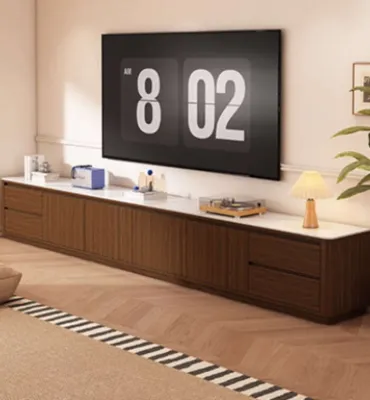

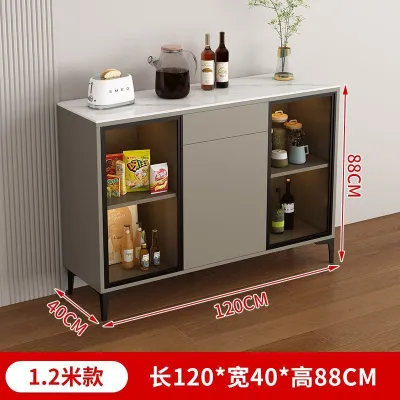
Prices are valid at publication and may change. Please refer to the product page for the latest price.
Finally, consider the visual weight of the material. Sintered stone has a solid, dense appearance with prominent veining or matte textures that naturally draw the eye. In compact living rooms, an oversized stone cabinet can easily dominate the entire wall, making the room feel smaller and more cramped than it actually is. Choosing a streamlined profile or a floating design can help mitigate this heavy visual presence while still providing the desired surface area.
Matching Cabinet Dimensions to Your TV Size
Achieving a balanced look requires matching the cabinet’s width to the physical dimensions of your television. As a general aesthetic guideline, the cabinet should be visibly wider than the TV, leaving a comfortable margin on both sides. This proportional layout creates a grounded, stable base and prevents the entire entertainment setup from looking top-heavy. If the television is wider than or equal to the cabinet, the arrangement can feel unstable and visually cluttered.

Height alignment is equally critical for comfortable viewing ergonomics. When seated on your sofa, your eye level should ideally align with the center of the television screen. To calculate the correct cabinet height, measure the height of your sofa seat, the height of the TV stand, and the television itself. If you plan to wall-mount the TV above the cabinet, ensure there is a balanced gap between the bottom of the screen and the stone surface, keeping the overall viewing angle natural to prevent neck strain.
Do not forget to verify the depth requirements of your media equipment. Sintered stone surfaces must be deep enough to safely support the TV base if it is not wall-mounted. If you use a soundbar, external media players, or gaming consoles, measure these devices beforehand to ensure they fit comfortably on the top slab or within the internal shelving without hanging over the edges.
Accounting for Sintered Stone Weight and Structural Needs
Sintered stone is a highly dense material manufactured under extreme pressure, making even relatively small slabs significantly heavier than traditional wood or MDF alternatives. Before finalizing your purchase, check the floor load limits of your home, particularly if you live in an elevated apartment unit. While standard residential floors are designed to support typical household furniture, a massive, solid-stone console filled with heavy electronics can exert concentrated point loads that require careful placement.
If you are considering a wall-hung or floating sintered stone cabinet, evaluating mounting feasibility is a critical safety step. Floating units require specialized heavy-duty brackets and must be anchored directly into solid concrete walls or reinforced wall studs. Standard drywall or light partition walls cannot support the dead weight of a sintered stone slab without structural reinforcement. For freestanding units, ensure your flooring is perfectly level and capable of supporting the weight without sinking or damaging delicate floor tiles.
Additionally, plan for proper ventilation within the cabinet design. Sintered stone retains heat differently than wood, and enclosed media compartments can trap warmth generated by game consoles, routers, and amplifiers. Verify that the cabinet features pre-drilled ventilation cutouts or open back panels as specified by the manufacturer to allow continuous airflow and prevent your electronics from overheating.
Planning for Delivery, Access, and Installation
Because sintered stone is delivered in large, heavy, and relatively rigid slabs, planning the delivery route is just as important as measuring your living room. Measure all building access points, including apartment lift doors, internal lift dimensions, corridor widths, and tight stairwell turns. A cabinet that fits perfectly on your living room wall is of no use if it cannot clear the ceiling of your residential elevator or navigate a narrow hallway corner.
You must also account for packaging bulk when calculating these clearances. Sintered stone is highly susceptible to edge chipping during transport, so manufacturers typically ship these units in thick, protective wooden crates or heavy-duty cardboard packaging. Factor in an extra ten to twenty centimeters on all sides of the product’s finished dimensions to ensure the crated shipment can safely pass through your front door frame.
Given the extreme weight and fragility of uninstalled stone slabs, always arrange for professional handling and installation. Specialized delivery teams use specific lifting equipment and techniques to carry the cabinet without putting stress on the joints or chipping the delicate edges. Attempting to move or assemble a large sintered stone cabinet without professional assistance increases the risk of personal injury and permanent damage to the stone.
Common Sizing and Placement Mistakes to Avoid
One of the most common mistakes when choosing a TV cabinet is ignoring the depth required for cable management. If you do not account for protruding HDMI cables, power plugs, and connectors behind your devices, you may be forced to push the cabinet several centimeters away from the wall, creating an awkward, dust-collecting gap. Look for cabinets with integrated cable routing channels or recessed back panels to keep the unit flush against the wall.
Another frequent error is choosing a cabinet that perfectly matches the width of your wall without leaving any clearance. This leaves zero room for standing decor, floor lamps, or surround-sound speakers, and can block access to nearby light switches or power outlets. Always leave a buffer of at least fifteen to thirty centimeters on either side of the cabinet to maintain a clean, uncluttered look.
Bagging a cabinet without checking the thickness of the sintered stone top itself is another oversight. A thicker slab adds to the overall height and weight of the unit, which can unexpectedly interfere with the operation of nearby sliding glass doors, low-hanging window blinds, or adjacent furniture drawers. Double-check all vertical clearances before confirming your order.
Frequently Asked Questions (FAQ)
Can I customize the exact dimensions of a sintered stone TV cabinet?
Yes, many specialized furniture retailers offer customization options, but this is subject to standard slab sizes and fabrication limits. Sintered stone is manufactured in specific slab dimensions, so exceeding these lengths may require visible joints or seams. Keep in mind that custom cuts, edge profiling, and specialized drilling will require professional fabrication, which can significantly increase your overall budget in S$ and extend delivery lead times.
How much space should I leave between the TV and the cabinet surface?
You should always refer to your TV manufacturer’s guidelines for minimum clearance to ensure proper heat dissipation. Generally, leaving a gap of ten to fifteen centimeters between the bottom of a wall-mounted TV and the top of the sintered stone cabinet is ideal. This spacing provides enough room to accommodate media accessories, routing boxes, or soundbars without blocking the lower portion of the screen or obstructing remote control signals.

Community discussion
Share your experience or ask a question. Comments are reviewed before publication.