
Finding the right shoe rack in Singapore is not about chasing a single, universally acclaimed brand. Instead, the most reliable purchase is one that aligns with your specific household footprint, storage volume, and budget. From compact flats with narrow entryways to expansive condominiums, different homes demand distinct structural solutions. By focusing on verifiable product specifications, material durability, and spatial limits, you can identify a brand category that keeps your footwear organized, accessible, and protected from the local tropical climate.
To make a practical decision, you must look past marketing claims of premium quality and evaluate concrete design elements. A shoe rack that works perfectly in a spacious foyer may fail completely in a tight corridor or warp under high humidity. This guide provides a systematic framework to assess your physical space, compare universal manufacturing standards, and match your storage needs with the right class of furniture brands available in the local market.
Assessing Your Space and Storage Requirements
Before browsing online marketplaces or visiting local furniture showrooms, you must establish the exact physical boundaries of your storage area. Start by measuring the available floor footprint with a standard tape measure, noting any nearby obstacles. In Singaporean homes, entryways are often high-traffic zones where every centimeter counts. You must account for door swing clearances, light switches, and power outlets that a tall cabinet might block. If you plan to place the rack in an indoor foyer, ensure there is enough clearance for your main door to open fully without striking the unit. For those utilizing external spaces like HDB corridors, measuring the exact width of the walkway is critical to maintaining safe passage.
Products mentioned in this guide
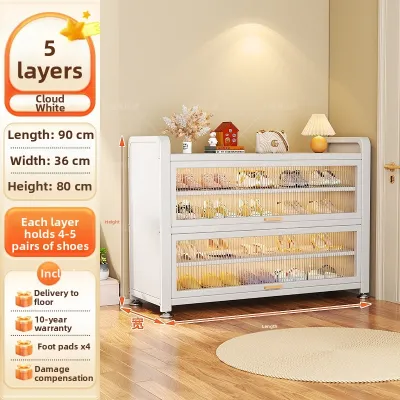
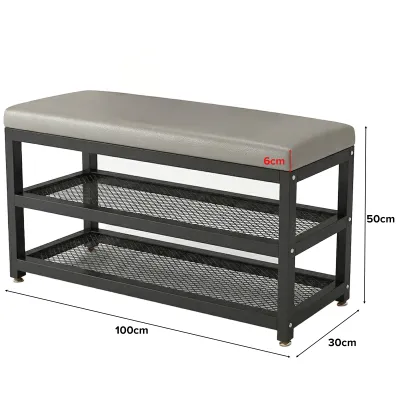
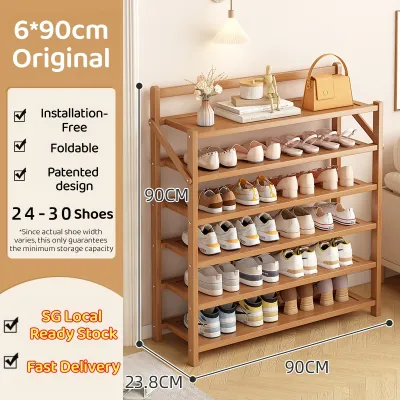
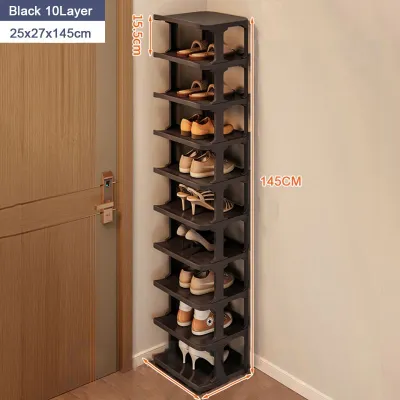
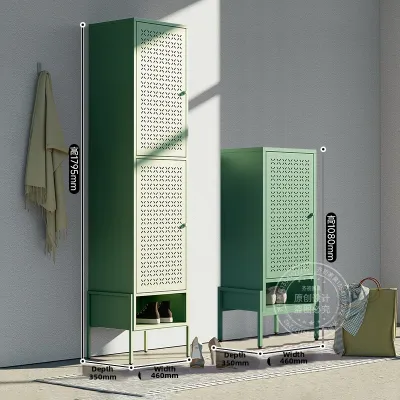
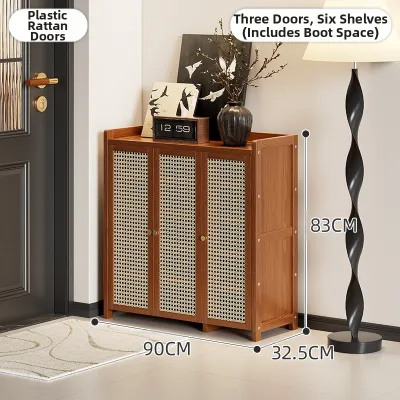
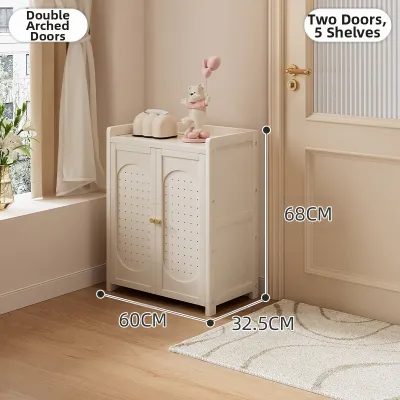
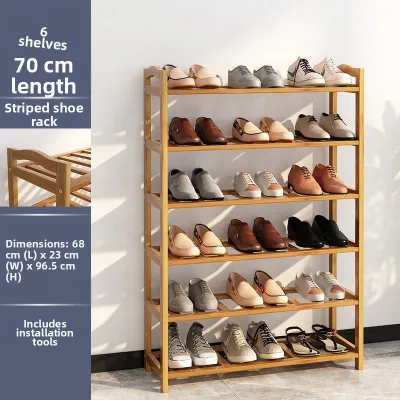
Prices are valid at publication and may change. Please refer to the product page for the latest price.
Next, calculate your actual storage capacity requirements by auditing your household’s current footwear collection. Count the total number of pairs and categorize them by height and width, as bulky sneakers, high heels, and boots require significantly more vertical and horizontal clearance than flat sandals or slippers. It is wise to add a buffer of at least twenty percent to your final count to accommodate future purchases or guests. If your collection consists mainly of high-top shoes or boots, look for brands that offer adjustable shelving rather than fixed compartments, which can leave valuable vertical space wasted.
Environmental factors in Singapore also play a decisive role in where and how you store your shoes. The year-round high humidity can quickly lead to mold growth and material degradation if your footwear is kept in unventilated, dark spaces. If your chosen location receives direct afternoon sunlight, certain plastics and low-grade laminates may warp, fade, or become brittle over time. Therefore, you must assess whether your storage spot requires an open-slat design to maximize airflow or an enclosed cabinet with built-in ventilation to protect delicate leather shoes from dust while preventing moisture buildup.
Key Features to Evaluate Across Shoe Rack Brands
Evaluating the quality of a shoe rack requires looking closely at the manufacturer’s material specifications and construction methods. For wooden options, high-density engineered wood or solid timber with a moisture-resistant polyurethane or melamine finish is highly desirable in humid climates. Check the product description to ensure all edges are fully sealed, as exposed particleboard easily absorbs airborne moisture, leading to swelling and structural failure. If you prefer metal or plastic racks, verify that the metal components are powder-coated or made of rust-resistant alloys to prevent corrosion from damp shoes or wet umbrellas.

Structural stability is another critical safety factor, especially for tall or narrow units. Always check the manufacturer’s stated weight capacity per shelf to ensure the unit can support heavy work boots or leather dress shoes without sagging. The base footprint should be wide and heavy enough to prevent the rack from wobbling when shoes are retrieved in a hurry. For any unit standing taller than one meter, look for brands that include dedicated anti-tip wall anchors and hardware. Securing the rack to a solid wall is an essential safety measure to prevent accidental tipping, particularly in households with active children or pets.
Adjustability and modularity offer the flexibility needed to adapt to changing storage demands over time. High-quality brands often feature pre-drilled internal peg holes, allowing you to reposition individual shelves at various heights. Modular designs, such as stackable plastic frames or interlocking metal grids, let you expand your storage vertically or horizontally as your collection grows. When evaluating modular options, inspect the connection joints closely; sturdy locking clips or metal screw connectors are far more reliable than loose-fitting plastic pegs, which can slip or crack under a full load.
Matching Brand Categories to Specific Household Needs
Rather than relying on unverified brand rankings, you can simplify your search by categorizing local retailers by their primary design focus and price tier. This conditional approach allows you to match your specific spatial constraints and budget directly to the class of brand best equipped to solve your storage challenges.
Budget-Friendly and Modular Options
For homeowners seeking affordable, highly flexible, or temporary storage solutions, large international furniture retailers and established online marketplaces offer a wide selection of modular shoe racks. These brands typically specialize in lightweight materials such as polypropylene, powder-coated steel tubes, or fabric covers. These options are particularly useful for rental properties or temporary setups where permanent furniture is not practical. Because these systems are mass-produced, they offer excellent cost-to-capacity ratios, allowing you to organize dozens of pairs of shoes for a modest investment.
However, when purchasing budget-friendly modular units, you must carefully review the product labels and user manuals for structural limitations. Pay close attention to the maximum load limits per tier, as overloading thin plastic shelves or fabric slings can cause them to sag, tear, or collapse. Inspect the quality of the connection joints, which are the most common failure points in modular systems. Opt for models that utilize reinforced ABS plastic connectors or metal screw-in joints rather than basic friction-fit parts, which can loosen over time with daily use.
Additionally, consider the assembly process and the long-term availability of replacement parts before finalizing your purchase. Many budget brands require complete self-assembly, which can range from snapping pre-fabricated panels together to assembling complex multi-tier metal frames. Check if the retailer sells individual add-on shelves or replacement connectors separately. This ensures that if a single joint breaks or if you need to expand your setup in the future, you do not have to discard the entire rack and purchase a completely new system.
Space-Saving and Slim Profiles for Tight Entryways
When floor space is at a premium, such as in narrow HDB entryways or compact condominium foyers, specialized space-saving brands offer highly efficient designs. These manufacturers focus on ultra-slim profiles, often utilizing tilt-out compartments where shoes are stored vertically rather than horizontally. This clever design can reduce the depth of the cabinet to as little as fifteen to twenty centimeters, allowing it to sit flush against a wall without obstructing foot traffic. Another popular space-saving option is the under-bench shoe rack, which combines a comfortable entryway seat with integrated lower shelving.
If you decide on a wall-mounted or floating shoe cabinet to keep your floor completely clear, you must verify your wall’s load-bearing capacity before installation. Floating units exert significant downward and outward leverage on their mounting points when fully loaded with shoes. Locate the studs behind your drywall or ensure you are mounting directly into a solid concrete wall using heavy-duty masonry plugs and screws. Avoid mounting heavy cabinets to thin partition walls unless you have verified that the internal framing can safely support the combined weight of the furniture and your footwear.
For those planning to place a slim shoe rack along an external HDB corridor, you must strictly adhere to local fire safety and community guidelines. Ensure that the placement of the rack does not obstruct the minimum clear escape path required by civil defense regulations, which is typically 1.2 meters. The rack should not block access to fire hose reels, dry risers, or utility meters. Choosing a low-profile, stable unit that sits flat against your outer wall helps maintain a safe, unobstructed evacuation route for your household and neighbors during an emergency.
Heavy-Duty and Enclosed Cabinets for Large Collections
If you own a large collection of high-value footwear or simply prefer a clean, clutter-free entryway, heavy-duty enclosed cabinets are the ideal choice. Specialty furniture brands and custom carpentry services excel in producing robust, freestanding cabinets made from solid wood, high-density fiberboard, or metal. Enclosed designs completely conceal your shoes from view, creating a streamlined aesthetic while protecting your footwear from dust, household pets, and ambient light. These premium pieces are built to last and often feature integrated drawers for keys, shoe polish, and other entryway essentials.
To prevent moisture and odor buildup inside an enclosed cabinet, you must inspect the unit’s ventilation features before buying. Look for brands that incorporate louvered doors, open back panels, or dedicated ventilation brass grommets at the rear of the cabinet. These design elements promote natural airflow, allowing dampness to evaporate rather than trapping it inside where it can ruin leather and fabric. Additionally, check that the internal shelf brackets are made of metal or heavy-duty plastic, as cheap pegs can shear under the weight of multiple pairs of heavy leather boots or winter footwear.
Because Singapore’s high humidity can cause wood to swell, warp, or mold, always review the manufacturer’s care instructions and warranty terms before investing in a premium wooden cabinet. Verify if the warranty covers structural defects such as wood warping, joint separation, or hinge degradation caused by environmental factors. To maintain the cabinet’s integrity, avoid placing wet shoes directly inside; instead, let them dry completely on an open mat first. Regularly wiping down the interior with a dry cloth and checking the door hinges for signs of rust will help extend the lifespan of your investment.
Pre-Purchase Checklist and Installation Considerations
Before clicking the purchase button or paying at the showroom counter, you must run through a final logistical checklist to ensure a smooth delivery and installation process. For large, pre-assembled shoe cabinets, measure your building’s elevator door width, interior height, and weight capacity to confirm the delivery team can transport the unit to your floor. If your building only has stair access, measure the width of the stairwell turns and landing clearances. You must also measure your own front door frame and any tight hallway corners inside your home to guarantee the cabinet can be maneuvered into its final position.
Next, evaluate the assembly requirements and determine whether you need to opt for professional installation services. While some flat-pack shoe racks can be assembled in under an hour with basic household tools like a screwdriver, larger wooden cabinets can be highly complex, requiring precise alignment of doors, hinges, and wall anchors. If the retailer offers professional assembly for a small fee, it is often a worthwhile investment to ensure the unit is built securely, leveled correctly, and safely anchored to your wall, saving you time and potential frustration.
Finally, carefully review the retailer’s return policy and warranty terms regarding structural defects and missing parts. Confirm how many days you have to report damaged panels, chipped finishes, or missing hardware after delivery. A reliable brand should provide a clear, straightforward process for claiming replacement parts without requiring you to return the entire heavy package. Keeping all original packaging and receipts until the shoe rack is fully assembled and inspected will help ensure a hassle-free resolution if any issues arise.
Frequently Asked Questions (FAQ)
How do I prevent mold and odors on my shoe rack in a humid climate?
To prevent mold and unpleasant odors in Singapore’s humid climate, never place damp or sweaty shoes directly onto your shoe rack. Allow your footwear to air dry completely in a well-ventilated area before storing them. You can also place active moisture absorbers, silica gel packets, or activated charcoal bags on the shelves to absorb excess humidity and neutralize odors. If you are using an enclosed cabinet, leave the doors open occasionally to encourage airflow, and regularly wipe down the shelves with a mild disinfectant to prevent mold spores from taking root.
What are the rules for placing a shoe rack outside my HDB door?
When placing a shoe rack along an HDB common corridor, you must comply with the prevailing fire safety guidelines set by the local authorities. The most critical rule is to maintain a clear, unobstructed escape passage of at least 1.2 meters along the corridor to ensure safe evacuation during an emergency. The shoe rack must be constructed of non-combustible materials if possible, kept to a reasonable depth, and placed flat against your unit’s wall. It must never block access to fire hose reels, dry risers, fire extinguishers, or common utility chutes, as doing so can result in enforcement action and mandatory removal.

Community discussion
Share your experience or ask a question. Comments are reviewed before publication.