
Finding the right home for your automated cleaning helper in a Singapore Housing & Development Board (HDB) flat requires a smart approach to space management. Modern HDB layouts, from compact Build-To-Order (BTO) units to older resale flats, present unique spatial challenges. A dedicated robot vacuum storage rack helps clear floor clutter, protects your appliance from accidental kicks, and keeps charging docks neatly organized.
Selecting the right design involves analyzing how your flat’s layout interacts with the physical footprint of the vacuum and its docking station. Whether you are dealing with a narrow entryway, a busy service yard, or an open-concept living area, the right rack design ensures your vacuum operates smoothly without disrupting your daily foot traffic.
Assessing Your HDB Floor Plan and Spatial Constraints
Before purchasing any storage furniture, take a close look at your flat’s floor plan to identify underutilized areas that can double as a docking station. Dead spaces, such as the gap beside a built-in shoe cabinet, the area underneath an entryway console, or a quiet corner in the service yard, make excellent candidates. These spots keep the vacuum out of direct sightlines while utilizing floor space that would otherwise remain empty.
Products mentioned in this guide
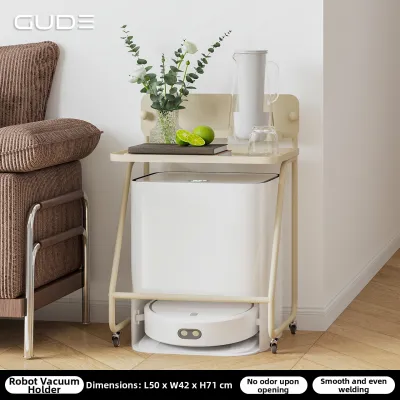
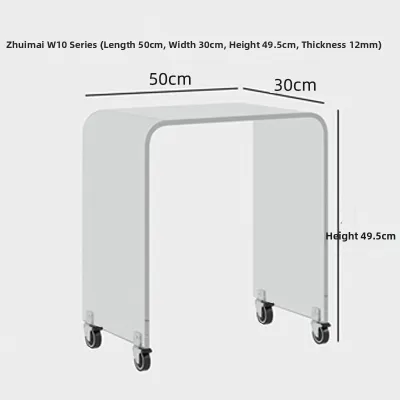
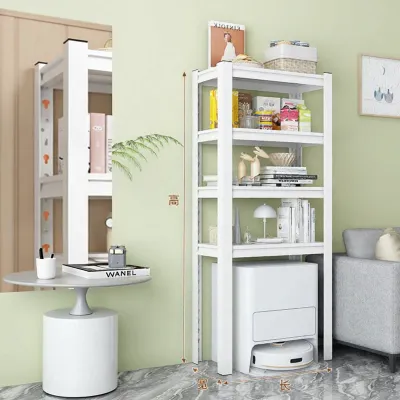
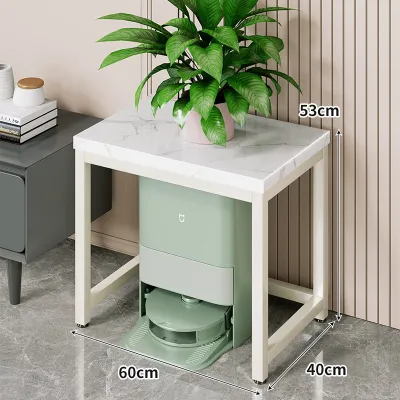
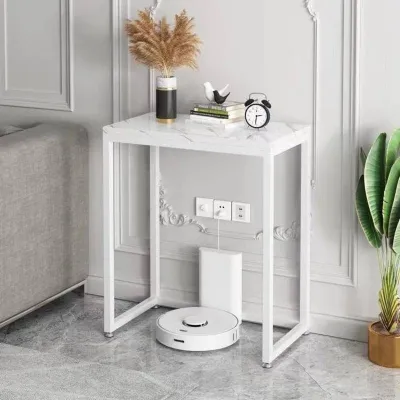
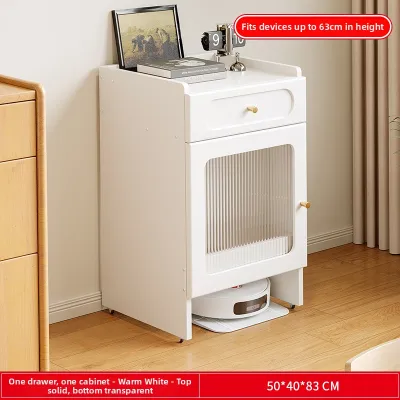
Prices are valid at publication and may change. Please refer to the product page for the latest price.
However, you must balance these hidden locations with the practical needs of the appliance. High-traffic zones, like the main corridor leading to the bedrooms, should generally be avoided to prevent family members from tripping over the vacuum as it docks. Additionally, you must measure both the horizontal floor footprint and the vertical clearance of the chosen spot. Modern self-emptying robot vacuums often feature tall auto-empty stations that require significant vertical space to open the top lid for dustbin replacement.
Power access is another critical factor when mapping out your installation site. Robot vacuum docks require a continuous power supply, meaning the storage rack must sit within reach of a wall outlet. To maintain a clean aesthetic and prevent safety hazards, plan your cord routing carefully, ensuring cables are not stretched across walkways or pinched behind heavy furniture.
Comparing Robot Vacuum Storage Rack Designs for Space Efficiency
Robot vacuum storage racks come in several distinct configurations, each offering different trade-offs regarding permanence, flexibility, and space efficiency. Understanding these structural categories allows you to choose a solution that aligns with your homeownership status and long-term renovation plans.

Wall-Mounted Racks
Wall-mounted storage racks are highly effective for maximizing floor space in exceptionally tight areas, such as narrow kitchen corners or compact service yards. By elevating the storage shelves off the ground, these units allow the robot vacuum to slide underneath to dock, leaving the upper wall space available for organizing cleaning supplies, detergents, or small household tools.
Before choosing a wall-mounted design, you must verify the construction material of your HDB walls. Structural walls and household shelter walls in Singapore flats are typically made of solid concrete, which requires a masonry drill and heavy-duty wall plugs for secure installation. Conversely, internal partition walls between rooms may consist of drywall, requiring stud-finding tools or specialized hollow-wall anchors to prevent the rack from pulling away under weight.
Additionally, you must cross-reference the physical design of your vacuum’s docking station with the rack’s lower clearance. Some robot vacuums rely on infrared sensors or optical cameras located on the dock to guide their return. If the wall-mounted rack’s lower shelf or support brackets block these sensors, the vacuum may struggle to align itself correctly, leading to docking failures.
Freestanding and Foldable Options
For renters or homeowners who prefer not to drill into their walls, freestanding and foldable storage racks offer an excellent, non-permanent alternative. Freestanding units can be positioned anywhere in the flat and easily relocated during future furniture rearrangements or when moving to a new home.
While freestanding racks provide outstanding flexibility, they do occupy a dedicated portion of your floor footprint. To minimize visual clutter in open areas like the living room, some designs feature foldable panels or concealable cabinet doors that hide the vacuum and its dock when not in use. These integrated enclosures help maintain a minimalist home aesthetic while keeping the appliance dust-free.
When evaluating freestanding options, pay close attention to the unit’s base stability and overall weight distribution. As a robot vacuum drives onto its charging dock, it exerts a forward and downward force. If the storage rack is top-heavy or lacks a stable, slip-resistant base, the motion of the vacuum docking or undocking can cause the entire structure to wobble, potentially shifting the dock out of alignment over time.
Multi-Tier and Multi-Functional Units
Multi-tier and multi-functional storage units are designed to consolidate multiple household organization needs into a single piece of furniture. These racks often integrate seamlessly with existing entryway consoles, shoe cabinets, or utility shelving, turning a single-purpose vacuum dock into a comprehensive storage hub.
This design is particularly beneficial for maximizing vertical space inside HDB household shelters or dedicated utility closets. By utilizing a tall, multi-tier rack, you can store heavy items like toolboxes, vacuum accessories, and household cleaning agents on the upper shelves, while reserving the bottom tier exclusively for the robot vacuum’s home base.
To ensure a successful setup, always verify that the bottom tier’s opening dimensions can comfortably accommodate your specific vacuum model. You must measure the total width of the vacuum base, the height of the charging tower, and the extra clearance required to access the water tanks or dust bags. Choosing a unit with adjustable shelving heights provides the greatest flexibility as your cleaning appliances change over time.
Essential Measurements and Safety Checks Before Installation
A successful robot vacuum storage setup relies on precise physical measurements and strict adherence to safety guidelines. Before purchasing or installing any rack, consult your vacuum’s user manual to identify the manufacturer’s recommended clearance zones. Most models require unobstructed space on both sides of the dock and a clear path directly in front to allow the navigation sensors to guide the unit home safely.
Electrical safety is equally important when integrating a charging dock into a storage rack. Ensure the power cord reaches the wall outlet comfortably without being stretched taut or bent at sharp angles around the rack’s frame. Avoid placing cords under rugs or pinching them beneath heavy furniture legs, as this can damage the internal wiring and create a fire hazard over time.
Proper ventilation is another critical factor that is easily overlooked. Both the robot vacuum’s battery charging process and the motor of a self-emptying dock generate heat during operation. The storage rack must allow for adequate airflow around the dock to prevent heat buildup, which can degrade battery performance over time. Avoid placing docks in completely sealed, unventilated cabinets unless they feature open back panels or integrated ventilation grilles.
Matching Rack Designs to Your Specific HDB Layout
To make the final decision, map the available rack designs directly to the specific layout characteristics of your HDB flat.
For narrow entryways and corridors, which are common in compact BTO layouts, prioritize wall-mounted docks or exceptionally slim, vertical multi-tier units. These designs keep the floor walkway clear, ensuring that family members can move freely without accidentally kicking the vacuum or blocking its path.
In open-concept living and dining areas, where aesthetics are a priority, opt for freestanding furniture pieces or foldable enclosures that blend naturally with your existing decor. A wooden or metal multi-functional console can house the vacuum discreetly at the bottom while serving as a stylish display shelf for books, plants, or decorative items on top.
If you prefer to keep your cleaning appliances completely out of sight, utilize your HDB household shelter or a dedicated utility room. In these spaces, heavy-duty freestanding metal racks or modular multi-tier shelving units work best. They allow you to consolidate all your cleaning supplies, mop buckets, and vacuum accessories in one centralized, highly organized location.
Frequently Asked Questions (FAQ)
How do I ensure proper ventilation for the vacuum dock?
To maintain safe operating temperatures, always refer to your vacuum manufacturer’s manual for specific clearance distances around the charging contacts. If you are placing the dock inside a multi-tier rack or a custom cabinet, avoid fully sealed enclosures. Opt for designs with open backings, wire mesh shelving, or built-in ventilation grilles to allow warm air to escape freely during charging and self-emptying cycles.
Can I hide the power cords inside a freestanding rack?
Yes, many freestanding storage racks feature built-in cable management systems, such as hollow legs, rear clips, or rubber grommets, designed specifically to hide power cords. When routing cables, ensure they are not pinched, tightly coiled, or bent sharply around structural joints. Keeping the cords organized not only improves the visual appeal of your setup but also prevents long-term wear and electrical hazards.
Community discussion
Share your experience or ask a question. Comments are reviewed before publication.