
In Singapore’s bustling office environments and home workspaces, the office chair is the cornerstone of daily productivity. While much attention is paid to lumbar support and seat cushioning, the armrests are often overlooked until they begin to cause discomfort or show signs of wear. Standard armrests, typically constructed from hard plastic or polyurethane (PU) leather, frequently degrade over time due to friction, body heat, and environmental humidity. Investing in a high-quality handrest cover is a practical, cost-effective solution to restore comfort, protect your chair, and enhance your overall ergonomic setup. To find the ideal cover, you must evaluate your specific physical needs, understand how different materials perform in our tropical climate, and verify compatibility with your chair’s adjustment mechanisms.
Identifying Your Comfort and Protection Needs
Before purchasing a handrest cover, take a close look at your current office chair and identify the exact problems you want to solve. For many office workers in Singapore, the primary catalyst is cosmetic and structural degradation. PU leather armrests are notorious for cracking and peeling after a few years of exposure to skin oils and ambient humidity. This peeling not only looks unprofessional but also leaves annoying black flakes on your clothes, desk, and floor. A snug cover immediately conceals this damage, saving you from the high cost of replacing the entire chair or paying for professional upholstery services.
Another common issue is physical discomfort. Hard plastic or dense rubber armrests can put excessive pressure on your elbows and forearms, especially during long typing sessions. This localized pressure can compress nerves, leading to stiffness, tingling, or soreness. If you frequently lean on one side or find yourself adjusting your posture to avoid resting your arms, your primary goal is pressure relief. Alternatively, you might simply want to protect a brand-new, expensive ergonomic chair from future wear and tear. Pinpointing whether you need heavy cushioning, basic surface protection, or temperature regulation will narrow down your material choices significantly.
Products mentioned in this guide
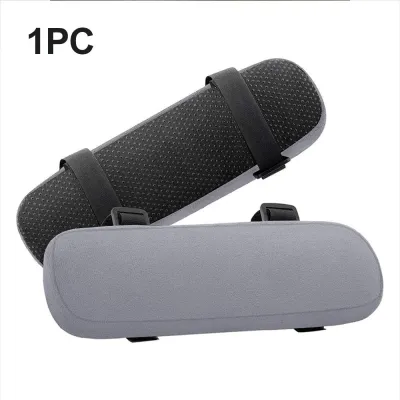
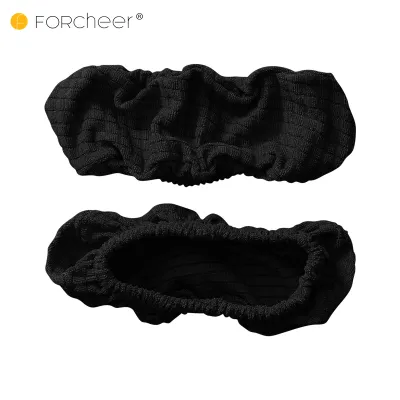
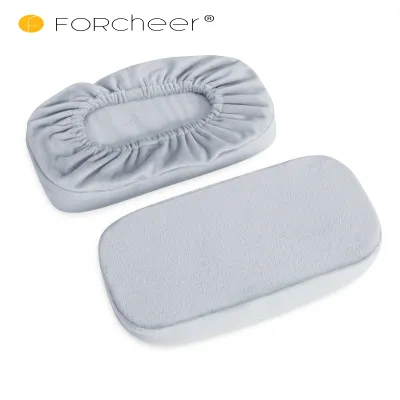
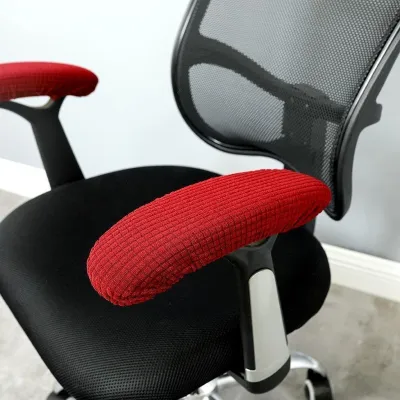
Prices are valid at publication and may change. Please refer to the product page for the latest price.
Furthermore, consider how your armrest height affects your overall upper-body alignment. When your armrests are too low or uncomfortably hard, you may unconsciously shrug your shoulders or lean forward to find support. This poor posture can lead to chronic tension in your neck, shoulders, and upper back. By adding a padded cover, you can effectively raise the height of your armrests by a few centimeters, helping you maintain a neutral posture where your shoulders are relaxed and your elbows rest at a comfortable 90-degree angle. Understanding these ergonomic dynamics ensures you choose a cover that supports your body, not just your chair.
Comparing Common Handrest Cover Materials
Evaluating the material of your handrest cover is crucial for matching your physical comfort with your workspace conditions. Different materials offer distinct advantages in terms of support, breathability, and ease of maintenance.

Memory foam is highly popular for its ability to contour to the unique shape of your forearms and elbows. It distributes weight evenly, reducing pressure points and providing a soft, plush feel. However, standard memory foam is highly dense and tends to trap body heat. If your workspace is not consistently air-conditioned, or if you prefer a warmer room, memory foam can feel uncomfortably hot and sweaty over time. Look for high-density memory foam with a removable, breathable outer cover to mitigate this heat retention. High-density foam offers better long-term support and is less likely to flatten out completely under the weight of your arms compared to low-density alternatives.
For those working in warm or fan-cooled environments in Singapore, cooling gel inserts combined with breathable mesh fabric offer an excellent alternative. The gel layer absorbs and dissipates initial heat, providing a refreshing, cool sensation when you first rest your arms. Meanwhile, the open-weave mesh fabric promotes continuous airflow, preventing sweat buildup. Keep in mind that cooling gel is not a permanent refrigerator; it eventually matches your body temperature, but it significantly delays heat buildup compared to solid foam. This combination is particularly beneficial during the hotter months of the year when indoor temperatures rise.
If your main goal is protection and hygiene rather than thick cushioning, stretchable spandex or polyester blends are ideal. These covers act like a fitted sheet for your armrests. They are highly flexible, lightweight, and incredibly easy to slip on and off. Because they are thin, they do not alter the height or ergonomics of your chair. They are also highly durable and can withstand frequent machine washing, making them excellent for keeping your workspace clean and free of sweat stains. Polyester blends are also highly resistant to stretching out of shape, ensuring a snug fit even after multiple wash cycles.
Always check the manufacturer’s specifications regarding material limitations. Some synthetic fabrics may pill over time when subjected to constant friction from rough clothing fabrics like denim. Additionally, check if the underside of the cover features a non-slip textured surface, such as silicone dots, to prevent the cover from sliding around on smooth plastic or leather armrests. A sliding cover can be highly distracting and may force you to constantly readjust your arms, defeating the purpose of an ergonomic upgrade.
Evaluating Attachment Mechanisms and Chair Compatibility
A handrest cover is only effective if it stays securely in place and does not interfere with your chair’s functionality. To ensure a perfect fit, you must perform a few quick measurements and checks before buying.
First, measure the exact dimensions of your existing armrest pads. Do not rely on visual estimates. Use a flexible measuring tape to record the length, width, and thickness (height) at the widest points. Many covers are marketed as “universal,” but armrest designs vary wildly—some are highly contoured, others are extra-wide, and some are short and stubby. Comparing your measurements against the product’s sizing chart is the only way to avoid a loose, shifting cover or one that is too tight to install.
Second, consider your chair’s adjustment features. High-end ergonomic chairs often feature adjustable armrests that slide forward, backward, pivot inward, or adjust in height via buttons and levers. A bulky cover can block these controls or restrict their range of motion. Ensure that the cover’s attachment straps or fabric sleeves do not wrap over adjustment buttons. Furthermore, adding a thick padded cover (which can add 2 to 5 cm of height) will alter your arm position. Make sure your chair’s height can be adjusted downward to compensate, allowing your shoulders to remain relaxed and your elbows to bend at a comfortable 90-degree angle.
Third, check your desk clearance. If you prefer to slide your office chair fully under your desk when not in use to save space in a compact Singapore apartment, a thick handrest cover might prevent this. Measure the clearance between the top of your current armrests and the underside of your desk to ensure the added height of the cover won’t cause the chair to get stuck.
Finally, evaluate the attachment methods. Velcro straps offer excellent adjustability and can be tightened securely around various armrest shapes, but excess strap length can scratch your bare skin if not tucked away. Zippered covers provide a sleek, tailored look but offer zero flexibility if your armrests are slightly larger than the cover’s dimensions. Elastic slip-on covers are incredibly easy to install and wash, but they rely heavily on a non-slip backing to prevent twisting during use. When browsing online marketplaces, read customer reviews to see how well different attachment styles hold up on chairs similar to yours, and verify the platform’s return policy in case of a mismatch.
Routine Care and Cleaning Practices
Because your forearms and hands are in constant contact with the handrest covers, they quickly accumulate sweat, skin oils, dust, and spilled drinks. Establishing a regular cleaning routine is vital to maintain hygiene and prolong the lifespan of both the covers and your chair.
Always refer to the manufacturer’s care label before washing. While most fabric covers (such as polyester, spandex, or mesh) are machine washable on a gentle cycle, the inner cushioning core often requires special care. Memory foam cores should never be submerged in water or placed in a washing machine, as moisture breaks down the foam’s cellular structure, causing it to lose its supportive properties. Instead, remove the outer cover for washing and gently spot-clean the foam core with a damp cloth if necessary.
In Singapore’s humid climate, ensuring complete dryness is the most critical step of the maintenance process. After washing, allow the covers to air-dry completely in a well-ventilated area, away from direct, harsh sunlight which can degrade synthetic fibers. Reattaching an even slightly damp cover to your chair traps moisture against the original armrest material. This trapped moisture creates a breeding ground for mold, mildew, and bacteria, which can ruin the underlying padding and cause unpleasant, persistent odors. It can also accelerate the peeling of PU leather underneath.
Before reattaching the clean, dry cover, take the opportunity to clean the underlying armrest pad itself. Wipe down the plastic or leather surface with a mild, non-alcohol disinfectant wipe to remove any accumulated sweat residue or dust. This ensures a clean interface and prevents any abrasive particles from grinding between the cover and the armrest during use.
Lastly, perform periodic inspections of the attachment components. Check Velcro straps for lint buildup, which reduces their gripping power, and clean them with a small brush. Inspect elastic bands for signs of stretching or dry rot, and check zippers for smooth operation. Replacing a worn-out cover before it slips completely will prevent sudden slips that could disrupt your typing or cause minor wrist strain.
Frequently Asked Questions (FAQ)
Can I use a handrest cover on a chair with adjustable armrests?
Yes, you can use handrest covers on adjustable armrests, but you must select the design carefully. Ensure the cover does not wrap around or obstruct the adjustment buttons, which are typically located on the sides or underside of the armrest. Opt for covers with adjustable Velcro straps or highly flexible elastic openings that allow you to position the attachment points away from the moving parts. If your armrests slide forward or pivot, a cover that is too bulky might rub against the chair’s backrest or frame, so check the clearance before making adjustments.
Do handrest covers prevent armrest peeling?
Handrest covers are highly effective at preventing further surface wear caused by friction, sweat, and skin oils, which are the primary external catalysts for peeling. If your chair’s PU leather is already beginning to flake, a cover will contain the mess and protect your skin from the rough, damaged surface. However, a cover cannot halt the chemical breakdown of the underlying material if it has already begun to degrade due to age or high humidity. It acts as a protective shield and cosmetic solution rather than a restorative cure.
Are universal fit covers reliable for all office chairs?
While universal fit covers work well for standard rectangular or slightly curved armrests, they have physical limitations. If your office chair features highly contoured, extra-wide, or unusually shaped armrests, a universal cover may slip, bunch up, or fail to stretch sufficiently. In these cases, look for covers that offer multiple size options (such as small, medium, and large) or those specifically designed for your chair’s brand. Checking customer feedback and detailed sizing diagrams on ecommerce platforms will help you determine if a universal option is reliable for your specific chair model.
Community discussion
Share your experience or ask a question. Comments are reviewed before publication.