
Maximizing efficiency in a compact Singapore HDB kitchen requires smart, adaptable furniture that serves multiple purposes without permanently occupying precious floor space. Galley layouts and cozy BTO kitchen configurations often leave little room for permanent kitchen islands or bulky storage cabinets. A foldable trolley rack offers a practical compromise, providing an on-demand work surface or storage unit that can be deployed during meal preparation and tucked away when the cooking is done. Selecting the right model involves balancing physical dimensions, material durability, and structural stability to ensure it complements your daily culinary workflow.
Whether you are budgeting S$50 for a basic metal cart or investing in a premium wooden drop-leaf model, making an informed choice requires looking beyond aesthetics. By evaluating your kitchen’s layout, understanding the mechanics of different folding designs, and verifying safety specifications, you can find a mobile storage solution that enhances your kitchen’s functionality without adding clutter. This guide outlines the essential steps to measure, compare, and maintain a foldable trolley rack tailored to your home.
Measure Your Space: Clearance and Storage Requirements
Before purchasing a mobile cart, precise spatial planning is essential to avoid blocking critical pathways or hindering appliance operations. Start by mapping out the exact floor area where the trolley will stand when fully open. You must account for the clearance required to open built-in cabinet doors, refrigerator drawers, and oven doors without collision. Additionally, ensure there is sufficient clearance around appliance ventilation ports; placing a trolley too close to a refrigerator vent or a freestanding microwave can restrict airflow and lead to overheating.
Products mentioned in this guide
![Easyhome.sg [Ready To Use] Multi-Purpose Foldable Trolley Rack for Kitchen /Living Room / Movable Organizer Rack](https://img.lazcdn.com/g/p/2e145915412be90d6a8cb9392b05d8d3.png_400x400q80.png_.webp)
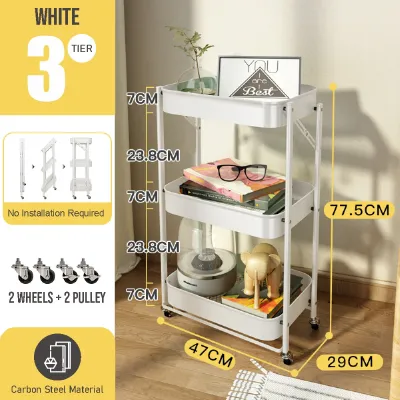
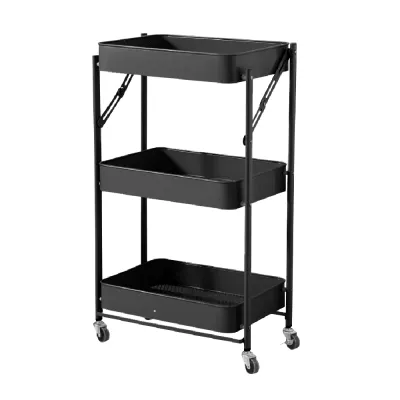
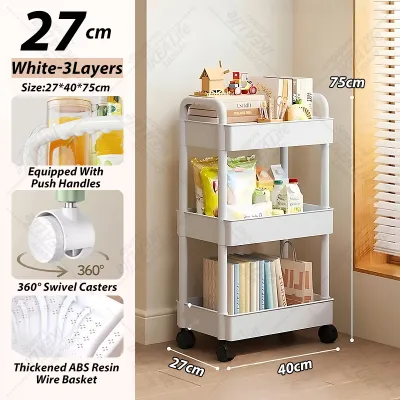
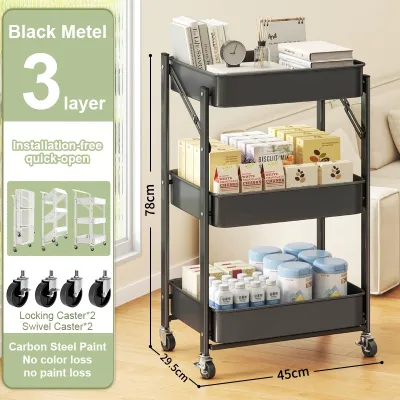
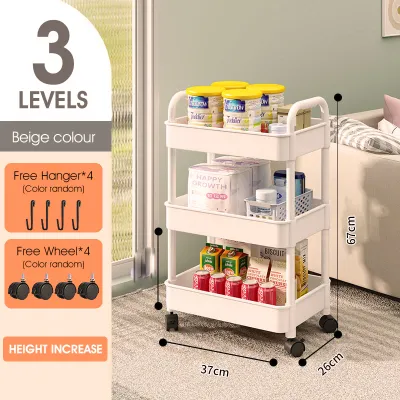
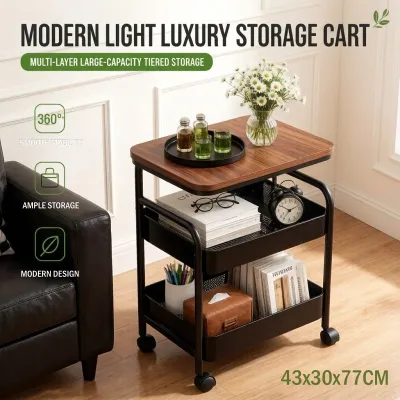
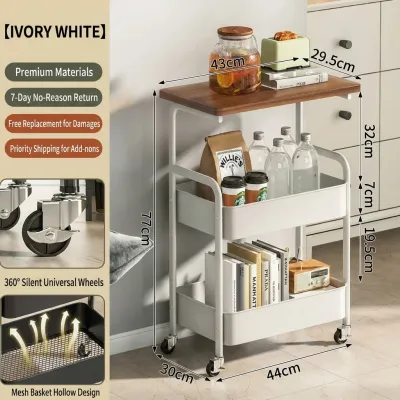
Prices are valid at publication and may change. Please refer to the product page for the latest price.
Next, define the primary function of the trolley in your kitchen. If you intend to use it as an auxiliary prep station, the height of the trolley should align comfortably with your existing countertops to prevent back strain. If it will serve as a mobile pantry or appliance station, measure the height and width of your largest kitchen gadgets, such as rice cookers, air fryers, or stand mixers, to ensure they fit comfortably on the shelves with adequate overhead clearance.
Finally, measure the storage gap where the trolley will reside when folded. Many HDB homeowners utilize the narrow space between the refrigerator and the kitchen wall, the gap next to the washing machine in the service yard, or a dedicated spot inside the household shelter. Measure the width, depth, and height of this storage gap, leaving at least a two-centimeter buffer on all sides. This buffer ensures you can slide the folded trolley in and out smoothly without scraping your walls or damaging adjacent appliances.
Essential Features for Compact Kitchen Trolleys
The utility of a foldable kitchen trolley depends heavily on its structural design and the ease with which it transitions from open to closed states. Folding mechanisms generally fall into three categories: drop-leaf tops, collapsible frames, and detachable shelves. Drop-leaf mechanisms allow you to extend the top surface while keeping the main frame rigid, making them ideal for quick transitions. Collapsible frames allow the entire structure to fold flat, which is excellent for deep storage but requires you to empty the shelves completely before folding. Detachable shelf designs offer high stability but require manual assembly and disassembly, which may become tedious if you plan to fold the cart daily.

Mobility and stability are governed by the quality of the wheels and their locking systems. Look for heavy-duty caster wheels that glide smoothly over common HDB flooring materials, such as homogeneous tiles, vinyl planks, or polished cement screed. The wheels should feature 360-degree swivel capabilities to allow easy maneuvering through tight corners. Crucially, at least two of the wheels must have robust, easy-to-operate locking brakes. These brakes secure the trolley in place, preventing it from shifting or rolling when you are chopping vegetables, mixing batter, or operating a small appliance on the top surface.
Material selection directly impacts the longevity of your trolley in a high-humidity kitchen environment. Kitchens are prone to steam, oil splatters, and water spills, making moisture resistance a primary concern. Powder-coated carbon steel and high-grade stainless steel are popular choices due to their structural rigidity and resistance to rust, provided the protective finish remains intact. If you prefer the warmth of wood, look for engineered wood with water-resistant laminates or solid wood treated with food-safe sealants. Always review the manufacturer’s care instructions to verify how the surfaces react to moisture and what cleaning agents are safe to use without degrading the finish.
Comparing Foldable Designs: Drop-Leaf, Collapsible, and Nesting
Different folding designs cater to distinct kitchen workflows and storage limitations. Understanding these trade-offs helps you select a model that aligns with your daily habits. Drop-leaf trolleys are highly favored by home cooks who require temporary countertop extensions. These models feature hinged side panels that lift and lock into place, instantly expanding your prep area. When the meal is ready, the leaves fold down, reducing the trolley’s footprint so it can slide neatly under standard-height kitchen counters or stand unobtrusively against a wall. While they offer excellent workspace flexibility, they do not fold completely flat, meaning they still occupy some floor space when stored.
Collapsible frame carts, on the other hand, prioritize maximum space-saving when not in use. These trolleys utilize a scissor-like folding mechanism that allows the entire frame to compress horizontally or vertically into a flat profile, often measuring less than ten centimeters in thickness. This ultra-slim profile makes them exceptionally easy to tuck into narrow gaps or store inside utility closets. However, the trade-off lies in structural rigidity. Because of the numerous hinges and pivot points required for a flat fold, collapsible carts may have lower weight capacities and slightly more lateral play compared to rigid frames. They are best suited for storing lightweight pantry items, dry goods, or serving as temporary dish racks rather than supporting heavy, vibrating appliances.
Tiered nesting trolleys offer a middle ground, compressing either vertically or horizontally while maintaining multiple shelf levels. Some designs allow the shelves to tilt or slide into a nested configuration, reducing the overall volume of the cart by up to fifty percent without requiring complete disassembly. This style is highly practical for tight corner storage, allowing you to keep the trolley partially loaded with lightweight items while compressed. When evaluating these designs, consider how often you plan to fold the cart. If you require daily storage, a quick-folding collapsible frame is highly efficient; if you need a semi-permanent fixture that only folds during deep cleaning or hosting events, a drop-leaf or nesting design may offer better structural integrity.
Safety, Stability, and Daily Maintenance Checks
Operating a mobile trolley in a busy kitchen requires ongoing attention to safety and maintenance to prevent accidents and prolong the life of the furniture. Always verify the weight capacity limits printed on the manufacturer’s label or instruction manual before loading the shelves. Exceeding these limits can warp the frame, strain the folding joints, and compromise the integrity of the wheels. To maintain optimal stability, distribute weight evenly across all shelves, placing the heaviest items—such as cast-iron cookware, bags of rice, or small appliances—on the bottom shelf. This practice lowers the trolley’s center of gravity, significantly reducing the risk of tipping when the cart is moved or bumped.
Regular inspections of the trolley’s moving parts are essential for safe daily operation. Periodically check the locking mechanisms on both the wheels and the folding joints to ensure they engage securely and do not slip under pressure. Over time, screws and bolts on folding hinges can loosen due to vibration and frequent movement; keep a screwdriver handy to tighten these connections as needed. If the wheels begin to squeak or resist turning, clean away any accumulated hair, dust, or kitchen debris from the axles, and apply a small amount of silicone lubricant if recommended by the manufacturer.
Proper surface maintenance prevents premature wear and aesthetic degradation in Singapore’s humid climate. Wipe down all surfaces immediately after use with a soft, damp cloth to remove food residues, grease, and moisture. Avoid using abrasive scrubbing pads or harsh chemical cleaners, which can scratch powder coatings, strip protective wood sealants, or accelerate rust formation on metal components. For wooden surfaces, address spills immediately to prevent water rings or warping, and consider reapplying food-safe mineral oil or wax periodically if specified by the manufacturer’s care guidelines.
Frequently Asked Questions (FAQ)
Can a foldable trolley rack support heavy kitchen appliances like microwaves?
Whether a foldable trolley can safely support a heavy appliance like a microwave depends entirely on the specific model’s structural design and manufacturer-certified weight limits. Before placing any appliance on the trolley, locate the product specification label to verify the maximum load capacity for both the individual shelves and the overall frame. If the appliance’s weight falls within the safe limits, place it on a lower shelf if possible to maintain a low center of gravity. If the appliance must go on the top shelf for ease of use, ensure the trolley is positioned against a wall or secured with wheel locks to prevent tipping during operation, especially when opening and closing the appliance door.
How do I prevent a folded trolley from scratching my kitchen cabinets?
Storing a folded trolley in tight gaps between cabinets or appliances requires careful handling to avoid cosmetic damage to your kitchen fixtures. Before sliding the trolley into storage, inspect the folded frame for any exposed metal edges, bolts, or sharp plastic corners that could scrape against adjacent surfaces. You can apply adhesive felt pads or silicone bumper guards to these contact points to create a soft barrier. Additionally, always measure the storage gap beforehand to ensure there is at least a two-centimeter clearance on either side of the folded trolley, allowing you to slide it in and out smoothly without friction or scraping.

Community discussion
Share your experience or ask a question. Comments are reviewed before publication.