
Selecting the right firmness for a 6-inch single mattress is a balancing act between comfort and structural support. Because a thinner mattress has less material to absorb your body weight, your sleeping position directly dictates how much support you need to avoid sinking straight through to the bed frame. Generally, side sleepers require a medium feel to cushion joints without bottoming out, back sleepers benefit from a medium-firm surface to maintain spinal alignment, and stomach sleepers need a firm profile to prevent the hips from sagging.
Matching your sleep style to the correct firmness ensures that this compact mattress size delivers restorative sleep without causing morning aches. By understanding how your body weight interacts with a slimmer profile, you can make an informed choice that maximizes both comfort and durability.
Understanding the 6-Inch Mattress Profile
A 6-inch single mattress is highly practical for space-saving setups, such as daybeds, trundle frames, or loft beds in compact urban apartments. However, this slim profile introduces physical limitations that differ significantly from standard 10- to 12-inch models. In a thicker mattress, multiple transition and comfort layers gradually distribute your weight before it reaches the support core. With only six inches of total depth, there is very little room for plush comfort layers, meaning the transition from the soft surface to the dense support core happens almost immediately.
Products mentioned in this guide
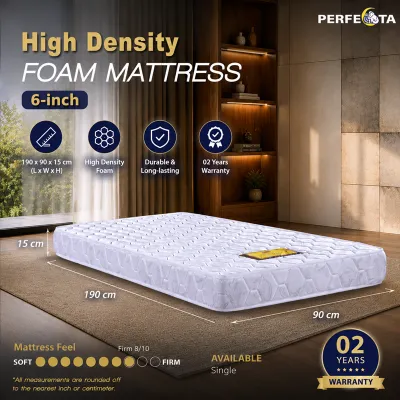
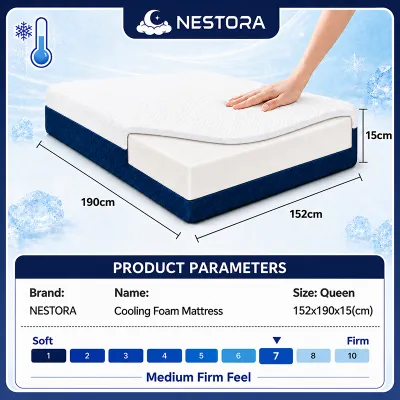
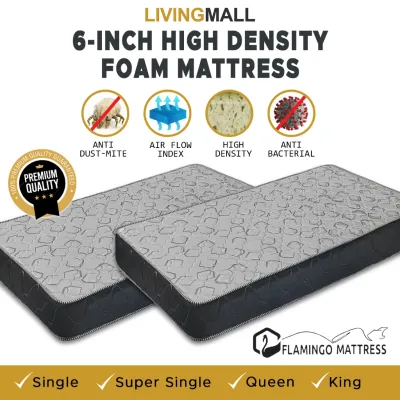
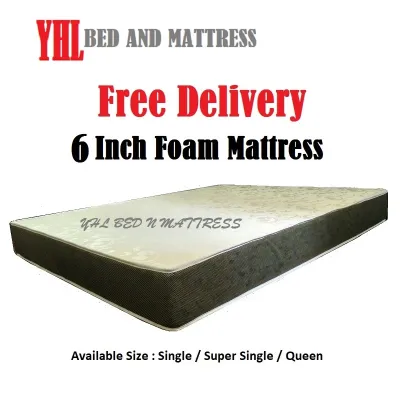
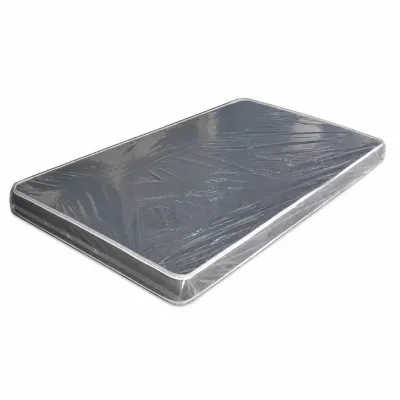

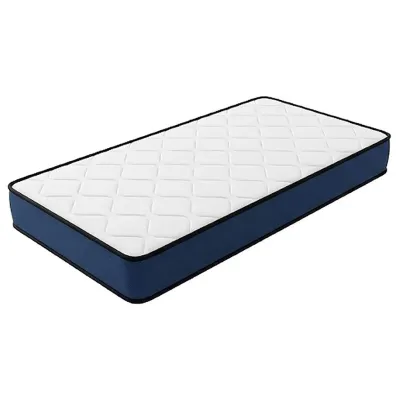
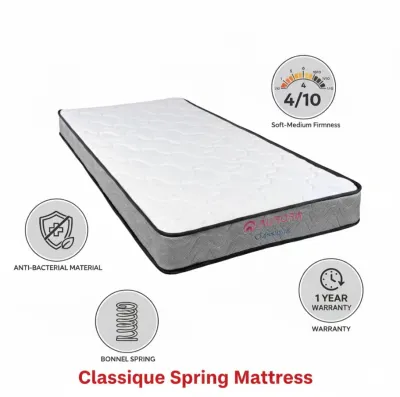
Prices are valid at publication and may change. Please refer to the product page for the latest price.
This limited depth creates a high risk of “bottoming out,” a situation where a sleeper’s heaviest body parts compress the comfort layers entirely and press against the hard bed base underneath. When this occurs, the mattress loses its ability to relieve pressure, leading to joint pain and disrupted sleep. To prevent this, you must look beyond surface softness and evaluate the density of the internal materials. Before making a purchase, always check the manufacturer’s specified weight limits and base requirements to ensure the mattress is engineered to support your body type within its slim dimensions.
Matching Firmness to Your Sleeping Position
Your sleeping position determines how your body weight is distributed across the mattress surface, which is particularly critical when dealing with a thin 6-inch profile. Side sleepers face the greatest challenge on a slim mattress because their body weight is concentrated over narrow areas, specifically the shoulders and hips. If a 6-inch mattress is too firm, it will not contour to these curved areas, leading to restricted circulation and sore joints. Conversely, if the mattress is too soft, the hips and shoulders will sink completely through the thin comfort layer, hitting the rigid support core or the bed slats below. A balanced medium firmness is typically recommended to provide just enough contouring while keeping the body suspended.

Back sleepers require a surface that supports the natural curve of the lower back without letting the pelvis sink too deeply. On a 6-inch mattress, a medium-firm option is usually the most reliable choice. This level of firmness provides enough surface tension to keep the spine in a neutral position while offering a touch of cushioning for the glutes and shoulders. If the mattress is too soft, the heavier pelvic region will sag, pulling the lumbar spine out of alignment and causing lower back stiffness by morning.
Stomach sleepers need the firmest surface possible on a 6-inch profile. Sleeping on your stomach naturally coaxes the lower back into an arch; if the mattress allows the midsection to sink even slightly, this arch becomes exaggerated, putting immense strain on the lumbar muscles and ligaments. Because a 6-inch mattress has very little depth to spare, a firm or extra-firm rating is essential to keep the hips level with the shoulders. This firm support ensures that the body remains flat on top of the mattress rather than sinking into it.
Factoring in Body Weight and Type
Body weight plays a decisive role in how firm a 6-inch single mattress actually feels to an individual. Firmness ratings are subjective, and a mattress labeled as “medium” by a manufacturer can feel entirely different depending on the sleeper’s physical build. Lighter individuals, typically those weighing under 60 kilograms, exert less downward force on the mattress. On a 6-inch profile, they may perceive a standard medium mattress as quite firm because their body weight is insufficient to compress the top comfort layers. For these sleepers, a slightly softer medium or a mattress with a more responsive top layer may be necessary to experience any pressure relief.
Conversely, average to heavier individuals compress foam and spring layers much more rapidly. For anyone weighing over 80 kilograms, a soft or even standard medium 6-inch mattress will likely fail to provide adequate support, leading to immediate bottoming out. Heavier sleepers should look for firm options constructed with high-density polyfoam or resilient latex cores that resist deep compression.
When shopping, avoid relying solely on generic marketing terms like “plush” or “orthopaedic.” Instead, examine the product specifications for foam density, which is measured in kilograms per cubic meter, and check the maximum weight capacity recommended by the manufacturer. A higher density core indicates a more robust cell structure that can support heavier loads without collapsing over time.
Evaluating Mattress Materials and Base Compatibility
The materials used to construct a 6-inch single mattress heavily influence its responsiveness, heat retention, and overall support. Memory foam is popular for its pressure-relieving contouring, but in a thin 6-inch cut, it can sometimes feel too restrictive if it allows you to sink too close to the base. Natural or synthetic latex offers a more responsive, buoyant alternative; it contours to the body but pushes back immediately, preventing that stuck-in-the-mud feeling and reducing the risk of bottoming out. High-density polyurethane foam (polyfoam) is often used as a cost-effective base layer, providing a stable foundation that keeps the mattress structurally sound.
The bed base you choose also directly alters the perceived firmness of a thin mattress. A solid platform base or a divan provides uniform, unyielding support, making a 6-inch mattress feel slightly firmer and more supportive. In contrast, a slatted bed frame allows for more flex. If the slats are spaced too far apart—typically more than five to seven centimeters—the thin mattress can sag between the gaps, compromising both support and durability.
To protect your investment, always verify the manufacturer’s warranty conditions regarding base compatibility. Many brands specify maximum slat spacing and require center support legs even for single sizes. Using an incompatible or unsupportive frame can void your warranty and cause the mattress to wear out prematurely.
Frequently Asked Questions (FAQ)
Can I use a 6-inch single mattress directly on the floor?
While placing a 6-inch single mattress directly on the floor might seem like an easy way to achieve a firmer feel, it is generally not recommended for long-term use. In humid climates, placing a mattress directly on the floor severely restricts airflow. Body heat and perspiration can become trapped beneath the mattress, leading to moisture buildup, musty odors, and mold growth. Additionally, many manufacturers explicitly state in their warranty terms that floor placement voids coverage, as mattresses require a raised, ventilated base to maintain hygiene and structural integrity.
Will a mattress topper change the firmness of my 6-inch mattress?
A mattress topper can alter the immediate surface feel of your bed, but it cannot fix a fundamental lack of support. If your 6-inch mattress is too firm, adding a soft two-inch topper can provide the pressure relief your shoulders and hips need. However, if your mattress is already too soft or is sagging, adding a topper will not restore its structural integrity; your body will simply sink through the topper and the thin mattress beneath. Keep in mind that adding a thick topper also changes the overall height, which may affect how fitted sheets grip the corners of your single bed.

Community discussion
Share your experience or ask a question. Comments are reviewed before publication.