
Choosing the right fabric sofa bed for a Housing & Development Board (HDB) living room requires a careful balance of spatial efficiency, mechanical functionality, and material durability. In Singapore’s compact residential layouts, every square meter of floor space must be utilized intentionally. A sofa bed serves as a primary seating area by day and a comfortable sleeping surface by night, making it an excellent space-saving solution for hosting guests or maximizing multi-functional rooms. However, selecting a model without considering the specific constraints of HDB living can lead to cramped walkways, blocked doorways, or delivery day complications.
To make a successful purchase, you must evaluate how the sofa bed integrates into your daily routine and physical environment. This involves measuring not just the static footprint of the sofa, but also its fully extended dimensions and the clearance required for smooth operation. Additionally, the tropical climate of Singapore demands careful attention to fabric selection to prevent moisture retention and premature wear. By focusing on practical dimensions, robust mechanisms, and breathable materials, you can find a versatile piece of furniture that enhances both the comfort and aesthetic of your home.
Assessing Your HDB Living Room Space and Delivery Access
Before browsing designs or fabric swatches, you must establish the physical boundaries of your living room. Start by measuring the available floor space where the sofa bed will sit. Use masking tape to outline the exact dimensions of the sofa on the floor, both in its closed seating position and its fully extended sleeping configuration. This physical template allows you to visualize the remaining space and ensure that essential pathways remain unobstructed when the bed is in use.
Products mentioned in this guide
![[SG Seller] Fabric Sofa Bed 3 Seater Sofabed Fast Delivery From Singapore. Free Assembly. High Quality Sofas and Sofabeds. 1 Year Warranty. Fast Delivery from Singapore.](https://img.lazcdn.com/g/p/348901f321b96fa2ba1866c7a1619f40.jpg_400x400q80.jpg_.webp)
![[SG] High Quality Fabric Sofabed | High Quality | Bedroom | Compact | Living Room | Fabric Sofa Bed | High-End | Comfortable | 3 Seater [SG OPEN BOX SALE]](https://img.lazcdn.com/g/p/5486a3bc39ec2ea9f6d992dfb470c94a.jpg_400x400q80.jpg_.webp)
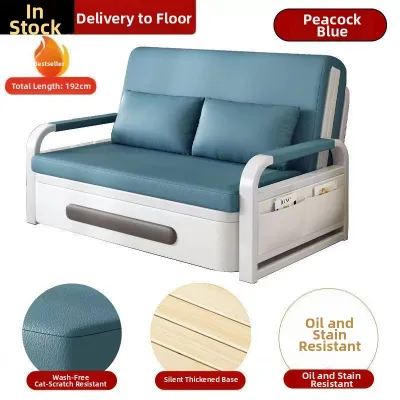
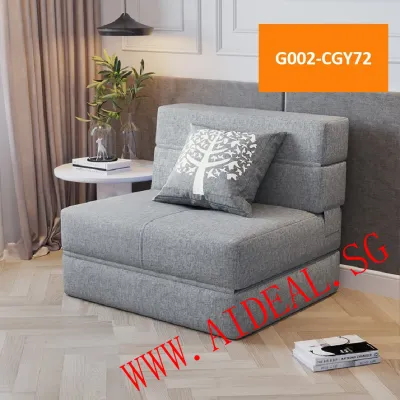
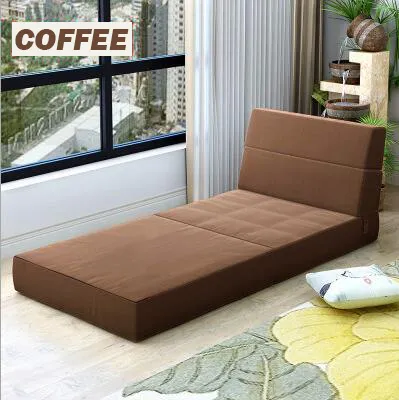
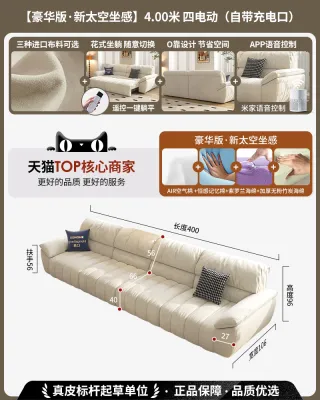
Prices are valid at publication and may change. Please refer to the product page for the latest price.
Maintaining clear walking paths is vital for safety and comfort. Ideally, you should leave a clearance of at least 50 to 60 centimeters around the sides and foot of the extended bed. This space ensures that overnight guests can get in and out of bed easily, and household members can still navigate the living room without tripping. If your living room layout is particularly tight, consider pairing the sofa bed with lightweight, easily movable coffee tables or side tables that can be rolled or lifted out of the way when converting the sofa.
Logistical access is another critical factor that is often overlooked until delivery day. HDB flats typically feature specific spatial constraints, including narrow corridors, tight staircase landings, and standard passenger lift dimensions. Measure the height and width of your main entrance door, as well as the interior dimensions and door clearance of your building’s lift. When purchasing a sofa bed, verify the packaged dimensions with the retailer to ensure the boxes can safely navigate these entry points. If your flat is only accessible via stairs or has a particularly narrow entryway, look for flat-packed models that can be assembled directly inside your living room.
The visual weight of the sofa bed also plays a significant role in how spacious your living room feels. Bulky, low-slung furniture can make a small room feel dark and congested. To maintain an airy and open aesthetic, opt for sofa beds with raised legs that elevate the frame off the floor. This design choice allows light to pass underneath, creating an illusion of greater floor space. Additionally, look for models with slim, low-profile armrests rather than wide, heavily padded ones, as this maximizes the usable seating width while keeping the overall footprint compact. Choosing a light or neutral color palette—such as soft greys, beige, or pastel tones—will also help the sofa blend seamlessly into your walls, making the room feel larger and more inviting.
Evaluating Mechanisms and Dimensions for Compact Spaces
The mechanism that converts your sofa into a bed determines both its ease of use and its spatial requirements. Different mechanisms suit different room layouts and usage frequencies. For instance, click-clack mechanisms are highly popular due to their simplicity and rapid conversion. By lifting the seat until it clicks and then lowering it flat, you can transform the sofa in seconds. However, many standard click-clack models require a few centimeters of clearance behind the backrest to unfold fully. If you plan to place the sofa flush against a wall, you will need to pull it forward each time you use it, which can be physically demanding. Look for “zero-wall” click-clack designs that slide forward automatically as they unfold to avoid this issue.

Pull-out or trundle mechanisms offer an alternative that keeps the backrest stationary. With this design, the sleeping surface is stored beneath the seat cushions and rolls forward on wheels or tracks. This is highly efficient for narrow living rooms because the sofa can remain flush against the wall at all times. However, you must ensure that the floor space directly in front of the sofa is completely clear of heavy furniture or thick rugs that might obstruct the rolling mechanism. Futon or fold-out designs, where the cushions unfold directly onto the floor, are lightweight and simple but may sit very low to the ground, which can be uncomfortable for older adults or guests with limited mobility.
Beyond the mechanism, you must evaluate the quality of the sleeping surface. Sofa bed mattresses are generally thinner than standard mattresses, typically ranging from 8 to 12 centimeters in thickness. To ensure adequate support, check the manufacturer’s specifications for the internal support system. High-density foam mattresses offer firm, contouring support, while pocket spring systems provide a more traditional mattress feel with better motion isolation. Ensure the sleeping surface dimensions align with standard bedding sizes if you plan to use standard sheets, or be prepared to purchase specialized bedding if the dimensions are non-standard.
Frame stability and floor protection are equally important considerations for long-term durability. A high-quality sofa bed must withstand the dynamic forces of both sitting and sleeping. Look for frames constructed from solid hardwood, such as kiln-dried oak or rubberwood, or reinforced steel. Avoid frames made entirely of low-grade particleboard, which can warp or crack under repeated stress. Additionally, because pull-out mechanisms involve moving parts that contact your floor, check that the wheels or legs are equipped with rubberized coatings or smooth protective caps. This prevents unsightly scratches or dents on common HDB flooring materials like vinyl tiles, laminate, or polished porcelain.
Selecting Fabric Upholstery for Humid Climates and Daily Use
The choice of fabric upholstery directly impacts the comfort, durability, and maintenance of your sofa bed, especially in Singapore’s warm and humid climate. High humidity levels can trap moisture within fabric fibers, creating an environment prone to musty odors, mold growth, and dust mite accumulation. Therefore, selecting a breathable and resilient fabric is essential for maintaining a hygienic living space.
When evaluating fabric options, start by reviewing the manufacturer’s technical specifications, which are often found on the product label or fabric swatch book. Look for the Martindale rub count, which measures the fabric’s resistance to abrasion. For a primary living room sofa that experiences daily use, a rub count of at least 15,000 to 20,000 rubs is recommended. If you have pets or young children, aim for heavy-duty fabrics with a rub count of 30,000 or higher to ensure the material does not pill or wear thin prematurely. Additionally, check if the fabric has been treated with stain-resistant or water-repellent coatings, which prevent liquid spills from soaking immediately into the cushions.
Material composition plays a crucial role in temperature regulation and moisture management. Tightly woven synthetic fabrics, such as low-grade polyester or non-breathable faux leathers, can trap body heat and feel sticky against the skin in non-air-conditioned rooms. Instead, look for breathable fabric blends that combine the strength of synthetic fibers with the comfort of natural ones. Linen-polyester or cotton-polyester blends are excellent choices for Singapore homes. They offer the natural breathability and moisture-wicking properties of linen or cotton, while the polyester content adds durability, wrinkle resistance, and ease of cleaning.
Maintenance requirements should also align with your household lifestyle. Fully removable and machine-washable fabric covers offer the highest level of convenience. They allow you to easily strip the sofa and wash the covers to remove sweat, dust, and allergens, keeping the bed fresh for guests. If the sofa bed features fixed upholstery, verify the manufacturer’s cleaning codes. Fabrics labeled with a “W” can be cleaned with water-based cleaning agents, while those labeled with an “S” require mild, water-free solvents. Understanding these codes beforehand prevents accidental damage to the fabric during spot cleaning.
Building Your Shortlist: A Pre-Purchase Verification Checklist
To finalize your decision and avoid post-purchase regrets, it is beneficial to compile a shortlist of candidate sofa beds and run them through a structured verification process. This systematic approach ensures that all spatial, logistical, and financial aspects are thoroughly vetted before you make a financial commitment.
First, perform a final spatial and access verification. Compare the exact dimensions of your shortlisted sofa beds against your physical measurements. Double-check the fully extended length of the bed to ensure it does not block access to balconies, hallways, or electrical outlets. Confirm that the packaged dimensions provided by the retailer will easily clear your HDB lift doors and main entrance. If the clearance is tight, contact the retailer to ask if the delivery team can unbox the sofa outside your flat or if they offer disassembly and reassembly services on-site.
Second, review the warranty terms and assembly conditions in detail. Because sofa beds contain moving mechanical parts, they are more susceptible to mechanical failure than standard stationary sofas. Ensure the retailer’s warranty covers the folding mechanism and frame for a reasonable period, typically at least one to two years. Additionally, clarify the delivery and assembly terms. Some retailers include professional assembly in their delivery fee, while others charge an additional fee. Given the complexity of some folding mechanisms, professional assembly is highly recommended to ensure the unit is set up safely and functions correctly.
Third, whenever possible, test the conversion mechanism and comfort in person. Visit a local showroom to operate the folding mechanism yourself. Pay attention to how much physical effort is required to open and close the bed, and listen for any squeaks or resistance in the joints. Sit on the sofa to evaluate the seating comfort, and lie down on the extended bed to check the supportiveness of the mattress. If you are purchasing online and cannot test the product physically, thoroughly review the detailed user manuals, care instructions, and customer reviews to gauge the product’s real-world performance and ease of assembly.
Finally, compare the total costs of your shortlisted options in S$. Ensure you are comparing the complete price, which includes the base cost of the sofa bed, delivery charges, assembly fees, and any costs associated with disposing of your old furniture. Be sure to check the estimated lead times as well. Ready-stock items can often be delivered within a few days, whereas customized fabrics or imported models may take several weeks or months to arrive. Balancing these factors will help you select a fabric sofa bed that fits your budget, timeline, and HDB living space perfectly.
Frequently Asked Questions (FAQ)
How often should I clean a fabric sofa bed in a humid climate?
In Singapore’s humid climate, you should vacuum your fabric sofa bed at least once a week using an upholstery attachment to remove dust, skin flakes, and pet dander. If the sofa bed is used frequently for sleeping, air out the mattress by leaving it unfolded for a few hours after use, preferably with a fan or dehumidifier running nearby. For removable covers, wash them every three to six months according to the manufacturer’s care label. For fixed upholstery, plan for a professional deep steam cleaning once a year to eliminate deep-seated moisture, sweat, and allergens that can accumulate over time.
Can I use standard fitted sheets on a sofa bed mattress?
Whether you can use standard fitted sheets depends on the exact dimensions and depth of your sofa bed mattress. Sofa bed mattresses are often thinner than standard mattresses, typically measuring between 8 and 12 centimeters deep, and their length or width may vary slightly from standard single, super single, or queen sizes. Measure the mattress’s width, length, and depth before purchasing bedding. If the mattress is significantly thinner than a standard mattress, standard fitted sheets may fit loosely and bunch up. In such cases, you can use sheet suspenders or straps to pull the excess fabric taut underneath, or opt for flat sheets tucked tightly under the mattress.

Community discussion
Share your experience or ask a question. Comments are reviewed before publication.