
Selecting the right disposable dust cover is the most effective way to protect your mattress, headboard, and bed accessories from damage during major life transitions. Whether you are navigating a hectic moving day, placing your bed in long-term storage, or shielding your bedroom from fine drywall dust during a home renovation, the right protective layer prevents costly stains, tears, and moisture damage. However, a single type of cover does not fit every situation perfectly.
To make an informed decision, you must evaluate the specific environmental threats of your project and match them to the cover’s material thickness, dimensions, and sealing capabilities. Choosing incorrectly can lead to trapped moisture, torn plastic, or ruined upholstery. By understanding how different covers perform under physical stress, humidity, and dust exposure, you can safeguard your sleeping surface and ensure a clean, healthy bed when it is time to sleep on it again.
Identifying Your Primary Protection Scenario
Every major home transition presents a unique set of hazards for your bedding and furniture accessories. Identifying your primary threat allows you to prioritize either physical durability, moisture resistance, or airtight sealing.
Products mentioned in this guide
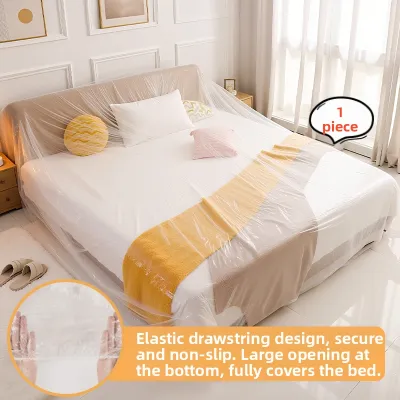
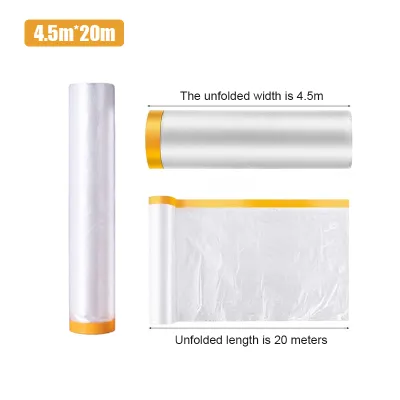
![[2-3 Days Delivery] 4.5m x 20m Plastic Dust Cover Protective Plastic Sheet Disposable Furniture Dustproof Cover Protective Cover Plastic Cover Plastic Film for Home Improvement CNY Gift Present](https://img.lazcdn.com/g/p/37fceab8fc43d4b3b58593d55aae9bcb.jpg_400x400q80.jpg_.webp)
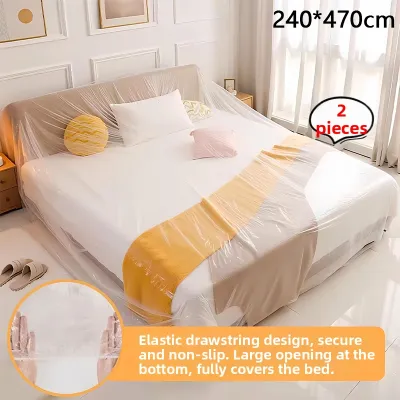
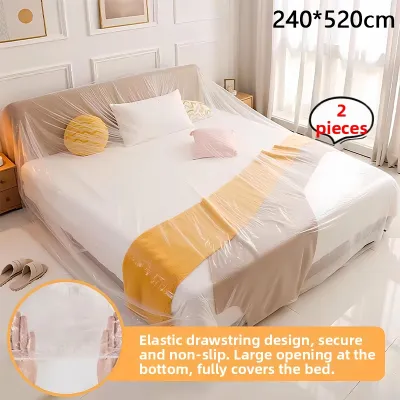
Prices are valid at publication and may change. Please refer to the product page for the latest price.
During a move, your mattress and bed frame face significant physical friction. Professional movers must slide, lift, and squeeze these bulky items through narrow doorways, tight stairwells, and passenger lifts. The primary hazard is mechanical damage, such as punctures from sharp corners, tears from rough truck beds, and dirt transfer. For this scenario, your disposable dust cover must prioritize high tear resistance and robust seam strength to withstand dragging and lifting.
Long-term storage introduces a completely different set of challenges, particularly in humid tropical climates like Singapore. When a mattress is stored in a self-storage unit or spare room for months, the main threats are ambient moisture, dust accumulation, and pests. If a cover traps humidity inside, it creates a breeding ground for mold and mildew. For storage, you need a cover that provides a reliable moisture barrier while ensuring the mattress is completely dry before sealing.
Home renovation zones are characterized by airborne particles. Activities like sanding drywall, cutting timber, and painting release fine dust and wet splatters that easily penetrate standard woven sheets. This fine dust can settle deep into the fibers of your mattress and upholstered headboard, making it incredibly difficult to clean. In this scenario, your primary need is a non-porous, fully sealed barrier that prevents even the smallest particles from settling on your bed accessories.
Essential Specifications to Evaluate
Before purchasing a disposable dust cover, you must look closely at the product specifications to ensure it fits your specific bed setup and offers adequate protection.

Sizing and fit are critical to preventing accidental tears during installation. Do not rely solely on standard terms like “Queen” or “King,” as mattress depths vary significantly. A modern pillow-top mattress or a mattress with an integrated topper can easily exceed 35 centimeters in depth. Measure the length, width, and depth of your mattress, and compare these to the finished dimensions of the cover. If the cover is too tight, the tension will cause the seams to split the moment you attempt to lift or move the bed.
Material thickness is typically measured in mils (thousandths of an inch). While manufacturers often label thicker covers as heavy-duty, you should verify the actual thickness specification on the packaging. For light dust protection during a quick room paint job, a thin cover of 1 to 1.5 mils may suffice. However, for moving and long-term storage, look for heavy-duty options that are 3 to 4 mils thick. These thicker materials offer substantially better puncture resistance against sharp bed frame corners and rough handling.
The sealing mechanism determines how well the cover isolates your mattress from the outside environment. Common options include open-ended bags that require manual taping, zippered closures, and built-in adhesive strips. Open-ended bags offer flexibility but require high-quality packing tape to achieve a complete seal. Zippered covers provide convenient access but may feature small gaps along the zipper teeth where fine dust can enter. Evaluate the closure method based on how airtight your specific scenario requires the seal to be.
Matching Cover Features to Your Scenario
Once you understand your primary scenario and the essential specifications, you can match specific product features to your immediate needs.
For moving day, look for disposable covers designed with reinforced corners or integrated handles. Because mattresses are heavy and awkward to carry, movers often grab the plastic cover itself to gain leverage. If the cover lacks reinforced stress points, this pulling force will tear the plastic instantly. If you cannot find a cover with built-in handles, ensure you select a heavy-duty 4-mil cover that can withstand the localized pressure of a tight grip without ripping.
For storage units, moisture management is your top priority. In Singapore’s humid climate, non-climate-controlled storage spaces can experience rapid temperature fluctuations, leading to condensation inside sealed plastic. Look for covers that specify moisture-blocking properties, and consider adding silica gel desiccant packs inside the cover before sealing it. Additionally, if your storage area has windows or exposed light sources, check if the cover material offers UV resistance to prevent the plastic from degrading and becoming brittle over time.
For renovation zones, the goal is to create an impenetrable dust envelope. Standard plastic drop cloths often shift and slide off furniture as air circulates through the room. Instead, choose a disposable mattress bag that fully encloses the mattress and can be sealed shut with heavy-duty painter’s tape. This ensures that fine plaster and paint overspray cannot drift underneath the cover, keeping your bed accessories pristine throughout the construction process.
If you are planning a transition that involves multiple stages—such as moving a mattress out of a home, storing it for several weeks, and then moving it into a newly renovated space—evaluating cross-scenario compatibility is essential. In these cases, investing in a single, premium-grade, heavy-duty cover is highly practical. A high-quality 4-mil cover can survive the physical demands of moving day and continue to provide excellent dust and moisture protection during subsequent storage and renovation phases, saving you both time and money.
Safe Application and Removal Practices
Even the best disposable dust cover will fail to protect your bed accessories if it is applied or removed incorrectly. Following a systematic process ensures your mattress remains undamaged throughout its journey.
Before wrapping your mattress or bed accessories, ensure they are completely clean and dry. Vacuum the mattress thoroughly to remove any existing dust, pet dander, or debris. If you have recently spot-cleaned a stain or used a fabric freshener, wait at least 24 to 48 hours to ensure the material is entirely dry. Sealing even a tiny amount of moisture inside a plastic cover will inevitably lead to mold growth, ruining the mattress during storage.
During installation, carefully inspect your bed frame and headboard for sharp edges. Metal brackets, wooden splinters, and exposed screws can easily puncture the plastic cover as you slide it over the mattress. Cover these sharp areas with thick cardboard or several layers of painter’s tape before proceeding. Once the cover is in place, gently press out excess air before sealing the opening to prevent the bag from ballooning, which makes handling difficult and increases the risk of snagging.
When it is time to unpack, avoid using sharp utility knives or box cutters directly against the plastic. A slip of the hand can easily slice through the cover and deep into your mattress fabric or upholstered headboard. Instead, use blunt-nosed scissors or safety shears, cutting away from the mattress surface. Carefully peel back any adhesive tape to ensure it does not pull on delicate fabric fibers, and check the mattress surface immediately for any signs of condensation or trapped dust.
Frequently Asked Questions (FAQ)
Can I reuse a disposable mattress cover after moving?
While it is physically possible to reuse a disposable cover, it is generally not recommended for sensitive storage scenarios. The physical stress of moving often creates microscopic punctures, tears, and seam separations that are difficult to see with the naked eye. Additionally, the exterior of the cover will have accumulated dirt, dust, and grime from the moving truck and handlers. Reusing a soiled, compromised cover for long-term storage risks transferring that dirt to your clean mattress and failing to provide an adequate moisture barrier.
Will a plastic dust cover cause my mattress to mold in storage?
A plastic cover itself does not cause mold, but it can trap existing moisture that leads to fungal growth. If a mattress is packed in a humid environment, or if it contains residual moisture from cleaning, that moisture cannot escape once the plastic is sealed. To prevent mold, ensure the mattress is completely dry before wrapping, store it in a dry, temperature-controlled environment if possible, and place several large desiccant packs inside the cover to absorb any trapped humidity.
Do I need to cover the bed frame and headboard separately?
Yes, it is highly recommended to wrap your bed frame and headboard separately from your mattress. Upholstered, leather, and wooden headboards have different protection needs and are highly vulnerable to scratches, scuffs, and moisture staining. Wrapping them in dedicated furniture wrap or separate heavy-duty plastic covers ensures they are protected from physical impact during transit without putting unnecessary tension on your mattress cover.

Community discussion
Share your experience or ask a question. Comments are reviewed before publication.