
Finding the right cloth storage cabinet for a Singapore HDB bedroom requires balancing storage capacity with floor space. Because HDB bedrooms typically feature compact layouts, introducing a freestanding wardrobe without careful planning can quickly make the room feel cramped. The key is to establish a clear relationship between the available floor footprint and the cabinet’s external dimensions before making a purchase.
To achieve this balance, you should follow a simple three-step workflow: measure your room’s physical limits, verify the exact product specifications, and calculate the necessary clearances for daily movement. This systematic approach prevents the common mistake of buying a cabinet that blocks walkways or clashes with existing furniture.
When browsing options, always prioritize the manufacturer’s official specification label over generic size categories like “large,” “medium,” or “three-door.” Visual estimates from online product photos can be highly deceptive, as studio lighting and staging often make items appear smaller or larger than they are in a real-world bedroom.
Products mentioned in this guide
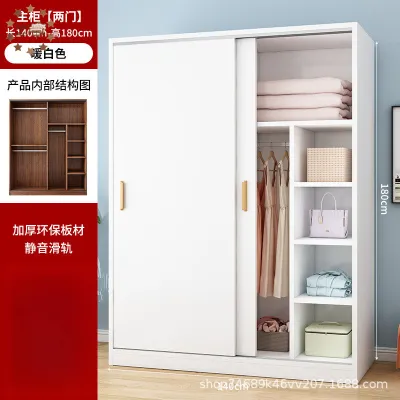
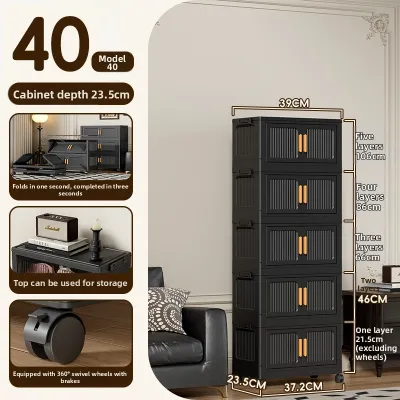
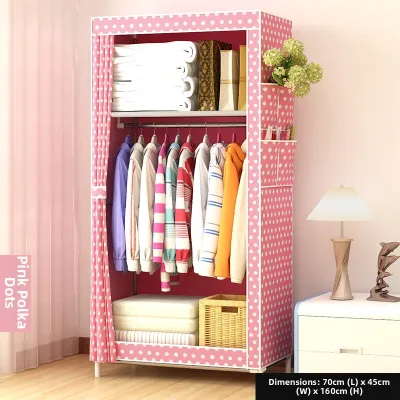

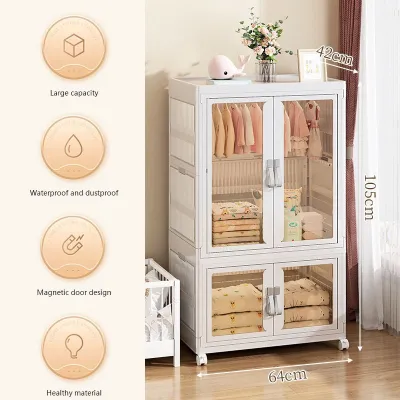
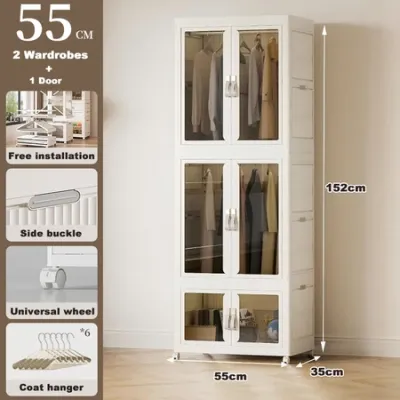
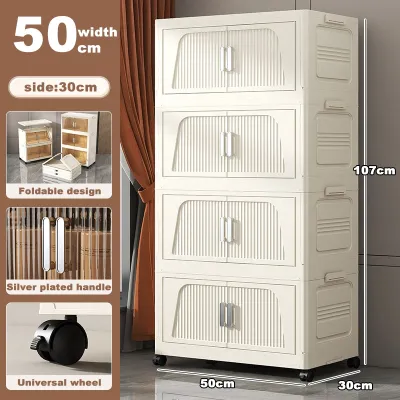
Prices are valid at publication and may change. Please refer to the product page for the latest price.
How to Measure Your Bedroom Space Accurately
Accurate measurements are the foundation of a successful furniture layout. To begin, use a metal measuring tape to record the width, depth, and height of the designated area. It is essential to measure at multiple points along the wall and floor, as concrete walls in HDB flats are rarely perfectly square, and skirting boards can reduce the actual floor width by a few centimeters.
Next, identify and map all fixed architectural features and utilities in the room. Take note of the positions of electrical outlets, light switches, air conditioning trunking, window sills, and any existing built-in wardrobes. Placing a cloth storage cabinet directly in front of a power socket or blocking aircon piping can restrict access to utilities and complicate future maintenance.
Do not forget to measure the vertical clearance if you plan to place the cabinet under a wall-mounted air conditioning unit or near ceiling fans. Ensure there is enough vertical space to prevent the cabinet from obstructing the airflow of your air conditioner or interfering with the safe operation of fan blades.
Finally, assess the pathway leading into the bedroom, including the doorway width and any tight corners in your hallway. Even though a cloth storage cabinet typically arrives flat-packed, you must ensure that the longest frame poles and the packaging can easily clear your entryways and that you have sufficient room to maneuver during the assembly process.
Evaluating External Dimensions and Internal Capacity
When selecting a cloth storage cabinet, it is vital to distinguish between its external footprint and its actual internal capacity. The external dimensions tell you how much floor space the unit will occupy, but the internal usable space is always slightly smaller. This reduction is due to the thickness of the structural frame poles, plastic or metal corner joints, and the fabric cover’s seams.

To ensure the cabinet meets your storage needs, review the product manual or specification sheet for details on the internal configuration. Look for the exact number of hanging rails, shelf tiers, and whether these components can be adjusted or removed. A cabinet with modular shelving allows you to customize the interior layout to accommodate longer garments like dresses or bulkier items like bedding.
Structural stability is another critical factor to evaluate before buying. Check the manufacturer’s specified weight limits for individual shelves and hanging rails. Overloading a lightweight frame can cause the metal or wooden poles to bow, the plastic connectors to crack, or the fabric shelves to tear over time.
If you plan to store heavy winter coats, denim, or storage boxes, look for cabinets that feature reinforced steel frames, thicker joint connectors, and heavy-duty fabric shelves. Verifying these material specifications in the product description helps ensure the wardrobe remains stable and safe for daily use.
Planning for Clearances and Daily Room Flow
A well-sized cabinet should fit into your bedroom without disrupting the natural flow of daily movement. As a general rule, aim to maintain a walking clearance of at least 60 to 70 centimeters between the cabinet and your bed or other major furniture pieces. This space allows you to walk comfortably through the room without having to squeeze past obstacles.
In addition to walking space, you must account for the operational clearance required to use the cabinet itself. Unlike traditional wooden wardrobes with swinging doors, many cloth storage cabinets feature zippered fabric covers, roll-up doors, or sliding curtains. Ensure there is enough physical space in front of the cabinet to comfortably stand, unzip the cover, roll it up, and secure it without bumping into your bed or bedside table.
Environmental placement is equally important for preserving both the cabinet and your clothing. In Singapore’s humid climate, placing a fabric wardrobe too close to a damp wall or directly under an air conditioning vent can encourage mold and mildew growth. Position the cabinet in a well-ventilated area, leaving a small gap of about 5 centimeters between the back of the cabinet and the wall to promote airflow.
Keep the cabinet away from direct sunlight from windows, as prolonged exposure to ultraviolet rays can fade the fabric cover and weaken the synthetic fibers over time. Avoid placing the unit near heat sources or humid areas, such as adjacent bathroom doors, to protect your stored garments from moisture damage.
Common Sizing and Placement Mistakes to Avoid
One of the most common mistakes when buying a cloth storage cabinet is relying solely on visual estimates from online listings. A cabinet that looks compact in a staged photo may overwhelm a small HDB bedroom in reality. Always cross-reference the listed dimensions with your physical room measurements before finalizing your purchase.
Another frequently overlooked factor is the space required for assembly. Many flat-packed cloth wardrobes must be assembled horizontally on the floor before being raised upright. If your bedroom is already filled with a bed and other furniture, you may not have enough floor space to put the frame together. Plan where you will assemble the unit, and ensure you have a clear, clean area to work in.
Finally, never ignore the levelness of your bedroom floor. Freestanding cloth cabinets are lightweight and rely on even weight distribution for structural integrity. If placed on an uneven floor or a thick rug, the frame can lean, putting uneven stress on the joints and increasing the risk of a tip-over. Use a spirit level to check the floor, and choose a cabinet with adjustable leveling feet if your floor is slightly uneven.
Community discussion
Share your experience or ask a question. Comments are reviewed before publication.