
Selecting the right mirror wardrobe for your HDB bedroom in Singapore requires balancing spatial efficiency, budget, and customization. For absolute space optimization, local custom carpentry firms provide the best fit by building around HDB structural beams and aircon trunking. For fast delivery and reliable warranties, modular retailers offer excellent pre-configured options. If you are on a tight budget or renting, flat-pack options provide temporary, cost-effective utility. The ideal choice depends on your bedroom’s layout, your willingness to wait for custom fabrication, and your storage requirements.
Why Mirror Wardrobes Maximize Small HDB Bedrooms
HDB bedrooms, especially in newer BTO flats, average around 9 to 11 square meters. In such compact spaces, a freestanding full-length mirror and a separate wardrobe can easily consume up to 20% of the available floor area. Integrating a mirror directly into the wardrobe doors is one of the most effective ways to reclaim this space.
The visual impact is significant. A large mirrored surface reflects the opposite wall, creating an optical illusion of depth that makes a narrow bedroom feel twice as wide. This visual expansion reduces the claustrophobic feeling common in small bedrooms.
Products mentioned in this guide
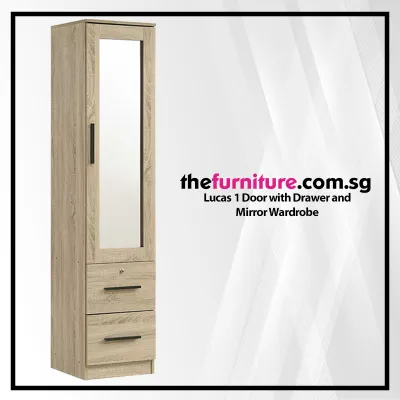
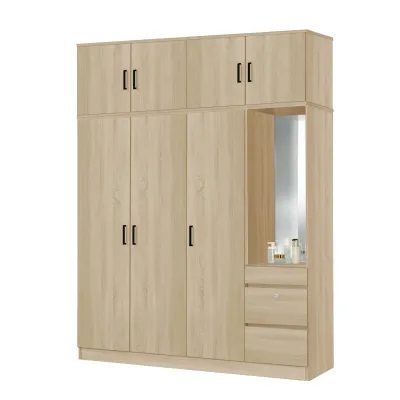
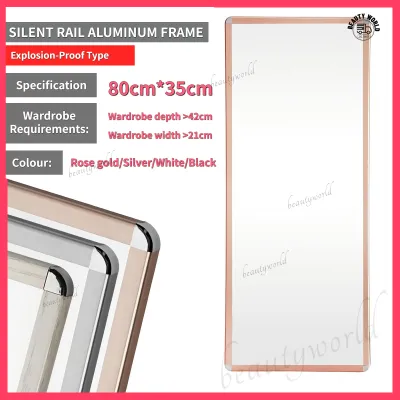
![[SG Stock]Wardrobe built-in full-length mirror folding sliding mirror escopic rotary mirror](https://img.lazcdn.com/g/p/16ffc4056d4d9b39e115c9836ce5035b.jpg_400x400q80.jpg_.webp)
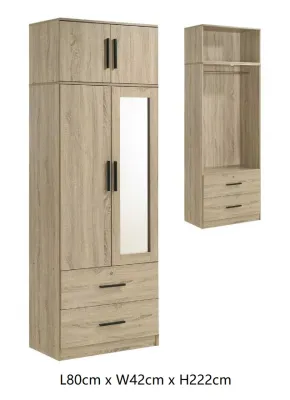
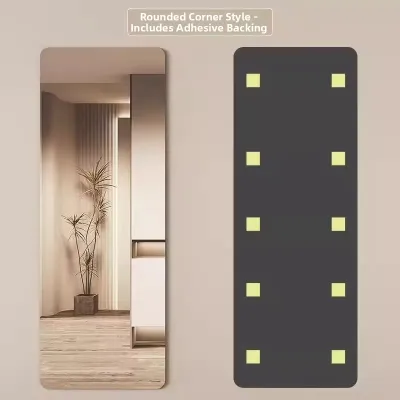
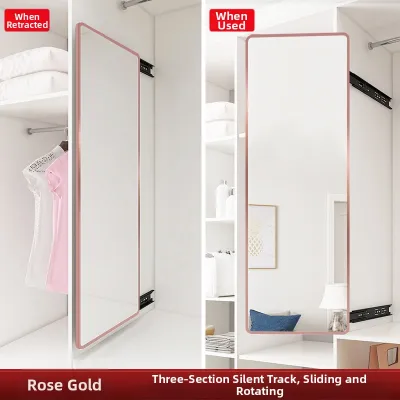
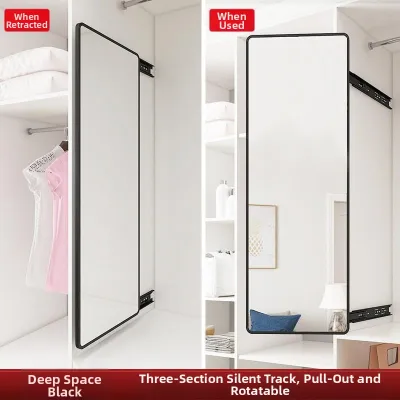
Prices are valid at publication and may change. Please refer to the product page for the latest price.
Furthermore, light reflection is a major benefit. Many HDB flats, particularly lower-floor units or those facing adjacent blocks, receive limited natural light. A mirror wardrobe positioned perpendicular or opposite to the window catches incoming light and bounces it throughout the room, brightening dark corners and reducing reliance on artificial lighting during the day.
Finally, it streamlines the room’s layout. By combining storage and a dressing mirror into a single footprint, you eliminate the need for a separate vanity or a floor-standing mirror. This frees up floor space for a larger bed, a bedside table, or simply a clearer walkway.
Essential Sizing and Logistical Checks for HDB Flats
Before browsing brands, precise measurements are mandatory. Modern HDB master bedrooms typically measure 3000mm by 3000mm, while common bedrooms can be as small as 2800mm by 2500mm.

To calculate usable floor space, first map out the bed placement. A standard queen-sized bed frame in Singapore measures roughly 152cm wide by 191cm long, but frame designs can add 10-20cm to these dimensions. You must maintain a minimum walkway clearance of 60cm around the bed to move comfortably. If your wardrobe has hinged doors, you need an additional 50cm to 60cm of clearance in front of the wardrobe to allow the doors to swing open fully without hitting the bed frame. Sliding doors eliminate this swing clearance but require a slightly deeper wardrobe frame.
Standard wardrobe depth for hanging clothes is 55cm to 60cm. Anything shallower will cause standard adult hangers to sit at an angle, forcing clothes against the doors and potentially scratching the back of mirror panels.
Ceiling height is another critical variable. Standard HDB BTO ceilings are 2.6 meters (2600mm) high, while older resale flats can vary from 2.4 meters to 2.8 meters. If you buy a modular or flat-pack wardrobe that is assembled lying down on the floor, you must have enough ceiling clearance to tilt the assembled frame upright. This tilt-up height is always greater than the wardrobe’s actual height due to the diagonal measurement of the side panels. Check the manufacturer’s assembly manual for the minimum ceiling height required for assembly—often at least 10cm to 15cm of clearance above the wardrobe’s finished height.
Do not overlook aircon trunking. In Singapore, air conditioning refrigerant pipes and drain lines are typically run along the top of bedroom walls in white PVC trunking. This trunking usually projects 5cm to 10cm from the wall and drops 10cm to 15cm from the ceiling. A standard tall wardrobe cannot sit flush against the wall if trunking is present. You must either choose a shorter wardrobe (e.g., 200cm to 220cm high) to sit below the trunking or work with a custom carpenter who can scribe the wardrobe panels around the pipes.
Logistical access is the final hurdle. Many HDB delivery issues arise not in the bedroom, but in the lift lobby or corridor.
- HDB Lift Dimensions: Measure the entrance height, interior height, and diagonal depth of your block's lift. Flat-pack and modular wardrobes often come in long boxes exceeding 2.2 meters in length. If these boxes cannot fit into the lift, delivery teams may have to carry them up the stairs, which incurs steep staircase charges (often S$10 to S$20 per floor, per item) or may even result in a rejected delivery.
- Corridor and Doorway Clearances: Ensure the corridor outside your flat has at least 1.2 meters of width to maneuver long packages around corners. Measure your main door and bedroom door frames. If your doorway has a tight turning radius immediately inside, a long pre-assembled wardrobe frame may get stuck.
Comparing Mirror Wardrobe Brand Categories in Singapore
The Singapore market offers three primary routes for sourcing a mirror wardrobe: custom carpentry, modular/ready-made retailers, and flat-pack budget options. Understanding the trade-offs of each will help you align your purchase with your renovation timeline and budget.
Custom Carpentry and Interior Design Firms
Custom carpentry is the gold standard for maximizing HDB space. An interior designer or direct carpenter will build the wardrobe on-site or fabricate it in a local workshop to fit your bedroom’s exact dimensions. This allows for a true floor-to-ceiling, wall-to-wall installation that leaves zero wasted gaps where dust can accumulate.
- Pros: Perfect integration with structural elements. If your bedroom has an awkward corner, a structural column, a DB electrical box, or low-hanging aircon trunking, custom carpentry can seamlessly build around these obstacles. You also have complete control over the mirror design. You can opt for tinted bronze or grey mirrors to match a modern design theme, or use vertical mirror strips to break up the visual weight of a large wardrobe.
- Cons: High cost and long lead times. Custom carpentry in Singapore typically costs between S$200 and S$350 per foot run, meaning a standard 6-foot (1.8-meter) wardrobe can easily cost S$1,200 to S$2,100 or more, excluding GST. Fabrication and installation usually take 4 to 8 weeks. Additionally, custom wardrobes are permanent fixtures; they cannot be easily disassembled and moved if you decide to relocate.
- What to Verify: Ask the carpentry firm about the materials they use. Ensure they use high-quality solid plywood (usually 15mm to 18mm thick) rather than cheap particleboard or medium-density fibreboard (MDF), which can sag under heavy loads or swell in Singapore's high humidity. Check the quality of the edge banding; ABS (Acrylonitrile Butadiene Styrene) edge banding is essential for sealing the edges of the wood substrate against moisture. Finally, review their portfolio of completed HDB projects to ensure their installers are skilled at scribing panels flush against uneven HDB walls and ceilings.
Modular and Ready-Made Furniture Retailers
Modular and ready-made retailers bridge the gap between custom carpentry and cheap flat-packs. Brands like IKEA (with their PAX system), Castlery, FortyTwo, and local furniture showrooms offer pre-designed wardrobe systems that can be configured with mirrored doors.
- Pros: Faster delivery and predictable costs. Most ready-made wardrobes can be delivered and assembled within 1 to 2 weeks. Because these products are mass-produced, you can visit local showrooms to physically test the sliding door tracks, feel the weight of the doors, and check the clarity of the mirrors. They also come with standardized warranties on structural frames and moving parts.
- Cons: Fixed dimensions. Modular systems usually come in standard widths (such as 50cm, 100cm, or 150cm) and heights (usually 201cm or 236cm). If your bedroom wall is 220cm wide, using modular units will leave a 20cm gap that is too small for practical use but large enough to trap dust. Standard heights may also leave a significant gap below a 2.6-meter HDB ceiling, preventing a clean, built-in look.
- What to Verify: Confirm whether delivery and professional assembly are included in the price. Assembling a large modular wardrobe with heavy glass mirror doors is a two-person job that requires specialized tools; paying for professional installation is highly recommended to ensure the frame is perfectly level and the doors slide smoothly. Check the brand's return and exchange policies, and ask if they stock replacement mirror panels. If a mirror door is accidentally cracked during a move or by a hard impact, being able to buy a single replacement panel is far cheaper than replacing the entire wardrobe.
Flat-Pack and Budget-Friendly Options
For renters, student accommodations, or those on a highly restricted budget, flat-pack mirror wardrobes sourced from online marketplaces or budget retailers are a viable temporary solution.
- Pros: Low cost and high flexibility. These wardrobes are highly cost-effective, with prices often starting under S$400. They are relatively lightweight and can be disassembled and transported to a new home with ease, making them ideal for temporary living arrangements.
- Cons: Limited durability and safety risks. Budget flat-pack wardrobes are almost exclusively made of thin particleboard (often 12mm to 15mm thick) with paper foil finishes. They are highly susceptible to moisture damage, warping, and sagging over time. Additionally, self-assembling a heavy mirror wardrobe carries a high risk of glass breakage or personal injury if the frame is not stabilized correctly during the build.
- What to Verify: Always check if the package includes an anti-tip wall anchoring kit. Because budget wardrobes are lightweight but have heavy mirror doors, they are highly prone to tipping forward when the doors are opened. Verify the thickness of the shelving boards; they should be at least 15mm thick to prevent sagging under the weight of folded clothes. Read the assembly instructions online before purchasing to ensure you have the necessary tools and space to build the unit safely.
How to Verify Brand Reliability and After-Sales Support
A mirror wardrobe is a long-term investment that experiences daily wear and tear. Verifying a brand’s reliability and after-sales support before purchasing will save you from costly repairs down the road.
Scrutinize the Warranty Terms: Do not rely on broad marketing claims. Read the fine print to see what is actually covered. A robust warranty should explicitly cover:
- Sliding Track Mechanisms and Hinges: These are the most common failure points. Look for brands that offer at least a 2-to-5-year warranty on moving hardware.
- Mirror Desilvering: High-quality brands will guarantee their mirrors against premature desilvering (the chemical breakdown of the reflective backing that causes black edges) for at least 1 to 2 years under normal indoor conditions.
- Frame Sagging: Ensure the warranty covers structural warping or sagging of the main panels under normal load conditions.
Check for Local Service Centers: Ensure the brand has a physical presence or an authorized distributor with a local service center in Singapore. If a sliding door derails or a soft-close damper fails three years after purchase, a brand with local technicians can easily dispatch help and supply original replacement parts. Overseas-only online sellers often cannot provide physical repairs, leaving you with the option of either living with a broken door or replacing the entire wardrobe.
Evaluate Installation Team Qualifications: Ask the brand if their installation teams are direct employees or third-party subcontractors. Direct employees are typically better trained on the brand’s specific hardware and are more accountable for quality control.
Read Verified Customer Reviews: Look for reviews on independent platforms that specifically mention HDB installations. Search for keywords like “uneven floor,” “tight corridor,” “delivery delay,” or “after-sales service.” Pay close attention to how the brand handles issues; a brand that actively resolves delivery damage or installation errors is far more reliable than one with high initial ratings but poor post-sales responsiveness.
Installation Safety and Long-Term Maintenance Guide
Proper installation and consistent maintenance are essential to ensure your mirror wardrobe remains safe and functional for years.
Wall Anchoring Requirements: Because glass mirrors add significant weight to the front of wardrobe doors, the center of gravity shifts forward. This makes mirror wardrobes highly susceptible to tipping over, especially when sliding doors are moved or hinged doors are opened.
- Identify the Wall Type: Before drilling, you must identify whether the wall behind the wardrobe is a structural concrete wall or a non-structural partition wall. Structural walls (such as the external walls of your HDB flat or the walls separating units) are made of reinforced concrete. Drilling into these requires a rotary hammer drill and heavy-duty masonry wall plugs. Non-structural walls (such as internal room partitions) may be made of lightweight concrete blocks, hollow bricks, or drywall. These walls have much lower load-bearing capacities and require specialized anchors, such as toggle bolts or hollow-wall anchors, to distribute the weight safely.
- Consult the HDB Floor Plan: Always refer to your flat's official floor plan to verify wall compositions. If you are unsure of the wall's material or structural integrity, do not attempt to drill. Consult a qualified professional contractor or an HDB-registered renovator to perform the anchoring.
Moisture Control in Humid Bedrooms: Singapore’s tropical climate, with relative humidity levels often hovering between 70% and 90%, poses a constant threat to mirror backings. Moisture can react with the silver coating on the back of the glass, causing it to oxidize and peel away, leaving ugly black spots or edges.
- Maintain Air Circulation: Never push your wardrobe completely flush against the wall. Leave a gap of at least 1cm to 2cm to allow air to circulate behind the unit, preventing condensation and mold growth.
- Use Dehumidifiers: Place disposable moisture-absorbing tubs (such as charcoal dehumidifiers) inside the wardrobe compartments. Replace them promptly once they fill with water. If possible, run an electronic dehumidifier or air conditioner in the bedroom regularly to keep ambient humidity levels around 50% to 60%.
Safe, Low-Risk Maintenance Steps:
- Proper Glass Cleaning: To clean your mirror doors without damaging the backing, always use a soft, lint-free microfiber cloth. Dampen the cloth slightly with water or a mild, alcohol-free glass cleaner. Never spray cleaning solutions directly onto the mirror surface. The liquid can run down the glass and pool in the bottom tracks or seep behind the edges, where it will attack the silver backing and accelerate desilvering. Instead, spray the cleaner onto the cloth first, wipe the glass, and immediately buff it dry with a second clean microfiber cloth.
- Routine Track Maintenance: For sliding mirror wardrobes, the bottom tracks are magnets for dust, hair, and clothing fibers. This debris clogs the rollers, causing the heavy doors to slide roughly, jump off the tracks, or damage the alignment. Vacuum the tracks once a month using a narrow crevice tool. Every six months, wipe the tracks clean with a damp cloth, let them dry completely, and apply a light coat of dry silicone spray lubricant to the running rails. Avoid using heavy oils, grease, or multi-purpose lubricants like WD-40, as these leave a sticky residue that attracts even more dust, eventually seizing the rollers.
Frequently Asked Questions (FAQ)
Can I install a heavy mirror wardrobe on an HDB non-structural wall?
Yes, but it requires specialized hardware and extreme care. HDB structural walls are made of solid, reinforced concrete and can easily support heavy anchored furniture using standard masonry wall plugs. In contrast, non-structural partition walls—such as lightweight concrete blocks or drywall—have much lower load-bearing capacities. If you anchor a heavy mirrored wardrobe to a partition wall using standard plugs, the anchors can pull out under the front-heavy load of the mirror doors, leading to a catastrophic tip-over. You must use high-quality hollow-wall anchors or toggle bolts designed specifically for the wall’s substrate. For the safest results, always consult HDB’s renovation guidelines, refer to your flat’s floor plan, or hire a qualified, HDB-registered contractor to assess the wall and perform the installation.
How do I prevent mirror edges from turning black in humid bedrooms?
The black edges on mirrors, known as desilvering, are caused by moisture and chemical pollutants reacting with the silver reflective backing of the glass. In Singapore’s hot and humid climate, this oxidation process is highly accelerated. To prevent this, ensure your bedroom has adequate ventilation; open windows during the day or run an air conditioner or dehumidifier to lower indoor humidity. When cleaning the mirror, never use harsh ammonia-based, highly alkaline, or acidic cleaners, as these chemicals will dissolve the protective backing paint and attack the silver. Always apply your cleaning spray to a microfiber cloth rather than directly onto the glass to prevent liquid from pooling along the edges. Lastly, when shopping, ask brands if their wardrobes use copper-free, moisture-resistant mirrors, which feature advanced protective coatings designed to withstand tropical humidity.
Are sliding mirror doors better than hinged doors for small HDB rooms?
Sliding mirror doors are generally the superior choice for compact HDB bedrooms where floor space is limited. Because sliding doors glide horizontally within the wardrobe frame, they require zero swing clearance in front of the wardrobe. This allows you to place the wardrobe close to the side of a queen-sized bed or along a narrow walkway without blocking movement. However, sliding systems require a deeper overall wardrobe footprint (usually an extra 5cm to 10cm to accommodate the double-track mechanism) and only allow you to open one section of the wardrobe at a time. Hinged mirror doors, on the other hand, allow you to swing open all doors simultaneously for full access to your clothes, and they have a shallower frame depth. However, they require at least 50cm to 60cm of clear floor space in front of the wardrobe to open fully, which can severely restrict your bedroom layout. Choose sliding doors if walkway clearance is your primary constraint, and hinged doors if you have ample floor space and prefer maximum interior visibility.
Community discussion
Share your experience or ask a question. Comments are reviewed before publication.