
Selecting the safest and most practical single storage bed frame for a child’s room in Singapore requires balancing space-saving utility with strict structural safety. In compact high-rise apartments where floor space is at a premium, storage beds offer an excellent way to keep toys, seasonal clothing, and extra bedding organized. However, because children use these beds for both sleep and active play, you must prioritize frames that feature certified non-toxic materials, secure structural joints, and child-safe storage mechanisms. By focusing on verifiable specifications and precise room measurements, you can find a bed that fits your home perfectly while keeping your child secure.
Evaluating a bed frame goes beyond its visual appeal or the amount of storage it promises. You must assess how the bed is constructed, how the storage compartments operate, and how the entire unit interacts with your child’s daily habits. Taking a systematic approach to safety checks, material quality, and spatial planning will help you make an informed decision that protects your investment and your child’s well-being.
Essential Safety Checks for Kids' Storage Beds
Before purchasing any single storage bed, you must verify its physical safety features against established standards. If you are opting for an elevated bed, a cabin bed, or a frame with integrated safety rails, the guardrails must extend at least 160 mm above the top surface of the mattress. This height is critical to prevent your child from rolling out of bed during sleep. Additionally, check that the gaps between the guardrail slats, or between the bed frame and the mattress, are either less than 75 mm or greater than 230 mm to eliminate the risk of head or limb entrapment.
Products mentioned in this guide
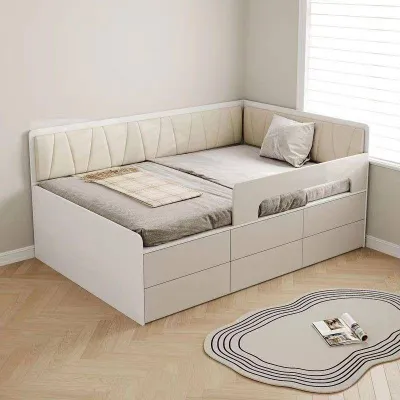
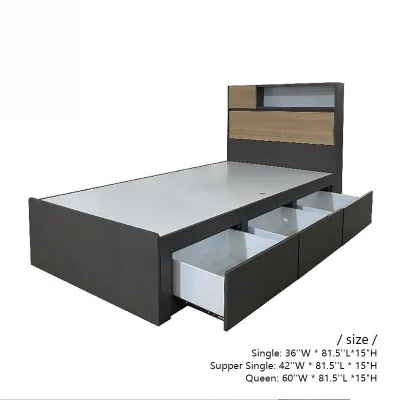
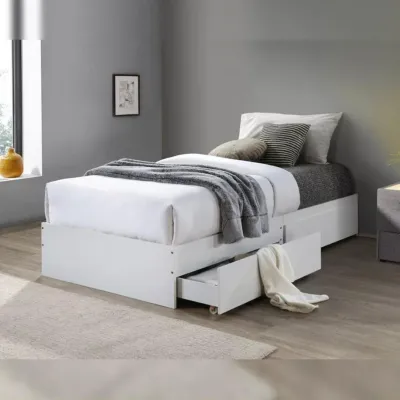

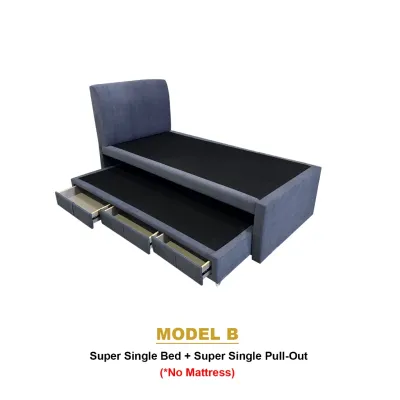


![[PRE-ORDER] Getha Leaf Storage Bedframe](https://img.lazcdn.com/g/p/5c1e2c40069e3f287bf5dcf8cdcb1340.jpg_400x400q80.jpg_.webp)
Prices are valid at publication and may change. Please refer to the product page for the latest price.
Inspect the physical design of the frame for potential impact hazards. Children’s furniture should feature rounded corners and eased edges rather than sharp, 90-degree angles. Run your hands along the corners of the headboard, footboard, and drawer fronts to ensure there are no rough spots, splinters, or sharp laminate edges that could cause cuts or bruises during active play.
Structural stability is another critical factor, especially for active children who may climb or jump on their furniture. Look for frames that include anti-tip hardware or are designed with a low center of gravity to prevent tipping. Check the manufacturer’s specifications for the maximum weight capacity of the bed, ensuring it can comfortably support both the mattress and your growing child. Vague marketing claims of “sturdiness” are not enough; look for explicit weight ratings in the product manual.
Finally, prioritize bed frames that carry recognized safety certification marks. Standards such as EN 747 (the European standard for bunk beds and high beds) or ASTM F1427 (the American standard for consumer safety specifications for bunk beds) indicate that the design has undergone rigorous testing for structural integrity and entrapment hazards. Ask the retailer or manufacturer to provide proof of these certifications rather than relying solely on promotional descriptions.
Choosing the Right Storage Mechanism for Children
Storage bed frames generally utilize either pull-out drawers or hydraulic gas-lift systems to access the space beneath the mattress. For a child’s room, drawer systems are almost always the safer and more practical choice. Drawers operate horizontally along the floor, which minimizes the risk of heavy components falling on a child. They allow children to access their toys or clothes independently, fostering organizational skills without compromising safety.

When evaluating drawer systems, check the product specifications for integrated drawer stoppers. These stoppers prevent the drawer from being pulled completely out of its tracks, which could otherwise fall onto a child’s feet. Additionally, look for drawers equipped with soft-close runners or anti-pinch dampers. These mechanisms slow down the drawer as it closes, preventing fingers from getting trapped or pinched.
In contrast, hydraulic lift mechanisms raise the entire mattress platform to reveal a large storage compartment underneath. While these systems maximize storage capacity, they present significant safety risks for young children. The force required to compress the gas struts and close the bed can be too high for a child to manage safely, leading to sudden drops or entrapment hazards. If you choose a hydraulic bed, it should only be operated by an adult, and the storage compartment should be reserved for items that are rarely accessed, such as seasonal bedding or travel gear.
Assess your child’s physical development and coordination before deciding on a storage type. If your child is young, simple open cubbies with lightweight fabric bins placed inside the bed frame can be a safer, more accessible alternative to heavy wooden drawers. As your child grows, you can transition to structured drawer systems with recessed handles that do not catch on clothing during play.
Space Planning and Dimensional Fit
In Singapore’s compact residential layouts, precise spatial planning is essential to ensure the bed frame fits comfortably without blocking pathways or creating hazards. Begin by measuring the exact floor area where the bed will be placed, keeping in mind that a standard single bed frame is typically wider and longer than the mattress itself. You must account for these outer dimensions, which can vary significantly depending on the thickness of the headboard and footboard.
Next, calculate the clearance required to fully extend the storage drawers. If the bed frame features drawers that pull out from the side, you will need at least 50 to 60 cm of open floor space adjacent to the bed to open them completely. If the room layout is tight, consider a bed frame with drawers that pull out from the footboard instead, or opt for sliding doors that do not require extra clearance to open.
Mattress compatibility is another critical dimension to verify. A mattress that is too thick will reduce the effective height of the guardrails, rendering them useless. Check the bed frame manufacturer’s instructions for the maximum recommended mattress height, which is typically between 15 and 20 cm for kids’ beds. Using a mattress within this specified range ensures that the safety barriers remain fully functional.
Do not forget to plan for the delivery and assembly process. Singapore’s high-rise apartments often have narrow corridors, tight stairwells, and specific lift dimensions. Measure your doorways, entryway clearances, and lift door heights to confirm that the flat-packed or pre-assembled components of the bed frame can be safely transported to your unit. If the access routes are exceptionally tight, look for modular designs that can be assembled entirely within the bedroom.
Building Your Conditional Shortlist
When compiling your shortlist of potential bed frames, start by filtering candidates by their primary materials and finishes. Solid wood frames, such as those made from sustainably sourced rubberwood or pine, offer excellent durability and natural stability. If you prefer engineered wood, such as MDF or plywood, verify that the product meets low-formaldehyde emission standards, such as E1 or E0 ratings. This is particularly important in Singapore’s warm, humid climate, where poor-quality adhesives can off-gas more rapidly in enclosed, air-conditioned bedrooms.
Evaluate the durability of the surface finish based on the manufacturer’s care instructions. Children’s furniture must withstand frequent cleaning, spills, and occasional drawing. Look for water-based, non-toxic lacquers or high-pressure laminates that can be easily wiped clean with a damp cloth. Avoid delicate finishes that require specialized chemical cleaners, as these can introduce unwanted residues into your child’s sleeping environment.
Examine the quality of the assembly hardware. High-quality bed frames utilize metal-to-metal connections, such as steel barrel nuts and bolts, rather than simple wood screws driven directly into the timber. Metal-to-metal joints can be tightened periodically without stripping the wood, ensuring the frame remains rigid and squeak-free over years of use. If you are not confident in your DIY skills, prioritize retailers that offer professional installation services to guarantee the frame is assembled exactly as the manufacturer intended.
Establish a realistic budget in S$ and compare warranty terms across your shortlisted options. A reliable single storage bed frame in Singapore typically ranges from S$300 for basic engineered wood models to over S$1,200 for solid wood designs with integrated storage systems. When comparing warranties, look for coverage that specifically includes structural defects, joint stability, and moving parts like drawer runners, rather than just cosmetic damage.
Installation and Ongoing Maintenance
Once you have selected and received your bed frame, proper installation is paramount to maintaining its safety features. If you are assembling the bed yourself, follow the manufacturer’s instructions meticulously, ensuring every dowel, screw, and bracket is installed in its correct position. Never skip steps or substitute hardware, as even a single missing fastener can compromise the structural integrity of the entire frame.
If the bed frame is tall, top-heavy, or features a cabin design, anchor it securely to the wall. In Singapore, most residential walls are made of concrete or brick, which require masonry drill bits and appropriate wall plugs to secure the anti-tip brackets. Ensure the brackets are mounted flush against the wall and checked for any movement before allowing your child to use the bed.
Establish a routine maintenance schedule to inspect the bed frame at least once every six months. Active children subject their furniture to significant dynamic loads through jumping, climbing, and playing. Use this periodic check to tighten any loose bolts, inspect the drawer tracks for alignment, and ensure the mattress support slats remain securely seated in their holders.
During your inspections, look out for warning signs of material fatigue or mechanism failure. These include persistent squeaking or creaking sounds when weight is applied, visible cracks in the wooden joints, sagging slats, or drawers that stick and require excessive force to open. If you detect any of these issues, stop using the bed immediately and consult the manufacturer or a professional repair service to address the problem before a failure occurs.
Frequently Asked Questions (FAQ)
Do hydraulic storage beds pose a risk to young children? (FAQ)
Yes, hydraulic gas-lift beds can present safety hazards for young children due to the heavy lifting force required and the risk of sudden closure. The gas struts are calibrated to support the weight of a heavy mattress, meaning a child may not have the physical strength or coordination to control the platform safely. This can lead to severe pinch injuries or entrapment if the platform drops unexpectedly. For a child’s bedroom, it is highly recommended to use drawer-based storage instead, or to keep hydraulic storage compartments locked and operated strictly by adults.
How often should I inspect the bed frame's structural joints? (FAQ)
You should inspect the structural joints, drawer runners, and slat supports of your child’s bed frame at least once every six months. Because children frequently jump or climb on their beds, the fasteners can gradually loosen over time due to vibration and movement. Regular checks allow you to tighten loose bolts and identify any signs of wear, such as cracked wood or bent metal brackets, before they lead to a structural failure. Always refer to the manufacturer’s maintenance manual for specific torque recommendations and care instructions.
Community discussion
Share your experience or ask a question. Comments are reviewed before publication.