
Selecting headboards for beds in Singapore’s Housing & Development Board (HDB) flats requires balancing personal comfort with strict spatial constraints. Because HDB master and common bedrooms feature compact layouts, the ideal headboard must provide aesthetic appeal and back support without eating into precious walkway clearances or blocking essential fixtures. Opting for slim profiles, wall-mounted designs, or integrated storage headboards helps maximize floor space while maintaining a balanced, proportional look.
Understanding HDB Bedroom Dimensions and Clearances
Before browsing designs, measuring the exact physical boundaries of your bedroom is essential. Start by mapping out the usable wall space where the bed will rest. Take note of any architectural features that cannot be moved, such as built-in wardrobes, window frames, and the swing path of the bedroom door. A headboard that is too wide can easily block a wardrobe door from opening fully or overlap awkwardly with a window frame, disrupting both the room’s function and its visual symmetry.
Walkway clearances dictate how comfortable the room will feel on a daily basis. Ideally, maintain a clear path of at least 60 to 75 centimeters around the sides and foot of the bed. If your headboard is exceptionally thick, it pushes the entire bed frame forward, directly reducing the clearance at the foot of the bed. This can make navigating the space tight, especially if you have sliding or swing-out wardrobe doors nearby that require dedicated clearance to operate.
Products mentioned in this guide

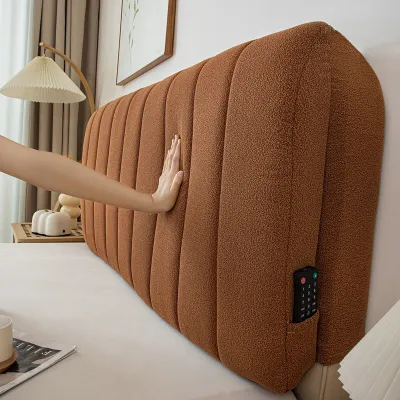
![[PRE-ORDER] Getha V6 Headboard](https://img.lazcdn.com/g/p/73a7b43ed7069e4572e7c5324027179e.jpg_400x400q80.jpg_.webp)
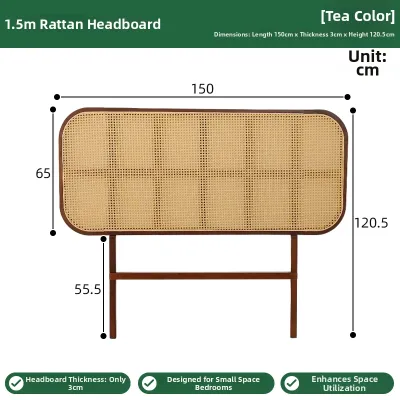
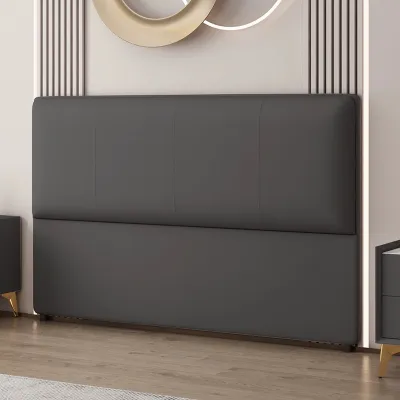
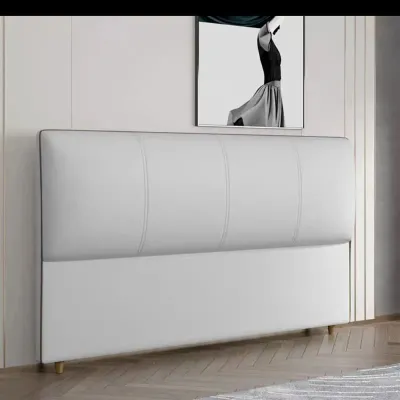
Prices are valid at publication and may change. Please refer to the product page for the latest price.
Vertical space also plays a significant role in how a headboard fits the room. High-profile headboards can make a standard HDB ceiling feel lower than it actually is, creating a cramped atmosphere. Additionally, consider the placement of existing wall fixtures, such as air-conditioning units, wall-mounted fans, or decorative sconces. A tall headboard must not interfere with the airflow of your air conditioner or block access to its filters during routine servicing.
Proportional Sizing for Master and Common Bedrooms
Achieving the right visual balance depends heavily on matching the headboard’s dimensions to the specific bedroom type. In a typical HDB master bedroom, which usually accommodates a Queen or King-sized bed, you have slightly more flexibility. You can choose a headboard that aligns perfectly with the outer edges of the bed frame for a clean, streamlined look. Alternatively, an extended headboard that stretches slightly beyond the bed frame can create a luxurious, built-in hotel aesthetic, provided it does not overlap with bedside tables or light switches.

For smaller common bedrooms, which often house Single or Super Single beds, keeping the headboard profile minimal is crucial. A bulky, oversized headboard in a compact room draws too much visual attention and makes the entire space feel smaller. In these rooms, a low-profile headboard that rises just high enough to support your pillows is often the most practical choice. This keeps the upper half of the wall open, allowing more natural light to bounce around the room.
Height proportions should also guide your selection. A standard rule of thumb is to ensure the headboard height does not exceed the length of the mattress itself, as this can make the bed look top-heavy. For rooms with lower ceilings or false ceilings that reduce vertical clearance, opting for a horizontal, wide-stretching headboard can visually widen the room, whereas a tall, vertical design works better in rooms with higher, unaltered ceilings.
Space-Saving and Low-Profile Headboard Styles
When floor space is at a premium, the style and construction of the headboard become major decision factors. Wall-mounted and floating headboards are excellent options for maximizing visible floor area. Because they attach directly to the wall rather than the bed frame, they often have an incredibly slim depth. Furthermore, keeping the floor beneath the bed clear makes cleaning much easier, allowing manual mops or robotic vacuums to navigate the under-bed area without obstruction.
Slim-profile and flat-panel headboards are specifically designed to minimize depth intrusion. Traditional tufted or wingback headboards can easily add 15 to 20 centimeters of depth to your bed setup, which directly robs you of valuable walkway space. In contrast, a flat-panel upholstered headboard or a simple wooden plank design might only add 3 to 5 centimeters of depth, preserving precious floor space while still providing a comfortable backrest for sitting up in bed.
Headboards with built-in shelving or storage compartments offer a clever way to save space, but they must be evaluated carefully. While they can eliminate the need for separate bedside tables by providing a place to rest your phone, glasses, or books, they also add significant depth to the head of the bed. If you choose a storage headboard, ensure the added depth does not compromise the clearance at the foot of the bed or block access to nearby wardrobe doors.
Certain design features should be approached with caution in tight HDB layouts. Deep wingback designs, heavily tufted oversized frames, and scrolled-top headboards add significant physical and visual bulk. These styles tend to dominate a small room, making it feel cluttered and restricted. If you prefer an upholstered look, opt for low-profile channeling or simple, flat fabric panels that offer softness without the excessive volume.
Measuring and Installation Checks Before You Buy
A successful headboard purchase relies on thorough preparation before the delivery team arrives. First, verify the delivery path from the building’s entrance to your bedroom. Measure the height and width of your HDB lift door, the interior dimensions of the lift cabin, and any tight corners in the common corridors or stairwells. Large, single-piece headboards—especially wide or tall upholstered models—may not fit into standard passenger lifts, leading to difficult manual carries or delivery rejections.
Next, identify the material of the wall where the headboard will be positioned. HDB walls are typically made of solid concrete or precast panels, which require specific masonry drill bits, wall plugs, and heavy-duty screws to mount a headboard securely. If you are mounting onto a drywall partition, you must locate the internal studs to anchor the brackets safely, as standard drywall cannot support the weight of a heavy headboard on its own.
Finally, check the placement of all electrical outlets, light switches, and air-conditioning trunking. A headboard should never cover active power sockets or light switches, as this creates a safety hazard and makes daily use highly inconvenient. If your preferred headboard design overlaps with these fixtures, look for models with built-in cutouts, or consider a lower-profile design that sits safely below the level of your wall switches.
Frequently Asked Questions (FAQ)
Can I use a freestanding headboard in a small bedroom?
Yes, you can use a freestanding headboard, but you must account for the floor space its support legs or base will occupy. Freestanding models often rely on being wedged tightly between the mattress and the wall, which can cause slight shifting or squeaking over time if the bed frame moves. To ensure stability in a high-traffic or narrow bedroom, look for freestanding designs that can be bolted directly to your existing bed frame to prevent wobbling.
Do I need a headboard if my bed is placed against a window?
Placing a traditional headboard directly against a window is generally not recommended, as it blocks natural light, restricts window operation, and interferes with curtains or blinds. If your room layout forces you to place the bed against a window, consider alternative comfort solutions. Low-profile wall cushions that hang from a simple rod below the windowsill, or a very low, open-slat headboard can provide back support without completely blocking your view or light source.
Community discussion
Share your experience or ask a question. Comments are reviewed before publication.