
Transforming a rigid wooden three-seater sofa into a comfortable guest bed requires a careful selection of cushions that can perform two distinct physical tasks. While daily sitting demands concentrated, upright support to prevent your body from bottoming out against the hard wooden slats, sleeping requires distributed pressure relief to protect the shoulders, hips, and spine. Finding a cushion setup that bridges this gap without overwhelming the wooden frame’s aesthetic or structural limits is the key to a successful dual-purpose living room setup.
By evaluating core factors such as foam density, folding mechanics, and frame dimensions, you can select a cushion system that keeps your living space looking polished while offering overnight guests a restful sleep. This guide covers the essential requirements for dual-purpose cushions, compares the most practical construction types, and details how to measure your wooden frame to ensure a secure, comfortable fit.
Core Requirements for Dual-Purpose Sofa Cushions
To serve effectively as both a daily seat and an occasional bed, a cushion must possess specific physical and functional traits. The primary challenge is balancing firmness and pressure relief. Standard sofa cushions are often too firm or contoured for sleeping, leading to morning aches, while standard sleeping mattresses are typically too soft or thick to support upright sitting without causing you to slide forward. A successful dual-purpose cushion must offer a medium-firm feel that supports your weight when sitting but still contours slightly to relieve pressure when you lie down.
Products mentioned in this guide
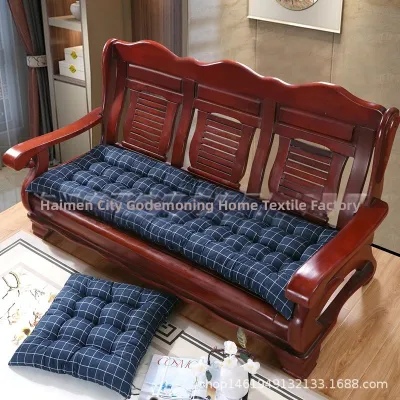
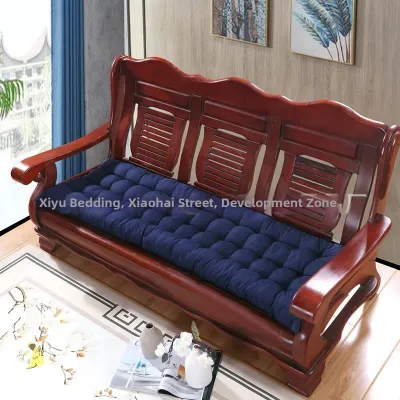
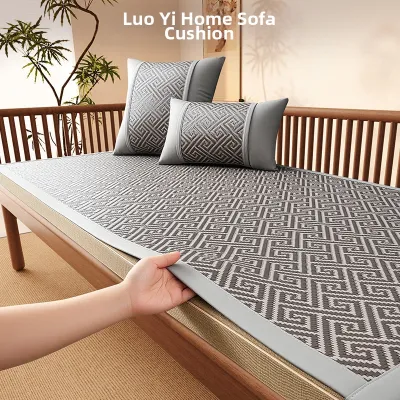
Prices are valid at publication and may change. Please refer to the product page for the latest price.
Thickness and height limits are heavily dictated by the wooden frame’s design. Most wooden three-seater sofas feature a fixed backrest height, seat depth, and armrest clearance. If a cushion is too thick, it raises the seating height uncomfortably, making it difficult for your feet to touch the floor, and reduces the effective height of the backrest. Conversely, a cushion that is too thin will fail to mask the rigid wooden slats underneath. Generally, a thickness between 10 to 15 centimeters provides the necessary buffer without compromising the sofa’s proportions.
Weight, flexibility, and folding mechanics are equally critical for easy conversion. If transitioning the sofa into a guest bed requires heavy lifting or complex maneuvers, you are less likely to utilize the feature. The cushions must be lightweight enough to rearrange easily, yet structurally stable enough to remain in place. If the wooden frame features a pull-out or fold-down mechanism, the cushions must possess the flexibility to bend or slide into position without bunching up or creating uneven sleeping surfaces.
Cushion Constructions That Balance Seating and Sleeping
No single cushion material or design is universally flawless for every home. The right choice depends on how you prioritize daily living room aesthetics versus occasional sleeping comfort. Layered, foldable, and modular approaches solve the dual-use problem differently, each offering distinct trade-offs in terms of support, ease of conversion, and visual appeal.

High-Density Foam with a Comfort Topper
A layered foam cushion is a highly reliable option for balancing structural support with surface comfort. This construction typically features a thick base layer of high-density polyurethane foam, which provides the necessary firmness to prevent bottoming out against the hard wooden slats of the sofa. On top of this base, a thinner comfort layer—such as memory foam or latex—is laminated to provide pressure relief for the hips and shoulders during sleep.
When selecting a comfort topper material, environmental factors play a significant role. In warm and humid climates, such as Singapore, traditional memory foam can retain body heat, potentially causing guests to sleep hot. Opting for open-cell memory foam, gel-infused foam, or natural latex can improve breathability and heat dissipation. Latex also offers a quicker response to movement, making it easier to shift positions compared to the deep sink of memory foam.
The primary limitation of a layered foam cushion is its rigidity. Because these cushions are designed to maintain a flat, structured shape, they do not fold easily. This means they are best suited for wooden frames where the seat and backrest cushions remain separate during daily use, or where the entire cushion unit can be flipped or laid flat without requiring tight bends. They can also be relatively heavy, requiring more physical effort to move and store.
Futon-Style Foldable Mattresses
Futon-style foldable mattresses are designed specifically for multi-use wooden frames. These mattresses typically feature built-in hinge points, such as bi-fold or tri-fold designs, that allow them to transition smoothly from an L-shaped sofa configuration to a flat sleeping surface. This makes them highly compatible with classic wooden A-frame or pull-out sofa beds.
Traditional futon mattresses rely on cotton or wool batting, which provides a natural, dense feel. However, natural fiber fills are prone to long-term compression and lumping, requiring regular flipping and shaking to maintain an even surface. Modern alternatives often incorporate synthetic fiber blends or flexible foam cores, which retain their shape much longer and offer more consistent support across the entire sleeping area.
While foldable mattresses excel in conversion convenience, they do present aesthetic trade-offs. Because they are designed to bend, they often lack the crisp, tailored look of individual, structured sofa cushions. Over time, the fabric near the fold lines can crease or sag, which may detract from the formal appearance of a main living room. They are highly practical for casual spaces, study rooms, or guest rooms where utility is prioritized.
Modular Split Cushion Sets
Modular split cushion sets consist of separate, individual cushion units—typically three seat cushions and three back cushions—that can be rearranged or pushed together to form a continuous sleeping surface. This approach allows you to maintain a highly polished, traditional sofa appearance during the day while retaining the flexibility to create a temporary bed at night.
To make a modular set work as a bed, you must address the physical gaps between the cushions. If left unsecured, the cushions can drift apart during the night, creating uncomfortable spaces that disrupt sleep. Using a tight-fitting fitted sheet, a mattress protector, or specialized connecting straps can help lock the individual modules together into a single, cohesive sleeping surface.
Additionally, modular cushions must feature anti-slip bases or interlocking mechanisms to prevent them from sliding on the smooth wooden frame. While this setup requires the most physical effort to convert and prepare for guests, it offers the greatest aesthetic flexibility, allowing you to style your living room with individual, high-quality cushions that do not look like a temporary bed.
How to Match Cushion Dimensions to Your Wooden Frame
To ensure your chosen cushions fit your wooden sofa frame without overhang, gaps, or restricted movement, precise measurements are essential. Start by measuring the internal drop-in space of the wooden frame rather than the outer dimensions. Many wooden sofas feature a raised lip, wooden spindles, or side panels that hold the cushions in place. Measure the clear width between the armrests and the clear depth from the front edge of the seat to the backrest spindles.
Reconciling standard sofa dimensions with standard mattress sizes is a common challenge. A standard three-seater wooden sofa typically has an internal seating width of 180 to 200 centimeters, which closely aligns with the length of a standard single or queen mattress (usually 190 centimeters in Singapore). However, the seating depth of a sofa is much narrower—typically 60 to 80 centimeters—compared to the width of a standard single bed (91 centimeters). To bridge this gap, you will need a cushion system that either unfolds forward to extend the depth or a frame that pulls out to accommodate a wider mattress.
| Wooden Frame Feature | Measurement Focus | Impact on Cushion Selection |
|---|---|---|
| Internal Seating Width | Distance between inside faces of armrests | Determines the maximum length of the sleeping surface. |
| Seat Depth | Front edge of seat to backrest spindles | Dictates the depth of the seat cushions and folding clearance. |
| Frame Lip / Edge | Height of the wooden retaining lip | Determines the minimum cushion thickness needed to clear the wood. |
| Armrest Height | Vertical distance from seat slats to armrest | Limits the thickness of the cushion if it needs to unfold over the sides. |
Always account for angled backrests and fixed wooden armrests. If your wooden frame has an angled backrest, a square-edged cushion may not sit flush against it, leaving a triangular gap at the rear of the seat. If the armrests are fixed and high, any unfolding cushion must fit strictly within those boundaries; otherwise, the cushion will bunch up at the ends, creating an uneven and uncomfortable sleeping surface.
Essential Features to Verify Before Buying
Before making a final purchase, there are several practical features you should verify to ensure the longevity of your cushions and protect your wooden furniture. First, evaluate the upholstery fabric. For a high-traffic living room, the fabric must be durable, breathable, and easy to clean. Synthetic blends, such as polyester-linen or heavy-duty canvas, offer excellent resistance to wear and moisture buildup. If you live in a humid environment, look for fabrics that have been treated to resist mold and mildew.
Because polished wood is naturally slippery, securing mechanisms are vital. Without proper anchoring, cushions will slide forward during daily sitting or shift apart when a guest tosses and turns at night. Look for cushions equipped with built-in fabric ties that can be secured to the wooden spindles, or non-slip rubberized underlays on the bottom of the cushions. If your frame allows, adhesive-free silicone grip mats placed directly on the wooden slats can provide excellent traction without damaging the wood’s finish.
Finally, check the cleaning and maintenance requirements. Removable, machine-washable covers are highly recommended for any dual-purpose cushion, as they allow you to easily wash away sweat, dust, and spills. If the covers are not removable, you will be limited to spot-cleaning, which can be difficult and may leave water rings on certain fabrics. Always verify the care instructions to ensure the fabric will not shrink or lose its shape after washing.
Quick Comparison of Dual-Purpose Cushion Types
To help narrow down your choices, the table below summarizes the core differences between the three primary cushion constructions. Each option offers a distinct balance of support, comfort, and convenience.
| Cushion Type | Seating Support | Sleeping Comfort | Conversion Effort | Best Use Case |
|---|---|---|---|---|
| High-Density Foam with Topper | Excellent (firm, structured base) | High (good pressure relief) | Moderate (requires moving heavy cushions) | Daily living rooms prioritizing long-term durability |
| Futon-Style Foldable Mattress | Moderate (softer, less structured) | Moderate to High (even surface) | Low (simple folding action) | Casual spaces, study rooms, or frequent overnight guests |
| Modular Split Cushion Set | High (individual tailored support) | Moderate (requires gap management) | High (requires aligning and securing modules) | Formal living rooms where daily sofa aesthetics are paramount |
Frequently Asked Questions (FAQ)
Can I use a standard spring mattress on a wooden 3-seater sofa?
Using a standard innerspring mattress on a rigid, non-flexing wooden sofa frame is generally impractical. Standard spring mattresses are designed to remain flat and cannot bend or fold, which prevents them from being used on sofas that require folding or unfolding for conversion. Additionally, standard spring mattresses are typically quite thick—often 20 centimeters or more—which would raise the sofa’s seating height uncomfortably high and block the backrest. For wooden slat bases, low-profile, flexible foam or latex mattresses are much more suitable alternatives.
How do I stop the cushions from sliding on a smooth wooden base?
To prevent cushions from sliding on polished wood without damaging the furniture, you can use cut-to-size non-slip rug pads or silicone grip mats placed directly on the wooden slats. These materials provide excellent friction without the use of adhesives. Alternatively, look for cushions with built-in fabric ties or Velcro straps that can be wrapped around the wooden spindles of the frame. Avoid using heavy-duty double-sided adhesive tapes, as the glue can strip, discolor, or permanently damage the wood’s varnish or lacquer finish over time.
Community discussion
Share your experience or ask a question. Comments are reviewed before publication.