
Selecting a tofu sofa bed for your HDB living room requires balancing modern aesthetic appeal with the practical realities of compact floor plans. The plush, blocky design of a tofu sofa—characterized by its low-slung profile and segmented, pillowy sections—offers a cozy, minimalist look. However, integrating this style into a standard HDB flat demands careful spatial planning, mechanism evaluation, and material checks to ensure it functions seamlessly without disrupting your daily routine.
To make this versatile piece work, you must look beyond the visual trend and assess how the sofa performs in both its seated and fully deployed bed configurations. Because HDB living rooms often serve as multi-functional zones, a sofa bed must transition smoothly without blocking essential walkways or overwhelming the room’s visual scale. By focusing on precise physical measurements, local climate compatibility, and layout-specific configurations, you can find a model that enhances your home’s utility.
Understanding the Tofu Sofa Bed Profile in Compact Spaces
The tofu sofa bed is defined by its distinct structural traits: a low-slung height, deep seating depths, and a modular, block-like silhouette that resembles cubes of tofu placed side-by-side. These pieces typically feature heavy, textured fabric upholstery such as bouclé, chenille, or thick linen blends, which wrap around dense foam layers. Unlike traditional sofas with high legs and slim frames, tofu sofas sit very close to the floor, creating a grounded, cozy aesthetic that can make low HDB ceilings feel visually higher.
Products mentioned in this guide
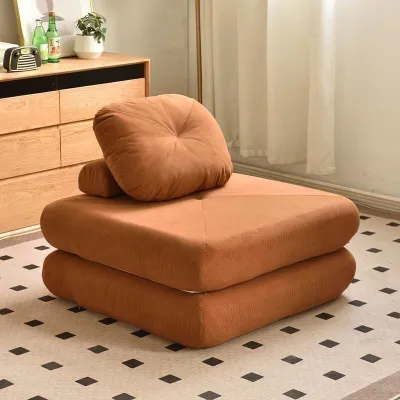
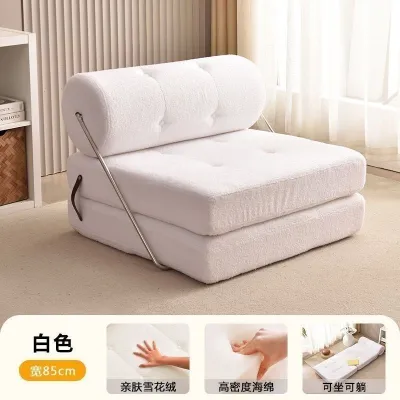
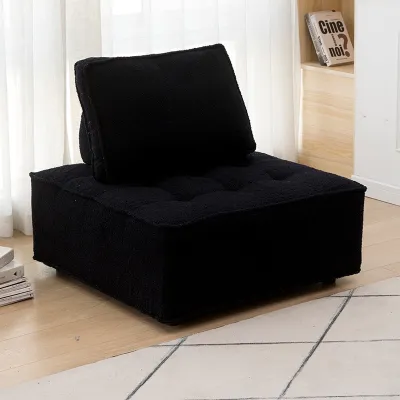
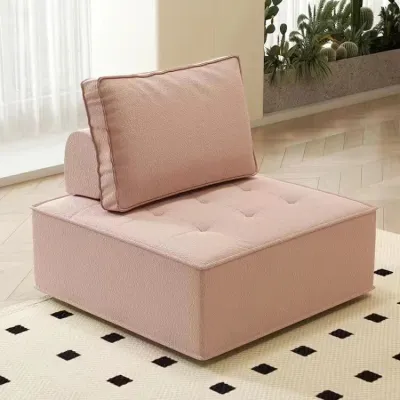
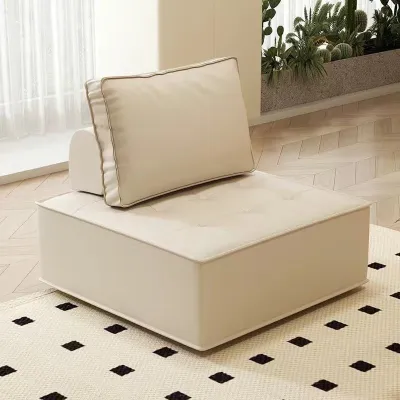
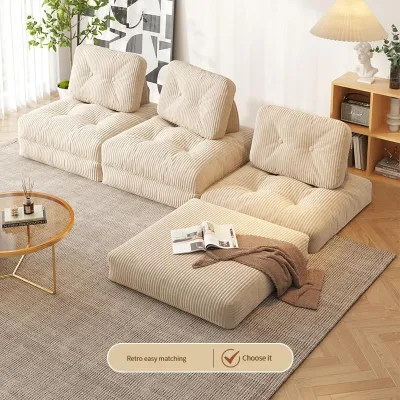
Prices are valid at publication and may change. Please refer to the product page for the latest price.
However, this low-profile design introduces a unique spatial paradox in compact living rooms. While the lack of high backs and legs reduces vertical clutter, the deep, blocky modules often occupy a larger horizontal footprint than standard sofas. A typical tofu sofa module can have a depth of 95 cm to 110 cm, which is significantly deeper than a standard 80 cm compact sofa. This means that even before you deploy the bed mechanism, the sofa will extend further into your living room, potentially narrowing the clearance between the seating and your TV console.
Furthermore, the modular nature of these sofas presents both opportunities and challenges. On one hand, individual blocks can be rearranged, separated, or pushed together to adapt to different social settings or guest hosting needs. On the other hand, the physical bulkiness of these individual foam or frame blocks means they cannot be easily folded away or tucked into a corner when not in use. Each block remains a substantial piece of furniture that requires dedicated floor space, making it essential to assess whether your room can accommodate their permanent physical presence.
Measuring Your HDB Living Room for a Sofa Bed
Before purchasing a tofu sofa bed, you must conduct a thorough spatial audit of your living room, measuring both the sofa’s static footprint and its dynamic footprint when fully extended. Start by measuring the length of the wall where the sofa will rest, keeping in mind that modular pieces often require a few centimeters of breathing room on either side to prevent a cramped appearance. Next, identify the exact mechanism of the sofa bed—whether it is a pull-out drawer, a click-clack fold-down backrest, or a modular system where an ottoman is pushed against the main frame.

For fold-down backrests, you must account for the clearance behind the sofa. If the backrest needs to tilt backward to flatten into a bed, the sofa cannot sit flush against the wall unless you physically slide the entire heavy frame forward every time you use it. For pull-out or modular push-together designs, measure the distance from the back wall to the furthest point of the extended bed. Ensure that when the bed is fully deployed, there is still a minimum of 60 cm—ideally 90 cm—of clear walkway space remaining. This ensures that family members can still access the kitchen, balcony, or bedrooms safely during the night without having to climb over the bed.
Additionally, look out for fixed architectural obstacles that can disrupt your placement plans. Check the height of your window sills; a very high-backed sofa bed might block natural light, while a low-profile tofu sofa usually sits safely below the sill but may block access to window handles if pushed too close. Take note of wall-mounted power outlets, internet ports, and light switches. If the deep block of the sofa covers these outlets, you may need to install slim-profile adapters or extension cords before positioning the furniture. Finally, factor in the thickness of your skirting boards, which can prevent the sofa frame from sitting completely flush against the wall, creating a small gap where dust and small items can accumulate.
Evaluating Upholstery and Mechanisms for Local Climates
Singapore’s tropical climate, characterized by high humidity and warm temperatures, plays a critical role in how fabric furniture performs over time. Tofu sofas are heavily padded and wrapped in fabric, making them susceptible to trapping moisture, dust mites, and ambient heat. When selecting upholstery, prioritize highly breathable fabrics. While bouclé and heavy chenille offer a luxurious texture, they can feel warm and trapping if your living room is not constantly air-conditioned. Look for linen blends, cotton weaves, or high-performance synthetic fabrics that are specifically engineered for breathability and moisture-wicking.
If you opt for treated fabrics designed to resist stains and spills, verify the manufacturer’s care instructions to ensure the treatment does not compromise the fabric’s breathability. Some heavy liquid-resistant coatings can create a non-porous barrier that traps body heat, making the sofa uncomfortable for sleeping during warm nights. Instead, look for fabrics where individual fibers are treated, allowing air to circulate freely through the weave while still offering reasonable spill protection.
The conversion mechanism itself must be evaluated for durability and ease of use in a humid environment. Metal folding frames, hinges, and click-clack joints are prone to rust or stiffness if exposed to humid air over several years. Inspect the mechanism in the showroom: check if the moving parts are coated with rust-resistant finishes and ensure the alignment remains true when transitioning from sofa to bed. The transition should feel smooth and require minimal physical strain; a mechanism that sticks or requires excessive force will quickly become a chore, discouraging you from using the bed function. Regular maintenance, such as vacuuming the fabric with a HEPA-filter vacuum and using a dehumidifier in the room, will help keep the internal foam dry and prevent musty odours.
Matching Tofu Sofa Bed Features to Your HDB Layout
Different HDB layouts demand different structural configurations of the tofu sofa bed to maintain a balanced and functional living space. In narrow, rectangular living rooms—common in older resale flats or smaller 3-room BTO units—a straight-block, two-seater or three-seater configuration is usually the most practical choice. Placing a long, deep sofa along the main wall keeps the central walkway clear. For these layouts, a pull-out front mechanism or a modular ottoman that doubles as a coffee table during the day is ideal, as it keeps the sofa’s daytime footprint as narrow as possible.
For modern, open-concept BTO layouts where the living room merges with the dining area or kitchen, you have more flexibility to play with modular shapes. An L-shaped tofu sofa bed can serve as an excellent zoning tool, physically defining the living room boundary without the need for solid walls. In these larger spaces, you can consider a floating island placement, where the sofa sits away from the walls. This setup allows you to use a modular push-together system, where you rearrange individual blocks to form a large sleeping platform when guests stay over, and scatter them as individual lounge chairs during social gatherings.
If you are placing the tofu sofa bed in a multi-purpose guest room or study, your priorities should shift toward ease of daily conversion and integrated storage. Look for models that feature built-in storage compartments beneath the seat cushions or within the hollow base of the modules. This space is invaluable for storing bedsheets, pillows, and blankets, keeping the room clutter-free when the bed is folded away. In a study, the mechanism must be quick and effortless, allowing you to transition the room from a professional workspace to a cozy guest bedroom in under two minutes.
Every layout choice involves spatial compromises. A larger modular setup offers unparalleled seating flexibility but will permanently reduce your open floor area, making the room feel more enclosed. Conversely, a compact straight-block sofa bed preserves floor space but may offer a smaller, less comfortable sleeping surface for taller guests. Weigh these trade-offs against your household’s daily habits—if you host overnight guests only once or twice a year, prioritize your daily living comfort and walkway clearance over a massive sleeping platform.
Delivery, Assembly, and Placement Checks for HDB Flats
The journey of your tofu sofa bed from the delivery truck to your living room requires careful logistical planning, especially given the tight corridors and lift dimensions of HDB estates. Before finalizing your purchase, obtain the exact packaging dimensions of the sofa modules from the retailer. Standard HDB passenger lifts typically have door opening widths of 80 cm to 90 cm and internal cabin depths that may not accommodate long, single-piece sofa frames. If you live in an older block with smaller lifts, modular tofu sofas offer a distinct advantage, as they are delivered in separate, manageable boxes that easily fit into standard lifts and through narrow front doors.
If a module is too large for the lift, you must coordinate with the delivery team to assess if it can be carried up the staircase. This often incurs additional manual lifting fees per floor and requires checking the clearance height and turning radius of your estate’s stairwell landings. To avoid these complications, opt for modular designs where the backrests, armrests, and base frames can be unbolted and assembled directly inside your living room.
Once the sofa is inside, take steps to protect your flooring during both daily use and bed deployment. Tofu sofas are heavy, and sliding modular blocks or pulling out metal frames can easily scratch vinyl, laminate, or polished tile floors. Attach heavy-duty felt pads to the bottom of all stationary legs or solid bases. If the sofa bed uses caster wheels for its pull-out mechanism, ensure the wheels are made of soft polyurethane or rubber rather than hard plastic, which can dent vinyl flooring over time. If you plan to place the sofa bed on an elevated storage platform—a popular space-saving feature in modern HDB designs—verify the platform’s structural weight capacity with your contractor, factoring in the combined weight of the heavy sofa, the bedding, and the sleepers.
Frequently Asked Questions (FAQ)
Can a modular tofu sofa bed fit through standard HDB lift doors?
Yes, most modular tofu sofa beds can fit through standard HDB lift doors because they are transported as individual, boxed modules rather than a single, massive frame. However, you must always verify the packaged dimensions with the retailer before delivery. Standard HDB lift doors generally have a clearance width of 80 cm to 90 cm and a height of about 200 cm. If a single module box exceeds these dimensions, or if you live in an older estate with smaller lift cabins, you may need to arrange for manual staircase carrying, which should be planned with the delivery team in advance.
How do I prevent fabric sofa beds from developing odours in Singapore?
To prevent musty odours in Singapore’s humid climate, ensure your living room is well-ventilated by opening windows daily or running a ceiling fan to promote air circulation. Using a dehumidifier in the room can significantly reduce ambient moisture levels, preventing dampness from settling deep into the sofa’s foam layers. Additionally, place a breathable, moisture-wicking mattress protector over the sofa bed when it is in use to shield the upholstery from sweat. Regularly vacuum the fabric with a brush attachment and use fabric-safe antibacterial sprays to keep the material fresh.
Is a low-profile block sofa bed stable enough for daily sleeping?
While low-profile block sofa beds are highly stable due to their wide, ground-hugging bases, they may not offer the same ergonomic support as a traditional mattress for daily, long-term sleeping. These sofas typically rely on high-density foam blocks rather than pocket springs, which can feel firmer and may lack targeted pressure relief. For occasional guest use, they provide excellent stability and comfort, but if you plan to use it as a primary daily bed, look for models that feature reinforced internal support grids or high-resiliency foam ratings, and consider adding a supportive mattress topper.

Community discussion
Share your experience or ask a question. Comments are reviewed before publication.