
Selecting a queen foldable mattress for a compact Singapore apartment requires balancing sleeping comfort with daily space efficiency. Because space is at a premium in modern HDB flats and condominiums, a foldable mattress offers a flexible sleeping solution that can be tucked away when not in use. To make the right choice, you must evaluate how the mattress fits your floor plan, how easily you can store and move it, and whether its construction provides the necessary support for a good night’s sleep.
By understanding the key factors of dimensions, materials, and maintenance, you can find a versatile bed that accommodates guests or daily living without cluttering your home. This guide outlines the essential considerations to help you navigate the selection process and find a high-quality mattress tailored to your living space.
Assessing Your Space and Storage Constraints
A standard queen-size mattress in Singapore typically measures approximately 152 cm by 190 cm. Before purchasing, map out this footprint in your designated room using masking tape to visualize the remaining floor space. Ensure you leave at least 50 to 60 cm of clearance around the sides of the bed to allow for comfortable walking paths and to prevent blocking wardrobe doors, study desks, or walkways.
Products mentioned in this guide
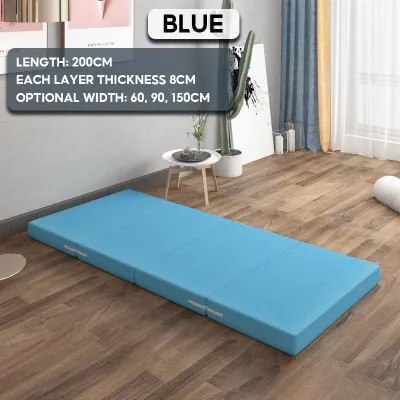
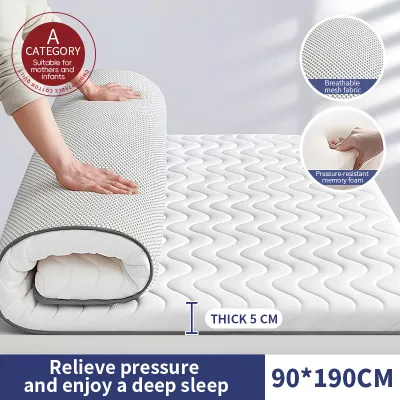
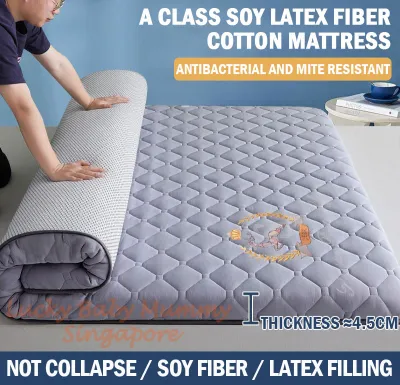
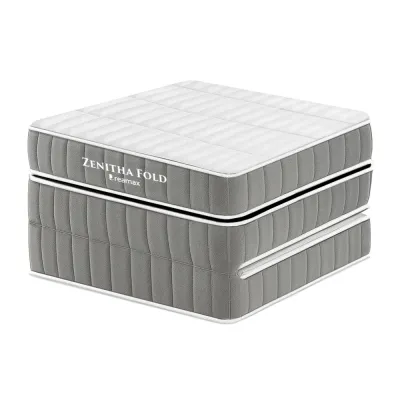
Prices are valid at publication and may change. Please refer to the product page for the latest price.
Storage is the next critical factor to analyze before making a purchase. Measure your intended storage area—whether it is a built-in wardrobe, a utility closet, the space under an existing bed frame, or a designated corner of the room. Compare these dimensions against the manufacturer’s specified folded dimensions, paying close attention to the folded thickness and width to ensure a seamless fit.
Do not overlook the physical handling of the mattress during daily transitions. Check the product specifications for the total weight and look for integrated carry handles, which make moving the mattress significantly easier for a single person. A mattress that is too heavy or awkward to carry will quickly become a hassle to pack away, defeating the purpose of a temporary sleeping solution.
Finally, consider the journey from the delivery vehicle to your room. Measure your apartment’s doorway widths, hallway clearances, and especially the elevator dimensions if you live in a high-rise building. A queen-size mattress, even when folded, can be bulky and difficult to maneuver around tight corners, so verifying these entry points beforehand prevents delivery-day complications.
Evaluating Folding Mechanisms and Mattress Construction
Foldable mattresses generally come in three primary designs: bi-fold, tri-fold, and roll-up. A tri-fold design is often the most practical for small apartments because it folds into a compact, self-supporting block that can double as a low bench or slide easily into closets. Bi-fold options have fewer seams but result in a larger folded footprint, while roll-up mattresses can be difficult to compress tightly without specialized straps or vacuum bags.

The internal core material directly determines your sleep quality and how well the mattress resists bottoming out. High-density foam is a common choice, offering a firm, supportive base that prevents you from feeling the hard floor beneath. Memory foam layers provide pressure relief but tend to retain heat, which is a key consideration in Singapore’s warm climate. Hybrid models combining different foam densities offer a balanced feel, but you should verify the manufacturer’s specifications regarding density and weight limits to ensure long-term support.
The outer cover plays a vital role in both comfort and maintenance. Look for covers made from breathable fabrics, such as bamboo-derived rayon or lightweight cotton, to help dissipate body heat. A non-slip bottom surface is also essential, as it keeps the mattress from sliding across smooth vinyl, tile, or polished wood floors during the night. Additionally, prioritize removable, zippered covers that can be machine-washed to simplify your cleaning routine.
Adapting to Multi-Purpose Room Layouts
In a multi-purpose room, such as a study that doubles as a guest room, transitioning the space should not feel like a strenuous chore. Establish a simple routine for deploying and packing away the mattress to minimize physical strain on your back. If you plan to use the mattress daily, choose a lighter model or one with a smooth folding mechanism that requires minimal lifting.
To elevate the sleeping experience and protect the mattress from floor-level dust, consider using complementary accessories. A low-profile, foldable wooden slat base or a set of traditional tatami mats can define the sleeping zone while keeping the mattress slightly elevated. This elevation is crucial because it allows air to circulate underneath, reducing the risk of heat retention and moisture buildup.
Singapore’s high humidity levels require proactive moisture management. When a mattress sits directly on the floor, sweat and ambient humidity can trap moisture underneath, leading to mold or mildew. Check the manufacturer’s guidelines for recommended airing schedules, and make it a habit to prop the mattress upright against a wall during the day to let both sides breathe.
Checking Comfort, Support, and Durability Standards
Finding the right firmness level is essential for spinal alignment, especially when sleeping on a temporary or foldable surface. Side sleepers generally benefit from a slightly softer surface that cushions the shoulders and hips, while back and stomach sleepers require a firmer mattress to prevent the lower back from sagging. Since you cannot easily test a mattress online, check the manufacturer’s firmness ratings and look for detailed specifications on foam density.
The durability of a foldable mattress hinges on its seams and joints. Inspect the folding hinges to ensure they feature reinforced stitching and durable fabric covers that can withstand repeated bending. High-density transition zones at the folds help maintain a continuous sleeping surface, preventing you from feeling the gaps between the segments when lying down.
Before making your final decision, review the manufacturer’s warranty terms and trial periods. A reliable warranty should cover premature foam sagging or seam splitting under normal use. Be sure to read the care instructions carefully, as failing to use a proper base or neglecting routine cleaning can sometimes void the warranty.
Frequently Asked Questions (FAQ)
Can I use a queen foldable mattress directly on the floor every night?
While you can use a queen foldable mattress directly on the floor, doing so every night requires careful maintenance to prevent moisture issues. Always check the manufacturer’s care label and warranty terms, as some brands explicitly require a raised base to maintain warranty coverage. To prevent mold and mildew in Singapore’s humid climate, use a breathable barrier like a tatami mat or a low-profile slatted frame, and lift the mattress daily to let air circulate underneath.
How do I clean and maintain a foldable mattress in a humid climate?
Maintaining a foldable mattress in a humid environment starts with protecting it from sweat and ambient moisture. Use a breathable, waterproof mattress protector to guard the inner foam from spills and perspiration. Follow the manufacturer’s instructions for washing the removable cover, and spot-clean the inner foam using a damp cloth and mild detergent, ensuring the foam dries completely in a well-ventilated area before folding it back up. Regularly inspect the folding seams for signs of wear or dust accumulation.

Community discussion
Share your experience or ask a question. Comments are reviewed before publication.