
Finding a durable foldable wardrobe in Singapore that can genuinely accommodate adult clothing requires looking beyond basic storage claims. Because adult garments are heavier, wider, and longer than children’s wear, standard budget wardrobes can easily buckle, sag, or fail to close properly. To secure adequate hanging space, buyers must evaluate internal depth, vertical clearance, and frame load capacities against their actual clothing collection. Rather than relying on generic brand names—which often source similar designs from various manufacturers—the key is knowing how to audit the physical specifications of units sold across local Singaporean home goods stores and online marketplaces.
Assessing Your Adult Clothing Storage Requirements
Adult clothing collections present unique storage challenges compared to children’s apparel or simple linen storage. The first step in selecting a foldable wardrobe is conducting a realistic audit of your current wardrobe composition. Hanging space is premium real estate in a temporary or foldable closet system. While folded items like t-shirts, knitwear, and jeans can be stacked on shelves, structured garments such as business shirts, suits, dresses, and long coats require dedicated hanging rods to maintain their shape and prevent deep creasing.
To establish a baseline, categorize your hanging garments by length. Short-hang items, including shirts, blouses, and folded trousers, typically require a vertical clearance of 90 to 105 centimetres. Long-hang items, such as full-length dresses, trench coats, and evening wear, demand a continuous vertical drop of 140 to 160 centimetres. If your wardrobe consists primarily of formal office wear or long dresses, a single-tier wardrobe with a high hanging rod is essential. Conversely, if your collection is dominated by casual shirts and jackets, a double-tier configuration can double your usable hanging space within the same footprint.
Products mentioned in this guide
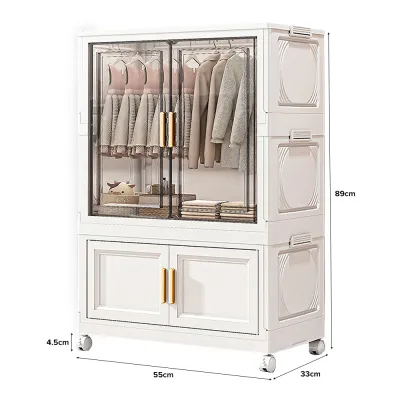
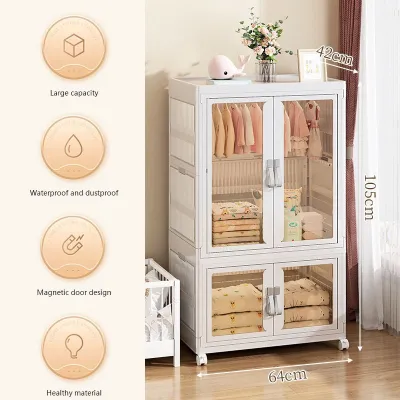
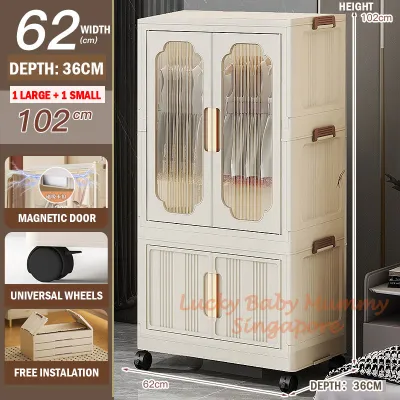
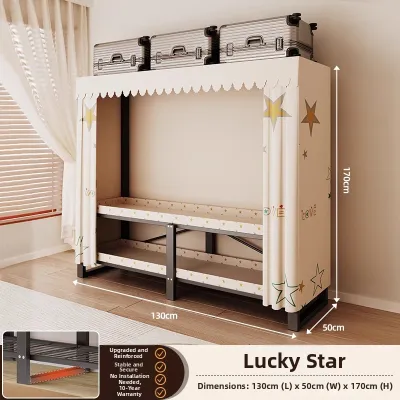
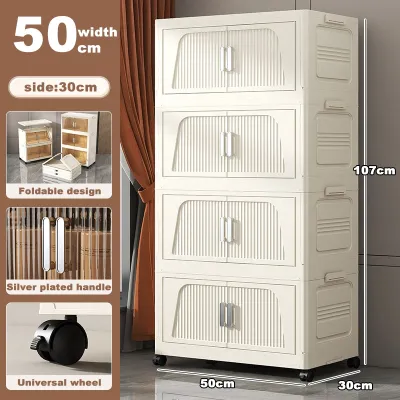
Prices are valid at publication and may change. Please refer to the product page for the latest price.
Next, estimate the total linear hanging space required. A helpful rule of thumb for a single adult’s year-round wardrobe is to allow approximately 5 to 7 centimetres of rod length per heavy coat or suit jacket, and 3 to 4 centimetres per standard shirt or blouse. For a modest collection of 30 shirts and 5 heavy jackets, you will need at least 115 to 155 centimetres of total linear rod space. Comparing this calculated need against the physical width of the wardrobe’s hanging compartments prevents overcrowding, which is a primary cause of broken rods and torn covers.
Critical Dimensions for Adequate Hanging Space
When browsing foldable wardrobes on local e-commerce platforms, the external dimensions can be highly misleading. The external frame measurements include the outer cover and the clearance from the floor, meaning the actual internal hanging space is always smaller. To ensure adult hangers fit comfortably, the internal depth of the wardrobe must be a critical focus. Standard adult clothes hangers measure between 40 and 45 centimetres in width. When you add the bulk of sleeves, jackets, and coats, the minimum internal depth required to hang clothes straight without them pressing against the front doors or back cover is 50 to 55 centimetres.

If a wardrobe’s internal depth is less than 50 centimetres, hangers must be angled diagonally to fit. This diagonal positioning drastically reduces the overall hanging capacity, causes garments to overlap tightly, and forces sleeves to rub constantly against the fabric cover. Over time, this friction can damage delicate fabrics and put outward pressure on the wardrobe’s zippers, leading to premature seam failure. Always verify the internal depth specification on the manufacturer’s technical drawings rather than relying on the overall external depth.
Vertical clearance is equally vital. For a single-tier hanging section, look for an internal height of at least 150 centimetres from the rod to the bottom shelf or floor of the unit. This prevents long garments from pooling at the bottom, where they can collect dust or interfere with lower storage compartments. Additionally, inspect the hanging rod itself. For adult clothing, the rod should have a minimum diameter of 19 millimetres and be constructed from stainless steel or reinforced carbon steel. Avoid thin aluminum or plastic-coated rods, which are prone to bowing under the weight of multiple adult garments.
Evaluating Frame Stability and Material Durability
The structural integrity of a foldable wardrobe depends entirely on its frame materials and joint design. In Singapore’s climate, where high humidity can affect material longevity, selecting the right frame composition is paramount. Common frame materials include hollow steel tubes, aluminum alloys, and solid wood dowels. Steel tubes are generally preferred for adult clothing due to their superior tensile strength. However, not all steel frames are equal; look for manufacturers that specify a tube wall thickness of at least 0.4 millimetres and an outer diameter of 16 to 25 millimetres to ensure the frame can support a full load of heavy garments.
The joints connecting these tubes are the most common failure points in foldable wardrobes. Budget models often use standard plastic connectors, which can become brittle and crack over time under constant load or when exposed to ambient heat. For a reliable adult wardrobe, prioritize units that utilize reinforced ABS plastic connectors, nylon joints, or, ideally, threaded metal screw connections. Metal-to-metal joints offer the highest level of stability, preventing the frame from swaying laterally when you slide hangers across the rod.
The outer cover serves as both a dust barrier and a structural stabilizer. Non-woven synthetic fabrics are common and lightweight, but they are highly susceptible to tearing at stress points, such as the corners where the frame meets the cover. For long-term durability, look for covers made from heavy-duty Oxford fabric (such as 210D or 600D specifications) or thick canvas. These materials offer superior tear resistance and are less likely to degrade under the weight of garments pressing against them. Ensure the seams are double-stitched and the zippers are heavy-duty nylon or metal to withstand daily opening and closing.
Verifying Manufacturer Specifications and Capacity Claims
Marketing terms like “extra-large,” “heavy-duty,” and “premium capacity” are subjective and unregulated. When shopping online or in local Singapore showrooms, you must look past these labels and perform a rigorous check of the technical specifications. Reliable manufacturers will always provide a detailed dimension diagram showing the exact height, width, and depth of each internal compartment, along with the maximum load capacity for individual shelves and hanging rods.
A robust foldable wardrobe designed for adult clothing should specify a weight capacity of at least 15 to 20 kilograms for the main hanging rod, and 5 to 10 kilograms per individual shelf. If a listing fails to provide these specific weight limits, it is safest to assume the unit is designed for lighter, child-sized clothing or temporary light-duty use. Do not hesitate to contact the seller directly to request these specifications if they are missing from the product description.
User reviews can provide invaluable real-world insights into how a wardrobe performs under the weight of actual adult clothing. When reading reviews on local shopping portals, filter for feedback that mentions long-term use—such as six months or a year after purchase. Look specifically for comments regarding rod sagging, joint cracking, or the wardrobe leaning to one side. Pay close attention to reviews from users who store heavy items like winter coats, suits, or denim, as these garments put the greatest stress on the wardrobe’s structural components.
Space Planning and Environmental Considerations
Before purchasing a foldable wardrobe, careful space planning is required to ensure it integrates seamlessly into your Singapore home. HDB bedrooms and rental rooms often have limited floor space, making precise measurements essential. Measure the designated floor area and compare it to the wardrobe’s external footprint. Be sure to account for the clearance needed to open zippered doors or fabric flaps. If the wardrobe uses swing-out doors or roll-up flaps, ensure there is at least 60 centimetres of clear space in front of the unit to allow for comfortable access and walking paths.
Singapore’s tropical climate, characterized by high relative humidity year-round, introduces unique environmental challenges for wardrobe storage. High humidity can encourage mold growth on fabric covers and cause low-quality metal frames to rust. To mitigate these risks, choose a foldable wardrobe with a breathable fabric cover, such as high-density Oxford cloth, which allows for some air circulation. Avoid completely sealed plastic covers that can trap moisture inside. If the frame is made of steel, ensure it has a rust-resistant powder coating or is made of stainless steel to prevent corrosion.
Finally, consider the practical aspects of assembly and future relocation. A key benefit of a foldable wardrobe is its portability, but this is only advantageous if the unit can be assembled and disassembled without damaging the components. Look for models that feature tool-free assembly with clear, step-by-step instruction manuals. Avoid systems that require excessive force to snap joints together, as this can stress the plastic connectors before the wardrobe is even loaded with clothing. If you plan to move houses in the future, keeping the original packaging and assembly instructions will make the disassembly and transport process significantly easier.
Frequently Asked Questions (FAQ)
Can a foldable wardrobe support the weight of heavy winter coats and suits?
Yes, a high-quality foldable wardrobe can support heavy winter coats and suits, provided you select a model with a reinforced frame and verified weight ratings. Look for steel support tubes with a diameter of at least 19 millimetres and a wall thickness of 0.4 millimetres or more. The hanging rod should be rated by the manufacturer to hold at least 15 to 20 kilograms. Ensure the joints are made of reinforced ABS plastic or metal, as standard plastic connectors can crack under the concentrated weight of heavy wool coats and structured suits. If you notice the hanging rod bowing or the frame leaning, immediately reduce the load to prevent structural failure.
How do I prevent the fabric cover from tearing at the hanging rod joints?
To prevent the fabric cover from tearing, ensure the frame is completely and correctly assembled before attempting to fit the cover. All tubes must be pushed fully into their joint connectors so the frame is perfectly square and flush; any protruding tubes will create sharp pressure points that can easily puncture the fabric. When sliding the cover over the frame, do so gently and evenly from top to bottom, avoiding forceful pulling. Once assembled, avoid overstuffing the wardrobe. Packing too many clothes onto the hanging rod forces the hangers outward, pressing them against the fabric walls and creating friction that can wear through the material over time.
Community discussion
Share your experience or ask a question. Comments are reviewed before publication.