
Convertible floor seats that work best as guest beds in Singapore must balance compact footprints, breathable materials suitable for high humidity, and supportive multi-layered foam. Because Singaporean homes, such as HDB flats and condominiums, often feature limited square footage, a successful floor seat must serve as an ergonomic lounge chair by day and transition seamlessly into a supportive sleeping surface by night without overwhelming the room. Finding the right balance requires looking beyond aesthetics to evaluate structural integrity, foam density, and fabric breathability.
Defining Your Space and Usage Needs
Before browsing online marketplaces or visiting local furniture showrooms, you must establish the exact physical boundaries of your room. A convertible floor seat requires two distinct sets of measurements: its compact footprint when folded for daily seating, and its fully extended length when laid flat as a guest bed. Standard single-size sleeping surfaces typically require a clear floor area of at least 190 cm in length and 90 cm in width. Mark these dimensions on your floor using masking tape to ensure your guests will have enough clearance to walk around the bed without bumping into wardrobes, desks, or doors.
Beyond the immediate floor space, consider the path the furniture must take to reach its destination. Singaporean apartments often feature tight lift entrances, narrow main doors, and sharp corners in hallways. Measure your doorways and corridor widths—which typically range from 80 cm to 90 cm—to confirm that the packaged or fully assembled floor seat can pass through without scraping your walls. If you live in an older estate with smaller lift cabins, checking these clearances beforehand prevents costly delivery failures or the hassle of returning an oversized item.
Products mentioned in this guide
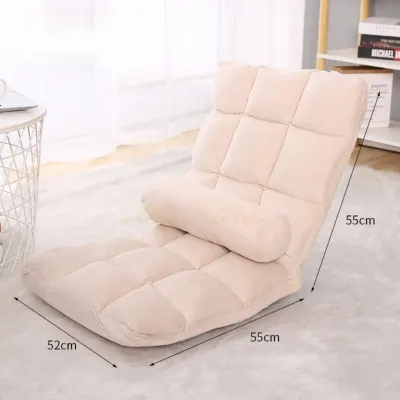
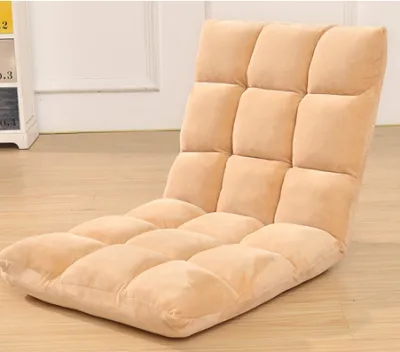
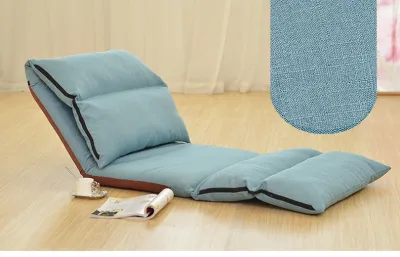
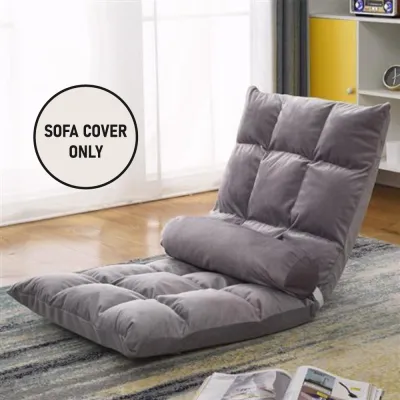
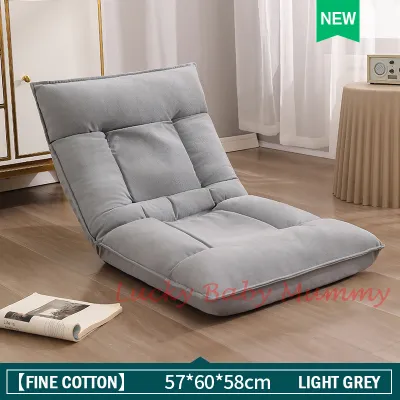
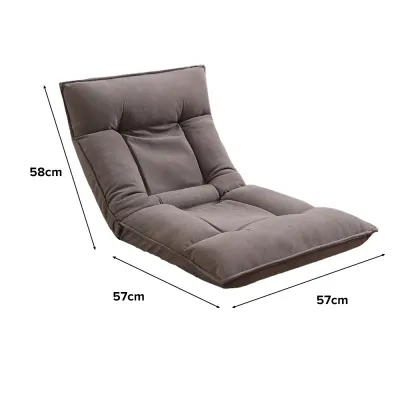
Prices are valid at publication and may change. Please refer to the product page for the latest price.
The frequency of your guest visits should dictate the complexity of the seat’s design. If you host overnight guests multiple times a month, prioritize a model with an intuitive, rapid unfolding mechanism that requires minimal physical effort. Conversely, if you only host guests during major festive seasons or occasional weekends, you can opt for a modular or highly compact design that prioritizes space-saving storage over daily setup speed. Aligning the mechanism with your actual usage patterns ensures you do not overpay for complex features you rarely use.
Comparing Conversion Mechanisms and Structures
Convertible floor seats generally fall into three structural categories: bi-fold frames, tri-fold foam blocks, and modular cushion systems. Bi-fold designs often utilize an internal metal click-clack mechanism, allowing you to adjust the backrest angle through multiple reclining positions before laying it completely flat. While these offer excellent versatility for daytime lounging, the internal metal joints can sometimes be felt through the padding if the foam layer is too thin.

Tri-fold foam blocks represent a simpler, highly durable alternative. These designs do not contain internal metal frames; instead, they rely on three hinged foam sections that stack into a neat cube for seating and unfold flat onto the floor for sleeping. Because they sit directly on the ground without legs or mechanical joints, tri-fold models offer exceptional stability and eliminate the risk of mechanical failure over time. However, they lack adjustable backrests, meaning they must be propped against a wall if you want back support while sitting.
Modular cushion systems consist of independent, high-density foam pieces that can be arranged as a low-profile sofa, a chaise lounge, or a flat mattress. While highly versatile and aesthetically modern, modular systems require a non-slip base or a secure wall placement to prevent the individual cushions from sliding apart during the night. When evaluating any of these structures, always check the manufacturer’s specified weight capacity. A reliable single-person floor bed should safely support an adult weighing up to 100 kg without bottoming out or straining the seams.
Assessing Sleep Comfort and Cushion Specifications
The primary factor determining whether your guest enjoys a restful night or wakes up with back pain is the quality of the cushion padding. For occasional adult sleeping, avoid cheap polyester fiberfill, which compresses permanently after only a few uses. Instead, look for high-density polyurethane foam with a density rating of at least 28 kg/m³ to 35 kg/m³. High-density foam provides the necessary upward resistance to support the spine and distribute body weight evenly across the floor.
Cushion thickness is equally critical when sleeping at floor level. A convertible seat should have a minimum thickness of 10 cm to 15 cm when fully extended. Anything thinner than 10 cm will likely cause heavier parts of the body, such as the hips and shoulders, to press directly against the hard tiled or vinyl flooring common in Singaporean homes. If you anticipate hosting taller or heavier adults, prioritizing a 15 cm thickness ensures a much closer approximation to a traditional mattress experience.
Hygiene is another vital consideration for guest bedding that sits directly on the floor. Floor-level furniture naturally accumulates more dust, hair, and floor debris than elevated beds. Ensure the convertible seat features a fully removable, zippered cover that can be machine-washed. Inspect the zipper quality; a heavy-duty nylon or metal zipper with a protective fabric flap is less likely to break during removal and prevents the zipper teeth from scratching your flooring.
Evaluating Materials for Humid Climates
Singapore’s tropical climate, characterized by high relative humidity levels averaging around 80%, presents unique challenges for fabric furniture. Materials that trap heat and moisture can quickly become uncomfortable, sticky, and prone to mold or mildew. Avoid heavy velvet, thick faux suede, and non-breathable synthetic leathers like PU or PVC. While these materials may look luxurious in air-conditioned showrooms, they prevent airflow and can cause guests to overheat during the night.
Instead, opt for breathable upholstery fabrics such as cotton-linen blends, canvas, or high-performance woven polyester. These fabrics allow air to circulate freely, helping to dissipate body heat and moisture. Some modern floor seats utilize breathable 3D mesh fabrics on the sleeping surface, which significantly improves ventilation. Additionally, check if the fabric has been treated with a water-resistant or stain-resistant coating, which makes it easier to wipe away accidental spills before they penetrate the foam core.
The internal frame, if present, must also be evaluated for climate resilience. Internal metal mechanisms are susceptible to rust over time due to the humid air. Look for manufacturer specifications indicating that the metal frame has been treated with a rust-resistant powder coating or electroplated finish. If you prefer to avoid metal entirely to eliminate the risk of rust and squeaking, a pure high-density foam tri-fold seat is the most climate-resilient option for long-term use in Singapore.
Building Your Conditional Shortlist
To make an informed purchase, compile a conditional shortlist based on verifiable product specifications rather than vague marketing promises. Begin by creating a spreadsheet to compare your measured space constraints against the exact folded and unfolded dimensions of candidate models. This step immediately filters out options that are too large for your room or too short for your tallest potential guests.
Next, verify the warranty coverage and return policies offered by the retailer. Mechanical parts, such as reclining hinges on bi-fold models, are the most common points of failure. A reputable retailer should offer at least a 6-month to 1-year warranty covering structural defects and mechanical malfunctions. Be cautious of sellers on online marketplaces who offer no warranty or refuse returns on vacuum-packed foam items, as these cannot be easily repackaged once opened.
Finally, prioritize products that provide transparent material certifications, such as CertiPUR-US for foam safety and emissions. This ensures the foam is free from harmful chemicals and will not off-gas unpleasant odors in a closed, air-conditioned room. Whether you are budgeting S$100 for a basic tri-fold cushion or over S$300 for a multi-angle reclining chair, focusing on these objective criteria—dimensions, warranty, material breathability, and foam density—allows you to select a convertible floor seat that delivers lasting comfort for your guests.
Frequently Asked Questions (FAQ)
Can a standard floor cushion replace a dedicated convertible guest bed?
A standard floor cushion is generally designed for short-term sitting and lacks the structural support required for overnight sleeping. Most decorative floor cushions are filled with loose polyester fiber or low-density shredded foam, which compresses flat under an adult’s body weight. This lack of support can lead to spinal misalignment and discomfort. A dedicated convertible floor seat, by contrast, utilizes engineered high-density foam layers and a minimum thickness of 10 cm to keep the sleeper elevated off the hard floor, making it a far safer and more comfortable solution for overnight guests.
How should I store a foldable floor seat when not in use?
To maintain the shape and longevity of your foldable floor seat, always fold it along its designated seams and avoid forcing the hinges past their natural stopping points. Store the unit in a dry, well-ventilated area of your home, such as a ventilated utility closet or a dry corner of a spare room. Avoid storing it in damp areas like unventilated bomb shelters or directly against damp external walls, as this can encourage mold growth. If you must store it for several months, cover it with a breathable cotton sheet to protect it from dust while allowing air circulation.
Do I need a separate mattress topper for better sleep support?
Whether you need a separate mattress topper depends on the thickness and density of your convertible floor seat. If your selected model is less than 10 cm thick, or if your guests find the folding seams uncomfortable, adding a 5 cm rollable latex or memory foam topper can significantly enhance sleep comfort. When choosing a topper, ensure it can be easily rolled up and stored separately so it does not interfere with the floor seat’s daily folding mechanism. For high-quality floor seats that are already 15 cm thick, a separate topper is usually unnecessary.

Community discussion
Share your experience or ask a question. Comments are reviewed before publication.