
Selecting a loft bed with stairs is an excellent way to maximize floor space in compact bedrooms, making it a highly popular choice for families living in high-rise apartments and HDB flats. By elevating the sleeping area, these beds free up valuable square footage underneath for study desks, play areas, or storage. However, because the sleeping platform is elevated, safety must be your absolute priority when shopping for the perfect model. A staircase design offers a more stable climb than a traditional vertical ladder, but it also introduces specific structural and design elements that require close inspection.
Before making a purchase, parents must look beyond aesthetics and storage features to evaluate the bed’s physical build and safety credentials. This guide outlines the essential safety features, structural checks, and installation considerations you need to verify to ensure your child’s elevated bed remains a secure and comfortable sanctuary.
Structural Stability and Weight Capacity
The foundation of any safe loft bed with stairs lies in its structural integrity and weight capacity. Elevated beds are subjected to dynamic forces when children climb, shift, or play, meaning a wobbly frame is an immediate safety hazard. When evaluating a bed, check the manufacturer’s specified maximum weight capacity. This limit must comfortably accommodate the mattress, bedding, and your child, with extra allowance for natural growth. Keep in mind that the staircase structure itself will also have a separate weight limit that should be verified.
Products mentioned in this guide





Prices are valid at publication and may change. Please refer to the product page for the latest price.
Next, examine the frame materials and joint connections. Solid hardwoods like rubberwood or beech offer excellent density, while high-quality metal frames provide robust support if they feature thick-walled tubing. Pay close attention to how the pieces connect; metal-on-metal barrel bolts and heavy-duty brackets are far superior to simple wood screws, which can loosen or split the wood over time. When testing a display model, apply firm pressure to the frame; any noticeable swaying or creaking indicates weak joints.
Finally, consider how the bed interacts with your room’s flooring. Because loft beds have a high center of gravity, many manufacturers require wall anchoring kits or anti-tip brackets. Verify whether these safety accessories are included in the packaging. Anchoring the bed securely to a concrete or stud wall is one of the most effective ways to eliminate wobbling and prevent accidental tipping.
Guardrails and Fall Prevention
Falls are the most common risk associated with elevated beds, making robust guardrails an indispensable safety feature. A secure loft bed must feature continuous guardrails on all four sides of the top bunk. Even if you plan to position the bed flush against a bedroom wall, a guardrail is still required on that side. Children can easily shift during the night, and without a barrier, they can slip into the gap between the mattress and the wall, leading to falls or entrapment.

The height of the guardrail relative to the mattress is a critical dimension to verify. Safety guidelines dictate that the top of the guardrail must extend significantly above the top surface of the mattress to prevent a sleeping child from rolling over the edge. When shopping, check the product specifications for the recommended mattress thickness. Using a mattress that is too thick will compromise the protective height of the guardrails. Always measure the distance from the mattress support slats to the top of the guardrail to ensure it can accommodate your intended mattress while maintaining a safe protective margin.
Additionally, inspect the guardrail’s mounting system. The rails should be bolted securely to the main bed posts rather than held in place by simple friction. They must not bend or detach when outward pressure is applied. Look for designs where the guardrail slats are spaced closely together to ensure there are no large openings.
Staircase Design and Accessibility
A primary reason parents choose a loft bed with stairs over a ladder is the increased safety and ease of access. However, not all staircase designs are created equal, and their configuration plays a major role in preventing slips. When comparing options, consider the physical footprint of the staircase. While integrated stairs take up more floor space than a vertical ladder, they provide a much wider, more stable platform for a child’s feet, making them highly suitable for younger users.
Examine the steps themselves for safety-focused details. The treads should be deep enough to allow your child to place their entire foot securely on each step. Look for slip-resistant features, such as textured treads or grooved wood surfaces, which provide essential traction for bare feet or socks. Additionally, an integrated handrail that runs the full length of the staircase is crucial, giving your child a secure handhold to maintain balance as they climb.
The connection between the staircase and the main bed frame must be exceptionally strong. The stairs should be bolted directly to the bed structure, forming a unified, rigid unit. Avoid models where the staircase simply hooks over the side rail without securing bolts, as these can shift during use. If the staircase includes built-in storage drawers, ensure the drawer slides feature safety stops to prevent drawers from pulling out completely.
Entrapment Hazards and Gap Sizes
Entrapment is a serious but often overlooked hazard in children’s furniture. Gaps that are too wide can allow a child’s body to pass through while trapping their head or neck. To prevent this, manufacturers must adhere to strict dimensional standards regarding the spacing of slats, guardrails, and frame openings. When evaluating a loft bed, look for compliance statements indicating that the product meets standard safety gap limits.
You can perform a quick visual and physical check of these gaps on display models. The space between individual guardrail slats, as well as the gap between the bottom rail and the mattress foundation, must be narrow enough to prevent a child’s head or torso from slipping through. Similarly, check the clearance between the mattress and the frame on all sides once the mattress is installed; a tight fit is essential to ensure limbs cannot get wedged in the margins.
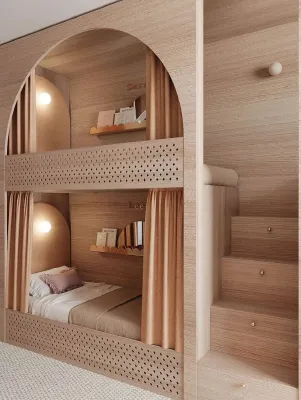
Beyond simple slat spacing, examine the overall design of the headboard, footboard, and staircase panels. Avoid beds that feature decorative cutouts or irregular geometric patterns, as these can easily catch a child’s limbs or clothing. Hardware such as bolts and brackets should be recessed or completely flush with the surface to eliminate any protruding edges that could snag pajamas or bedding.
Verifying Safety Certifications and Manufacturer Guidelines
One of the most reliable ways to ensure a loft bed with stairs is safe is to verify its compliance with recognized safety standards. Reputable manufacturers subject their products to rigorous third-party testing to certify that they meet strict structural, material, and safety requirements. Look for official certification marks on the product packaging, the frame’s warning labels, or within the manufacturer’s technical documentation. These certifications provide peace of mind that the bed has been tested for load capacity and tip-over resistance.
Pay close attention to the warning labels permanently affixed to the bed frame. These labels contain crucial safety information, including the minimum recommended age for the top bunk and specific weight limits. Standard safety guidelines strongly advise against allowing children under the age of six to sleep on an elevated bed, as they may lack the coordination and spatial awareness required to navigate the height safely.
When you purchase the bed, keep all official documentation in a safe, accessible place. The assembly manual, hardware parts list, and warranty details are invaluable resources. If you ever need to disassemble the bed for a move, refer to the manual to ensure it is reassembled correctly. Having the parts list also makes it much easier to order genuine replacement hardware from the manufacturer if any bolts or brackets become lost.
Room Fit, Assembly, and Ongoing Maintenance
Ensuring safety does not end once you select the right bed; proper installation and ongoing maintenance are equally critical. Before buying, take precise measurements of your child’s bedroom, focusing particularly on the ceiling height. In Singapore, where ceiling heights can vary, you must ensure there is ample clearance between the top of the mattress and the ceiling. A child should be able to sit up comfortably in bed without any risk of bumping their head. Additionally, map out the position of ceiling fans and light fixtures; the bed must be positioned far enough away from these fixtures to prevent any accidental contact.
When it comes to assembly, patience and precision are key. Carefully follow the manufacturer’s step-by-step instructions, ensuring every single bolt, dowel, and support slat is installed exactly as directed. Never skip steps or leave out hardware, even if the structure feels stable initially. Use the recommended tools, and if you are using power tools, be careful not to over-tighten and split the wood or strip the metal threads.
Finally, establish a routine for periodic safety checks. Wood is a natural material that expands and contracts in response to changes in temperature and humidity, which can cause joints to loosen over time. Every few months, inspect the bed frame and staircase, tightening any loose bolts or screws. Run your hands along the frame to check for wood splinters, sharp metal burrs, or worn non-slip treads on the stairs, addressing any issues immediately to keep the bed in peak, safe condition.
Frequently Asked Questions (FAQ)
At what age is it safe for a child to sleep on the top bunk of a loft bed?
Most safety standards and manufacturers recommend that children be at least six years old before sleeping on the top bunk of a loft bed. At this age, children have typically developed the physical coordination, balance, and spatial awareness necessary to climb the stairs safely, especially during the night when they might be groggy. Younger children are at a much higher risk of falls and accidental injuries due to underdeveloped motor skills and a lack of understanding of the potential dangers associated with elevated heights.
Can I use a thicker mattress on a loft bed to make it more comfortable?
While a thick, plush mattress might seem like a comfortable choice, using one on a loft bed can be highly dangerous. A mattress that is too thick reduces the effective height of the guardrails, leaving an insufficient barrier to prevent your child from rolling off the bed. Always check the manufacturer’s specifications for the maximum recommended mattress thickness, which is typically designed to leave a safe clearance of at least several inches from the top of the mattress to the top of the guardrail. Stick strictly to these guidelines to ensure the guardrails can perform their protective function.

Community discussion
Share your experience or ask a question. Comments are reviewed before publication.