
When shopping for a single bed with storage for a child, safety must be the primary filter before aesthetics or space-saving convenience. Storage beds are excellent for maximizing space in compact bedrooms, but their moving parts, heavier frames, and elevated profiles introduce specific physical risks. To ensure a secure sleeping and playing environment, parents must carefully inspect the bed’s structural stability, drawer safety mechanisms, edge finishes, and mattress compatibility.
Checking Frame Stability and Weight Limits
To ensure the bed frame remains stable under the dynamic loads of a child’s play and sleep, you must evaluate its physical construction. Start by inspecting the base materials and the thickness of the support legs or panels. Solid timber and high-density engineered woods are common choices, but their safety depends heavily on the quality of the joints. Look for steel-on-steel barrel bolt connections rather than simple wood screws, as metal threads resist loosening over time from the vibrations of daily use.
Next, verify the manufacturer’s stated weight limits. A reliable single bed with storage must support not only the weight of the sleeping child and the mattress but also the additional force of a parent sitting on the edge. Check the load capacity for both the sleeping platform and the individual storage drawers. Overloading drawers can warp the tracks, leading to alignment issues or sudden drawer failure.
Products mentioned in this guide

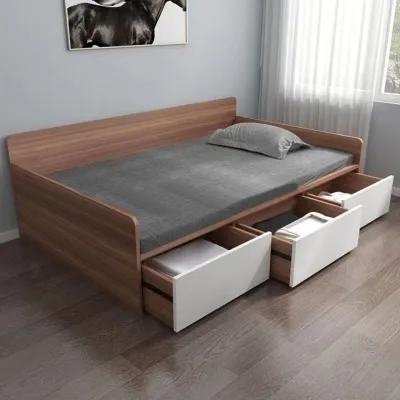
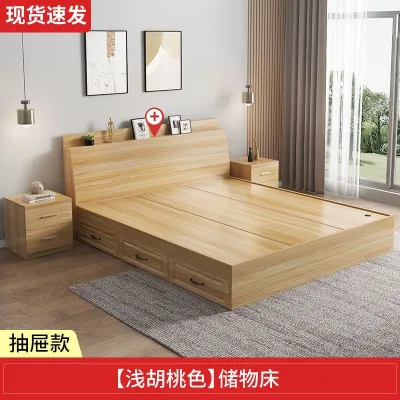


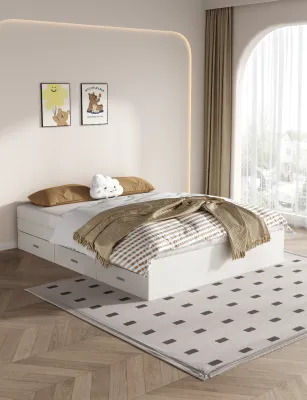
Prices are valid at publication and may change. Please refer to the product page for the latest price.
In compact residential layouts, delivery and assembly conditions require careful planning. Before purchasing, measure your doorways, corridors, and lift dimensions to ensure the flat-packed or pre-assembled frame components can safely reach the bedroom. Once in the room, assess the floor surface. If the bed is placed on a smooth laminate or tiled floor, check if it requires non-slip pads to prevent sliding. For beds with tall headboards, integrated shelving, or heavy pull-out drawers, check the manufacturer’s instructions for wall-anchoring requirements. Shifting weight inside fully extended drawers can alter the center of gravity, making anti-tip hardware a critical safety feature.
Inspecting Drawer Mechanisms for Pinch and Crush Risks
Storage drawers are the defining feature of these beds, but they also represent the primary source of pinch and crush hazards for young children. When visiting a showroom or reviewing product specifications, pay close attention to the drawer slides. High-quality slides should operate smoothly without sticking or requiring excessive force, which could cause a child to pull too hard and lose their balance.

Look for drawers equipped with soft-close or anti-slam mechanisms. These hydraulic or spring-loaded dampers slow the drawer down during the final inches of closure, preventing fingers from being trapped and crushed. If soft-close slides are not included, check if you can install aftermarket drawer dampers or rubber bumpers to cushion the impact.
Another critical safety feature is the drawer stop. Pull the drawers out to their maximum extension to verify that physical stops are built into the runners. These stops prevent the drawer from being pulled completely out of the frame and falling onto a child’s feet or legs. Avoid designs where the drawers simply slide on the floor without tracks, unless they are lightweight fabric bins, as heavy wooden drawers can easily tip over if pulled out at an angle.
Finally, examine the design of the drawer fronts and handles. Protruding metal knobs, sharp wooden pulls, or ornate handles pose a constant snagging hazard for loose clothing and can cause painful bruises during active play. Opt for flush-mounted handles, recessed cut-outs, or push-to-open mechanisms that keep the front profile of the storage bed completely smooth and free of obstructions.
Evaluating Edge Protection and Surface Finishes
Children’s furniture must be designed to minimize the impact of accidental bumps and falls. Run your hands along every corner, edge, and bed rail to check for rounded profiles. Sharp 90-degree edges on the footboard, headboard, or side panels should be avoided; instead, look for radiused or chamfered edges that distribute impact force more safely.
Examine the entire frame for physical defects. For wooden beds, check for splinters, rough grain, or poorly sanded seams that could catch on skin or fabric. For metal frames, inspect the quality of the welds to ensure there are no sharp burrs or rough spots. Check that all assembly hardware, such as screws, bolts, and brackets, is fully recessed or covered with plastic caps so that no metal threads protrude.
Surface finishes require careful verification through product labels and documentation. Because children have close, prolonged contact with their beds, the paints, varnishes, or laminates used must be non-toxic and low in volatile organic compounds (VOCs). Look for manufacturer declarations certifying compliance with international toy safety standards or specific chemical safety regulations. Avoid products that smell strongly of chemical solvents upon unboxing, and allow any new furniture to ventilate thoroughly in a well-ventilated room before letting your child sleep in it.
Preventing Entrapment With Proper Mattress Fit
A mattress that does not fit the bed frame properly creates dangerous gaps where a child’s limbs, hands, or head can become wedged. When selecting a single bed with storage, compare the internal dimensions of the bed base directly with the dimensions of the mattress you plan to use. Standard single mattress sizes can vary slightly by region, so relying solely on the term ‘single’ is not enough; always check the exact millimeter measurements.
Once the mattress is placed inside the frame, inspect the perimeter. There should be no gap wider than two centimeters between the mattress edges and the side rails, headboard, or footboard. If you can easily slide two fingers between the mattress and the frame, the fit is too loose, and the risk of entrapment increases.
Additionally, evaluate the depth of the mattress recess. This is the distance from the top of the mattress support slats to the top edge of the side rails. The recess must be deep enough to hold the mattress securely so it cannot slide or shift during use. However, if the bed features built-in guardrails, ensure the mattress is not so thick that it reduces the effective height of the guardrail. The top of the guardrail should sit significantly higher than the top surface of the mattress to provide adequate roll-off protection.
Verifying Safety Labels and Documentation
A commitment to safety is usually reflected in the quality of the manufacturer’s documentation. Before making a purchase, ask to see the assembly manual. A comprehensive manual should provide clear, step-by-step instructions, a complete list of included hardware, and specific warnings regarding weight limits and usage. It should also outline ongoing maintenance requirements, such as checking and tightening the structural bolts every six months to ensure the frame remains rigid.
Look for recognized safety standard labels on the bed frame itself, its packaging, or within the official product documentation. These standards verify that the bed design has undergone independent mechanical testing for stability, strength, and durability. If the retailer makes broad safety claims but does not display standard labels, ask them directly for a copy of the compliance certificates or test reports.
Finally, check the warranty terms and the availability of replacement parts. A manufacturer that offers a clear warranty and stocks replacement hardware or drawer slides demonstrates confidence in the long-term safety and structural integrity of their product. Taking the time to verify these details before buying ensures that your child’s single storage bed remains a safe, functional, and comfortable sanctuary for years to come.
Frequently Asked Questions (FAQ)
At what age is a storage bed safe for a child?
Most manufacturers recommend storage beds for children aged six and older. At this age, children generally possess the physical strength and coordination to operate drawers safely without pinching their fingers, as well as the cognitive understanding to avoid climbing inside the storage compartments or using the drawers as steps.
Do I need to anchor a single storage bed to the wall?
Wall anchoring is highly recommended if the storage bed has a tall headboard, integrated shelving, or heavy drawers that extend significantly when opened. Shifting weight can alter the bed’s center of gravity, creating a tip-over hazard. Always check the assembly instructions to see if the manufacturer requires or provides anti-tip anchoring hardware.

Community discussion
Share your experience or ask a question. Comments are reviewed before publication.