
Selecting a bunk bed for your child’s bedroom is an excellent way to maximize floor space, especially in compact living environments like Singapore’s HDB flats or condominiums where bedrooms often pull double duty for sleep, study, and play. However, because elevated beds introduce unique risks such as falls, structural failures, and entrapment, safety must be your absolute priority during the buying process. Before committing to a purchase, you must look beyond aesthetics and evaluate specific engineering details, material quality, and safety certifications. By systematically verifying guardrail dimensions, gap sizes, structural stability, and room placement compatibility, you can create a secure sleeping environment that protects your children while they rest and play.
Guardrail Height and Fall Prevention Standards
The top bunk’s guardrails are the primary defense against accidental falls, which represent the most common source of bunk bed injuries. When evaluating any model, verify that guardrails are installed on all four sides of the upper bed. Even if you plan to push the bed flush against a bedroom wall, a dedicated guardrail is still required on the wall-facing side. Children can shift during sleep, and without a barrier, the bed can slide slightly away from the wall, creating a dangerous void where a child can fall or become trapped.
The height of these guardrails relative to the mattress is a critical safety metric. To prevent a sleeping child from rolling over the edge, the top of the guardrail must extend significantly above the surface of the mattress. Standard safety guidelines recommend a minimum clearance of 127 millimeters (approximately 5 inches) from the top of the mattress to the upper edge of the guardrail. When shopping, always check the manufacturer’s specifications for the maximum allowable mattress thickness. Buying a mattress that is too thick will compromise this safety margin, leaving the guardrail too low to prevent falls.
Products mentioned in this guide
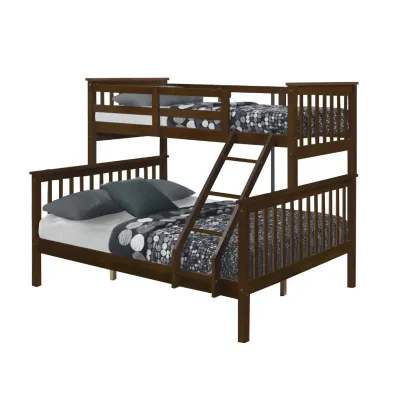
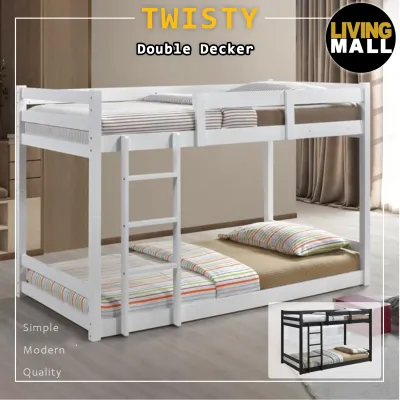

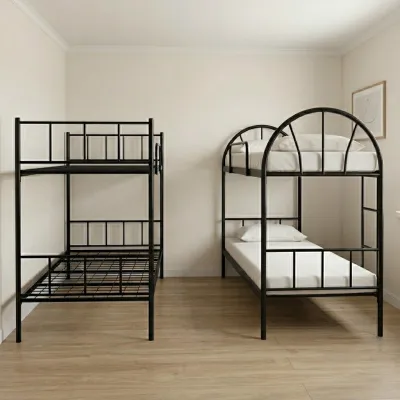
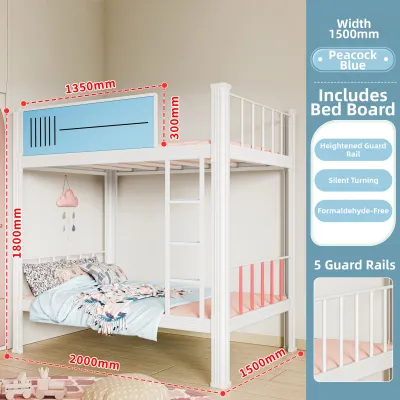
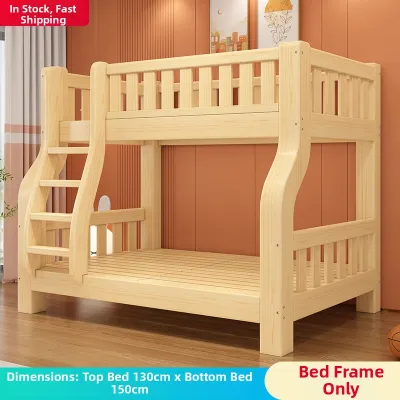
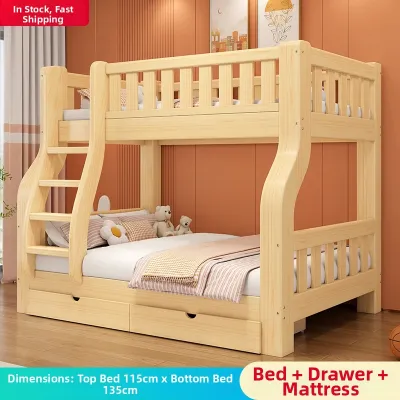
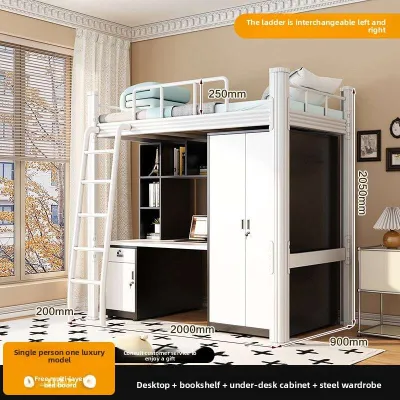
Prices are valid at publication and may change. Please refer to the product page for the latest price.
Additionally, examine the physical design of the guardrails to ensure they do not invite dangerous behavior. The infill between the top rail and the bed frame should consist of sturdy vertical slats rather than horizontal bars. Horizontal bars can inadvertently act as ladder rungs, tempting young children to climb over the barrier. The spacing between any vertical slats must also be narrow enough to prevent a child’s body from slipping through while remaining robust enough to withstand outward pressure.
Entrapment Risks: Measuring Critical Gaps and Openings
Entrapment is a severe hazard that occurs when a child’s body or head becomes wedged in a gap within the bed’s structure. To eliminate this risk, you must carefully measure and inspect all openings on both the upper and lower bunks before finalizing your purchase. The most critical areas to check are the spaces between the guardrails and the bed frame, as well as the gaps between individual slats.

Safety standards dictate that any gap must either be small enough to prevent a child’s torso from entering, or large enough to allow their head to pass through completely without getting stuck. Specifically, openings should be less than 90 millimeters (about 3.5 inches) to prevent a child’s body from slipping through feet-first, or greater than 230 millimeters (about 9 inches) to ensure the head can pass through freely. Avoid any mid-sized gaps that fall between these two measurements, as they pose a high risk of head entrapment.
The fit of the mattress within the bed frame is another crucial area where dangerous gaps can form. A mattress that is too small for the bed frame leaves open spaces along the sides or ends. If a child rolls into these gaps, they can become wedged between the mattress and the frame. When purchasing, verify that the mattress dimensions align perfectly with the internal frame measurements, leaving no more than a finger’s width of space around the perimeter.
Finally, inspect the ladder and any structural cutouts for potential limb entrapment. The spaces between ladder rungs, and the clearance between the ladder and the bed frame itself, must be uniform and free of awkward angles. Ensure that hands, feet, and limbs cannot get wedged during a hurried climb in the dark.
Structural Stability, Materials, and Weight Limits
A bunk bed must be exceptionally sturdy to withstand not only the weight of sleeping children but also the dynamic forces of daily use. When inspecting a display model or reviewing specifications, perform a physical stability test if possible. Grasp the upper frame and shake it firmly; a safe bed should exhibit minimal sway or wobble. Any significant movement indicates weak joints or a design that lacks proper structural bracing.
Whether you are investing S$500 in a basic metal frame or over S$1,500 in a solid hardwood configuration, pay close attention to the construction materials and the quality of the fastening hardware. Solid hardwoods like rubberwood, oak, or beech are highly durable and well-suited for the humid climate of Singapore, where moisture can cause lesser-quality engineered woods to swell or warp over time. If choosing a metal frame, ensure the tubing is thick and the welds are clean and continuous. Examine the joints where the bed posts meet the guardrails and ladder; high-quality models utilize heavy-duty metal-to-metal bolts and brackets rather than simple wood screws, which can loosen and strip the wood over time.
Always verify the manufacturer’s certified weight limits for both the top and bottom decks. These limits must comfortably accommodate the weight of the mattress, the bedding, and the child. Keep in mind that children grow rapidly, so selecting a bed with a generous weight capacity ensures long-term safety and utility.
Lastly, run your hands over all surfaces of the bed frame to check the finish. The wood or metal must be completely smooth, with rounded corners and no sharp edges, protruding bolts, or exposed hardware that could snag clothing or cause scratches. Ensure any paints, varnishes, or laminates are certified non-toxic and low-emission to maintain healthy indoor air quality in air-conditioned bedrooms.
Safe Assembly, Placement, and Ongoing Maintenance
Even the most safely designed bunk bed can become hazardous if it is assembled incorrectly or placed in a dangerous location. When setting up the bed, you must follow the manufacturer’s assembly instructions meticulously. Use every single screw, bolt, and dowel provided in the hardware kit, and never substitute missing parts with random hardware from a local store. If a piece is missing or damaged, contact the retailer or manufacturer directly for an official replacement.
Room layout and bed placement require careful planning, particularly in rooms with limited vertical clearance. Measure your ceiling height before buying; there should be at least 75 to 90 centimeters of headspace between the top of the upper mattress and the ceiling so the child can sit up comfortably without bumping their head. Crucially, position the bunk bed far away from ceiling fans and light fixtures. In Singapore’s warm climate, ceiling fans are common fixtures, but placing an elevated bed within reach of spinning blades poses an extreme danger. Additionally, keep the bed clear of windows, air conditioning units, and dangling cords from blinds or curtains, which present strangulation hazards.
Over time, the physical stresses of climbing and sleeping will naturally cause fasteners to loosen. Establish a routine maintenance schedule to inspect the bed every few months. Use a screwdriver or Allen key to tighten all bolts and joints, check that the ladder remains securely anchored, and inspect the mattress support slats for any signs of cracking, bowing, or structural fatigue.
Age Guidelines and Establishing Safe Usage Rules
Determining whether your children are developmentally ready for a bunk bed is just as important as checking the bed’s physical features. As a general rule, the top bunk is strictly unsuitable for children under six years of age. Younger children lack the coordination, balance, and spatial awareness required to safely navigate the ladder and avoid falling out of an elevated bed, even with guardrails in place.
Once the bed is installed, sit down with your children to establish clear, non-negotiable household safety rules. Emphasize that the bunk bed is designed solely for sleeping and quiet reading, not for play. Prohibit roughhousing, jumping on either the top or bottom mattress, and climbing up the outer frame instead of using the ladder. Make it clear that only one person is allowed on the top bunk at any given time.
To prevent accidents during nighttime bathroom visits, ensure the path from the bed to the door is well-lit. Installing a small, low-wattage clip-on nightlight near the top of the ladder or using motion-activated floor lighting can guide your child safely down the rungs in the dark, reducing the risk of missteps and slips.
Frequently Asked Questions (FAQ)
Are bunk beds safe for toddlers?
No, bunk beds are not safe for toddlers. The upper bunk should never be used by any child under the age of six due to the high risk of falls and serious injury. Even the bottom bunk can pose risks for very young toddlers if there are gaps between the mattress and the frame where they could become trapped, or if they attempt to climb the ladder when unsupervised. If you have a toddler, it is safest to keep them in a standard toddler bed or a single floor bed until they reach the appropriate age and developmental milestones.
How often should I inspect the bunk bed hardware?
You should conduct a thorough inspection of your bunk bed’s hardware at least once every three to six months. During these checks, physically wiggle the frame to test for stability, and use the appropriate tools to tighten any bolts, screws, or brackets that may have loosened from daily movement. Additionally, inspect the wooden slats or metal mesh supporting the mattresses to ensure they are not cracked, bent, or slipping out of their designated tracks.
What type of mattress is safest for a bunk bed?
The safest mattress for a bunk bed is one that fits the frame snugly with virtually no gaps around the edges, and has a low profile. A mattress thickness of 12 to 15 centimeters (about 5 to 6 inches) is typically ideal for the top bunk. This low profile ensures that the mattress does not sit too high, preserving the critical 127-millimeter safety clearance between the top of the mattress and the upper edge of the guardrails. Always consult the manufacturer’s manual for the exact maximum mattress thickness specified for your specific bunk bed model.

Community discussion
Share your experience or ask a question. Comments are reviewed before publication.