
Finding the right bed and mattress combination for your children’s bedroom involves more than just selecting a fun design or a comfortable material. When it comes to bunk beds, the thickness of the top bunk mattress is a critical factor that directly affects the safety of the sleeping environment. To maintain the effectiveness of the bunk bed’s guardrails and prevent accidental falls, the mattress must be thin enough to leave an adequate safety margin. Generally, the top of the mattress must sit at least 5 inches (approximately 13 cm) below the top edge of the guardrail. Understanding how to measure and select these components ensures your child remains secure throughout the night.
Understanding Guardrail Safety in a Bed and Mattress Setup
When setting up a bunk bed, many parents focus entirely on the height of the wooden or metal guardrails built into the frame. However, the physical height of the rail is only half of the safety equation. The actual safety margin is determined by the “effective guardrail height,” which is the distance from the top surface of the mattress to the very top edge of the guardrail. If you install a mattress that is too thick, you systematically reduce this functional barrier, significantly increasing the risk of a child rolling over the edge while asleep.
This risk becomes particularly acute during active sleep phases when children naturally toss and turn. A standard guardrail is designed to act as a physical block, but its ability to stop a rolling body depends entirely on the height difference between the sleeping surface and the rail’s upper limit. When a mattress is excessively tall, the pivot point of a child’s body rises close to or even above the top of the guardrail, rendering the safety barrier virtually useless.
Products mentioned in this guide

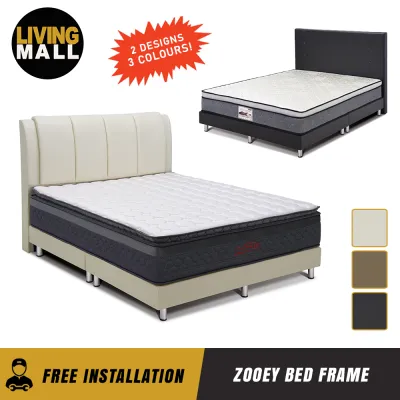
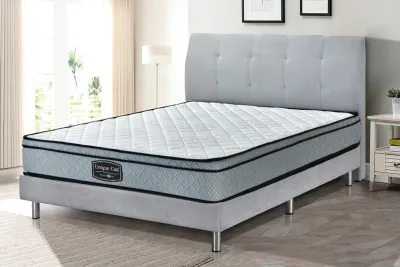
![[SG Brand] Dreamster Quartz / Luna / High Grade Knitted Fabric / Euro Top / Mattress & Bedframe set/ Queen Size](https://img.lazcdn.com/g/p/913f9ddbcc8ba6b507943b941a12d7a0.png_400x400q80.png_.webp)

Prices are valid at publication and may change. Please refer to the product page for the latest price.
To prevent these dangerous falls, safety standards emphasize maintaining a strict clearance. The mattress thickness you choose directly dictates whether the guardrail can perform its intended safety function. Consequently, evaluating a bed and mattress together as a single, integrated safety system is the only reliable way to protect your child.
How to Determine the Maximum Safe Mattress Thickness
Determining the exact mattress thickness for your specific bunk bed model requires precise measurements rather than guesswork. Because bunk bed designs vary widely among manufacturers, you should never assume a standard mattress size will automatically be safe. Follow these steps to calculate the maximum allowable thickness for your setup.

Step 1: Measure the Bed Frame Begin by measuring the total vertical distance from the top of the bed base—where the mattress will sit, whether on wooden slats or a solid platform—to the top edge of the guardrail. Use a standard measuring tape and ensure the tape is completely vertical. This measurement represents the total available height for both the mattress and the required safety clearance.
Step 2: Consult the Manufacturer’s Documentation Before making any purchase, consult the bunk bed frame’s user manual or the manufacturer’s official specifications. The manufacturer is the primary authority on safety limits and will explicitly state the maximum allowable mattress thickness for that specific model. Many modern bunk beds also feature a safety warning label printed directly on the inside of the guardrail or headboard, indicating the maximum mattress height line. Always check the manufacturer’s instructions first to ensure compliance with the product’s design limits.
Step 3: Calculate the Safety Margin To verify the safety margin, subtract the required safety clearance from your total bed frame measurement. While general guidelines recommend that the guardrail extend at least 5 inches (approximately 13 cm) above the mattress surface, verify the exact standard required by your local regulations and the product’s certification labels. In Singapore, children’s furniture safety standards dictate precise clearance requirements. Subtracting this required safety clearance from your total frame height gives you the maximum thickness your mattress can be. If your total frame height from slat to rail top is 11 inches, and the safety standard requires a 5-inch clearance, your mattress must not exceed 6 inches.
Never guess these dimensions or compromise on the safety margin. Using a mattress that leaves less than the manufacturer’s recommended clearance compromises the protective barrier.
What Affects the Actual Sleeping Surface Height
Material Compression and Settling
Different mattress materials behave uniquely under a child’s weight, which directly impacts the effective guardrail height during use. High-density polyfoam and memory foam mattresses tend to compress evenly but may feel firmer or softer depending on the ambient temperature and the child’s weight. In contrast, innerspring mattresses provide a more active bounce and may not compress as deeply under a lighter child, meaning the sleeping surface remains closer to the mattress’s nominal, unweighted height.
Because safety clearances are calculated based on the compressed mattress surface, you must consider how the mattress behaves under load. A very soft foam mattress might compress significantly when a child sits or sleeps on it, temporarily increasing the effective guardrail height. However, as mattresses age, they undergo natural settling and may lose their structural integrity, causing the edges to sag. It is wise to select a mattress that maintains a safe clearance both when brand new and after it has broken in over several months of continuous use.
Bed Frame and Slat Design
The structural design of the bunk bed base itself plays a major role in determining where the mattress actually sits. Some bunk beds feature a recessed frame design, where the mattress is cradled inside a protective wooden or metal lip. This recess lowers the bottom of the mattress relative to the guardrail, effectively allowing you to use a slightly thicker mattress while still maintaining the necessary safety clearance.
Conversely, flush slat designs place the mattress directly on top of slats that sit level with the side rails. In this configuration, there is no recess to sink the mattress into, meaning the entire physical thickness of the mattress sits fully exposed. A flush design requires a thinner mattress to preserve the exact same guardrail clearance as a recessed model. Always measure from the actual surface where the mattress rests, rather than the outer frame, to avoid underestimating the final sleeping height.
Final Safety Checks Before Use
Once you have selected and installed your bed and mattress, you must perform several physical checks before allowing your child to sleep on the top bunk. Safety is an ongoing process that requires active verification during setup and throughout the lifespan of the furniture.
Measure with Bedding Installed Always measure the final guardrail clearance with all bedding fully applied. Mattress protectors, thick quilted mattress toppers, fitted sheets, and heavy blankets can add up to an inch of height to the sleeping surface. If your mattress clearance was exactly 5 inches when bare, adding a thick mattress pad could easily reduce that safety margin to an unsafe 4 inches. Ensure the 5-inch minimum clearance is maintained even with all bedding in place.
Inspect for Perimeter Gaps Carefully check the perimeter gap between the edge of the mattress and the inside of the bed frame or guardrail. If the mattress is too small for the frame, it can slide around, compromising stability and creating dangerous gaps. A gap that is too wide poses a severe entrapment hazard where a child’s limb or head could become stuck. Conversely, a mattress that is too wide might bunch up or ride up over the frame, reducing stability and safety. The mattress should fit snugly within the frame with minimal gaps.
Perform Periodic Re-evaluations Bunk bed safety is not a one-time calculation. Over months of use, wooden slats can sag, mattress materials can settle, and hardware can loosen. Make it a habit to inspect the bunk bed setup every few months. Check that all frame joints remain tight, the slats are securely anchored, and the mattress has not expanded or shifted in a way that reduces the effective guardrail height.
Frequently Asked Questions (FAQ)
Can I use a standard single mattress on a top bunk?
While a standard single mattress matches the length and width of most top bunk frames, standard adult mattresses are typically too thick for safe use on an elevated bed. Many standard mattresses range from 8 to 12 inches in thickness. Installing a mattress of this height on a top bunk will severely compromise the guardrail, leaving little to no protective barrier to prevent falls. Always prioritize the manufacturer’s maximum thickness specification over standard mattress dimensions.
Are low-profile mattresses the only safe option?
Low-profile mattresses, which typically measure between 5 and 6 inches thick, are highly recommended for bunk beds because they consistently satisfy safety clearance requirements. However, they are not the only option. Any mattress is safe to use on a top bunk as long as its physical thickness, combined with the bed base design, leaves the manufacturer’s required guardrail clearance. If your bunk bed frame features exceptionally tall guardrails, you may safely use a slightly thicker mattress, provided you verify the final clearance measurements.
Community discussion
Share your experience or ask a question. Comments are reviewed before publication.